


What Is an Inline Duct Fan Motor?

An Inline Duct Fan Motor sits inside a ventilation duct and drives the fan that moves air through it. It may look like a small component, but its speed, electrical demand, and compatibility affect how the whole system performs. In a home, that can mean steadier airflow through a bathroom or a long run of ductwork. In a workshop, it can influence ventilation where heat or odors build up. Small details matter.

The wider energy picture makes this component worth understanding. The International Energy Agency’s The Future of Cooling report projects that global electricity demand for space cooling could rise from about 2,000 terawatt-hours in 2016 to 6,200 terawatt-hours by 2050. That forecast covers cooling, not inline fans specifically, so it should not be treated as a fan-motor estimate. Still, it underscores why efficient air movement deserves attention. The U.S. Department of Energy’s Improving Fan System Performance sourcebook likewise recommends assessing fans as part of a system, including motors, controls, and airflow resistance.

That distinction is easy to miss. A motor’s rated power alone cannot tell you whether a fan will deliver the needed airflow in a particular duct. Duct length, bends, filters, and control settings all change operating conditions. This guide explains what an Inline Duct Fan Motor is, how it works, and which specifications matter when comparing options. It also covers common installation and maintenance considerations, such as mounting, vibration, and access for inspection. Real systems are rarely perfect; a careful selection still needs to match the actual duct layout and ventilation goal.
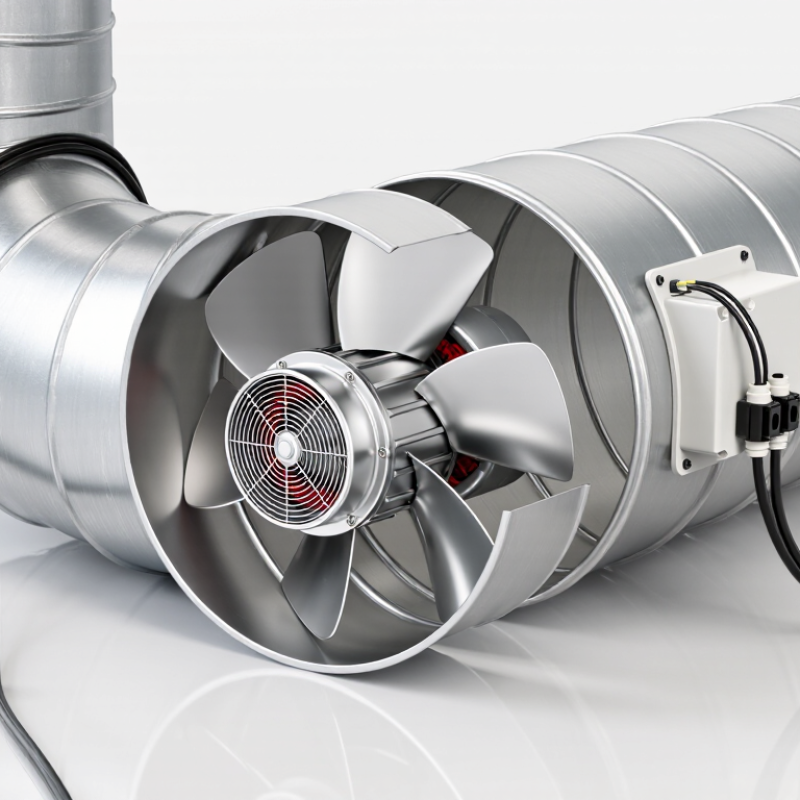
What Is an Inline Duct Fan Motor?

What an Inline Duct Fan Motor Is

An inline duct fan motor is the component that supplies the turning force inside a fan installed within a ventilation duct. It converts electrical energy into rotation, driving an impeller that moves air through the duct. The motor and impeller work together, but they are not the same part. The motor creates motion; the impeller shapes airflow. Air passes through. In many installations, the fan sits between duct sections, above a ceiling, or near an exhaust outlet. Its position can make access less convenient than it looks on a diagram.

Motor design affects how the fan performs. Some motors use alternating current, while others use direct current and electronic controls. Speed settings, electrical supply, bearing design, and the fan’s rated airflow all matter when selecting a replacement or planning a system. A motor that runs continuously may warm up, so its operating limits and ventilation requirements should be checked in the manufacturer’s technical documentation. It is easy to focus on wattage alone, though that can be misleading: a higher number does not automatically mean better airflow. I may be giving motor specifications too much attention; duct length, bends, and filters can also change the air reaching a room. A humming sound, unusual vibration, or reduced airflow can signal a problem, but each symptom needs careful inspection before a motor is blamed.

What Is an Inline Duct Fan Motor? - What an Inline Duct Fan Motor Is

Dimension Description Why It Matters
Definition An inline duct fan motor is the electric motor that turns the fan impeller inside a duct-mounted fan assembly. The motor supplies the rotation needed to move air through a connected duct system.
Location The motor is housed in or attached to the inline fan unit, which is installed along a duct run. This arrangement keeps the fan in the duct path rather than at a room grille or wall opening.
Main components Common components include the stator, rotor, bearings, electrical connections, and a shaft or motor support connected to the impeller. The exact layout depends on the fan design; some assemblies use a directly coupled impeller.
Common motor designs Inline fans may use AC induction motors, including permanent-split-capacitor designs, or electronically commutated (EC) motors. Motor type affects control options, efficiency, electrical requirements, and service considerations.
Operating principle Electrical energy creates a rotating magnetic field that turns the rotor and drives the fan impeller. The impeller’s rotation produces airflow, while the duct system’s resistance influences the delivered airflow.
Speed control Control methods vary by motor and fan. Some units support compatible speed controllers; EC models commonly use an electronic control input. A controller must be compatible with the motor and follow the fan manufacturer’s wiring instructions.
Typical applications Ducted ventilation, room exhaust, air transfer, and other applications specified for the particular fan model. The fan must be selected for the required airflow, duct resistance, environment, and installation conditions.
Key selection checks Check the fan’s airflow and pressure data, supply voltage, motor type, control compatibility, mounting requirements, and approved operating environment. Published performance and installation instructions are model-specific; a motor’s suitability cannot be determined by duct size alone.
Maintenance considerations Keep the fan and ductwork clear of excessive dust or obstructions, and inspect or service the unit according to its instructions. Before inspection or cleaning, isolate electrical power and follow the unit’s safety and maintenance guidance.

Specifications and features vary by fan model; consult the product documentation for exact electrical ratings, performance, controls, and maintenance requirements.


Key Components of an Inline Duct Fan Motor

What Is an Inline Duct Fan Motor?

Key Components of an Inline Duct Fan Motor

An inline duct fan motor sits inside a cylindrical housing fitted into ductwork. It turns electrical energy into rotation, driving the fan wheel and moving air through the duct. The motor’s size and speed affect airflow, noise, and power use. A compact unit may fit a tight ceiling space, but it still needs enough clearance for service and ventilation.

The motor shaft connects to an impeller, the rotating wheel with blades that push air along the duct. Bearings support the shaft and help it turn smoothly; worn or dry bearings can cause rattling or a rising hum. The housing holds these parts in alignment, while mounting brackets limit vibration. Electrical leads supply power, and some motors include thermal protection that interrupts operation if the motor overheats. Designs vary, so check the unit’s specifications rather than assuming every component is identical.

Tips: Switch off power before inspection. Look for dust buildup, loose mounts, unusual noise, or weaker airflow. A little vibration may be normal, but it is easy to misjudge by ear alone. Compare changes over time, and ask a qualified technician to investigate persistent overheating or electrical problems.

How an Inline Duct Fan Motor Works

An inline duct fan motor converts electrical energy into rotation, driving an impeller inside a cylindrical housing. When powered, the motor spins the impeller, pulling air into one end and pushing it toward the other. The duct guides this moving air through a ventilation system. Depending on the design, the motor may use alternating current or electronically controlled operation, which affects speed adjustment and energy use. The fan does not create airflow in isolation. It must work against resistance from duct length, bends, grilles, and filters. Small details matter.

As the blades rotate, their shape and speed help create a pressure difference that moves air through the duct. A controller or speed setting can adjust the motor’s rotation, but reducing speed also reduces airflow. The direction matters. A loose mounting bracket can cause vibration, while a blocked filter may make the fan work harder and move less air. Even a tidy installation can behave differently once connected to real ductwork; a sharp bend may change the sound or airflow more than expected. If the fan rattles, overheats, or performs poorly, check the duct path and mounting before assuming the motor has failed.

Common Motor Types and Performance Factors

An inline duct fan motor turns the impeller inside a duct-mounted housing. Common choices include permanent-split-capacitor (PSC) AC motors and electronically commutated motors (ECMs). PSC motors are relatively simple and often offer basic speed control. ECMs use electronic controls to adjust speed and can maintain airflow as resistance changes. Performance depends on more than motor type: check airflow, static pressure, wattage, noise, and the fan curve at the intended operating point. A quiet fan on an open bench may sound very different beside a ceiling grille.

The U.S. Department of Energy’s 2014 motor-system sourcebook reports that motor-driven systems account for about 68% of electricity use in U.S. manufacturing. That figure is not specific to ventilation fans, but it shows why motor efficiency matters. AMCA Publication 201 explains the fan affinity laws: speed changes affect airflow roughly in proportion, pressure with the square, and power with the cube. Small speed adjustments can therefore change energy use substantially. Real ducts complicate the picture. Filters load with dust, and sharp bends add resistance. Measure airflow after installation, not just at the fan outlet. A sizing mistake is easy. It’s worth checking twice.

Where Inline Duct Fan Motors Are Used

What Is an Inline Duct Fan Motor?

Where Inline Duct Fan Motors Are Used

An inline duct fan motor powers an impeller inside a fan housing fitted directly into ductwork. It moves air through the duct, rather than sitting at a room grille. The motor may be mounted within the airflow or separated from it, depending on the fan design. That difference affects noise, heat exposure, and maintenance access.

These motors are used in bathrooms where a short ceiling fan cannot clear damp air effectively. They also appear in kitchens, laundry rooms, workshops, and small commercial spaces. In a long duct run, an inline fan can help overcome airflow resistance from bends and narrow sections. Some systems use one to move fresh air between rooms or support a building’s ventilation equipment. Placement matters: a fan near a bedroom may still transmit a low hum through the duct. And a powerful motor cannot fix a blocked grille or poorly sized duct. Check the required airflow, duct diameter, operating temperature, and access for cleaning before selecting a unit.

Tips: Keep the motor reachable for inspection. Clear lint and dust from nearby screens, and check for vibration after installation. A small rattle can point to loose supports, not a failing motor.

Powder Coat Booths

For those larger-sized parts, or smaller quantity runs, we have 2 independent powder coat booths and ovens. The quality, durability and affordability of today’s powder coating finishes make this the process of choice for world-class companies.

Powder coating advantages over other forms of coating are many. Materials used in the Powder coating process can be metals and non-metals that come in a multitude of thicknesses, textures, colors, etc. Another of Powder coating’s biggest advantages over conventional coatings is its ability to create finishes in many different textures. Powder Coating Booths allow us the ability to apply these advantages to large products.

Wet Paint Line

Tri-State Fabricators runs a full-service conveyor line for painting. Wet painting can provide protection or decoration to many different part styles. From start to finish, every project is easier to undergo random and point-based inspection by our skilled painting team.

Advantages to our Wet Paint Line are these lines start with product prep and ends with a thorough inspection of a high quality finished product. Our ability to complete large and small projects with a superior finish and doing so in a timely and economical fashion. This passes along the savings in production to our customers. When powder coating ins not an option, our Wet Paint Line gets the job done right the first time.

Wet Paint Booths

When the parts get big and heavy we roll-out our custom paint racks and oversize booth. By utilizing our partnerships with all the major paint brands, we can match virtually any color with wet paint.

The advantages of having access to a Wet Paint Booth are many. Large projects of many different shapes can be loaded into the booth. The Wet Paint Booth offers an environment that is much more controlled than a typical parts painting operation.

Not only are they used because of their controlled environment, but they’re are also advantageous when it comes to applying paint to parts that are needed in industries that require specialty coatings such as medical, aerospace, etc.

Military CARC

Our military forces have some very high standards when it comes to the finish of their vehicles and equipment. From the first pre-treatment step to final coat, it takes a great deal of knowledge and experience to protect the men and women of our armed forces. They deserve only the best, and Tri-State Fabricators provides it.

All of our processes are closely monitored by our staff and management teams. Both of which are highly trained in the processes of metal fabrication and finishing. Tri-State Fabricators’ goal is to always fully satisfy each and every customer, including the military. We will always put a 110% into what we do.

Glass-Bead Blasting

Abrasive media blasting is an excellent way to remove old paint, rust, and increase the paint/powder adhesion. Glass beads produce a much smoother and brighter finish than angular abrasives; leaving the part clean yet without any dimensional change. Chemically inert and environmentally friendly, we can recycle our beads approximately 30 times; making them a more preferred method of metal cleaning or surface finishing.

Advantages to Glass Bead Blasting are many. Glass bead blast media is used when a project is needing rough surfaces need to become smooth for applications of coatings such as paint. It is typically used to clean paint and rust from a product surface without deforming the surface it is being used on. Overall, compared to many other blasting media, Glass Bead Blasting is a very economical choice and those savings are always passed on to our customers.

Part Washing

Tri-State Fabricators utilize a zinc phosphate wash to clean and etch the material to ensure the best paint adhesion possible. The unique design of our 3-stage wash system does the work like a 5-stage. From Cleaning and rinsing to conversion coating and post-treatment, Our Part Washing process is a complete service and works throughout the fabrication service and the finishing service.

Along with the previously mentioned benefits, Curing is a vital chemical reaction that leaves the product finish hard and relatively safe from mild abrasion and aggressive corrosion. This process can be done in more than one way; ambient air-dry or in curing ovens at temps that exceed 240°.

Burn-Off Oven

From fixing paint mistakes (someone else’s of course) to simply cleaning our paint line hooks, our burn-off oven is put to good use. After a quick burn-off, a little clean up, and a fresh coat of paint, your parts will look better than new.

Why does our Burn-Off Oven work so well? Because super heating the air around parts turns the materials into ashes. From paint and powder coatings to rubber and machining oils, high temps do the job without degrading the integrity of the part.

Masking

Masking is a vital part of producing high quality products. We have die-cut masking patterns to protect machined surfaces as well as a wide range of plugs and caps to protect threaded holes and bolts. We provide permanent and temporary masking.

Masking allows the selected sections of a product to be protected from a fabrication or finishing service. This can be with both chemicals when etching and tapes, paints when only finishing just a section of the product. Masking is great in aiding the customization process of a project.

Screen Printing

Screen printing is a photographic process that transfers artwork onto a porous nylon screen which allows colored ink to flow through the screen and be deposited on an aluminum or plastic component. We can generally have just about any design created onto a screen for your parts.

Some of the advantages of Screen Printing are, brand recognition for your business displaying on your products, assembly instructions, product warnings/hazards, etc. Tri-State Fabricators produces Screen Printing of the highest quality so you know it’s durable.

Metal Finishing

Metal Finishing is the art of treating the exterior portion of product, often metal but can also be made of other materials, so that the surface is clean and free of any debris. Then the process of applying coats or either paint of powder coat takes place. This coating process improves the quality of the product in both appearance and resistance to wear and corrosion.

Tri-State Fabricators, Inc., understands that a project typically isn’t complete until a high-quality finish has been added to your product. This is why our painting and powder coating teams continuously inspect the products throughout the Metal Finishing process.
