


What Is Ammonia Used For?

Ammonia is easy to overlook: it may arrive as granules in a fertilizer bag or as a clear, pungent liquid in an industrial tank. Yet this simple nitrogen-and-hydrogen compound supports food production and many everyday materials. The International Energy Agency’s 2021 Ammonia Technology Roadmap reports that about 70% of ammonia is used to make fertilizers. It also estimates that ammonia production accounted for roughly 2% of global final energy consumption and 1.3% of energy-related carbon dioxide emissions in 2020. Those figures reveal both its value and its cost.

The uses extend beyond farms. Manufacturers use ammonia in refrigeration systems, water treatment, and the production of plastics, fibers, and cleaning products. Interest is also growing in ammonia as a way to store and transport hydrogen, though this role remains constrained by safety, cost, and infrastructure requirements. The IEA’s Executive Director, Fatih Birol, has emphasized the need to reduce emissions from ammonia production as demand develops. That is the central tension: ammonia is useful, but conventional production is energy-intensive. The details matter.

This guide examines what ammonia is used for, how those applications work, and where newer uses may fit. It also distinguishes established uses from emerging ones. One caveat is important: global estimates vary by year and by how researchers define production and consumption. A fertilizer sack may be familiar; the energy system behind it is less visible. Understanding both helps readers assess ammonia’s practical value without overlooking its environmental footprint.
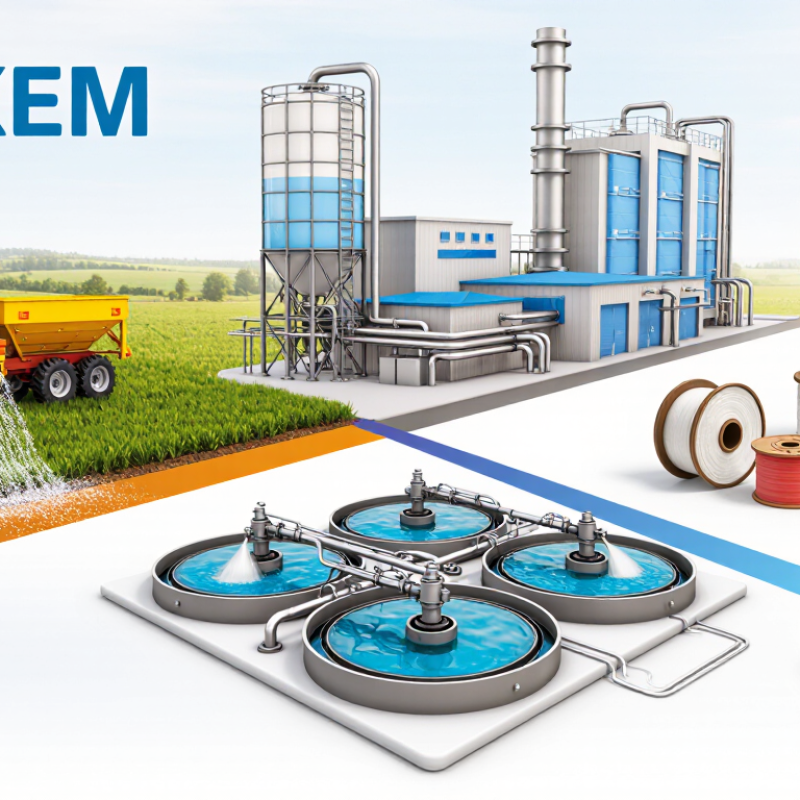
What Is Ammonia Used For?

What Ammonia Is and How It Is Produced

Ammonia is a compound of nitrogen and hydrogen, with the formula NH₃. At room temperature, it is a colorless gas with a sharp, distinctive smell. It dissolves readily in water, forming an alkaline solution. In nature, small amounts arise as nitrogen-containing material breaks down, but most commercial ammonia is made in industrial plants. The chemistry is familiar; the full process is less simple.

Most production combines nitrogen separated from air with hydrogen, often made from natural gas using steam. A catalyst, high temperatures, and high pressure help the gases react. The ammonia is then cooled, separated, and often stored as a liquid under pressure. Plants recycle unreacted gases, which improves efficiency. Still, this conventional route uses substantial energy and can release carbon dioxide. That detail matters. Some newer approaches use hydrogen made with renewable electricity, though their cost and availability vary. Actual results depend on the energy source and plant design, so “low-carbon” is not automatic. Even a clear chemical equation can hide a complicated supply chain.


How Ammonia Supports Agriculture

Ammonia supports agriculture mainly by supplying nitrogen, an essential nutrient for crop growth. Plants use nitrogen to build proteins and chlorophyll, which helps leaves capture sunlight. Farmers apply ammonia directly in carefully managed forms or use it to produce fertilizers such as urea and ammonium salts. In soil, nitrogen may become available as ammonium or nitrate, which roots can absorb. The exact form and timing matter.

A soil test can help estimate how much nitrogen a field needs. Too little may limit growth; too much can wash into waterways or escape into the air. That matters. Farmers often consider crop type, soil conditions, weather, and the stage of plant growth when planning applications. For example, applying nitrogen close to a crop’s period of rapid growth can improve its chances of uptake, though heavy rain may still move nutrients away from roots.

Ammonia requires careful handling. Anhydrous ammonia is pressurized and can cause severe injury, so its storage and application call for suitable equipment and trained operators. Fertilizer planning is not exact. Fields vary, and even a sound estimate may need adjustment as conditions change. Used thoughtfully, ammonia-based fertilizers help maintain yields while reducing avoidable nutrient losses.

How Ammonia Is Used in Industry and Household Products

What Is Ammonia Used For?

How Ammonia Is Used in Industry and Household Products

Ammonia is a nitrogen-containing chemical used widely in industry. Much of it goes into making nitrogen fertilizers, which help crops grow. It is also used to produce materials such as plastics and synthetic fibers. In some large refrigeration systems, ammonia circulates through pipes to absorb heat. These systems can cool warehouses and food-processing facilities. The details matter: industrial ammonia is handled with specialized equipment and training.

At home, ammonia usually appears diluted in certain glass and surface cleaners. It can help loosen grease and leave glass clear, though results depend on the surface and product instructions. A sharp smell may linger. That is easy to underestimate. Household products are not the same as concentrated industrial ammonia, and neither should be treated casually. Check the label, use good ventilation, and keep products away from children and pets.

Tips: Never mix ammonia cleaners with bleach or acidic cleaners; dangerous fumes can form. Wear gloves if the label recommends them, and open a window while cleaning. Use only the amount directed. If a surface becomes cloudy or damaged, stop and check the care instructions—cleaning advice is not always universal.

Ammonia’s Roles in Refrigeration and Energy Systems

What Is Ammonia Used For?

Ammonia’s Roles in Refrigeration and Energy Systems

In industrial refrigeration, ammonia circulates through pipes and evaporators, absorbing heat from cold rooms and food-processing spaces. It transfers heat efficiently, so systems can deliver strong cooling with relatively little refrigerant. Ammonia also has no ozone-depletion potential and very low direct climate impact when contained. But it is toxic, and leaks demand prompt, practiced responses. Safety is part of the system, not an extra feature.

Energy systems are exploring ammonia as a way to store and transport hydrogen. It can be liquefied more readily than hydrogen, which may simplify some storage and shipping steps. At its destination, ammonia can be used directly in certain energy applications or split into hydrogen and nitrogen. The process takes energy, and combustion can produce nitrogen oxides unless carefully controlled. The idea is useful, but not effortless. Real performance depends on the whole chain, from production to end use. That chain can be easy to overlook.

Tips: In refrigeration facilities, keep leak detectors, ventilation, and emergency procedures maintained. For energy projects, compare conversion losses and emissions across the full supply chain. Small details matter.

What Is Ammonia Used For? - Ammonia’s Roles in Refrigeration and Energy Systems
Application How Ammonia Is Used Relevant Facts Key Considerations
Industrial refrigeration Serves as the refrigerant in systems that remove heat from cold stores, food-processing facilities, ice plants, and other large cooling operations. Ammonia is designated R-717. Its normal boiling point is approximately −33.3°C at atmospheric pressure, making it suitable for low-temperature cooling. It is toxic at elevated concentrations and can be flammable under certain conditions, so systems require leak detection, ventilation, and trained operation.
Vapor-compression cooling Circulates through an evaporator, compressor, condenser, and expansion device. It absorbs heat as it evaporates and releases heat as it condenses. Ammonia has zero ozone-depletion potential and a global-warming potential of zero under the commonly used 100-year assessment convention. Its environmental profile does not remove the need for careful engineering, since a release can pose immediate health and safety hazards.
Absorption refrigeration Acts as the refrigerant in an ammonia–water absorption cycle. Water absorbs ammonia, and heat is then used to separate the ammonia so the cycle can continue. The cycle can use heat as its main energy input instead of relying solely on mechanical compression. System design must account for the different volatility of ammonia and water and manage pressure, heat input, and refrigerant containment.
Hydrogen storage and transport Can carry hydrogen in chemically bound form. Ammonia may be decomposed, or “cracked,” to produce hydrogen and nitrogen. Ammonia contains three hydrogen atoms per molecule and is liquefied by cooling or pressurization, which can support bulk storage and transport. Cracking requires energy and equipment, and the resulting hydrogen may need purification for its intended use.
Fuel for power and heat Can be burned directly in suitably designed equipment or converted to hydrogen for use in fuel cells and other hydrogen systems. Ammonia contains no carbon, so its use does not produce carbon dioxide from the fuel itself at the point of combustion. Combustion can generate nitrogen oxides, and potentially nitrous oxide, so emissions control and appropriate system design are important.
Energy-system emissions May be used as an energy carrier when produced, stored, and delivered for later conversion to heat, electricity, or hydrogen. Its overall climate impact depends on how the ammonia is made and on emissions from processing, transport, conversion, and use. Ammonia is not automatically low-carbon; the full production pathway and lifecycle emissions must be assessed.

Safety and Environmental Considerations in Ammonia Use

Ammonia supports fertilizer production, refrigeration, and several industrial processes, but its usefulness depends on careful handling. The gas has a sharp, irritating odor, yet smell is not a reliable warning system: people may become less sensitive to it, and dangerous concentrations can develop quickly. Small leaks matter. Use equipment designed for ammonia, maintain working detectors, and keep storage areas ventilated. Workers should know the site’s emergency plan and consult the safety data sheet before handling the chemical.

Contact with concentrated ammonia can injure the eyes, skin, and lungs. Wear suitable protective equipment, including eye protection and gloves selected for the task. Never mix ammonia with bleach or other cleaners; hazardous gases may form. If a release occurs, move away and alert trained responders rather than trying to investigate it yourself. A checklist helps, but it can still miss a blocked vent or a damaged connection. That deserves regular attention.

Ammonia can also harm nearby ecosystems. Spills or fertilizer runoff may raise ammonia levels in water, where fish and other aquatic life are vulnerable. Water carries it. Facilities can reduce risks through sound tanks, secondary containment, careful transfer procedures, and prompt repair of leaks. Fertilizer users can follow soil-test guidance and avoid applying nutrients before heavy rain. Monitoring air and water around a site gives people useful evidence, though measurements need context. Safety is ongoing work, not a label on a container.

Powder Coat Booths

For those larger-sized parts, or smaller quantity runs, we have 2 independent powder coat booths and ovens. The quality, durability and affordability of today’s powder coating finishes make this the process of choice for world-class companies.

Powder coating advantages over other forms of coating are many. Materials used in the Powder coating process can be metals and non-metals that come in a multitude of thicknesses, textures, colors, etc. Another of Powder coating’s biggest advantages over conventional coatings is its ability to create finishes in many different textures. Powder Coating Booths allow us the ability to apply these advantages to large products.

Wet Paint Line

Tri-State Fabricators runs a full-service conveyor line for painting. Wet painting can provide protection or decoration to many different part styles. From start to finish, every project is easier to undergo random and point-based inspection by our skilled painting team.

Advantages to our Wet Paint Line are these lines start with product prep and ends with a thorough inspection of a high quality finished product. Our ability to complete large and small projects with a superior finish and doing so in a timely and economical fashion. This passes along the savings in production to our customers. When powder coating ins not an option, our Wet Paint Line gets the job done right the first time.

Wet Paint Booths

When the parts get big and heavy we roll-out our custom paint racks and oversize booth. By utilizing our partnerships with all the major paint brands, we can match virtually any color with wet paint.

The advantages of having access to a Wet Paint Booth are many. Large projects of many different shapes can be loaded into the booth. The Wet Paint Booth offers an environment that is much more controlled than a typical parts painting operation.

Not only are they used because of their controlled environment, but they’re are also advantageous when it comes to applying paint to parts that are needed in industries that require specialty coatings such as medical, aerospace, etc.

Military CARC

Our military forces have some very high standards when it comes to the finish of their vehicles and equipment. From the first pre-treatment step to final coat, it takes a great deal of knowledge and experience to protect the men and women of our armed forces. They deserve only the best, and Tri-State Fabricators provides it.

All of our processes are closely monitored by our staff and management teams. Both of which are highly trained in the processes of metal fabrication and finishing. Tri-State Fabricators’ goal is to always fully satisfy each and every customer, including the military. We will always put a 110% into what we do.

Glass-Bead Blasting

Abrasive media blasting is an excellent way to remove old paint, rust, and increase the paint/powder adhesion. Glass beads produce a much smoother and brighter finish than angular abrasives; leaving the part clean yet without any dimensional change. Chemically inert and environmentally friendly, we can recycle our beads approximately 30 times; making them a more preferred method of metal cleaning or surface finishing.

Advantages to Glass Bead Blasting are many. Glass bead blast media is used when a project is needing rough surfaces need to become smooth for applications of coatings such as paint. It is typically used to clean paint and rust from a product surface without deforming the surface it is being used on. Overall, compared to many other blasting media, Glass Bead Blasting is a very economical choice and those savings are always passed on to our customers.

Part Washing

Tri-State Fabricators utilize a zinc phosphate wash to clean and etch the material to ensure the best paint adhesion possible. The unique design of our 3-stage wash system does the work like a 5-stage. From Cleaning and rinsing to conversion coating and post-treatment, Our Part Washing process is a complete service and works throughout the fabrication service and the finishing service.

Along with the previously mentioned benefits, Curing is a vital chemical reaction that leaves the product finish hard and relatively safe from mild abrasion and aggressive corrosion. This process can be done in more than one way; ambient air-dry or in curing ovens at temps that exceed 240°.

Burn-Off Oven

From fixing paint mistakes (someone else’s of course) to simply cleaning our paint line hooks, our burn-off oven is put to good use. After a quick burn-off, a little clean up, and a fresh coat of paint, your parts will look better than new.

Why does our Burn-Off Oven work so well? Because super heating the air around parts turns the materials into ashes. From paint and powder coatings to rubber and machining oils, high temps do the job without degrading the integrity of the part.

Masking

Masking is a vital part of producing high quality products. We have die-cut masking patterns to protect machined surfaces as well as a wide range of plugs and caps to protect threaded holes and bolts. We provide permanent and temporary masking.

Masking allows the selected sections of a product to be protected from a fabrication or finishing service. This can be with both chemicals when etching and tapes, paints when only finishing just a section of the product. Masking is great in aiding the customization process of a project.

Screen Printing

Screen printing is a photographic process that transfers artwork onto a porous nylon screen which allows colored ink to flow through the screen and be deposited on an aluminum or plastic component. We can generally have just about any design created onto a screen for your parts.

Some of the advantages of Screen Printing are, brand recognition for your business displaying on your products, assembly instructions, product warnings/hazards, etc. Tri-State Fabricators produces Screen Printing of the highest quality so you know it’s durable.

Metal Finishing

Metal Finishing is the art of treating the exterior portion of product, often metal but can also be made of other materials, so that the surface is clean and free of any debris. Then the process of applying coats or either paint of powder coat takes place. This coating process improves the quality of the product in both appearance and resistance to wear and corrosion.

Tri-State Fabricators, Inc., understands that a project typically isn’t complete until a high-quality finish has been added to your product. This is why our painting and powder coating teams continuously inspect the products throughout the Metal Finishing process.
