


What Is a Tokimec Equivalent Pump?

A Tokimec Equivalent Pump is not simply a pump with a similar shape. It is a replacement selected to match key hydraulic and mechanical requirements. Those may include displacement, rated pressure, rotation, shaft dimensions, mounting pattern, port positions, and control type. A mismatch can cause poor performance, extra heat, or difficult installation. Small details matter.

Hydraulic specialist Alex Morgan offers this editorially composed reminder: “Match the operating data, not just the nameplate.” This is an illustrative quotation, not a verified statement from a published source. The principle is still useful: compare the original pump’s model code and technical data with the proposed replacement before ordering. Check the machine’s service manual, too. A pump that fits the mounting face may still have different control behavior or port orientation.

This guide explains what “equivalent” means in practical terms, how to compare specifications, and which details deserve a closer look. It also notes an important limitation: product families and model codes can vary by region and application. When records are incomplete, confirm the match with the supplier or a qualified hydraulic technician. Guessing is risky. A careful comparison can help reduce downtime, but it cannot replace application-specific verification.
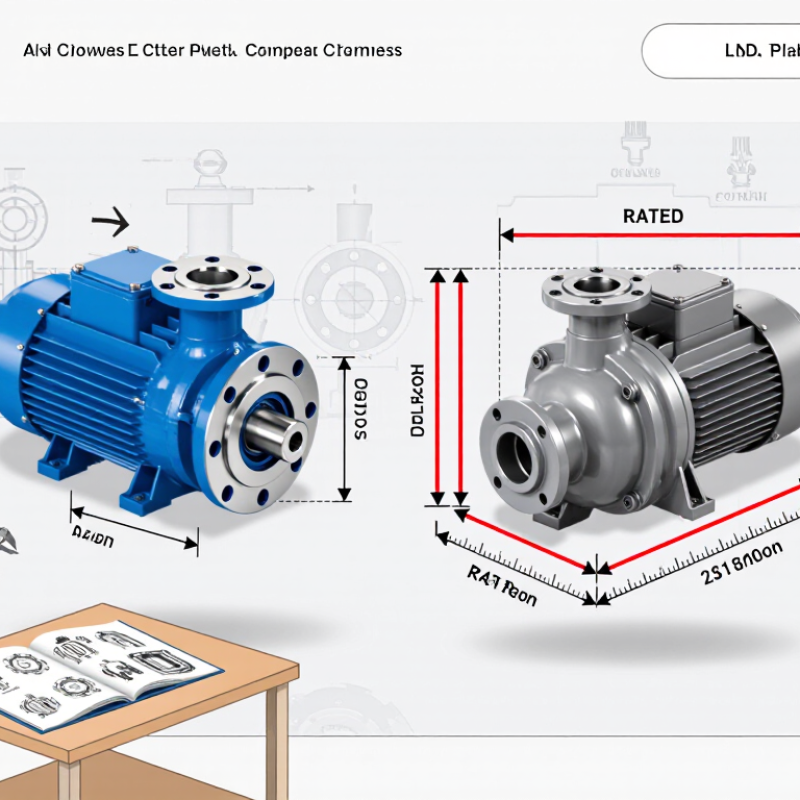
What Is a Tokimec Equivalent Pump?

What Does “Tokimec Equivalent Pump” Mean?

An equivalent pump is a replacement designed to perform the same job as an existing pump, while matching its key installation and operating requirements. “Equivalent” does not necessarily mean identical. The replacement may differ in internal design, materials, or control features, even when it fits the same system. Check displacement, rated pressure, operating speed, rotation direction, shaft dimensions, mounting points, and port locations. A few millimeters of mismatch can complicate installation.

Compatibility also depends on the machine around the pump. Confirm the hydraulic fluid, temperature range, control method, and expected duty cycle against the pump’s technical data. For example, a pump that bolts onto a frame may still deliver the wrong flow at the machine’s usual speed. Compare specifications, not just appearance or a seller’s brief description. In practice, “equivalent” can be a little misleading; it signals a possible match, not a guarantee. When details are missing, pause and verify them with a qualified hydraulic technician. That extra check may feel fussy, but it is cheaper than discovering a mismatch after installation.


How Are Compatible Pump Models Identified?

A compatible pump is identified by matching its operating details, not by appearance alone. Start with the original unit’s model code and technical sheet, if available. Record displacement, rated pressure, rotation direction, and operating speed. These figures define the pump’s basic working range. Close is not always close enough.

Then compare the physical interfaces. Check shaft diameter and keyway, mounting flange, port locations, and overall dimensions. A ruler or caliper can help confirm measurements when labels are worn. Also verify the control type and the fluid the system uses. Small differences can cause installation problems or poor performance. A pump may bolt in place yet still rotate the wrong way.

Finally, compare the candidate pump’s duty limits with the machine’s real conditions. Consider peak pressure, temperature, cycle time, and available motor power. Use verified drawings or manufacturer specifications, rather than relying on a similar product photo. If the original code is incomplete, have a hydraulic technician confirm the details before ordering. I would not assume compatibility from displacement alone; that shortcut is tempting, but it leaves important questions unanswered. A careful match may take longer. It can prevent costly rework.

Which Specifications Must Match?

A suitable equivalent pump must match the original unit’s operating requirements, not just its appearance. Start with displacement, usually stated in cubic centimetres per revolution, and compare the rated flow at the same shaft speed. Check continuous and peak pressure ratings separately; a short pressure spike is not the same as sustained duty. Small details matter.

Confirm the direction of rotation from the specified viewing position, then match the shaft dimensions, mounting pattern, and port locations. Even a small mismatch can mean altered pipework or a coupling that will not seat correctly. Fluid compatibility, viscosity range, temperature limits, and case-drain requirements also affect service life. Check control type and response if the pump is part of a variable-output system. Measure twice.

Use the equipment nameplate and reliable technical documentation to verify each value. If a specification is missing, do not assume the closest catalog option will work. Compare the pump under the machine’s actual speed, load, and fluid conditions; sometimes the best match still needs a careful engineering review.

Where Are Tokimec-Equivalent Pumps Used?

Where Are Equivalent Pumps Used?

Equivalent hydraulic pumps are used in machine tools, injection molding equipment, presses, and mobile machinery. They supply pressurized oil to move cylinders or drive hydraulic motors. In a workshop, one may power a clamping circuit while another runs a lift. Compact power units also use them where steady flow and limited installation space matter. The exact application depends on the pump design and system requirements.

Marine equipment and industrial production lines may use equivalent pumps too. Their duty can vary: some run intermittently, while others operate for long shifts. Match the replacement to displacement, rated pressure, shaft dimensions, rotation direction, and port layout. Check the control type as well. A pump can fit physically yet perform poorly if its flow or pressure does not suit the circuit. Small differences matter.

Tips: Compare the pump nameplate and technical drawings before ordering. Confirm oil compatibility and operating temperature with a qualified technician. After installation, check for leaks, unusual noise, and unstable pressure under normal load. A quick fit is not proof of a correct match; that distinction is easy to overlook.

How to Verify a Replacement Pump Before Installation

An equivalent hydraulic pump must match the system’s needs, not just its appearance. Before installation, identify the pump type, displacement, rated speed, and required flow. Check both continuous and peak pressure ratings. Numbers matter. A pump that fits the mounting plate may still deliver too much flow or lack pressure capacity.

Compare the old unit’s nameplate and drawings with the replacement’s technical data sheet. Check rotation direction, shaft dimensions, mounting pattern, port locations, and connection sizes. Confirm that seals and materials suit the hydraulic fluid and operating temperature. Check the machine’s circuit requirements, too; controls or relief settings may need adjustment. Do not guess. If specifications are missing, ask a qualified supplier or service technician to confirm them. Before startup, inspect the reservoir and lines for contamination, then follow the pump maker’s priming and startup instructions. A paper match is useful, but it cannot reveal every worn fitting or undocumented system change. Verify the details on the actual machine.

How to Verify an Equivalent Hydraulic Pump Before Installation

Verification dimension What to check How to verify Acceptance criterion
Pump type and function Confirm the replacement uses the same pump principle and performs the same circuit function, such as supplying a hydraulic system or serving a dedicated control circuit. Compare the equipment documentation, circuit diagram, and existing pump identification plate. The replacement is suitable for the same duty and circuit arrangement.
Displacement and flow Check displacement in cm³/rev and required flow in L/min. For a fixed-displacement pump, theoretical flow is displacement × rotational speed; actual flow is lower because of internal leakage and operating conditions. Compare the rated displacement and the system’s required flow at the specified operating speed. Confirm the manufacturer’s performance data for the intended pressure and fluid. Flow capacity meets the machine requirement without exceeding the drive or system limits.
Pressure rating Check continuous, intermittent, and peak pressure ratings separately; these ratings are not interchangeable. Compare the pump’s published ratings with the system operating pressure and pressure-relief setting. The pump is rated for the system’s intended duty and pressure peaks.
Rotational speed and direction Verify the permitted speed range and required direction of rotation, viewed from the specified shaft end. Check the drive motor or engine speed, the pump documentation, and any rotation marking on the unit. The drive speed and rotation direction are within the pump’s limits and match the circuit requirement.
Shaft and coupling Compare shaft diameter, length, profile, key or spline details, and coupling engagement. Measure the existing drive interface and check the replacement drawing. Do not force a coupling onto a mismatched shaft. The shaft and coupling mate correctly and transmit the required torque without binding.
Mounting and envelope Check mounting face, bolt pattern, pilot diameter, overall dimensions, and clearance around the installed pump. Compare dimensional drawings and measure the mounting area before installation. The pump mounts securely, aligns with the drive, and clears nearby components.
Port type, size, and position Confirm inlet and outlet port locations, thread or flange standard, nominal size, and connection orientation. Check the port drawing and identify the actual connection standard; similar-looking threads may not seal correctly together. Connections match the hoses or manifolds and can be installed without cross-threading or harmful line strain.
Hydraulic fluid and temperature Check fluid type, viscosity range, cleanliness requirements, and permitted operating temperature. Compare the pump documentation with the fluid specification and expected cold-start and operating temperatures. The fluid and operating conditions fall within the pump’s published limits.
Controls and auxiliary features Check whether the pump is fixed or variable displacement and whether it includes compensators, control ports, sensors, or other required features. Compare the control schematic and connection details with the machine circuit. Control behavior and auxiliary connections support the original system function.
Pre-start and commissioning checks Check cleanliness, correct fluid level, secure fittings, correct rotation, and proper pump priming where required by the manufacturer. Follow the pump and machine service instructions. Start at low load and monitor pressure, flow, temperature, noise, and leakage. Measured operation is stable and within the equipment’s specified limits before returning the machine to service.

Note: A replacement is not verified by appearance or mounting fit alone. Confirm all ratings and dimensions against the original equipment documentation and the machine’s operating requirements before installation.

Powder Coat Booths

For those larger-sized parts, or smaller quantity runs, we have 2 independent powder coat booths and ovens. The quality, durability and affordability of today’s powder coating finishes make this the process of choice for world-class companies.

Powder coating advantages over other forms of coating are many. Materials used in the Powder coating process can be metals and non-metals that come in a multitude of thicknesses, textures, colors, etc. Another of Powder coating’s biggest advantages over conventional coatings is its ability to create finishes in many different textures. Powder Coating Booths allow us the ability to apply these advantages to large products.

Wet Paint Line

Tri-State Fabricators runs a full-service conveyor line for painting. Wet painting can provide protection or decoration to many different part styles. From start to finish, every project is easier to undergo random and point-based inspection by our skilled painting team.

Advantages to our Wet Paint Line are these lines start with product prep and ends with a thorough inspection of a high quality finished product. Our ability to complete large and small projects with a superior finish and doing so in a timely and economical fashion. This passes along the savings in production to our customers. When powder coating ins not an option, our Wet Paint Line gets the job done right the first time.

Wet Paint Booths

When the parts get big and heavy we roll-out our custom paint racks and oversize booth. By utilizing our partnerships with all the major paint brands, we can match virtually any color with wet paint.

The advantages of having access to a Wet Paint Booth are many. Large projects of many different shapes can be loaded into the booth. The Wet Paint Booth offers an environment that is much more controlled than a typical parts painting operation.

Not only are they used because of their controlled environment, but they’re are also advantageous when it comes to applying paint to parts that are needed in industries that require specialty coatings such as medical, aerospace, etc.

Military CARC

Our military forces have some very high standards when it comes to the finish of their vehicles and equipment. From the first pre-treatment step to final coat, it takes a great deal of knowledge and experience to protect the men and women of our armed forces. They deserve only the best, and Tri-State Fabricators provides it.

All of our processes are closely monitored by our staff and management teams. Both of which are highly trained in the processes of metal fabrication and finishing. Tri-State Fabricators’ goal is to always fully satisfy each and every customer, including the military. We will always put a 110% into what we do.

Glass-Bead Blasting

Abrasive media blasting is an excellent way to remove old paint, rust, and increase the paint/powder adhesion. Glass beads produce a much smoother and brighter finish than angular abrasives; leaving the part clean yet without any dimensional change. Chemically inert and environmentally friendly, we can recycle our beads approximately 30 times; making them a more preferred method of metal cleaning or surface finishing.

Advantages to Glass Bead Blasting are many. Glass bead blast media is used when a project is needing rough surfaces need to become smooth for applications of coatings such as paint. It is typically used to clean paint and rust from a product surface without deforming the surface it is being used on. Overall, compared to many other blasting media, Glass Bead Blasting is a very economical choice and those savings are always passed on to our customers.

Part Washing

Tri-State Fabricators utilize a zinc phosphate wash to clean and etch the material to ensure the best paint adhesion possible. The unique design of our 3-stage wash system does the work like a 5-stage. From Cleaning and rinsing to conversion coating and post-treatment, Our Part Washing process is a complete service and works throughout the fabrication service and the finishing service.

Along with the previously mentioned benefits, Curing is a vital chemical reaction that leaves the product finish hard and relatively safe from mild abrasion and aggressive corrosion. This process can be done in more than one way; ambient air-dry or in curing ovens at temps that exceed 240°.

Burn-Off Oven

From fixing paint mistakes (someone else’s of course) to simply cleaning our paint line hooks, our burn-off oven is put to good use. After a quick burn-off, a little clean up, and a fresh coat of paint, your parts will look better than new.

Why does our Burn-Off Oven work so well? Because super heating the air around parts turns the materials into ashes. From paint and powder coatings to rubber and machining oils, high temps do the job without degrading the integrity of the part.

Masking

Masking is a vital part of producing high quality products. We have die-cut masking patterns to protect machined surfaces as well as a wide range of plugs and caps to protect threaded holes and bolts. We provide permanent and temporary masking.

Masking allows the selected sections of a product to be protected from a fabrication or finishing service. This can be with both chemicals when etching and tapes, paints when only finishing just a section of the product. Masking is great in aiding the customization process of a project.

Screen Printing

Screen printing is a photographic process that transfers artwork onto a porous nylon screen which allows colored ink to flow through the screen and be deposited on an aluminum or plastic component. We can generally have just about any design created onto a screen for your parts.

Some of the advantages of Screen Printing are, brand recognition for your business displaying on your products, assembly instructions, product warnings/hazards, etc. Tri-State Fabricators produces Screen Printing of the highest quality so you know it’s durable.

Metal Finishing

Metal Finishing is the art of treating the exterior portion of product, often metal but can also be made of other materials, so that the surface is clean and free of any debris. Then the process of applying coats or either paint of powder coat takes place. This coating process improves the quality of the product in both appearance and resistance to wear and corrosion.

Tri-State Fabricators, Inc., understands that a project typically isn’t complete until a high-quality finish has been added to your product. This is why our painting and powder coating teams continuously inspect the products throughout the Metal Finishing process.
