What Is a Refractory Castable Mixer Machine?
A Refractory Castable Mixer Machine blends refractory cement, graded aggregates, and other dry ingredients with water. Its purpose is to produce a consistent castable that can be placed around furnace linings, kiln walls, or industrial equipment. The machine may use a pan, planetary, or other forced-action mixing system. Designs vary, so the right choice depends on batch size, material behavior, and site conditions.
Good mixing is more than making the material look uniform. Operators need to follow the castable supplier’s instructions, add water in controlled amounts, and allow enough mixing time. Too much water can affect strength and drying behavior. Poorly dispersed powder may leave dry pockets or uneven patches. Small details matter. A clean mixing pan matters, too.
In practice, the mixer is only one part of the process. A sound recipe, accurate weighing, and trained operation all influence the result. Even a capable machine cannot repair poor material storage or incorrect proportions. That point is easy to overlook. Before purchasing, compare capacity, power requirements, discharge method, cleaning access, and spare-parts support. Ask for performance data using materials similar to those used at your site, since published capacity alone may not predict real output. This guide explains how the equipment works, what features deserve attention, and where careful operation makes a difference. Some choices still depend on actual trials, not specifications alone.
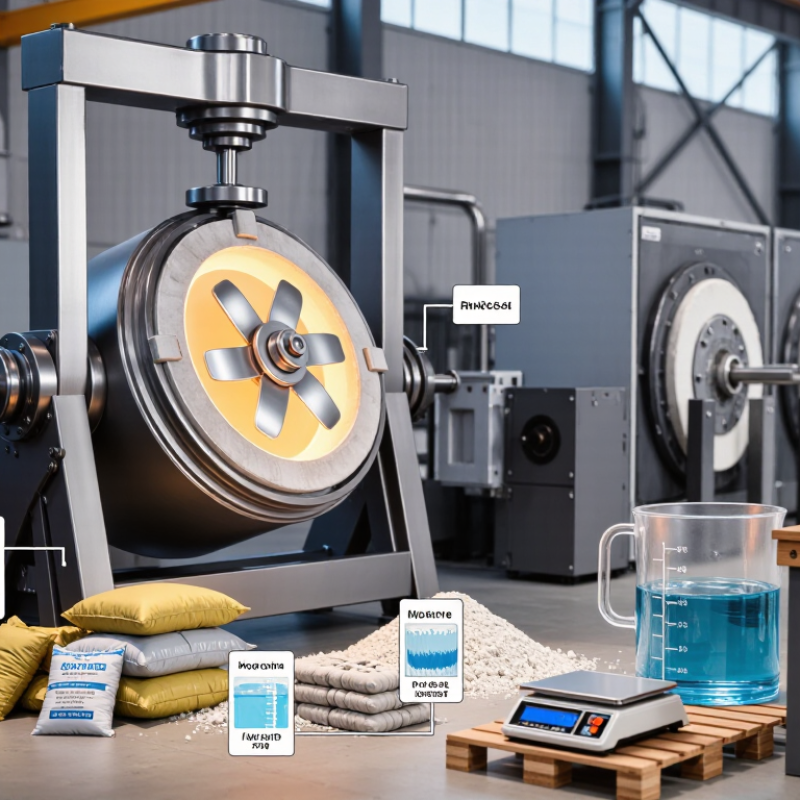
What a Refractory Castable Mixer Does in Monolithic Refractory Production
What Is a Refractory Castable Mixer Machine?
In monolithic refractory production, a castable mixer combines graded aggregates, fine powders, and other dry ingredients into a consistent batch. After dry blending, measured water or a specified liquid binder is added. The machine’s mixing action helps distribute these materials throughout the batch, so installers can place the castable with more predictable flow and workability.
That sounds simple. It isn’t. Too little mixing can leave dry pockets or uneven binder distribution; excess water can weaken the installed lining. Operators therefore follow the castable supplier’s mixing instructions, control liquid addition, and watch the batch as it changes from loose powder to a cohesive mix. The right sequence and mixing time depend on the formulation and equipment.
A mixer also supports repeatable production between batches, which matters when lining furnaces, kiln zones, or other hot-face surfaces. Check that the drum or mixing pan is clean before loading; old material can contaminate a fresh batch. Inspect mixing blades for wear, too. A worn blade may still turn, but it can leave unmixed material near the edges. Even careful operation cannot make every batch perfect, so consistency should be checked before placement.
What Is a Refractory Castable Mixer Machine? - What a Refractory Castable Mixer Does in Monolithic Refractory Production
| Production Stage | Materials or Input | Mixer Machine Function | Typical Operating Reference | Quality Check |
| Batch preparation | Refractory aggregates, fine powders, cement or other binders, and permitted additives | Receives measured ingredients in a defined recipe and prepares them for mixing. | Ingredient proportions are set by the castable formulation; there is no single recipe suitable for every product. | Verify material identity, batch weights, and ingredient condition before charging. |
| Dry blending | Dry aggregates, fines, binders, and dry additives | Forced-action mixing circulates material through the mixing zone to distribute particle sizes and dry ingredients. | About 1–3 minutes is a commonly used starting range; actual time depends on the mixer, batch, and recipe. | Check for visible streaks, pockets of unmixed powder, or separation. |
| Liquid addition | Mixing water or another liquid specified by the product formulation | Introduces liquid in a controlled manner while the mixing action helps disperse it through the dry blend. | Addition rate and quantity are formulation-specific. Follow the product instructions rather than using a universal water percentage. | Measure the liquid accurately and avoid unapproved extra additions. |
| Wet mixing | Dry-blended materials combined with the specified liquid | Continues mixing until the castable reaches a consistent, workable condition for placement. | About 2–5 minutes after liquid addition is an indicative starting range, not a universal setting. | Assess consistency and uniformity using the product’s specified placement or workability checks. |
| Discharge and placement | Freshly mixed monolithic refractory castable | Discharges the batch for immediate transport and installation by the specified placing method. | Discharge promptly and observe the product’s stated working time and installation instructions. | Look for a uniform batch without obvious dry pockets, excess liquid, or segregation. |
| Batch and equipment control | Recipe records, mixer condition, and cleaned mixing surfaces | Supports repeatable batches and helps prevent residues from affecting later mixes. | Record batch quantities and mixing times; clean the machine between products or as required by the operating procedure. | Inspect mixing elements and the vessel for wear, buildup, or contamination. |
| Note: Time ranges are general planning references only. Required mixing time and workability depend on the castable formulation, batch size, mixer design, material temperature, and installation method. Always follow the product data and equipment operating instructions. |
Main Components: Mixing Pan, Shaft, Blades, and Drive System
A refractory castable mixer machine combines dry refractory materials and measured liquid into a consistent working mix. Its mixing pan contains the batch, while its shape and internal clearances help material circulate rather than collect in corners. After unloading, check for stubborn residue around the pan edge. Small details matter.
The shaft transfers torque from the drive system to the blades. Blade shape and position determine how the mix is lifted, folded, and moved across the pan. A steady, even flow is useful; material that rides around without turning may signal poor loading, worn blades, or an unsuitable mixing speed. Not always obvious.
The drive system typically includes a motor and gearbox, with couplings or belts transmitting power to the shaft. Operators should listen for unusual noise and watch for vibration, especially under a full load. Excessive wear can change mixing action before a part visibly fails. The pan, shaft, blades, and drive must work together. Even so, blade wear and material recipes vary, so trial batches and routine inspection are practical ways to confirm performance.
Pan, Planetary, and Twin-Shaft Mixers for Different Castable Formulations
A refractory castable mixer machine combines refractory aggregate, fine powders, binder, and measured water into a workable mass. The right mixer depends on the formulation, batch size, and required consistency. Small batches matter. A few extra seconds of mixing can change how evenly the water coats the grains, but excessive mixing may affect some sensitive blends.
A pan mixer uses a rotating pan and mixing tools to turn the material through the batch. It can suit many conventional castables and gives operators a clear view of mixing and discharge.
Planetary mixers move their tools along more than one path, helping reach material near the vessel walls and floor. This action can be useful for dense or cohesive formulations, though the recipe and loading still matter.
Twin-shaft mixers use paired shafts to move larger volumes quickly and are often considered for production lines. Their vigorous action may not suit every mix, especially when a formulation needs gentle handling.
Watch the discharge.
Look for dry pockets, uneven color, or material left on the sides. A tidy laboratory result can still mislead; plant-scale trials may reveal different mixing behavior. Batch records, moisture checks, and consistent charging order help make comparisons more reliable.
Batch Workflow: Dry Blend, Add Water, and Mix to ASTM C860 Consistency
What Is a Refractory Castable Mixer Machine?
A refractory castable mixer machine blends dry refractory ingredients and water into a workable mass for installation. Its job is not simply to make the mix look smooth. It helps distribute cement, fine powders, and aggregates evenly before crews place the material. Batch size, mixing action, and timing can all affect the result.
A reliable batch workflow starts with a clean, dry mixing pan. Add the measured dry castable and blend it until the color and texture appear uniform. Keep dust control in place. Then introduce the specified water gradually while the mixer runs, following the material supplier’s instructions. Avoid adding water by eye. Too much can weaken the castable, while too little may leave dry pockets around coarse grains. Mix for the recommended time, then check the batch promptly.
Consistency should be verified using the applicable ASTM C860 procedure, not judged by appearance alone. The test helps crews assess whether the prepared castable meets the required consistency for placement. Keep water measurements, batch times, and test observations together; these details make adjustments more dependable. A practical note: mixer wear, material temperature, and operator habits can still influence results. Machines do not remove every variable. Rechecking the process is worthwhile.
Quality Checks: ASTM C860 Consistency Testing and ASTM C862 Specimen Casting
What Is a Refractory Castable Mixer Machine?
Quality Checks: ASTM C860 Consistency Testing and ASTM C862 Specimen Casting
A refractory castable mixer machine helps produce a uniform batch, but the mixer alone cannot confirm quality. ASTM C860 provides a ball-in-hand method for assessing castable consistency. After mixing, a technician forms and handles a sample, checking whether it holds together and feels workable. The sample should not crumble like dry sand or feel overly wet and sticky. Small differences matter.
Keep water additions measured and record the batch time. Add water gradually, following the material instructions, and avoid correcting a stiff mix with an unrecorded splash. That shortcut can change the result. It happens.
ASTM C862 covers preparing cast specimens for testing. Use clean, correctly sized molds, fill them consistently, and remove trapped air using the method specified for the work. Label each specimen with the batch, casting time, and curing details. A poorly filled corner or uneven consolidation can affect later test results. Check the applicable ASTM editions and project requirements before testing; procedures and acceptance criteria may differ. Even careful checks have limits, so record observations rather than treating one test as proof of every batch’s performance.





