


A Portable Multi Gas Detector is a small instrument with a serious responsibility. It can monitor oxygen, carbon monoxide, hydrogen sulfide, methane, and other hazards in changing work environments. A worker may clip it to a vest, enter a tank, and watch the display change within seconds.
Market evidence shows why this technology matters. Grand View Research estimated the global gas detection equipment market at approximately USD 5.3 billion in 2023. Its report also projects continued growth through 2030, driven by industrial safety requirements and connected monitoring. MarketsandMarkets separately projects strong expansion in portable gas detection, although published estimates differ by scope and methodology. That difference deserves attention.
Gas detection specialist Tony O’Brien has stated, “A gas detector is only as reliable as its maintenance, calibration, and correct use.” The principle is simple. The practice is harder.
A reliable Portable Multi Gas Detector requires sensor selection, bump testing, calibration, alarm verification, and documented training. NIOSH guidance repeatedly stresses atmospheric testing before and during confined-space work. The device should not be treated as a magic shield. A blocked sensor, depleted battery, or ignored alarm can create a dangerous illusion of control.
This guide examines sensor types, alarm settings, accuracy, certification, battery life, and field routines. It also considers uncomfortable questions. Is the instrument suitable for the actual gases? Are workers trained to respond immediately? Are records complete?
Small details matter. A clean inlet matters. So does a visible alarm in bright sunlight.
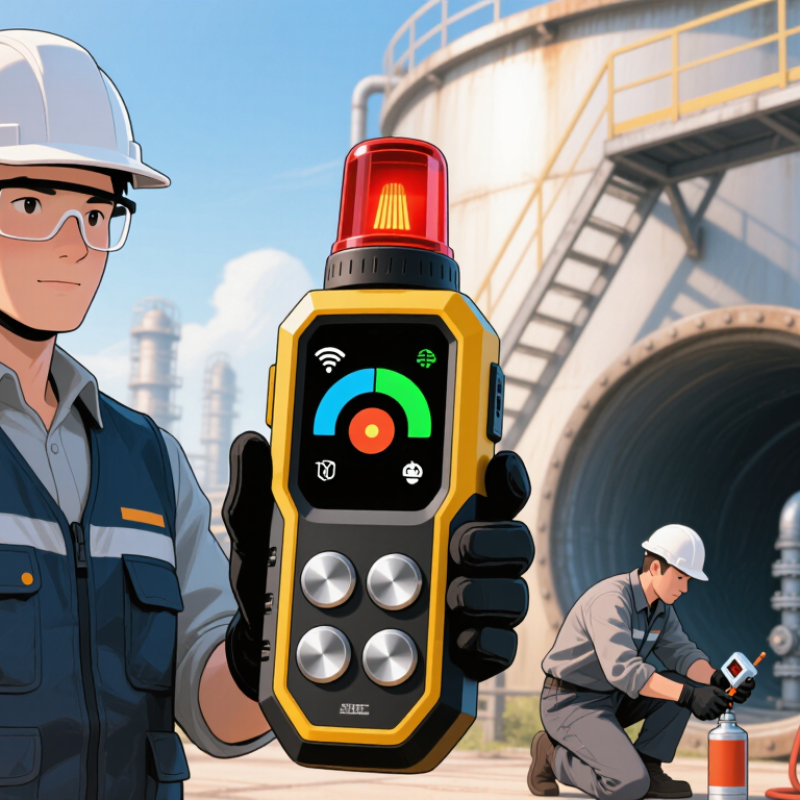
What Is a Portable Multi Gas Detector?
A Portable Multi-Gas Detector is a compact instrument that measures several airborne gases simultaneously. Its core purpose is simple: warn people before invisible hazards reach dangerous concentrations. Depending on its sensor configuration, it may monitor oxygen, combustible gases, and toxic gases such as carbon monoxide or hydrogen sulfide. The device draws air through sensors and displays readings on a screen. Audible, visual, and vibrating alarms can alert users quickly. This matters in tanks, utility areas, laboratories, and other spaces where air conditions can change rapidly.
Detection is not the same as protection. A detector supports decisions, but it does not replace ventilation, training, or an approved entry procedure. In practical use, workers should check the display, alarm status, battery, and sensor condition before entering a monitored area. Calibration and bump testing are also important, although they are sometimes treated as routine paperwork. That is a mistake. Sensors can age, readings can drift, and a clean screen does not prove safe air. I would question any reading that changes suddenly without a clear environmental reason.
Tips: Wear the detector near the breathing zone, not inside a pocket or bag. Keep sensor openings clear. Follow the manufacturer’s instructions for calibration intervals and alarm limits. Record unusual readings and leave the area when alarms persist.
| Data Dimension | Definition or Typical Data | Core Purpose and Practical Meaning |
|---|---|---|
| Definition | A battery-powered, portable instrument that measures two or more atmospheric hazards at the same time. | It provides real-time information about oxygen deficiency, toxic gases, combustible gases, or a combination of these hazards. |
| Most Common Configuration | Four-gas configuration: oxygen (O₂), combustible gas expressed as %LEL, hydrogen sulfide (H₂S), and carbon monoxide (CO). | This combination is widely used for general industrial work, confined-space entry, utilities, wastewater operations, and emergency response. |
| Oxygen Measurement | Usually displayed as volume percent (% vol). Normal atmospheric oxygen is approximately 20.9% by volume. | The measurement helps identify oxygen-deficient or oxygen-enriched atmospheres that may create breathing, combustion, or fire risks. |
| Combustible-Gas Measurement | Usually shown as a percentage of the Lower Explosive Limit (%LEL). The LEL is the lowest concentration of a flammable gas or vapor in air that can ignite. | The detector warns users before a combustible atmosphere reaches a potentially ignitable concentration. |
| Toxic-Gas Measurement | Common toxic-gas channels include H₂S and CO, normally displayed in parts per million (ppm). | Continuous monitoring helps identify invisible and potentially harmful gas exposure that cannot be reliably detected by human senses. |
| Sensor Technologies | Typical technologies include electrochemical sensors for oxygen and toxic gases, and catalytic-bead or infrared sensors for combustible gases. | The sensor type determines the gases that can be measured, the operating range, response behavior, and maintenance requirements. |
| Alarm Types | Common alarms are audible, visual, and vibrating alerts. Instruments may also display a high, low, short-term exposure, time-weighted average, or over-range alarm. | Multiple alarm methods help attract the user's attention in noisy, dark, or high-risk working environments. |
| Alarm Settings | Alarm limits are configurable and depend on the gas, applicable regulations, site procedures, and occupational exposure limits. | There is no single universal alarm value for every workplace; settings must be verified by a competent safety professional. |
| Sampling Method | Diffusion instruments sample gas from the surrounding atmosphere, while pumped instruments draw samples through a probe or tubing. | Diffusion is suitable for personal monitoring; pumped sampling is useful for remote, enclosed, or difficult-to-access areas. |
| Response Time | Response time varies by sensor type, gas concentration, airflow, sampling system, and tubing length. | Users should allow sufficient time for the sample to reach the sensors and for the readings to stabilize before making safety decisions. |
| Portability | The detector is designed to be carried on a belt, harness, or clothing using a clip or similar attachment. | Personal placement keeps the sensors close to the worker's breathing zone and supports continuous monitoring during movement. |
| Battery Operation | Rechargeable or replaceable batteries power the sensors, display, alarms, and data functions. | Battery status and expected operating time should be checked before each shift or entry into a hazardous area. |
| Pre-Use Testing | A bump test applies a known test gas briefly to confirm that the sensors and alarms respond correctly. | A successful pre-use test helps verify operational readiness; calibration is still required according to the manufacturer's instructions and site procedures. |
| Calibration | Calibration compares the instrument with a certified reference gas and adjusts the readings when necessary. | Regular calibration helps maintain measurement accuracy and should be performed at the required interval or after conditions that may affect sensor performance. |
| Typical Applications | Confined-space entry, tank and vessel inspection, industrial maintenance, wastewater treatment, utility work, mining, and emergency response. | The detector supports hazard identification, worker warning, entry decisions, evacuation, and incident investigation. |
| Primary Safety Limitation | A portable multi-gas detector is a monitoring and warning device, not a substitute for ventilation, isolation, respiratory protection, or a formal risk assessment. | Safe work requires an integrated control program that includes suitable equipment, trained personnel, atmospheric testing, and emergency procedures. |

A portable multi gas detector combines several sensors inside a compact, battery-powered instrument. Common components include electrochemical sensors, catalytic bead sensors, infrared sensors, a microprocessor, alarm indicators, and a sampling pump. Each sensor responds to a different gas property. Electrochemical cells measure toxic gases such as carbon monoxide or hydrogen sulfide. Catalytic bead sensors detect combustible gases. Infrared technology can measure gases that absorb specific infrared wavelengths.
During use, the device draws air through a filter or receives it by diffusion. The sensors convert gas exposure into electrical signals. The processor compares those signals with programmed alarm limits. It then activates sound, lights, vibration, or a display warning. NIOSH’s Pocket Guide provides exposure information for many workplace gases, while the ILO’s 2023 estimates report nearly three million work-related deaths each year. Gas monitoring is only one part of prevention, but it provides a critical early warning.
Tips: Bump-test the detector before each shift. Calibrate it according to the manufacturer’s schedule and site conditions. Keep the inlet clean and check battery status. A zero reading feels reassuring, but it is not proof of safe air. Sensor drift, blocked filters, low oxygen, and poor placement can affect results. Operators should sample near breathing zones, low areas, and suspected leak points when conditions require it. Field judgment still matters.
What Is a Portable Multi Gas Detector?
A portable multi-gas detector is a small safety instrument worn on a belt or carried near the breathing zone. It checks several atmospheric hazards while workers move through tunnels, tanks, utility rooms, or industrial sites. Readings appear within seconds, and audible, visual, or vibration alarms warn users when conditions become dangerous. However, no detector replaces proper ventilation, training, or an entry procedure.
Gas Types Commonly Measured by Portable Multi-Gas Detectors
Oxygen is commonly measured because low levels can impair judgment and breathing. Enriched oxygen can also increase fire risk. Carbon monoxide may build up near engines, heaters, and incomplete combustion. Hydrogen sulfide is especially concerning around wastewater, sewers, and organic decomposition. It can smell like rotten eggs at low levels, but smell is unreliable. Many detectors also monitor combustible gases, often reported as a percentage of the lower explosive limit. Some models measure gases such as sulfur dioxide, chlorine, ammonia, or volatile organic compounds. The correct sensor depends on the site. Guessing is a poor method.
Tips: Check calibration before use and perform a bump test when required by site procedures. Keep the sensor inlet clear of dust, water, and clothing. Read the oxygen value before interpreting combustible-gas results. Record alarms and environmental conditions, including temperature and humidity. Sensors can drift, and users sometimes overlook this. Replace them according to verified maintenance data, not appearance alone.
A portable multi gas detector measures several atmospheric hazards at once. Common channels include oxygen, combustible gases, carbon monoxide, and hydrogen sulfide. Before entering a work area, inspect the case, sensor openings, battery, and calibration date. Perform a fresh-air zero and a bump test with certified test gas.
A silent test is not enough. The alarm must respond visibly, audibly, and through vibration.
Wear the detector near the breathing zone, not inside a pocket or tool bag. Sample high, middle, and low areas when possible, because gases behave differently. OSHA identifies oxygen below 19.5% or above 23.5% as hazardous in confined-space evaluations. It also treats flammable atmospheres at 10% of the lower explosive limit as hazardous. These figures require immediate action, not casual observation. Workers should leave when an alarm activates and follow the site emergency procedure.
Read oxygen as a percentage, combustibles as %LEL, and toxic gases as parts per million.
The NIOSH Pocket Guide lists 100 ppm hydrogen sulfide and 1,200 ppm carbon monoxide as IDLH concentrations. Alarm settings should follow risk assessments, exposure limits, and site procedures. A normal screen does not prove the atmosphere is safe. Sensors can drift, respond slowly, or experience cross-sensitivity. I have seen teams trust one stable reading too quickly. Recheck after ventilation, process changes, or any unusual odor. The instrument supports judgment; it does not replace it.
What Is a Portable Multi Gas Detector?
Applications, Maintenance, Calibration, and Safety Considerations
A portable multi gas detector measures oxygen, flammable gases, and toxic gases in changing work areas. It supports confined-space entry, wastewater treatment, tank cleaning, and emergency response. OSHA’s permit-required confined-space standard requires atmospheric testing before entry and continuous monitoring when conditions may change. The device should be worn near the breathing zone, not left on a toolbox. Position matters.
Maintenance starts with a daily visual inspection. Check the casing, filters, alarm openings, battery, and sensor response. A bump test confirms that alarms react to known gas exposure. It does not prove accurate measurement. Calibration must follow the manufacturer’s schedule and the sensor’s service conditions. Heavy humidity, solvents, dust, or repeated alarms can shorten sensor life. Record every test, failed response, repair, and calibration result. Small records protect big decisions.
Safety depends on people, not only instruments. The International Labour Organization reported 2.93 million work-related deaths globally in 2023, showing why hazard controls need discipline. Never silence an alarm without identifying the hazard. Leave the area when readings become unsafe, and follow the site emergency plan. A detector may display normal oxygen while toxic exposure develops elsewhere. That limitation deserves attention. Workers should understand alarm levels, response routes, and sensor cross-sensitivity. Training is often rushed, and that is a weakness worth correcting.


For those larger-sized parts, or smaller quantity runs, we have 2 independent powder coat booths and ovens. The quality, durability and affordability of today’s powder coating finishes make this the process of choice for world-class companies.
Powder coating advantages over other forms of coating are many. Materials used in the Powder coating process can be metals and non-metals that come in a multitude of thicknesses, textures, colors, etc. Another of Powder coating’s biggest advantages over conventional coatings is its ability to create finishes in many different textures. Powder Coating Booths allow us the ability to apply these advantages to large products.
Tri-State Fabricators runs a full-service conveyor line for painting. Wet painting can provide protection or decoration to many different part styles. From start to finish, every project is easier to undergo random and point-based inspection by our skilled painting team.
Advantages to our Wet Paint Line are these lines start with product prep and ends with a thorough inspection of a high quality finished product. Our ability to complete large and small projects with a superior finish and doing so in a timely and economical fashion. This passes along the savings in production to our customers. When powder coating ins not an option, our Wet Paint Line gets the job done right the first time.
When the parts get big and heavy we roll-out our custom paint racks and oversize booth. By utilizing our partnerships with all the major paint brands, we can match virtually any color with wet paint.
The advantages of having access to a Wet Paint Booth are many. Large projects of many different shapes can be loaded into the booth. The Wet Paint Booth offers an environment that is much more controlled than a typical parts painting operation.
Not only are they used because of their controlled environment, but they’re are also advantageous when it comes to applying paint to parts that are needed in industries that require specialty coatings such as medical, aerospace, etc.
Our military forces have some very high standards when it comes to the finish of their vehicles and equipment. From the first pre-treatment step to final coat, it takes a great deal of knowledge and experience to protect the men and women of our armed forces. They deserve only the best, and Tri-State Fabricators provides it.
All of our processes are closely monitored by our staff and management teams. Both of which are highly trained in the processes of metal fabrication and finishing. Tri-State Fabricators’ goal is to always fully satisfy each and every customer, including the military. We will always put a 110% into what we do.
Abrasive media blasting is an excellent way to remove old paint, rust, and increase the paint/powder adhesion. Glass beads produce a much smoother and brighter finish than angular abrasives; leaving the part clean yet without any dimensional change. Chemically inert and environmentally friendly, we can recycle our beads approximately 30 times; making them a more preferred method of metal cleaning or surface finishing.
Advantages to Glass Bead Blasting are many. Glass bead blast media is used when a project is needing rough surfaces need to become smooth for applications of coatings such as paint. It is typically used to clean paint and rust from a product surface without deforming the surface it is being used on. Overall, compared to many other blasting media, Glass Bead Blasting is a very economical choice and those savings are always passed on to our customers.
Tri-State Fabricators utilize a zinc phosphate wash to clean and etch the material to ensure the best paint adhesion possible. The unique design of our 3-stage wash system does the work like a 5-stage. From Cleaning and rinsing to conversion coating and post-treatment, Our Part Washing process is a complete service and works throughout the fabrication service and the finishing service.
Along with the previously mentioned benefits, Curing is a vital chemical reaction that leaves the product finish hard and relatively safe from mild abrasion and aggressive corrosion. This process can be done in more than one way; ambient air-dry or in curing ovens at temps that exceed 240°.
From fixing paint mistakes (someone else’s of course) to simply cleaning our paint line hooks, our burn-off oven is put to good use. After a quick burn-off, a little clean up, and a fresh coat of paint, your parts will look better than new.
Why does our Burn-Off Oven work so well? Because super heating the air around parts turns the materials into ashes. From paint and powder coatings to rubber and machining oils, high temps do the job without degrading the integrity of the part.
Masking is a vital part of producing high quality products. We have die-cut masking patterns to protect machined surfaces as well as a wide range of plugs and caps to protect threaded holes and bolts. We provide permanent and temporary masking.
Masking allows the selected sections of a product to be protected from a fabrication or finishing service. This can be with both chemicals when etching and tapes, paints when only finishing just a section of the product. Masking is great in aiding the customization process of a project.
Screen printing is a photographic process that transfers artwork onto a porous nylon screen which allows colored ink to flow through the screen and be deposited on an aluminum or plastic component. We can generally have just about any design created onto a screen for your parts.
Some of the advantages of Screen Printing are, brand recognition for your business displaying on your products, assembly instructions, product warnings/hazards, etc. Tri-State Fabricators produces Screen Printing of the highest quality so you know it’s durable.
Metal Finishing is the art of treating the exterior portion of product, often metal but can also be made of other materials, so that the surface is clean and free of any debris. Then the process of applying coats or either paint of powder coat takes place. This coating process improves the quality of the product in both appearance and resistance to wear and corrosion.
Tri-State Fabricators, Inc., understands that a project typically isn’t complete until a high-quality finish has been added to your product. This is why our painting and powder coating teams continuously inspect the products throughout the Metal Finishing process.

