


What Is a Nail Hardener Machine Used For?

A Nail Hardener Machine is commonly used to cure compatible gel products, not to strengthen the natural nail itself. Usually, it uses UV or LED light to harden gel polish or builder gel applied to the nail. The change is visible: a tacky layer becomes set, helping the coating resist smudging during normal use. Not quite a nail treatment. The machine works on the product, not the living nail beneath it.

Nail scientist Doug Schoon is known for explaining nail-product chemistry and safe application. A concise paraphrase of his educational guidance is: “A curing lamp works only when the product and lamp are compatible.” That distinction matters. A lamp’s appearance or advertised wattage alone cannot confirm that it cures every gel formula properly. Follow the product maker’s curing time and lamp instructions, and avoid guessing when a coating stays soft or lifts.

For salon professionals, a Nail Hardener Machine can support consistent gel services when it is clean, maintained, and matched to the products in use. For home users, it can make gel manicures more convenient, but it does not replace careful preparation or removal. Details count. Even a neat, glossy finish can conceal incomplete curing. That possibility deserves attention, not panic. The term “hardener” can be confusing, so this guide explains what the machine does, what it cannot do, and how to use it thoughtfully.
What Is a Nail Hardener Machine Used For?

What Is a Nail Hardener Machine?

What Is a Nail Hardener Machine?

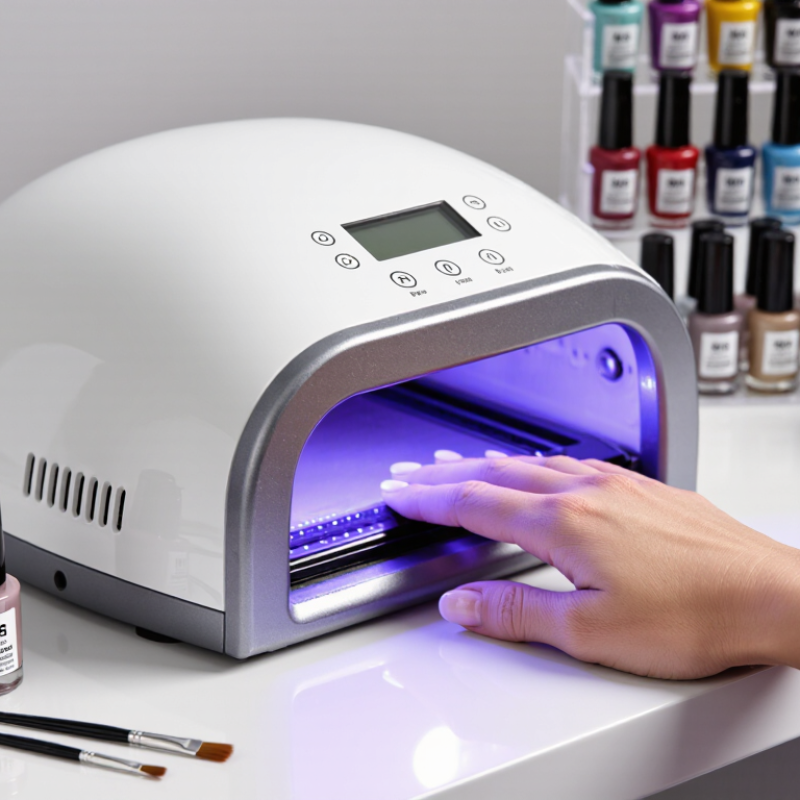
A nail hardener machine is usually a UV or LED lamp that cures gel nail products. It does not strengthen natural nails by itself. Instead, light activates ingredients in the gel, helping the coating form a firm, dry surface. A technician selects the curing time and positions each hand beneath the lamp, with fingertips resting near the light source. That distinction matters. Traditional air-dry polish and nail treatments may not need a lamp, and a lamp cannot reliably cure every formula.

The right lamp and curing time depend on the product’s instructions, coating thickness, and lamp output. A surface that feels dry may still be under-cured beneath. In a 2023 Nature Communications study, researchers found that repeated exposure to nail-polish dryer radiation caused DNA damage and mutations in laboratory cells. This was a cell study, not proof of the same level of harm in everyday salon use, but it supports sensible precautions: avoid unnecessary exposure and follow product directions. In practice, small details matter: keep fingers flat, avoid overlapping them, and do not shorten the stated curing cycle. I still find the term “hardener” a little misleading; the machine cures a coating, not the nail itself.


How Does a Nail Hardener Machine Work?

What Is a Nail Hardener Machine Used For?
How Does a Nail Hardener Machine Work?

A nail hardener machine, often called a nail lamp, cures compatible gel products using UV or LED light. The light activates ingredients called photoinitiators, starting a chemical reaction that turns liquid gel into a firm coating. It does not strengthen the natural nail by itself. That distinction is easy to miss.

Curing depends on the gel formula, lamp wavelength, and exposure time. A thin, even layer usually cures more reliably than a thick one, which may stay soft underneath. Follow the product’s timing instructions and keep your hand positioned as directed. If the coating remains tacky, that can be normal for some gels; if it feels soft or shifts, it may be undercured. Do not simply add extra time without checking the product guidance. Lamp and gel compatibility matters.

Tips: Apply thin coats, avoid getting gel on the surrounding skin, and use only a lamp specified for that gel. Keep your fingers still under the light. If you feel unusual heat or irritation, stop and reassess; curing should not be a guessing game.

What Products Can It Harden?

A nail hardener machine is mainly used to cure products that react to UV or LED light. It does not dry every manicure product. A thin layer of gel polish, for example, may set under a compatible lamp, while ordinary air-dry polish will not.

That difference matters. The machine activates ingredients in the gel, helping the coating form a firm, durable layer. It does not directly strengthen the natural nail beneath it.

Common products include gel base coats, colored gel polish, top coats, builder gel, hard gel, and some polygel formulas. Nail art gels can also cure under a suitable lamp. Check the product directions, since formulas can require different light types or curing times.

A thick bead of builder gel may need careful application; curing only the surface can leave softer material underneath. Thin, even layers are usually more reliable.

I have seen people assume a tacky surface means the product failed, but some gels leave a sticky inhibition layer after curing. Not every detail is obvious. Acrylic powder and liquid systems, press-on glue, and regular nail polish generally are not cured by these machines.

How Is a Nail Hardener Machine Used?

What Is a Nail Hardener Machine Used For?

How Is a Nail Hardener Machine Used?

A nail hardener machine is commonly used to cure hardener products made for UV or LED lamps. It does not dry every type of nail hardener. Check the product label before using the device. Start with clean, dry nails, and gently shape them if needed. Apply a thin, even coat, keeping the product off your skin. A thick layer may cure unevenly. Small details matter.

Place your hand flat inside the machine, with each nail beneath the light. Follow the product and device instructions for curing time; settings can vary. Keep your fingers still while the lamp is on. When the cycle ends, check that the coating feels set before applying another layer, if directed. If it remains tacky, don’t assume extra exposure is always the answer. Recheck the instructions.

Tips: Apply thin coats and wipe away any product on the skin before curing. Avoid staring directly at the light, and stop if you feel unusual heat or discomfort. Clean the machine as its manufacturer recommends, and don’t use it with cracked wiring or a damaged casing. It’s easy to rush this step. A careful check can prevent a messy finish.

What Safety Precautions Should Users Follow?

A nail hardener machine usually uses UV or LED light to cure gel products and strengthen a finished manicure. Treat it as a light-emitting device, not a harmless hand rest. Keep your eyes away from the lamp, place only the instructed fingertips inside, and use the timer recommended for the product. Do not extend curing time to “make it stronger.” Stop if the unit overheats, flickers, or has a damaged cord.

Tips: Apply broad-spectrum sunscreen to exposed hands before use, or wear fingerless UV-protective gloves. Keep the skin around your nails uncovered only as long as needed. If you have a photosensitivity condition or take medication that increases light sensitivity, ask a health professional before using the machine.

A 2023 Nature Communications study found that repeated 20-minute exposure to nail-polish-dryer light caused substantial cell death in lab-grown human and mouse cells. These laboratory results do not measure the risk from a typical manicure, but they support limiting unnecessary exposure. Keep the device clean and dry, never block its vents, and follow its safety instructions. Small details matter. I would not assume every lamp has identical output; exposure can vary by device, distance, and curing time.

What Is a Nail Hardener Machine Used For?

UV/LED nail lamps cure gel nail products by activating their photoinitiators. They do not strengthen or harden natural nails.

Safety precautions: Follow the product’s curing instructions, avoid looking directly at the light, and protect the skin on your hands with UV-protective fingerless gloves or broad-spectrum sunscreen. Representative wavelengths are shown; actual lamp spectra vary by device.

Powder Coat Booths

For those larger-sized parts, or smaller quantity runs, we have 2 independent powder coat booths and ovens. The quality, durability and affordability of today’s powder coating finishes make this the process of choice for world-class companies.

Powder coating advantages over other forms of coating are many. Materials used in the Powder coating process can be metals and non-metals that come in a multitude of thicknesses, textures, colors, etc. Another of Powder coating’s biggest advantages over conventional coatings is its ability to create finishes in many different textures. Powder Coating Booths allow us the ability to apply these advantages to large products.

Wet Paint Line

Tri-State Fabricators runs a full-service conveyor line for painting. Wet painting can provide protection or decoration to many different part styles. From start to finish, every project is easier to undergo random and point-based inspection by our skilled painting team.

Advantages to our Wet Paint Line are these lines start with product prep and ends with a thorough inspection of a high quality finished product. Our ability to complete large and small projects with a superior finish and doing so in a timely and economical fashion. This passes along the savings in production to our customers. When powder coating ins not an option, our Wet Paint Line gets the job done right the first time.

Wet Paint Booths

When the parts get big and heavy we roll-out our custom paint racks and oversize booth. By utilizing our partnerships with all the major paint brands, we can match virtually any color with wet paint.

The advantages of having access to a Wet Paint Booth are many. Large projects of many different shapes can be loaded into the booth. The Wet Paint Booth offers an environment that is much more controlled than a typical parts painting operation.

Not only are they used because of their controlled environment, but they’re are also advantageous when it comes to applying paint to parts that are needed in industries that require specialty coatings such as medical, aerospace, etc.

Military CARC

Our military forces have some very high standards when it comes to the finish of their vehicles and equipment. From the first pre-treatment step to final coat, it takes a great deal of knowledge and experience to protect the men and women of our armed forces. They deserve only the best, and Tri-State Fabricators provides it.

All of our processes are closely monitored by our staff and management teams. Both of which are highly trained in the processes of metal fabrication and finishing. Tri-State Fabricators’ goal is to always fully satisfy each and every customer, including the military. We will always put a 110% into what we do.

Glass-Bead Blasting

Abrasive media blasting is an excellent way to remove old paint, rust, and increase the paint/powder adhesion. Glass beads produce a much smoother and brighter finish than angular abrasives; leaving the part clean yet without any dimensional change. Chemically inert and environmentally friendly, we can recycle our beads approximately 30 times; making them a more preferred method of metal cleaning or surface finishing.

Advantages to Glass Bead Blasting are many. Glass bead blast media is used when a project is needing rough surfaces need to become smooth for applications of coatings such as paint. It is typically used to clean paint and rust from a product surface without deforming the surface it is being used on. Overall, compared to many other blasting media, Glass Bead Blasting is a very economical choice and those savings are always passed on to our customers.

Part Washing

Tri-State Fabricators utilize a zinc phosphate wash to clean and etch the material to ensure the best paint adhesion possible. The unique design of our 3-stage wash system does the work like a 5-stage. From Cleaning and rinsing to conversion coating and post-treatment, Our Part Washing process is a complete service and works throughout the fabrication service and the finishing service.

Along with the previously mentioned benefits, Curing is a vital chemical reaction that leaves the product finish hard and relatively safe from mild abrasion and aggressive corrosion. This process can be done in more than one way; ambient air-dry or in curing ovens at temps that exceed 240°.

Burn-Off Oven

From fixing paint mistakes (someone else’s of course) to simply cleaning our paint line hooks, our burn-off oven is put to good use. After a quick burn-off, a little clean up, and a fresh coat of paint, your parts will look better than new.

Why does our Burn-Off Oven work so well? Because super heating the air around parts turns the materials into ashes. From paint and powder coatings to rubber and machining oils, high temps do the job without degrading the integrity of the part.

Masking

Masking is a vital part of producing high quality products. We have die-cut masking patterns to protect machined surfaces as well as a wide range of plugs and caps to protect threaded holes and bolts. We provide permanent and temporary masking.

Masking allows the selected sections of a product to be protected from a fabrication or finishing service. This can be with both chemicals when etching and tapes, paints when only finishing just a section of the product. Masking is great in aiding the customization process of a project.

Screen Printing

Screen printing is a photographic process that transfers artwork onto a porous nylon screen which allows colored ink to flow through the screen and be deposited on an aluminum or plastic component. We can generally have just about any design created onto a screen for your parts.

Some of the advantages of Screen Printing are, brand recognition for your business displaying on your products, assembly instructions, product warnings/hazards, etc. Tri-State Fabricators produces Screen Printing of the highest quality so you know it’s durable.

Metal Finishing

Metal Finishing is the art of treating the exterior portion of product, often metal but can also be made of other materials, so that the surface is clean and free of any debris. Then the process of applying coats or either paint of powder coat takes place. This coating process improves the quality of the product in both appearance and resistance to wear and corrosion.

Tri-State Fabricators, Inc., understands that a project typically isn’t complete until a high-quality finish has been added to your product. This is why our painting and powder coating teams continuously inspect the products throughout the Metal Finishing process.
