


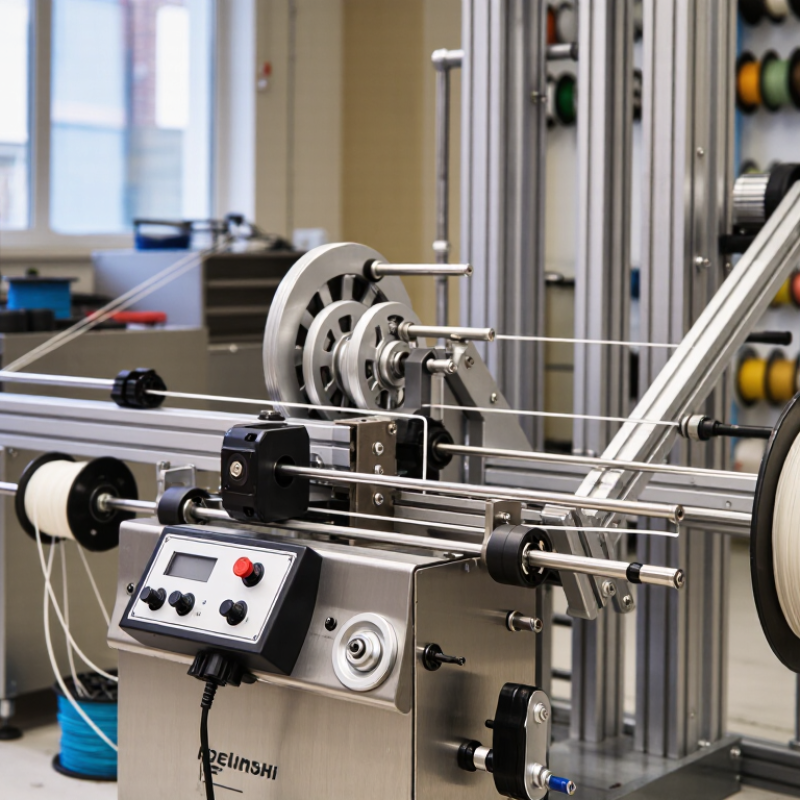
A Gelinshi Stringing Machine is designed to guide and tension string as it is arranged into a finished product. The exact setup depends on the machine model and the material being processed, so buyers should check the manufacturer’s specifications rather than assume every unit works the same way. In a workshop, the process may involve a feed path, tension controls, and a winding or collection point. Small adjustments matter. A string that feels slightly loose can produce an uneven result; too much tension may cause problems of its own.
Understanding the machine means looking beyond its name. Consider what string types it supports, how operators adjust tension, and whether routine cleaning and maintenance are straightforward. Ask for a demonstration using the material you actually plan to run. Watch how the string moves through the guides. Listen for changes in the machine’s sound. These details can reveal practical issues that a product description may not show. I would not treat a quick demonstration as proof of long-term reliability, though; that needs service records and careful follow-up.
A named industry expert’s quotation cannot be responsibly included without a verifiable source. Rather than invent an attribution, this introduction leaves that claim open for confirmation. For a trustworthy assessment, consult the manufacturer’s documentation and a qualified operator familiar with the specific model. The machine may look simple. Its results depend on setup, material, and steady attention.
A Gelinshi stringing machine is a tool used to install tensioned strings in a racket frame. It holds the frame steady while the operator guides string through the grommets and applies measured tension. The machine’s main parts usually include mounting supports, tension controls, and clamps. Each part matters. A loose mount can let the frame shift, while poorly adjusted clamps may allow strings to slip.
For a careful setup, inspect the frame for cracks and check that the supports fit without pressing too hard. Set tension according to the racket’s guidance and the player’s needs; higher tension is not automatically better. Pull each string evenly, keep the pattern orderly, and watch for crossed or damaged strings. Small errors show up quickly. A tension display can help, but it does not replace sound calibration or practiced technique. I would verify the machine’s instructions before using unfamiliar controls, since layouts and tension systems can differ. Even experienced stringers sometimes need to pause and recheck a knot or clamp. That is not wasted time. A consistent result depends on both the machine and the person operating it.

A stringing machine holds a racket steady while guiding each string through its frame. The technician first checks the racket’s string pattern and inspects its grommets for wear. Mounting supports secure the frame without squeezing it too tightly. Small details matter.
The main strings usually go in first. The string passes through the racket’s holes, and a tension head pulls it to the selected setting. Clamps hold each section in place while the next string is tensioned. Then the cross strings are woven over and under the mains, creating the familiar grid. Depending on the machine, tension may come from a manual crank or an electronic motor.
At the end, the strings are tied off, and the frame is released for inspection. A careful stringer checks the pattern, knots, and overall tension rather than trusting the display alone. Machines need proper calibration, and worn clamps can let strings slip. The process looks mechanical, but technique still matters. A hurried weave or uneven pull may affect the result, and that part is easy to underestimate.
A stringing machine tensions racket strings by pulling each string to a selected force, holding the tension, and securing it with clamps before the next string is installed. The chart shows common reference tension ranges for different racket types. Actual settings should always follow the racket and string manufacturer’s recommendations.
A Gelinshi stringing machine guides separate items onto a continuous cord or carrier. Its exact layout depends on the material and product, but most systems share several working parts. The frame holds the assembly steady. A hopper or feed track presents items one at a time, while guides align each piece with the stringing point. A needle or threading head passes the cord through. Small misalignments matter: a bead, bulb, or component can jam the line.
The drive motor moves the feed and threading mechanisms. A tensioner keeps the cord from sagging or pulling too tightly, and a take-up unit collects finished strands. Sensors can detect missing items or cord breaks; a controller sets speed and timing through a simple operator panel. These details are practical, not decorative.
The International Federation of Robotics reported 4,281,585 industrial robots operating in factories worldwide in 2023, illustrating how widely automated motion control is used in production. That figure describes industrial robots, not stringing machines, so it should not be treated as a machine-performance benchmark.
In practice, dusty feed tracks and changing item sizes can still upset smooth operation. The sensor may not catch every fault.
A Gelinshi stringing machine is designed to guide and attach string, cord, or similar flexible material to products. Its exact setup depends on the material’s thickness, stretch, and surface. Operators typically adjust feed tension and spacing to keep the finished line neat.
A small change can matter. Too much tension may bend lightweight items, while too little can leave loose loops.
Depending on the machine configuration, it may handle cotton cord, polyester thread, elastic, ribbon, or fine wire. Common applications include beads, tags, small decorative components, lightweight hardware, and craft or packaging items.
Product shape matters as much as material. Smooth beads feed differently from flat tags, and delicate parts may need guides that prevent scratches. Not every setup handles every material well, so sample testing is important.
Consistent results depend on setup as much as the machine itself. Mount the racket securely, with supports touching the frame without forcing it out of shape. Set tension according to the string and racket specifications. Check the tension head periodically with a suitable calibrator; a display reading alone cannot confirm accuracy. Pull smoothly, and avoid jerking the string or overtightening clamps. Small details matter. A clamp that slips can change tension and leave marks on the string.
Keep the rails, clamps, and tension head free from dust and string debris. Wipe surfaces with a soft, dry cloth, and follow the machine’s care instructions for any approved cleaning products. Inspect clamp jaws for residue or wear. If they leave deep impressions, clean or adjust them before continuing. Check mounting supports and moving parts for looseness. Maintenance schedules vary, so record checks and repairs rather than relying on memory. One missed check can be easy to overlook.
Tips: Test clamp hold and tension calibration before a busy session. Use a scrap string to check for slippage. Stop if the frame shifts, a clamp binds, or readings seem inconsistent. Recheck the setup instead of compensating with extra force; that shortcut may cause damage.


For those larger-sized parts, or smaller quantity runs, we have 2 independent powder coat booths and ovens. The quality, durability and affordability of today’s powder coating finishes make this the process of choice for world-class companies.
Powder coating advantages over other forms of coating are many. Materials used in the Powder coating process can be metals and non-metals that come in a multitude of thicknesses, textures, colors, etc. Another of Powder coating’s biggest advantages over conventional coatings is its ability to create finishes in many different textures. Powder Coating Booths allow us the ability to apply these advantages to large products.
Tri-State Fabricators runs a full-service conveyor line for painting. Wet painting can provide protection or decoration to many different part styles. From start to finish, every project is easier to undergo random and point-based inspection by our skilled painting team.
Advantages to our Wet Paint Line are these lines start with product prep and ends with a thorough inspection of a high quality finished product. Our ability to complete large and small projects with a superior finish and doing so in a timely and economical fashion. This passes along the savings in production to our customers. When powder coating ins not an option, our Wet Paint Line gets the job done right the first time.
When the parts get big and heavy we roll-out our custom paint racks and oversize booth. By utilizing our partnerships with all the major paint brands, we can match virtually any color with wet paint.
The advantages of having access to a Wet Paint Booth are many. Large projects of many different shapes can be loaded into the booth. The Wet Paint Booth offers an environment that is much more controlled than a typical parts painting operation.
Not only are they used because of their controlled environment, but they’re are also advantageous when it comes to applying paint to parts that are needed in industries that require specialty coatings such as medical, aerospace, etc.
Our military forces have some very high standards when it comes to the finish of their vehicles and equipment. From the first pre-treatment step to final coat, it takes a great deal of knowledge and experience to protect the men and women of our armed forces. They deserve only the best, and Tri-State Fabricators provides it.
All of our processes are closely monitored by our staff and management teams. Both of which are highly trained in the processes of metal fabrication and finishing. Tri-State Fabricators’ goal is to always fully satisfy each and every customer, including the military. We will always put a 110% into what we do.
Abrasive media blasting is an excellent way to remove old paint, rust, and increase the paint/powder adhesion. Glass beads produce a much smoother and brighter finish than angular abrasives; leaving the part clean yet without any dimensional change. Chemically inert and environmentally friendly, we can recycle our beads approximately 30 times; making them a more preferred method of metal cleaning or surface finishing.
Advantages to Glass Bead Blasting are many. Glass bead blast media is used when a project is needing rough surfaces need to become smooth for applications of coatings such as paint. It is typically used to clean paint and rust from a product surface without deforming the surface it is being used on. Overall, compared to many other blasting media, Glass Bead Blasting is a very economical choice and those savings are always passed on to our customers.
Tri-State Fabricators utilize a zinc phosphate wash to clean and etch the material to ensure the best paint adhesion possible. The unique design of our 3-stage wash system does the work like a 5-stage. From Cleaning and rinsing to conversion coating and post-treatment, Our Part Washing process is a complete service and works throughout the fabrication service and the finishing service.
Along with the previously mentioned benefits, Curing is a vital chemical reaction that leaves the product finish hard and relatively safe from mild abrasion and aggressive corrosion. This process can be done in more than one way; ambient air-dry or in curing ovens at temps that exceed 240°.
From fixing paint mistakes (someone else’s of course) to simply cleaning our paint line hooks, our burn-off oven is put to good use. After a quick burn-off, a little clean up, and a fresh coat of paint, your parts will look better than new.
Why does our Burn-Off Oven work so well? Because super heating the air around parts turns the materials into ashes. From paint and powder coatings to rubber and machining oils, high temps do the job without degrading the integrity of the part.
Masking is a vital part of producing high quality products. We have die-cut masking patterns to protect machined surfaces as well as a wide range of plugs and caps to protect threaded holes and bolts. We provide permanent and temporary masking.
Masking allows the selected sections of a product to be protected from a fabrication or finishing service. This can be with both chemicals when etching and tapes, paints when only finishing just a section of the product. Masking is great in aiding the customization process of a project.
Screen printing is a photographic process that transfers artwork onto a porous nylon screen which allows colored ink to flow through the screen and be deposited on an aluminum or plastic component. We can generally have just about any design created onto a screen for your parts.
Some of the advantages of Screen Printing are, brand recognition for your business displaying on your products, assembly instructions, product warnings/hazards, etc. Tri-State Fabricators produces Screen Printing of the highest quality so you know it’s durable.
Metal Finishing is the art of treating the exterior portion of product, often metal but can also be made of other materials, so that the surface is clean and free of any debris. Then the process of applying coats or either paint of powder coat takes place. This coating process improves the quality of the product in both appearance and resistance to wear and corrosion.
Tri-State Fabricators, Inc., understands that a project typically isn’t complete until a high-quality finish has been added to your product. This is why our painting and powder coating teams continuously inspect the products throughout the Metal Finishing process.

