What Is a Conveyor Belt Scale?
A Conveyor Belt Scale measures the mass of material moving across a conveyor in real time. It combines belt speed, load pressure, and calibration data. The result is a continuous flow rate, usually shown in tonnes per hour.
Picture a loaded belt passing over a weighing idler. Load cells sense the material’s force. A speed sensor tracks belt movement. The integrator then calculates total production. Simple in theory. Demanding in practice.
As weighing-systems specialist Steve Merritt explains, “A belt scale is only useful when its measurements reflect the material actually moving through the process.” That principle deserves attention. A stable reading depends on correct installation, belt tension, alignment, and regular calibration. Dust, vibration, moisture, and uneven loading can quietly distort results.
This guide examines what a Conveyor Belt Scale is, how its main components work, and where operators use it. It also considers accuracy limits that product brochures sometimes overlook. A scale may display precise numbers while the conveyor itself remains unstable. That is an uncomfortable possibility.
In mining, aggregates, cement, agriculture, and recycling, reliable weighing supports inventory control and production decisions. Operators can compare the displayed tonnage with stockpile changes, truck records, or laboratory checks. Those comparisons reveal problems early.
The technology is not magic. It is measurement engineering applied to a moving surface. Good data begins with good mechanics.
Definition and Main Components of a Conveyor Belt Scale
A conveyor belt scale measures the mass flow of material moving along a conveyor. Unlike a platform scale, it weighs material continuously during transport. The system usually reports tonnes per hour and total transported weight. This makes it useful in mining, agriculture, recycling, and bulk material handling.
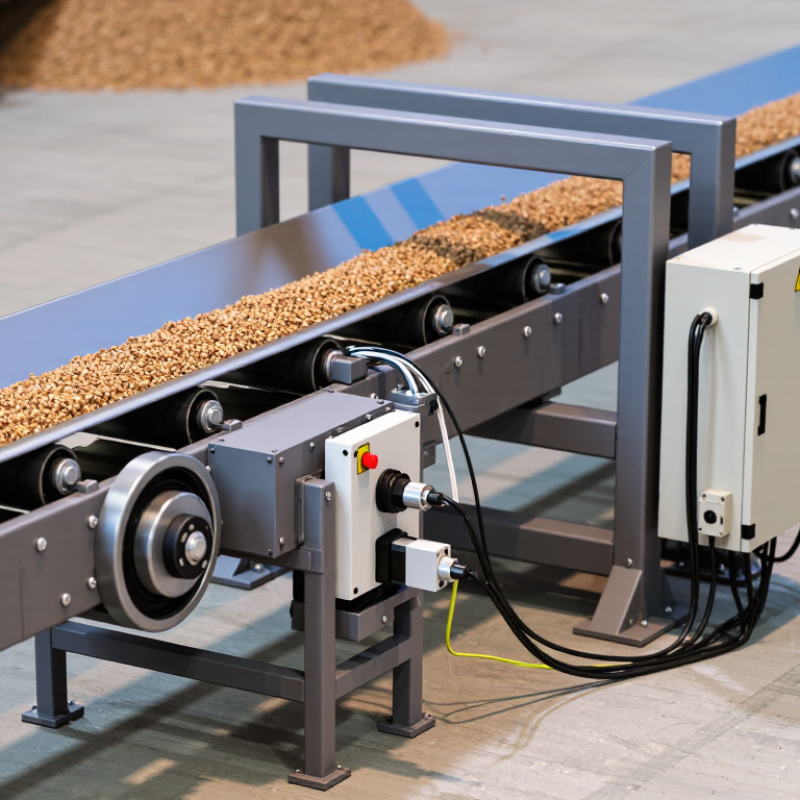
The main components are a weighbridge, load cells, a belt speed sensor, and an integrator. The weighbridge supports a short section of the conveyor belt. Load cells detect the material’s force on that section. Meanwhile, the speed sensor tracks belt movement, often through a rotating wheel. The integrator combines belt load and speed data, then displays the calculated flow rate.
Accuracy depends on more than the sensor itself. Belt alignment, tension, vibration, and material buildup can affect readings. A wet patch or uneven load may create a temporary error. Regular zero checks and controlled calibration help reveal these problems. Installation experience matters. The weighbridge must sit firmly, and the belt should pass smoothly across it. Small mechanical faults can become large measurement differences over a long shift. The system is not foolproof. Even careful operators may overlook changing material density or belt slip. For reliable results, technicians should compare scale readings with a verified reference weight and record each adjustment.
How Load Cells and Speed Sensors Calculate Material Flow in t/h
What Is a Conveyor Belt Scale?
How Load Cells and Speed Sensors Calculate Material Flow in t/h
A conveyor belt scale measures material flow while the belt keeps moving. Load cells detect the material’s weight on a short section of the conveyor. A speed sensor measures belt movement, usually in metres per second. The control system combines these signals to calculate tonnes per hour, or t/h.
The basic calculation is simple: belt load multiplied by belt speed equals mass flow. For example, heavier material creates a higher load-cell signal. Faster belt movement increases the hourly output. The system continuously integrates these readings, giving operators a running production value. In practical inspections, accurate alignment matters greatly. Belt tension, material buildup, vibration, and uneven loading can distort results. A clean calculation can still hide a dirty belt.
Tips: Keep the weighing area free from buildup. Check the speed sensor for slipping or damaged parts. Calibrate the scale with a trusted test method and compare readings during different loads. Calibration is essential. Still, even careful calibration may not remove every error. Material moisture can change density and flow behaviour. Regular checks help reveal these small but costly differences.
Installation Factors: Belt Width, Speed, Incline, and Calibration
What Is a Conveyor Belt Scale?
A conveyor belt scale measures material flow while products travel across a moving belt. It combines belt loading data with belt speed measurements. A properly installed system can support production control, inventory tracking, and process decisions. However, accuracy begins before calibration. The mounting area must be rigid, level, and free from vibration. Nearby belt cleaners or transfer points may disturb the reading.
Installation Factors: Belt Width, Speed, Incline, and Calibration
Belt width must match the scale’s weighing area and the material profile. A belt carrying material near its edges may create unstable measurements. Belt speed also matters. Sudden speed changes can produce delayed or uneven signals. Choose a straight conveyor section with consistent tension and tracking. Inclined conveyors need extra care because material can shift backward or compress differently. Steeper angles may require application-specific correction and testing. Calibration should reflect real operating conditions, including typical moisture, particle size, and loading rate. Test weights are useful, but material tests often reveal problems that static checks miss. In practice, no installation is perfect. Field adjustments are sometimes necessary.
Tips: Keep the belt clean. Check alignment regularly. Record speed and load readings during commissioning. Repeat calibration after major belt changes, drive repairs, or structural movement. Do not trust one successful test. Compare several runs at low, medium, and normal loads. Observe the belt directly; small tracking errors can become large measurement errors.
What Is a Conveyor Belt Scale?
Installation accuracy depends on belt width, belt speed, conveyor incline, and calibration practice. The chart shows typical operating speed ranges used for belt-scale installations across common belt widths.
A relatively straight, stable conveyor section is preferred. Inclines are commonly kept below approximately 18° for bulk-material belt weighing, while zero checks and material tests should be performed regularly. Actual limits depend on material characteristics, belt construction, loading conditions, and site design.
Industrial Applications, Standards, and Maintenance Requirements
What Is a Conveyor Belt Scale?
Industrial Applications, Standards, and Maintenance Requirements
A conveyor belt scale measures material moving continuously along a conveyor. It records belt load, speed, and total transported weight. Mining sites use these scales for ore control and production records. Aggregate plants monitor crushed stone, sand, and limestone. Grain facilities track receiving and loading volumes. Recycling plants also rely on accurate material flow data.
Accuracy depends on correct installation and suitable operating conditions. Relevant requirements may include OIML R 50, NIST Handbook 44, and local metrology regulations. Legal-for-trade systems usually require verification, documented tests, and protective seals. Requirements differ between countries and applications. That detail is easy to overlook. A scale used for internal process control may need different approval than one used for commercial transactions.
Maintenance should begin with a clean weighing area. Material buildup can change belt tension and distort readings. Technicians should inspect idlers, check belt alignment, and test the speed sensor regularly. Zero checks should be performed when the belt is empty. Span tests with certified test loads can reveal gradual drift. Keep calibration records, weather notes, and repair details. In practice, perfect conditions rarely exist. Dust, vibration, moisture, and uneven loading still create uncertainty. Experienced teams should question stable readings when physical conditions look wrong.





