


What Is a Ceramic Ball Used For?

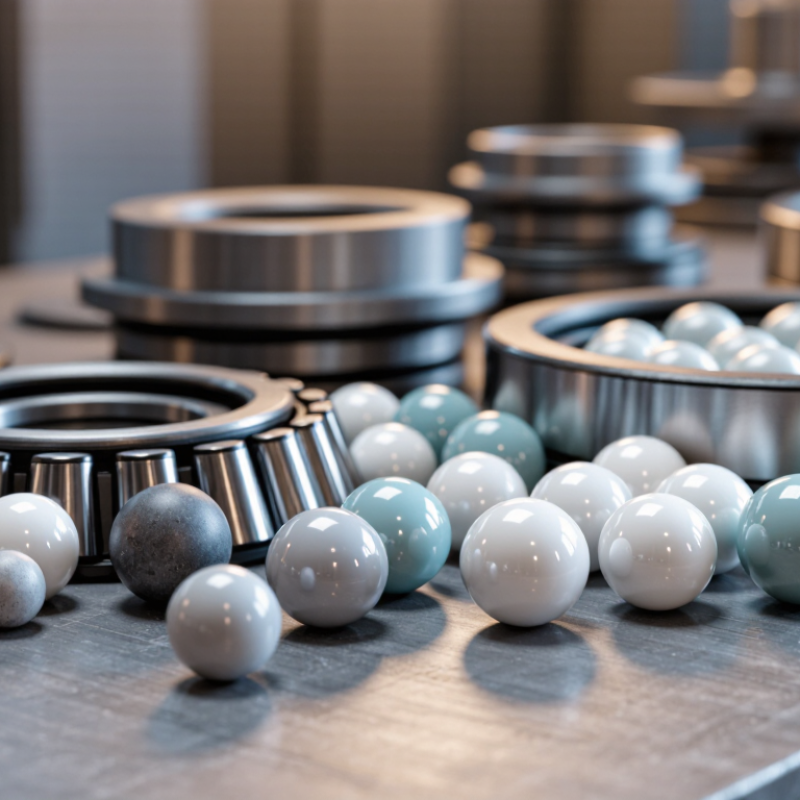
A Ceramic Ball may look simple: a smooth sphere, often white or gray, resting in a bearing or grinding mill. Its job depends on its material, size, and operating environment. Alumina and zirconia balls can offer hardness, wear resistance, and chemical stability, while silicon nitride balls are valued in demanding bearing applications. The right choice is never universal.

Industry references help explain the engineering context. ISO 3290-2:2014 defines requirements for ceramic bearing balls, including dimensional and grade specifications. The U.S. Geological Survey’s Mineral Commodity Summaries tracks alumina-related mineral supply, an upstream factor for many alumina ceramic products. These sources do not report a single global count of ceramic balls in service. That data gap matters: claims about market size or service life should be checked against the application.

Ceramic balls are used in bearings, valves, pumps, grinding equipment, and catalyst-support systems. In a bearing, a ball rolls between raceways; in a mill, it impacts and abrades material. Small details matter. Surface finish, load, temperature, and contamination can change performance. A useful overview should distinguish these roles instead of treating every ball as interchangeable.

Professor John Binner is a ceramic-materials researcher, but I cannot verify a published verbatim quotation from him about ceramic-ball uses. I will not invent one. A sound engineering takeaway is simple: select the ball for its actual service conditions, then verify the specification. Real systems can still surprise you. That deserves attention.
What Is a Ceramic Ball Used For?

What Ceramic Balls Are: Alumina and Silicon Nitride Material Grades

What Is a Ceramic Ball Used For?

Ceramic balls serve as rolling elements in bearings, sealing parts in valves, and grinding media in mills. Their performance depends on the ceramic grade, ball size, surface finish, and operating conditions. Alumina and silicon nitride are common choices, but they are not interchangeable. The material matters.

Alumina Balls are typically selected for wear resistance, electrical insulation, and good resistance to many corrosive environments. They are often used in pumps, chemical equipment, and grinding applications where steel could contaminate the material being processed. However, alumina is relatively brittle, so impact loads or poor alignment can cause chipping. A lower purchase price does not automatically make it the better choice.

Silicon nitride balls are lighter than steel and can handle high speeds, repeated rolling contact, and temperature changes well. These qualities make them useful in precision bearings and demanding machinery. They also tend to cost more, and the surrounding bearing design still matters. A premium ball cannot compensate for poor lubrication.

The distinction is not always neat: load, temperature, contamination, and maintenance may outweigh a material’s headline properties. Small, but important. A careful comparison of operating conditions is more reliable than choosing by material name alone.


How Ceramic Balls Work in Bearings: Si₃N₄ Density Is About 3.2 g/cm³

What Is a Ceramic Ball Used For?

How Ceramic Balls Work in Bearings: Si₃N₄ Density Is About 3.2 g/cm³

Silicon nitride ceramic balls are used in bearings that need low mass, high stiffness, and reliable operation at speed. Their density is about 3.2 g/cm³, compared with roughly 7.8 g/cm³ for bearing steel. A lighter ball creates lower centrifugal forces as it rolls, which can reduce stress where the ball meets the raceway. That matters. In a hybrid bearing, ceramic balls run between steel rings; they do not make the whole bearing ceramic. Si₃N₄ also resists corrosion and does not conduct electricity, but performance still depends on bearing design, fit, and lubrication.

The reduced mass can help limit heat and wear in some high-speed applications. It is not a guarantee: poor lubrication or misalignment can still damage a bearing. Ceramic is also hard and stiff, so it may not suit every load or impact condition. The right choice depends on the operating speed, load, temperature, and surrounding equipment. A density figure helps explain the material, but it cannot tell the whole story.

Tips: Check the bearing maker’s load and speed limits before choosing a ceramic-ball design. Keep lubricant clean, and watch for unusual noise or rising temperature. One detail is easy to miss: the raceway matters just as much as the ball.

Where Ceramic Balls Are Used: Bearings, Pumps, Valves, and Mills

Ceramic balls are used in bearings when low weight, hardness, and resistance to corrosion are important. In a hybrid bearing, ceramic balls run against steel rings, helping reduce friction and heat at suitable speeds. Full ceramic bearings can suit demanding environments, but they need careful load and fit selection. Less weight is not always the answer.

In pumps, ceramic balls may serve as check-valve elements or moving parts exposed to abrasive or corrosive fluids. Their smooth, hard surfaces can resist wear, yet sudden impacts may chip some ceramics. Fluid chemistry, pressure, and temperature all matter. A material that performs well in clean water may behave differently in a slurry.

Valves use ceramic balls where a durable sealing surface and chemical resistance are useful. The ball and seat must match closely; tiny surface defects can cause leakage.

In mills, ceramic balls act as grinding media, breaking material through repeated impact and abrasion. Their wear resistance can help limit contamination, though density affects grinding energy and speed. Choosing the right size takes testing. Small details matter. A trial batch may reveal what a specification sheet misses.

How Hardness Shapes Use: Alumina Reaches Mohs 9; Si₃N₄ About 1,500 HV

A ceramic ball is a precision-made sphere used for rolling, grinding, or sealing. Its performance depends on material, size, finish, load, and temperature—not hardness alone. Hardness matters.

Alumina reaches Mohs 9, making it highly resistant to scratching and abrasion. Alumina balls can serve as grinding media or wear-resistant parts in some valves. Silicon nitride is commonly rated near 1,500 HV on the Vickers scale. Mohs and Vickers are different scales, so their numbers cannot be compared directly. That detail is easy to overlook.

In precision bearings, silicon nitride balls combine high hardness with low mass, which can reduce rolling inertia. Alumina may be a better fit where abrasion resistance and chemical stability are priorities. Neither material is unbreakable. Impact, poor lubrication, or uneven loading can still cause damage. A hardness value alone cannot predict service life; check material data against the actual load, speed, temperature, and operating conditions.

What Is a Ceramic Ball Used For? — How Hardness Shapes Use
Ceramic Material Typical Hardness Useful Material Traits Common Ceramic-Ball Uses How Hardness Affects the Choice
Alumina (Al₂O₃) About 9 on the Mohs scale; commonly around 1,500–2,000 HV, depending on grade and test conditions High wear resistance, electrical insulation, and good resistance to many chemical environments Grinding and milling media; wear-resistant components; some valve and fluid-handling applications Its high hardness helps resist abrasion during milling and repeated contact with hard particles.
Silicon nitride (Si₃N₄) About 1,400–1,600 HV for many grades; approximately 1,500 HV is a commonly cited value Low density, high strength, good fatigue resistance, and strong performance at elevated temperatures Rolling elements in precision bearings; high-speed or electrically insulated bearing applications Hardness supports wear resistance, while low density can reduce centrifugal forces in fast-running bearings.
Zirconia (ZrO₂) Typically about 1,200–1,400 HV, depending on composition and test conditions High toughness for a ceramic, good corrosion resistance, and relatively high density Grinding media; check-valve balls; metering and sealing components Its hardness provides wear resistance, while its comparatively high toughness can help reduce chipping.
Silicon carbide (SiC) Often about 2,200–2,800 HV, depending on grade and measurement method Very high hardness, low density, high thermal conductivity, and strong high-temperature capability Abrasive or wear-resistant components; selected high-temperature and chemically demanding applications Its exceptional hardness suits severe abrasion, though component design must account for ceramic brittleness.

Hardness values are typical approximate ranges, not guaranteed specifications. Mohs hardness is a scratch-resistance scale, whereas HV is measured by a Vickers indentation test; the two scales are not directly interchangeable. Actual performance also depends on material grade, surface finish, load, lubrication, temperature, and operating conditions.

How to Select Ceramic Balls: Match Material, Size, Grade, and Service Conditions

Ceramic balls are used in grinding mills, valves, bearings, and other equipment that needs hard, wear-resistant components. The best choice depends on the job, not just the material name. Alumina is often selected for abrasive environments and general industrial use. Zirconia can offer greater toughness, while silicon nitride suits some high-speed, high-temperature applications. Check the supplier’s technical data for the specific grade.

Size affects performance. Smaller balls provide more contact points and can improve fine grinding, but may be less effective on large particles. Larger balls deliver stronger impacts, yet can increase equipment wear. Grade also matters: roundness, surface finish, and dimensional consistency can influence movement and sealing. Match these details to the machine’s clearances and expected load. A ball that looks smooth may still be out of tolerance.

Service conditions deserve equal attention. Consider operating temperature, chemical exposure, impact, lubrication, and contamination limits. A ceramic ball that performs well in a dry test may behave differently in a wet, abrasive process. Tips: Confirm the actual operating range, then request a sample or test data. Record wear and temperature during a trial. It is easy to over-specify hardness; I would review the real failure mode before paying for a higher grade.

Article Source:

Powder Coat Booths

For those larger-sized parts, or smaller quantity runs, we have 2 independent powder coat booths and ovens. The quality, durability and affordability of today’s powder coating finishes make this the process of choice for world-class companies.

Powder coating advantages over other forms of coating are many. Materials used in the Powder coating process can be metals and non-metals that come in a multitude of thicknesses, textures, colors, etc. Another of Powder coating’s biggest advantages over conventional coatings is its ability to create finishes in many different textures. Powder Coating Booths allow us the ability to apply these advantages to large products.

Wet Paint Line

Tri-State Fabricators runs a full-service conveyor line for painting. Wet painting can provide protection or decoration to many different part styles. From start to finish, every project is easier to undergo random and point-based inspection by our skilled painting team.

Advantages to our Wet Paint Line are these lines start with product prep and ends with a thorough inspection of a high quality finished product. Our ability to complete large and small projects with a superior finish and doing so in a timely and economical fashion. This passes along the savings in production to our customers. When powder coating ins not an option, our Wet Paint Line gets the job done right the first time.

Wet Paint Booths

When the parts get big and heavy we roll-out our custom paint racks and oversize booth. By utilizing our partnerships with all the major paint brands, we can match virtually any color with wet paint.

The advantages of having access to a Wet Paint Booth are many. Large projects of many different shapes can be loaded into the booth. The Wet Paint Booth offers an environment that is much more controlled than a typical parts painting operation.

Not only are they used because of their controlled environment, but they’re are also advantageous when it comes to applying paint to parts that are needed in industries that require specialty coatings such as medical, aerospace, etc.

Military CARC

Our military forces have some very high standards when it comes to the finish of their vehicles and equipment. From the first pre-treatment step to final coat, it takes a great deal of knowledge and experience to protect the men and women of our armed forces. They deserve only the best, and Tri-State Fabricators provides it.

All of our processes are closely monitored by our staff and management teams. Both of which are highly trained in the processes of metal fabrication and finishing. Tri-State Fabricators’ goal is to always fully satisfy each and every customer, including the military. We will always put a 110% into what we do.

Glass-Bead Blasting

Abrasive media blasting is an excellent way to remove old paint, rust, and increase the paint/powder adhesion. Glass beads produce a much smoother and brighter finish than angular abrasives; leaving the part clean yet without any dimensional change. Chemically inert and environmentally friendly, we can recycle our beads approximately 30 times; making them a more preferred method of metal cleaning or surface finishing.

Advantages to Glass Bead Blasting are many. Glass bead blast media is used when a project is needing rough surfaces need to become smooth for applications of coatings such as paint. It is typically used to clean paint and rust from a product surface without deforming the surface it is being used on. Overall, compared to many other blasting media, Glass Bead Blasting is a very economical choice and those savings are always passed on to our customers.

Part Washing

Tri-State Fabricators utilize a zinc phosphate wash to clean and etch the material to ensure the best paint adhesion possible. The unique design of our 3-stage wash system does the work like a 5-stage. From Cleaning and rinsing to conversion coating and post-treatment, Our Part Washing process is a complete service and works throughout the fabrication service and the finishing service.

Along with the previously mentioned benefits, Curing is a vital chemical reaction that leaves the product finish hard and relatively safe from mild abrasion and aggressive corrosion. This process can be done in more than one way; ambient air-dry or in curing ovens at temps that exceed 240°.

Burn-Off Oven

From fixing paint mistakes (someone else’s of course) to simply cleaning our paint line hooks, our burn-off oven is put to good use. After a quick burn-off, a little clean up, and a fresh coat of paint, your parts will look better than new.

Why does our Burn-Off Oven work so well? Because super heating the air around parts turns the materials into ashes. From paint and powder coatings to rubber and machining oils, high temps do the job without degrading the integrity of the part.

Masking

Masking is a vital part of producing high quality products. We have die-cut masking patterns to protect machined surfaces as well as a wide range of plugs and caps to protect threaded holes and bolts. We provide permanent and temporary masking.

Masking allows the selected sections of a product to be protected from a fabrication or finishing service. This can be with both chemicals when etching and tapes, paints when only finishing just a section of the product. Masking is great in aiding the customization process of a project.

Screen Printing

Screen printing is a photographic process that transfers artwork onto a porous nylon screen which allows colored ink to flow through the screen and be deposited on an aluminum or plastic component. We can generally have just about any design created onto a screen for your parts.

Some of the advantages of Screen Printing are, brand recognition for your business displaying on your products, assembly instructions, product warnings/hazards, etc. Tri-State Fabricators produces Screen Printing of the highest quality so you know it’s durable.

Metal Finishing

Metal Finishing is the art of treating the exterior portion of product, often metal but can also be made of other materials, so that the surface is clean and free of any debris. Then the process of applying coats or either paint of powder coat takes place. This coating process improves the quality of the product in both appearance and resistance to wear and corrosion.

Tri-State Fabricators, Inc., understands that a project typically isn’t complete until a high-quality finish has been added to your product. This is why our painting and powder coating teams continuously inspect the products throughout the Metal Finishing process.
