What Are Bevel Gears and What Types Are Available?

Bevel Gears are conical-toothed components designed to transmit motion between intersecting or offset shafts. They often appear inside automotive differentials, right-angle drives, machine tools, and compact industrial gearboxes. Their tapered teeth change rotational direction, usually by 90 degrees, while carrying torque through a carefully controlled contact pattern.

Dr. Hermann J. Stadtfeld, a respected bevel-gear researcher and engineer, has emphasized a practical principle: “Bevel gears are a system, not merely a set of teeth.” That observation matters during design. A small error in mounting distance, tooth alignment, lubrication, or backlash can create noise, heat, and premature wear. The drawing may look perfect. The assembly may still fail.

This guide examines the main types of Bevel Gears, including straight, spiral, zerol, and hypoid designs. Straight bevel gears are relatively simple and economical, but they can produce noticeable impact noise at higher speeds. Spiral bevel gears provide smoother engagement because several tooth sections share the load. Zerol gears offer a compromise, while hypoid gears support offset shafts and are common in vehicle final drives. Each type has a different manufacturing cost, load capacity, and maintenance demand.

A neat classification can mislead.

Real performance depends on more than tooth shape. Engineers must consider speed, torque, shaft geometry, materials, heat treatment, lubrication, and operating temperature. In practice, even experienced teams revisit their assumptions after testing. That humility is useful. A bevel gear that performs well in a model may behave differently under vibration, contamination, or repeated shock loads.
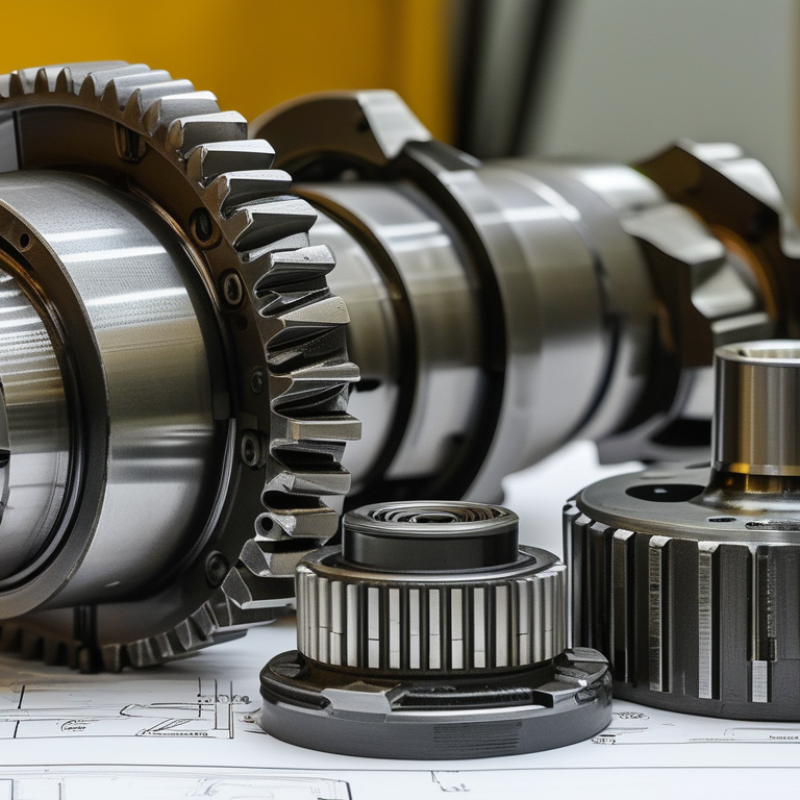
What Are Bevel Gears and What Types Are Available?

What Are Bevel Gears and How Do They Work?

Bevel gears transmit rotary motion between intersecting shafts, often at a 90-degree angle. Their conical tooth surfaces change the direction of torque while maintaining controlled speed. As the smaller pinion turns, its teeth push against the larger gear’s teeth. This contact creates rotation around a different axis. Gear ratio determines whether the output shaft turns faster, slower, or with greater torque.

Tooth geometry strongly affects performance. Straight bevel gears have simple, radial teeth and suit moderate speeds. Spiral bevel gears use curved teeth, producing smoother engagement and lower vibration. However, their sliding action can increase heat and lubrication demands. Zerol bevel gears offer a compromise between straight and spiral designs. Hypoid gears use offset shafts and provide quiet operation, but they need carefully selected lubricant and precise alignment.

In practical assembly, backlash must be measured rather than guessed. A technician may rotate the shaft gently and check movement with a dial indicator. Too little clearance can cause heat, noise, and premature wear. Too much clearance can create impact loads. Small errors matter. Mounting distance, tooth contact, housing stiffness, and lubrication all influence service life. I have found that visual inspection alone can miss a narrow contact pattern near the tooth edge. Load testing can reveal problems that appear harmless during hand rotation. Even accurate calculations need real-world verification.

What Are Bevel Gears and What Types Are Available?

Bevel gears transmit motion between intersecting or offset shafts. Straight, spiral, and Zerol bevel gears are commonly arranged at a nominal 90° shaft angle, while hypoid gears use offset, non-intersecting shafts.

How they work: Mating conical gears transfer torque while changing the direction of rotation. Straight bevel gears use straight teeth, spiral bevel gears use curved teeth for smoother engagement, Zerol gears have near-zero spiral angle, and hypoid gears combine curved teeth with shaft offset.

Key Components and Design Features of Bevel Gears

Bevel gears transfer rotary motion between shafts that usually intersect at an angle. Their teeth sit on conical surfaces, so the assembly changes both speed and direction. The main pair includes a smaller pinion and a larger gear. A hub, bore, keyway, and gear body connect the teeth to the shafts. The pitch cone defines the working geometry. Small errors here can produce noise, heat, and uneven wear.

Straight bevel gears use radial teeth and remain comparatively simple to manufacture. Spiral bevel gears use curved teeth, creating gradual engagement and quieter operation under load.

Zerol bevel gears have curved teeth with a nominally zero spiral angle. They can offer a compromise between straight and spiral designs. Hypoid gears resemble bevel gears, but their shaft axes are offset rather than intersecting. That difference affects lubrication, mounting, and sliding contact.

Design work starts with torque, speed, shaft angle, service hours, and available space. Tooth count, module, pressure angle, face width, and backlash must work together. Heat-treated alloy steel may improve fatigue resistance, while stainless steel or engineered plastics suit special environments. Field inspection often reveals more than dimensions alone. A theoretically correct layout can still fail because the housing flexes. Mounting stiffness matters. Clean lubrication matters too. Designers should check tooth contact after assembly, rather than trusting drawings blindly. A little humility prevents expensive revisions.

Straight, Spiral, and Zerol Bevel Gears Explained

Bevel gears transmit motion between intersecting shafts, often at a right angle. Their conical tooth surfaces resemble two cones meeting at their tips. In real machinery, engineers select them by speed, torque, noise, space, and maintenance conditions. A small gearbox may favor simplicity, while a high-speed drive demands smoother tooth engagement.

Straight bevel gears have teeth cut directly across the cone. They are relatively simple to inspect and manufacture. However, each tooth engages suddenly, which can create vibration and audible impact at higher speeds. Spiral bevel gears use curved teeth that enter contact gradually. This produces quieter operation, higher load capacity, and smoother torque transfer. The trade-off is important: spiral teeth create axial thrust and require careful bearing support, lubrication, and alignment.

Zerol bevel gears also have curved teeth, but their nominal spiral angle is near zero. They offer smoother engagement than straight gears while producing little axial thrust. This makes them useful where shaft support or housing space is limited. Still, “low thrust” does not mean “no thrust.” Field inspections often reveal wear caused by poor alignment rather than weak gear material. Tooth contact should be checked with an approved marking compound, and backlash should match the design specification. A simple rule can mislead. Straight gears are not always outdated, and spiral gears are not always the best choice. Temperature, contamination, installation accuracy, and operating speed can change the decision.

Comparing Common Bevel Gear Types and Their Uses

What Are Bevel Gears and What Types Are Available?

Bevel gears transmit motion between intersecting or offset shafts, often at a 90-degree angle. Their conical teeth change both speed and direction. Straight bevel gears use simple, radial teeth. They suit low-speed machinery, compact drives, and applications where cost matters. However, their tooth engagement can create noticeable noise and vibration at higher speeds.

Spiral bevel gears have curved teeth that engage gradually. This design usually produces smoother rotation, greater load capacity, and quieter operation. It also creates axial thrust, so the housing and bearings must be selected carefully. Zerol bevel gears offer curved teeth with minimal spiral-angle effect. They can provide smoother running than straight gears while limiting axial forces. Miter gears are a special equal-ratio arrangement. They redirect motion without changing speed, making them useful in right-angle mechanisms.

Hypoid gears handle offset shafts rather than intersecting shafts. Their sliding contact supports compact layouts and high torque, but it demands accurate alignment and suitable extreme-pressure lubricant. In practical installations, tooth pattern checks matter as much as catalogue calculations. A clean contact mark near the tooth center usually indicates healthier load sharing. Small errors matter.

Choosing a bevel gear type depends on speed, torque, noise limits, space, lubrication, and maintenance access. A simple selection chart can mislead. I have seen a theoretically suitable gear fail because the housing flexed under load. Straight gears may be adequate, while spiral or hypoid gears often justify their extra complexity in demanding drives. Inspections should include backlash, tooth wear, bearing condition, and unusual temperature changes.

How to Select the Right Bevel Gear for an Application

Bevel gears transfer motion between intersecting shafts, often at a 90-degree angle. Their tapered teeth create a cone-shaped gear set. Common types include straight, spiral, zerol, and hypoid bevel gears. Each type changes noise, load capacity, efficiency, and manufacturing cost. Selecting the right bevel gear starts with the application, not the catalog picture.

Measure the required speed ratio, torque, shaft angle, and available space. A straight bevel gear may suit low-speed equipment with modest loads. Spiral bevel gears usually run more smoothly under higher loads, but they need accurate alignment and stronger support. Hypoid gears allow offset shafts, although sliding contact can increase heat and lubrication demands. Check starting torque, shock loading, operating hours, and expected service life.

In field inspections, poor mounting often causes more damage than incorrect tooth design. That detail is easy to overlook. Verify backlash, housing stiffness, bearing positions, and lubrication before final selection. A calculation can still miss real vibration or contamination.

Tips:

Match the gear material to the load and environment. Confirm the manufacturer’s rated torque at your actual speed. Keep the shaft angle and mounting tolerances precise. If noise matters, test the gear under realistic load conditions. Do not choose by ratio alone. It is tempting, but incomplete. When requirements remain uncertain, compare two suitable designs and review their thermal, maintenance, and replacement implications.


Powder Coat Booths

For those larger-sized parts, or smaller quantity runs, we have 2 independent powder coat booths and ovens. The quality, durability and affordability of today’s powder coating finishes make this the process of choice for world-class companies.

Powder coating advantages over other forms of coating are many. Materials used in the Powder coating process can be metals and non-metals that come in a multitude of thicknesses, textures, colors, etc. Another of Powder coating’s biggest advantages over conventional coatings is its ability to create finishes in many different textures. Powder Coating Booths allow us the ability to apply these advantages to large products.

Wet Paint Line

Tri-State Fabricators runs a full-service conveyor line for painting. Wet painting can provide protection or decoration to many different part styles. From start to finish, every project is easier to undergo random and point-based inspection by our skilled painting team.

Advantages to our Wet Paint Line are these lines start with product prep and ends with a thorough inspection of a high quality finished product. Our ability to complete large and small projects with a superior finish and doing so in a timely and economical fashion. This passes along the savings in production to our customers. When powder coating ins not an option, our Wet Paint Line gets the job done right the first time.

Wet Paint Booths

When the parts get big and heavy we roll-out our custom paint racks and oversize booth. By utilizing our partnerships with all the major paint brands, we can match virtually any color with wet paint.

The advantages of having access to a Wet Paint Booth are many. Large projects of many different shapes can be loaded into the booth. The Wet Paint Booth offers an environment that is much more controlled than a typical parts painting operation.

Not only are they used because of their controlled environment, but they’re are also advantageous when it comes to applying paint to parts that are needed in industries that require specialty coatings such as medical, aerospace, etc.

Military CARC

Our military forces have some very high standards when it comes to the finish of their vehicles and equipment. From the first pre-treatment step to final coat, it takes a great deal of knowledge and experience to protect the men and women of our armed forces. They deserve only the best, and Tri-State Fabricators provides it.

All of our processes are closely monitored by our staff and management teams. Both of which are highly trained in the processes of metal fabrication and finishing. Tri-State Fabricators’ goal is to always fully satisfy each and every customer, including the military. We will always put a 110% into what we do.

Glass-Bead Blasting

Abrasive media blasting is an excellent way to remove old paint, rust, and increase the paint/powder adhesion. Glass beads produce a much smoother and brighter finish than angular abrasives; leaving the part clean yet without any dimensional change. Chemically inert and environmentally friendly, we can recycle our beads approximately 30 times; making them a more preferred method of metal cleaning or surface finishing.

Advantages to Glass Bead Blasting are many. Glass bead blast media is used when a project is needing rough surfaces need to become smooth for applications of coatings such as paint. It is typically used to clean paint and rust from a product surface without deforming the surface it is being used on. Overall, compared to many other blasting media, Glass Bead Blasting is a very economical choice and those savings are always passed on to our customers.

Part Washing

Tri-State Fabricators utilize a zinc phosphate wash to clean and etch the material to ensure the best paint adhesion possible. The unique design of our 3-stage wash system does the work like a 5-stage. From Cleaning and rinsing to conversion coating and post-treatment, Our Part Washing process is a complete service and works throughout the fabrication service and the finishing service.

Along with the previously mentioned benefits, Curing is a vital chemical reaction that leaves the product finish hard and relatively safe from mild abrasion and aggressive corrosion. This process can be done in more than one way; ambient air-dry or in curing ovens at temps that exceed 240°.

Burn-Off Oven

From fixing paint mistakes (someone else’s of course) to simply cleaning our paint line hooks, our burn-off oven is put to good use. After a quick burn-off, a little clean up, and a fresh coat of paint, your parts will look better than new.

Why does our Burn-Off Oven work so well? Because super heating the air around parts turns the materials into ashes. From paint and powder coatings to rubber and machining oils, high temps do the job without degrading the integrity of the part.

Masking

Masking is a vital part of producing high quality products. We have die-cut masking patterns to protect machined surfaces as well as a wide range of plugs and caps to protect threaded holes and bolts. We provide permanent and temporary masking.

Masking allows the selected sections of a product to be protected from a fabrication or finishing service. This can be with both chemicals when etching and tapes, paints when only finishing just a section of the product. Masking is great in aiding the customization process of a project.

Screen Printing

Screen printing is a photographic process that transfers artwork onto a porous nylon screen which allows colored ink to flow through the screen and be deposited on an aluminum or plastic component. We can generally have just about any design created onto a screen for your parts.

Some of the advantages of Screen Printing are, brand recognition for your business displaying on your products, assembly instructions, product warnings/hazards, etc. Tri-State Fabricators produces Screen Printing of the highest quality so you know it’s durable.

Metal Finishing

Metal Finishing is the art of treating the exterior portion of product, often metal but can also be made of other materials, so that the surface is clean and free of any debris. Then the process of applying coats or either paint of powder coat takes place. This coating process improves the quality of the product in both appearance and resistance to wear and corrosion.

Tri-State Fabricators, Inc., understands that a project typically isn’t complete until a high-quality finish has been added to your product. This is why our painting and powder coating teams continuously inspect the products throughout the Metal Finishing process.



