What is a Well Screen Manufacturer and Its Importance?
In the ever-evolving landscape of water resource management, the role of a well screen manufacturer is crucial. These manufacturers produce vital components that filter water and protect well systems. According to Dr. Emily Carter, an expert in groundwater engineering, "A well-designed well screen can significantly enhance water quality and flow efficiency."
The expertise of a well screen manufacturer affects not just individual wells but entire communities. A quality well screen prevents sediment intrusion and enhances water extraction efficiency. However, not all manufacturers are created equal. Some cut corners on materials or design, leading to failures in the field. It is essential for stakeholders to recognize the difference.
Understanding the significance of well screen manufacturers helps ensure sustainable water management. Ensuring the right choice today can prevent operational inefficiencies tomorrow. Investing in reliable manufacturers can lead to long-term success in groundwater projects. The importance of their role cannot be overstated. Without quality well screens, well systems face various challenges. Thus, collaboration with reputable manufacturers is vital for success.
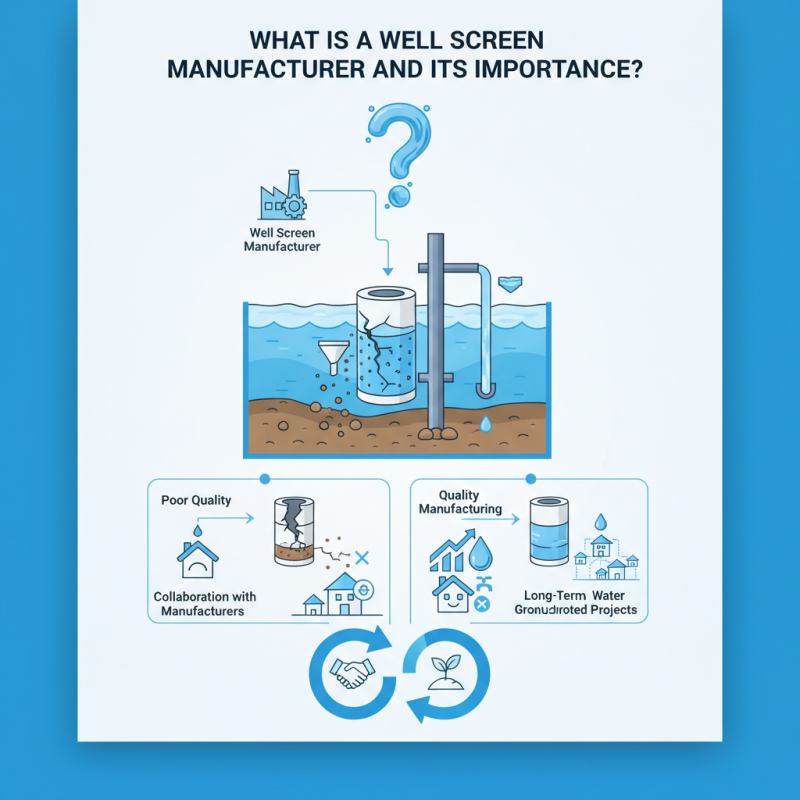
What is a Well Screen Manufacturer?
Well screen manufacturers play a vital role in the water well industry. They create screens that filter out unwanted particles while allowing water to flow freely. This ensures a reliable water supply for households, farms, and industries. The design and material of these screens can significantly affect their performance. Effective testing and quality control are critical in the manufacturing process.
Choosing a well screen manufacturer involves understanding their expertise and reputation. Experienced manufacturers often use advanced technology to enhance efficiency. They should be knowledgeable about various geological conditions. This knowledge helps in tailoring screens to specific environments. However, not all manufacturers prioritize quality. Some focus on cost-cutting, which can lead to subpar products.
The importance of a well screen manufacturer cannot be overstated. A poor-quality screen can lead to sediment issues. It may also reduce the lifespan of pumps and increase maintenance costs. The decisions made in selecting a manufacturer can impact water quality and supply stability. This selection process deserves careful consideration and informed choices.
Key Functions of a Well Screen in Water Extraction
A well screen serves a crucial role in water extraction. It acts as a barrier that filters sediments while allowing groundwater to flow into the well. The design of a well screen influences the efficiency of the water extraction process significantly. A well-constructed screen helps prevent sand and debris from entering the pumping system. This protection ensures longer life for pumps and reduces maintenance costs.
When selecting a well screen, consider your specific water source. The screen's material impacts its durability and effectiveness. Stainless steel screens are more resistant to corrosion, while PVC may be cost-effective in less demanding conditions. Think about the well's depth and the anticipated water flow. These factors help determine the appropriate slot size and type of screen.
Tips for installation: Ensure the well screen is securely anchored. A poorly installed screen can lead to costly issues. Regular inspections help catch early problems. Don’t underestimate the importance of a skilled technician for installation. An experienced installer can adapt to varying geological conditions, ensuring optimal performance.
Types of Well Screens and Their Applications
Well screens are essential components in water wells. They filter out sediment while allowing water to flow. Understanding the types of well screens helps in selecting the right one for various applications.
There are several types of well screens. Wire-wrapped screens are popular due to their robust design. They allow for excellent water flow and provide good filtering. Another type is the PVC screen, which is lightweight and resistant to corrosion. They are often used in shallow wells. Each screen type has its unique benefits and limitations.
Tips: When choosing a well screen, consider the specific environment. Groundwater conditions can greatly influence your choice. It's also important to assess installation requirements. Proper installation affects the screen's performance and longevity. Use professionals for a better outcome. The right well screen can significantly affect water quality and supply.
Well Screen Types and Their Applications
Importance of Material Quality in Well Screen Production
Well screen production is fundamentally reliant on the quality of materials used. High-quality materials ensure durability and efficiency in water filtration systems. Reports indicate that well screens made from stainless steel have a 50% longer lifespan compared to those made from lower-grade steel. This translates to significant cost savings for projects, as fewer replacements are needed over time.
Material quality directly affects the overall performance of well screens. For instance, screens constructed from corrosion-resistant materials offer improved water flow rates. Studies show that using advanced polymer materials can enhance filtration, making systems more efficient. On the flip side, using inferior materials can lead to faster degradation and increased maintenance costs. In some cases, up to 30% of total project costs arise from poor material choices.
Reliable data signifies that companies focused on material integrity gain market trust. They tend to experience higher customer satisfaction rates. Failing to prioritize material quality not only jeopardizes project outcomes but also risks reputational damage. Every choice matters in well screen manufacturing. The right materials can lead to better sustainability and functionality, critical in today’s water resource management.
Market Trends and Growth Projections for Well Screen Manufacturers
The well screen manufacturing sector is experiencing notable trends reflecting growing demands. According to recent market reports, the global well screen market is projected to reach $3 billion by 2028, expanding at a CAGR of 7%. This growth can be attributed to increasing groundwater extraction and environmental concerns regarding water supply. Consequently, the need for durable, efficient well screens is paramount for sustainable water management.
Additionally, emerging technologies are reshaping the landscape. Advancements in materials like stainless steel and polymer composites enhance screen durability and reduce maintenance needs. These innovations cater to broader applications, from municipal water systems to agricultural uses. However, challenges persist. Issues such as raw material costs and supply chain disruptions could impact growth rates. The industry must adapt to these changing economic dynamics while focusing on sustainable practices.
Regulatory factors also play a significant role. Governments worldwide are prioritizing water conservation, influencing demand for quality well screens. Manufacturers must stay ahead by complying with evolving regulations. This landscape presents both opportunities and challenges, prompting a need for continuous innovation and quality improvements in well screen production. The path ahead is not without its hurdles, but the potential for growth remains significant.
What is a Well Screen Manufacturer and Its Importance? - Market Trends and Growth Projections for Well Screen Manufacturers
| Region | Market Size (2023, USD Million) | CAGR (2024-2030) | Key Trends | Growth Drivers |
| North America | 320 | 5.2% | Increased demand for groundwater | Rising investment in water management |
| Europe | 250 | 4.8% | Sustainable water solutions | Technological advancements |
| Asia Pacific | 400 | 6.5% | Urbanization and industrial growth | Government initiatives for water security |
| Latin America | 150 | 3.7% | Rural water supply projects | Increased agricultural demand |
| Middle East & Africa | 180 | 4.2% | Focus on desalination and recycling | Water scarcity issues |





