What Is a Universal Saucepan Lid and How Does It Fit?
A Universal Saucepan Lid promises one simple solution: one cover for several pans. In practice, fit depends on rim diameter, pan shape, handle clearance, and the lid’s sealing edge. A 16-centimetre saucepan may accept the same lid as a slightly wider pan, but only if the lid rests securely without wobbling. Small gaps can release steam, reduce heat control, and leave sauce splashing onto the hob.
Cookware designer Chris Young, co-author of Modernist Cuisine, has said, “A lid is part of the cooking system, not merely a piece of glass.” That principle explains why a Universal Saucepan Lid should be judged by performance, not convenience alone. Tempered glass can reveal bubbling milk or a simmering curry. A stainless-steel rim can protect the edge from daily knocks. A vent may reduce pressure, although it cannot replace safe cooking practices.
This guide examines how a Universal Saucepan Lid fits different saucepan sizes and shapes. It also considers adjustable rings, stepped rims, silicone edges, and central handles. Measure carefully. Check the lid on a cold pan before cooking. It should sit level, remain stable when gently nudged, and leave enough space for steam to escape as designed.
There is no perfect universal fit.
Some lids claim broad compatibility but perform unevenly. A curved lid may suit one pan beautifully and rock on another. That limitation is easy to overlook. Understanding these details helps shoppers choose a reliable cover instead of trusting a convenient label.
Universal Lid Design: How Adjustable Rims Fit 16–30 cm Pans
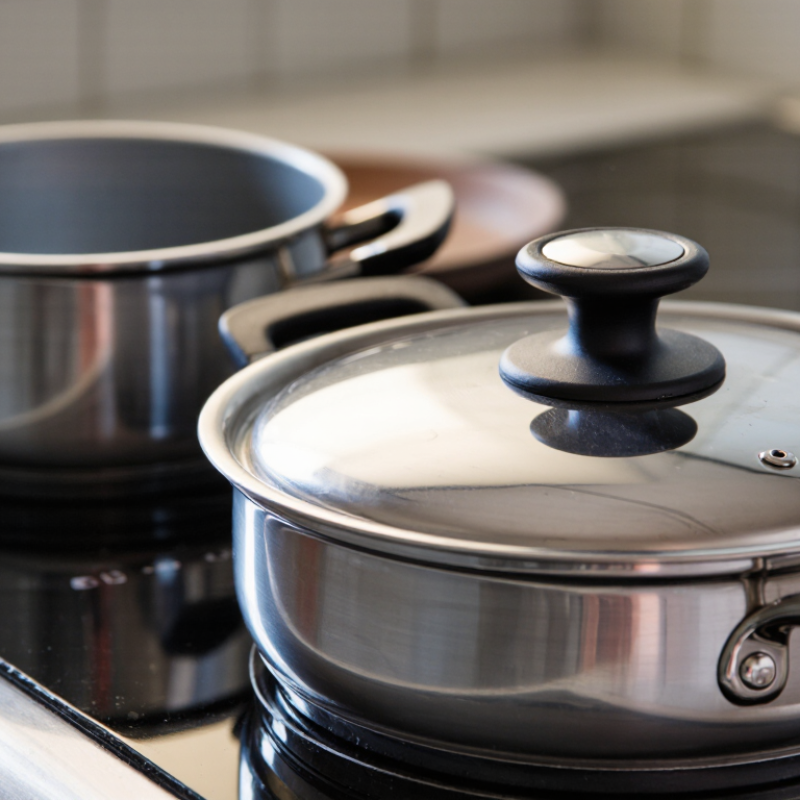
A universal saucepan lid uses an adjustable rim instead of one fixed diameter. Its edge contracts or expands across pans measuring roughly 16–30 cm. Flexible silicone or spring-loaded sections create contact around the rim. The lid should sit flat, not wobble. Measure the pan’s inner rim, not its widest outer edge. That small detail prevents many fitting mistakes.
A 2023 Grand View Research report valued the global cookware market at about USD 19.3 billion. It also forecast annual growth of approximately 5.1% through 2030. This expansion reflects demand for flexible kitchen tools, but “universal” still has limits. Handles, pouring lips, square shapes, and heavily curved walls can interrupt the seal. Steam vents also matter. A controlled vent reduces rattling and helps prevent sudden pressure from lifting the lid.
In a practical kitchen check, place the rim on a cool pan first. Press lightly at four points. A suitable lid should remain stable when the pan is gently nudged. For a 16 cm saucepan, an oversized rim may cover the cooking surface poorly. On a 30 cm pan, a small adjustment range can leave exposed gaps. I would not treat one lid as perfect for every vessel. Real cookware varies more than product charts suggest. Even a minor handle angle can change the fit.
Measuring Pan Diameters for a Secure Universal-Lid Fit
A universal saucepan lid is useful only when its rim matches the pan’s actual outside diameter. That measurement sounds simple, but curved edges often create errors. Use a rigid ruler, not a flexible tape, when possible. Place the pan on a flat surface. Measure straight across the widest point of the upper rim. Repeat the measurement at a right angle. The readings should be nearly identical. Small differences matter. Do not measure the base or the inside cooking area. A lid rests on the rim, so that edge controls stability and steam retention.
For pans with rolled or flared rims, measure from outer edge to outer edge. Keep the ruler level, rather than following the pan’s curve. If the rim is thick, measure its widest usable section. I once measured only one side and bought a lid that rocked slightly. That small mistake made lifting the pan feel unsafe. Rechecking several points is slower, but more reliable.
After choosing a lid, place it gently on the empty pan. The rim should sit evenly without wobbling or slipping inward. Leave the pan on a stable counter during this test. A lid that fits too tightly may catch when steam builds. One that fits loosely may rattle during simmering. Check the handle, vent, and edge clearance too. Measure twice. Fit once.
Common Saucepan Diameters for a Secure Universal-Lid Fit
Measure the outside diameter across the pan rim, not the base. Choose a Universal Lid whose adjustable range includes the measured rim diameter. The sizes below represent common nominal cookware diameters in centimetres.
How to use the chart: A 20 cm saucepan should be paired with a lid designed for approximately 20 cm cookware. Allow a small tolerance only when the lid manufacturer specifies an adjustable fitting range.
Steam Vents and Pressure Control Under EN 12983-1 Principles
A universal saucepan lid is designed to cover several pan diameters, usually through a stepped rim or flexible sealing edge. Its value depends on controlled contact, not a perfectly airtight seal. A lid may sit securely on a 16, 18, or 20-centimetre pan, yet still allow limited steam movement.
Steam control matters more than appearance. A small vent releases vapour before pressure builds excessively beneath the lid. This supports safer everyday cooking and reduces sudden rattling or splashing.
Under the safety principles associated with EN 12983-1, cookware should remain stable, durable, and suitable for normal domestic heating. This standard should not be confused with pressure-cooker certification. A Universal Lid is not a pressure vessel.
Check the fit while the pan is cool. The rim should rest evenly, without rocking or leaving a large open gap. During simmering, steam should escape through the intended vent rather than forcefully lifting one side. A clear vent is essential; dried starch or sauce can obstruct it. The handle should remain firm, but heat can still travel through metal parts. Use care.
In practice, the fit is rarely perfect.
That deserves attention.
A lid that fits one saucepan well may perform poorly on another with a thick rolled rim. Condensation can also drip toward the handle, especially when cooking pasta or vegetables. I would test the lid with water first, using low heat, then observe movement, vapour, and stability. Small design differences matter more than the word “universal.”
Silicone Heat Resistance: FDA 21 CFR 177.2600 Compliance
What Is a Universal Saucepan Lid and How Does It Fit?
A universal saucepan lid uses a flexible rim to cover several pan sizes. Its silicone edge can sit inside, outside, or across the pan lip. The correct fit should feel stable, not forced. Steam should escape through the vent without lifting the lid during gentle simmering. In daily use, I check the lid on cold and warm pans. A loose fit becomes obvious when condensation gathers unevenly.
Silicone heat resistance matters, but temperature claims need careful reading. Food-contact silicone should be evaluated under FDA 21 CFR 177.2600 requirements for repeated-use rubber articles. Compliance depends on the complete formulation, including pigments, additives, curing agents, and manufacturing controls. It is not enough to call a product “food-grade.” Suppliers should provide relevant test reports or a compliance declaration. FDA does not individually approve every saucepan lid.
A practical lid should tolerate boiling water, oily sauces, and repeated washing without cracking or becoming sticky. Follow the stated temperature limit. Do not place it directly over an open flame unless the instructions clearly allow it. I have found that silicone can remain comfortable to touch while trapped steam stays dangerously hot. That detail is easy to overlook. Another weakness is fit: one universal lid may cover many pans, but it rarely seals every diameter perfectly. Check the rim, vent, handle, and surface condition before cooking.
Handle Clearance, Stability, and Safe Lid Placement During Cooking
What Is a Universal Saucepan Lid and How Does It Fit?
Handle Clearance, Stability, and Safe Lid Placement During Cooking
A universal saucepan lid usually fits several pan sizes through a stepped rim or flexible edge. Measure your saucepan before buying one. The stated diameter may describe the outer rim, not the cooking surface. A lid should rest evenly on the pan, without rocking or dropping inside. Small gaps can be normal. They allow steam to escape and prevent pressure from building.
Handle clearance matters during everyday cooking. Place the lid so its handle does not touch the pan handle, nearby utensils, or a burner flame. Leave enough space to lift it with a dry, heat-resistant grip. Steam can escape suddenly. Keep your face and hands away from the opening. I once assumed a centered lid was always stable, but a crowded stovetop changed its position. That small mistake deserved more attention.
A stable lid sits flat and remains steady when water simmers. Do not force it onto a smaller pan or use it when the rim is bent. During cooking, place a hot lid on a heat-safe trivet, with the wet inner surface facing upward when practical. Do not rest it across the counter edge or over another burner. Check the knob and rim regularly for looseness, cracks, or trapped food. Some lids appear secure but shift when condensation collects. Test the fit with the burner off before cooking, especially when using a pan with a long or angled handle.





