


Ultrasonic Cleaning for Transmission Parts: Valve Bodies, Gears & Housings

Introduction

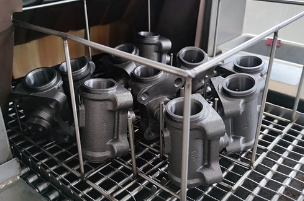
Automatic transmissions are among the most contamination-sensitive assemblies in any vehicle. Dozens of hydraulic passages, valves operating at tight tolerances, clutch packs, and precision gears all depend on clean fluid and clean surfaces to function. A single metal chip left in a valve body bore can cause a shift complaint, a solenoid failure, or a warranty comeback. For transmission rebuilders, remanufacturers, and service shops, cleaning is therefore not a routine chore—it is a core quality competency that determines whether a rebuilt transmission lasts. This article explains how ultrasonic cleaning handles the most difficult transmission components, including valve bodies, gears, and housings, and how to set up an ultrasonic cleaning machine process that delivers the cleanliness these parts demand.
11


Why Transmission Parts Are Especially Hard to Clean

⚙️

Dense, Complex Internal Hydraulics

A modern valve body is a maze of cross-drilled bores, valve spools, accumulator bores, separator-plate channels, and solenoid ports. Some passages are only a few millimeters wide, and many intersect at angles that trap debris with no straight-through path. Housings contain fluid galleries, bolt holes

Transmission components carry a mixture of very different soils:

  • • Dark, oxidized transmission fluid and varnish baked onto hot components
  • • Clutch and friction material dust from worn plates and bands
  • • Fine metal fines from gear, bearing, and bushing wear
  • • Machining chips from new or remachined housings and valve bodies
  • • Sealant and gasket residue on split surfaces
  • • Sludge and sediment that settles in the bottom of housings and coolers

The Cost of Getting It Wrong

Residual contamination in a rebuilt transmission causes: Hard, delayed, or erratic shifts; Solenoid failures; Contamination of new plates; Repeated comebacks; and Warranty claims. A transmission component cannot be judged clean by appearance alone.
 

Why Ultrasonic Cleaning Outperforms Traditional Methods

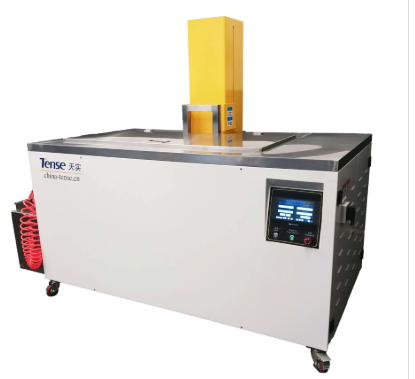
Lift Ultrasonic Cleaner TS-UD Series

33

Short Description:

The industry standard range of ultrasonic cleaning equipment ranges from 140 to 2300 liters capacity. They are designed for cleaning and descaling of all types of parts, components and accessories. All equipment in this line can incorporate a lifting platform that facilitates loading and unloading of parts.


The Limitation of Solvent Tanks and Spray Washers

Hot tanking, solvent soaking, and cabinet spray washers address surface grease but struggle with transmission internals. Spray jets cannot penetrate the valve body’s labyrinth of bores, and solvent soaking does not mechanically lift metal fines from cross-holes.

How Cavitation Reaches Every Passage

An industrial ultrasonic cleaner creates cavitation—millions of microscopic bubbles that implode throughout the liquid. Benefits include:

• Break the grip of varnish and oxidized ATF
• Strip clutch dust and metal fines from bores
• Lift fine chips from intersecting passages
• Clean gear tooth roots and splines uniformly


Component-Specific Cleaning Guides


Cleaning a Valve Body

Disassembly Is Essential: The valve body should be fully stripped: valves, springs, pins, and plates removed. Solenoids usually follow separate procedures.

Recommended Process:

  • Frequency: 40 kHz for precision protection.
  • Temperature: 55–70°C to soften varnish.
  • Detergent: Mildly alkaline, non-etching (aluminum safe).
  • Cycle: 10–20 minutes with agitation.


Gears, Shafts & Plates

Use 28–40 kHz for hardened steel. Include rust inhibitor in final rinse. Avoid cleaning friction material in the same bath to prevent fiber contamination.

Housings and Cases

Large-tank cleaning (TS-UD series) is ideal. Pre-scrape gasket material. Use filtration and oil skimming to handle heavy sludge loads.


The Full Cleaning Workflow

1. Drain & Pre-clean | 2. Disassemble | 3. Sort Materials | 4. Ultrasonic Wash | 5. Rinse (DI Final) | 6. Blow Out & Dry | 7. Inspect | 8. Clean Storage | 9. Reassemble


Conclusion

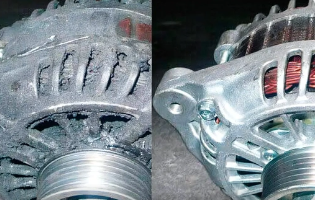
Transmission rebuilding is a cleanliness business. Ultrasonic cavitation cleans every flooded surface simultaneously, ensuring high-quality results. Get the process right in a properly sized ultrasonic cleaning machine, and your rebuilt transmissions will leave the bench genuinely clean.
22

For help configuring an ultrasonic system, contact Tense with your component dimensions.


FAQ

Q: Can I clean a transmission valve body without fully disassembling it?

A: Not reliably. Stuck valves and sealed plates prevent solution from reaching every bore. Fully strip the valve body before cleaning.

Q: What frequency should I use for aluminum valve bodies?

A: 40 kHz is the typical starting point with an aluminum-safe detergent to avoid etching precision bores.

Q: Are transmission solenoids safe in an ultrasonic cleaner?

A: Generally not in heated aqueous production baths. Many rebuilders replace them or follow specific manufacturer procedures.

Q: Can I clean the whole transmission case in one cycle?

A: Yes, if the tank is large enough. A lifting machine helps significantly with large cases to ensure all galleries fill and drain.


Powder Coat Booths

For those larger-sized parts, or smaller quantity runs, we have 2 independent powder coat booths and ovens. The quality, durability and affordability of today’s powder coating finishes make this the process of choice for world-class companies.

Powder coating advantages over other forms of coating are many. Materials used in the Powder coating process can be metals and non-metals that come in a multitude of thicknesses, textures, colors, etc. Another of Powder coating’s biggest advantages over conventional coatings is its ability to create finishes in many different textures. Powder Coating Booths allow us the ability to apply these advantages to large products.

Wet Paint Line

Tri-State Fabricators runs a full-service conveyor line for painting. Wet painting can provide protection or decoration to many different part styles. From start to finish, every project is easier to undergo random and point-based inspection by our skilled painting team.

Advantages to our Wet Paint Line are these lines start with product prep and ends with a thorough inspection of a high quality finished product. Our ability to complete large and small projects with a superior finish and doing so in a timely and economical fashion. This passes along the savings in production to our customers. When powder coating ins not an option, our Wet Paint Line gets the job done right the first time.

Wet Paint Booths

When the parts get big and heavy we roll-out our custom paint racks and oversize booth. By utilizing our partnerships with all the major paint brands, we can match virtually any color with wet paint.

The advantages of having access to a Wet Paint Booth are many. Large projects of many different shapes can be loaded into the booth. The Wet Paint Booth offers an environment that is much more controlled than a typical parts painting operation.

Not only are they used because of their controlled environment, but they’re are also advantageous when it comes to applying paint to parts that are needed in industries that require specialty coatings such as medical, aerospace, etc.

Military CARC

Our military forces have some very high standards when it comes to the finish of their vehicles and equipment. From the first pre-treatment step to final coat, it takes a great deal of knowledge and experience to protect the men and women of our armed forces. They deserve only the best, and Tri-State Fabricators provides it.

All of our processes are closely monitored by our staff and management teams. Both of which are highly trained in the processes of metal fabrication and finishing. Tri-State Fabricators’ goal is to always fully satisfy each and every customer, including the military. We will always put a 110% into what we do.

Glass-Bead Blasting

Abrasive media blasting is an excellent way to remove old paint, rust, and increase the paint/powder adhesion. Glass beads produce a much smoother and brighter finish than angular abrasives; leaving the part clean yet without any dimensional change. Chemically inert and environmentally friendly, we can recycle our beads approximately 30 times; making them a more preferred method of metal cleaning or surface finishing.

Advantages to Glass Bead Blasting are many. Glass bead blast media is used when a project is needing rough surfaces need to become smooth for applications of coatings such as paint. It is typically used to clean paint and rust from a product surface without deforming the surface it is being used on. Overall, compared to many other blasting media, Glass Bead Blasting is a very economical choice and those savings are always passed on to our customers.

Part Washing

Tri-State Fabricators utilize a zinc phosphate wash to clean and etch the material to ensure the best paint adhesion possible. The unique design of our 3-stage wash system does the work like a 5-stage. From Cleaning and rinsing to conversion coating and post-treatment, Our Part Washing process is a complete service and works throughout the fabrication service and the finishing service.

Along with the previously mentioned benefits, Curing is a vital chemical reaction that leaves the product finish hard and relatively safe from mild abrasion and aggressive corrosion. This process can be done in more than one way; ambient air-dry or in curing ovens at temps that exceed 240°.

Burn-Off Oven

From fixing paint mistakes (someone else’s of course) to simply cleaning our paint line hooks, our burn-off oven is put to good use. After a quick burn-off, a little clean up, and a fresh coat of paint, your parts will look better than new.

Why does our Burn-Off Oven work so well? Because super heating the air around parts turns the materials into ashes. From paint and powder coatings to rubber and machining oils, high temps do the job without degrading the integrity of the part.

Masking

Masking is a vital part of producing high quality products. We have die-cut masking patterns to protect machined surfaces as well as a wide range of plugs and caps to protect threaded holes and bolts. We provide permanent and temporary masking.

Masking allows the selected sections of a product to be protected from a fabrication or finishing service. This can be with both chemicals when etching and tapes, paints when only finishing just a section of the product. Masking is great in aiding the customization process of a project.

Screen Printing

Screen printing is a photographic process that transfers artwork onto a porous nylon screen which allows colored ink to flow through the screen and be deposited on an aluminum or plastic component. We can generally have just about any design created onto a screen for your parts.

Some of the advantages of Screen Printing are, brand recognition for your business displaying on your products, assembly instructions, product warnings/hazards, etc. Tri-State Fabricators produces Screen Printing of the highest quality so you know it’s durable.

Metal Finishing

Metal Finishing is the art of treating the exterior portion of product, often metal but can also be made of other materials, so that the surface is clean and free of any debris. Then the process of applying coats or either paint of powder coat takes place. This coating process improves the quality of the product in both appearance and resistance to wear and corrosion.

Tri-State Fabricators, Inc., understands that a project typically isn’t complete until a high-quality finish has been added to your product. This is why our painting and powder coating teams continuously inspect the products throughout the Metal Finishing process.
