What Is an Ultra High Temperature Servo Motor?
An Ultra High Temperature Servo Motor is designed to deliver controlled motion where ordinary motors may lose accuracy, insulation strength, or service life. These motors operate in environments with intense heat, such as industrial ovens, glass production lines, semiconductor equipment, and aerospace testing systems. Heat changes everything.
Unlike standard servo motors, high-temperature models use specialized winding insulation, heat-resistant magnets, sealed bearings, and reinforced feedback components. Their housings may include advanced alloys or ceramic elements that reduce thermal stress. The exact design depends on operating temperature, torque demand, duty cycle, and available cooling. A motor rated for 200°C may not perform reliably at that temperature continuously.
In practical installations, engineers examine more than the headline temperature rating. They review torque curves, encoder limits, cable materials, bearing grease, and thermal expansion data. Manufacturer datasheets, independent test reports, and application history provide stronger evidence than marketing claims alone. Installation details matter too. A poorly routed cable can transfer heat into sensitive electronics, while insufficient ventilation can shorten the motor’s working life.
This guide explains how an Ultra High Temperature Servo Motor works, where it is used, and which specifications deserve careful attention. It also considers common design compromises. Higher heat resistance may reduce peak speed, increase cost, or complicate maintenance. No single specification tells the whole story. Even experienced engineers can misjudge real-world heat transfer. Therefore, reliable selection requires measured temperatures, verified load data, and testing under actual operating conditions.
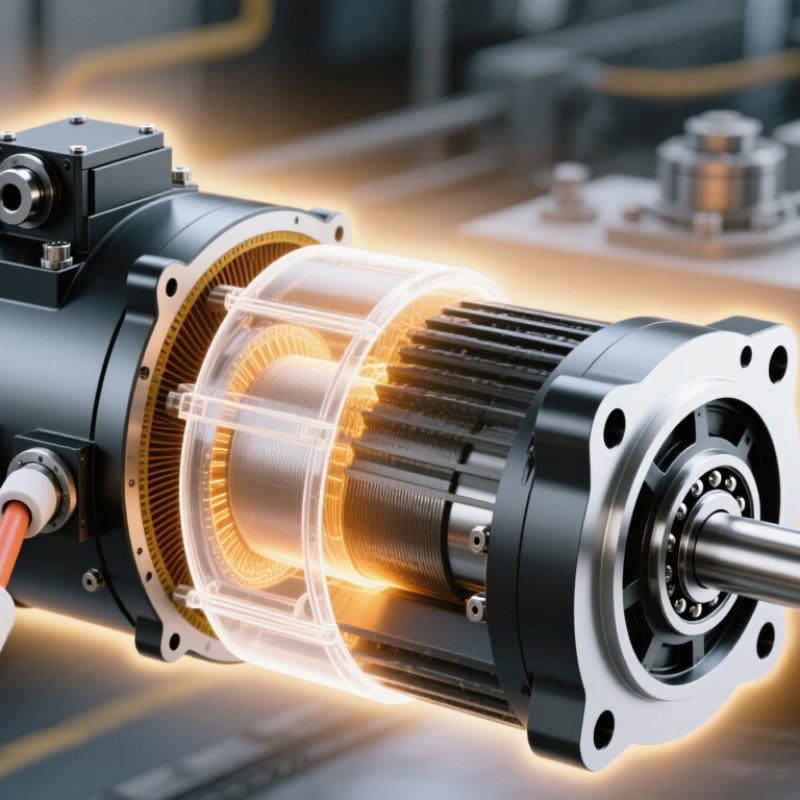
Definition and Core Function of an Ultra High Temperature Servo Motor
An ultra high temperature servo motor is a precision motor built to operate reliably in extreme heat. Its definition depends on the approved temperature rating of its insulation, bearings, seals, wiring, and feedback components. Unlike a standard motor, it maintains controlled motion near furnaces, ovens, and high-temperature processing equipment. The exact limit varies by construction, so the product specification must be checked carefully.
Its core function is accurate speed, position, and torque control under thermal stress. A drive sends electrical current to the motor, while an encoder reports shaft movement in real time. The control system then corrects errors within milliseconds. Heat can reduce lubrication quality and weaken insulation. It can also change resistance and reduce available torque. Engineers therefore consider thermal expansion, cooling paths, cable protection, and torque derating. Small details matter.
Tips: Confirm the temperature rating at the motor housing, not only the surrounding workspace. Check whether the encoder and connector share the same rating. Measure surface temperature during commissioning. Leave safety margin. No design is perfect, and a motor that works during a short test may struggle after continuous operation. Regular inspection can reveal hardened seals, unusual vibration, or unstable positioning before accuracy declines.
Key Components Designed for Extreme Heat Environments
What Is an Ultra High Temperature Servo Motor?
Key Components Designed for Extreme Heat Environments
An ultra high temperature servo motor is built for continuous positioning near furnaces, engines, or high-temperature processing lines. Its components must survive heat, vibration, and rapid thermal cycling. IEC 60085 rates Class H insulation for thermal endurance up to 180°C. That figure describes insulation capability, not a guaranteed operating temperature.
The winding system usually combines heat-resistant enamel, reinforced slot liners, and varnish with stable bonding strength. Ceramic or hybrid bearings can reduce thermal expansion and electrical damage. However, bearing grease often becomes the weak point. Its limit depends on speed, load, sealing, and relubrication practices. Small details matter.
Feedback devices also need protection. High-temperature resolvers can replace conventional optical encoders when dust, oil, or heat threatens signal accuracy. Shielded cables and high-temperature connectors prevent insulation cracking near the motor flange. IEC 60034-1 commonly references a 40°C ambient for standard motor ratings, so engineers must derate performance above that condition. In field commissioning, I would verify winding temperature, bearing temperature, and feedback stability separately. One sensor is not enough. Thermal models can also mislead when airflow changes. That deserves more testing.
What Is an Ultra High Temperature Servo Motor?
An ultra high temperature servo motor uses heat-resistant materials and components to maintain reliable performance in demanding environments. The chart shows the maximum operating temperatures associated with common IEC 60085 insulation classes used for motor windings.
Higher insulation classes allow the winding system to tolerate greater thermal stress. The complete motor temperature rating also depends on bearings, magnets, cables, seals, cooling design, and the surrounding ambient temperature.
How Ultra High Temperature Servo Motors Operate
An ultra high temperature servo motor is a precision actuator designed to maintain controlled motion where ordinary motors lose reliability. Its operation depends on a closed feedback loop. A resolver or high-temperature sensor measures shaft position and speed. The drive compares that signal with the commanded position, then adjusts current within milliseconds. This process keeps torque stable near furnaces, engines, and deep-well equipment.
Heat changes the design. High-temperature insulation, ceramic bearings, sealed lubricants, and reinforced magnets help protect the motor’s electromagnetic circuit. IEC 60085 classifies thermal insulation systems, with Class H rated at 180°C under specified conditions. That number is not a universal operating promise. Housing temperature, duty cycle, vibration, and cable materials still matter. The U.S. Department of Energy’s 2022 Motor Systems Market Assessment reports that motor-driven systems use about 68% of industrial electricity in the United States. Efficient servo control therefore has practical value, especially when frequent acceleration wastes energy.
Engineers often reduce current as temperature rises. This derating protects winding insulation and prevents demagnetization. Cooling may use conduction through a metal flange rather than conventional airflow. However, the feedback electronics may remain the weakest point. A sensor can survive the heat, yet its connector may fail first. That is an easy detail to miss. Field testing should measure winding temperature, bearing friction, position error, and response drift together. In harsh installations, laboratory results can look better than reality.
Applications Across High-Temperature Industrial Systems
What Is an Ultra High Temperature Servo Motor?
Applications Across High-Temperature Industrial Systems
An ultra high temperature servo motor provides controlled rotation where ordinary motors lose accuracy or insulation strength. The term is not perfectly standardized. In practice, it describes a servo system engineered for sustained heat, often near furnaces, kilns, thermal chambers, and metal-processing lines. Special insulation, high-temperature bearings, sealed feedback devices, and heat-resistant cables protect performance. Cooling may also use air, water, or a remote mounting arrangement.
Glass-forming equipment uses these motors to position molds and handling arms beside glowing material. Ceramic production relies on precise motion during firing, loading, and inspection. In steel plants, servo motors can adjust rollers, valves, and robotic tools near radiant heat. Thermal testing systems use them to move samples inside controlled chambers. These applications demand stable torque, repeatable positioning, and resistance to dust, vibration, and rapid temperature changes.
Small details matter. A motor may survive high ambient heat but fail when radiant heat reaches its encoder. Cable jackets can harden. Lubricant can degrade quietly. Engineers should measure the motor housing, nearby surfaces, and actual duty cycle during commissioning. A design that looks adequate on paper may still drift under continuous load. Thermal shielding helps, but it can also trap heat around the motor. This trade-off deserves testing. Feedback accuracy should be checked after warm-up, not only at room temperature.
Performance Standards, Benefits, and Selection Considerations
What Is an Ultra High Temperature Servo Motor?
An ultra high temperature servo motor is designed to operate reliably in unusually hot environments. Standard motors often lose insulation life, torque stability, or feedback accuracy as temperatures rise. These motors use heat-resistant insulation, improved sealing, and carefully selected bearings. Temperature alone is not enough. Performance ratings should reference recognized motor standards, insulation class, continuous torque, peak torque, and allowable winding temperature. Thermal cycling tests also matter because repeated heating and cooling can loosen connections or damage insulation. Encoder operation needs separate verification, especially near furnaces, ovens, or enclosed machinery.
The main benefit is stable motion where ordinary motors require frequent cooling or replacement. A properly matched motor can maintain positioning accuracy during long production cycles. It may also reduce cabinet ventilation demands and unplanned downtime. However, higher temperature capability does not automatically mean higher output. Torque often needs derating as ambient heat increases. Real conditions matter more than a headline rating. Airflow, mounting direction, shaft load, and nearby radiant heat can change results quickly.
Selection should begin with the actual duty cycle, not only the maximum temperature. Record ambient temperature, surface temperature, speed, acceleration, load inertia, and operating hours. Check insulation class, protection rating, cable materials, brake limits, and feedback-device tolerance. Ask for thermal test data and derating curves. A short trial under real heat is valuable. In my experience, calculations can miss heat trapped behind a metal guard. That detail deserves attention. Allow service access, because even reliable high-temperature equipment still needs inspection, cleaning, and occasional bearing checks.





