What Is a Turbidity Sensor and How Does It Work?

A Turbidity Sensor measures how cloudy a liquid is by detecting light affected by suspended particles. These particles may include silt, algae, or fine organic matter. In many instruments, a light source shines through a sample, while a detector measures scattered light, often at an angle near 90 degrees. More scattered light generally indicates greater turbidity. The instrument converts that signal into a reading, commonly expressed in NTU or FNU, depending on its design and measurement method. Small device. Important result.

This measurement helps operators monitor drinking-water treatment, wastewater processes, and rivers after rainfall. A sudden increase can point to changing conditions, but it does not identify the particles or prove that water is safe. That distinction matters. Bubbles, colored liquids, dirty sensor windows, and changing particle sizes can all affect readings. For dependable results, users typically follow the instrument’s calibration guidance, keep the optical surfaces clean, and compare measurements under consistent conditions. Even then, a single reading may not tell the whole story. Turbidity sensors provide useful evidence, not a complete water-quality assessment. Understanding how light, sample conditions, and sensor design interact makes it easier to interpret readings carefully—and to recognize when another test is needed.
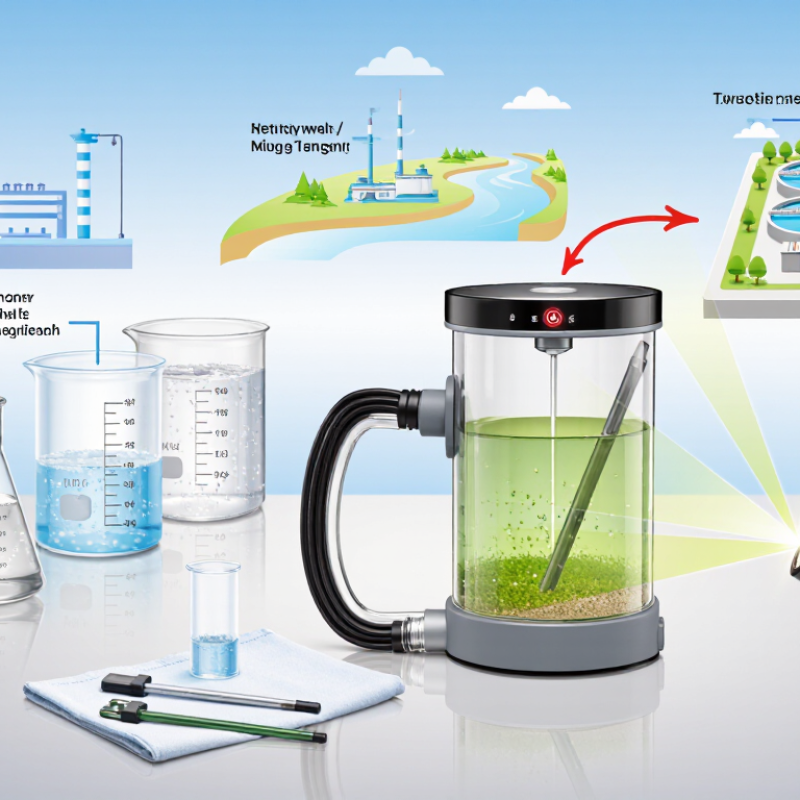
What Is a Turbidity Sensor and How Does It Work?

Definition and Purpose of a Turbidity Sensor

A turbidity sensor measures how cloudy a liquid is because of suspended particles, such as clay, silt, or organic matter. It does not identify each particle or directly measure water quality. Instead, it detects how particles affect light passing through or scattering inside a sample. The result is commonly reported in nephelometric turbidity units.

In a typical optical sensor, a light source shines into the water, and a detector records light scattered at an angle. More suspended particles often produce a stronger signal, though particle size and color can influence the reading. Small details matter. A trapped air bubble or dirty sensor window can also distort results.

The sensor’s purpose is to provide quick, repeatable turbidity readings for applications such as drinking-water treatment, wastewater monitoring, and stream surveys. Operators can use changes in readings to spot a filtration problem or track a muddy runoff event. Still, the number is not the whole story. Turbidity alone cannot confirm that water is safe, since dissolved substances may remain invisible. For dependable comparisons, sensors need suitable calibration, careful cleaning, and consistent sampling. Real-world readings can drift, so checking them against a known standard is worthwhile, even when the display looks steady.

The Light-Scattering Principle Behind Turbidity Measurement

A turbidity sensor estimates how cloudy water is by measuring how suspended particles affect light. It does not identify those particles. It detects an optical change. A lamp or LED sends a beam through a small water sample. Silt, algae, and other particles scatter some of that light. Tiny particles scatter light too, though their effects depend on size and concentration.

In many sensors, a detector sits at a right angle to the beam and measures side-scattered light. More scattered light often indicates greater turbidity. That relationship is not unlimited. At high particle concentrations, light can scatter repeatedly or become blocked, so the reading may no longer rise in a simple way. Some instruments measure light passing straight through the sample instead. Calibration links the sensor’s signal to a reference scale, such as nephelometric turbidity units.

Small details matter. A bubble can scatter light like a particle, while a scratched window can distort the beam. Colored water may absorb light and affect the result. For a reliable reading, keep the optical surfaces clean, avoid trapped bubbles, and use a consistent sampling method. Even then, turbidity is an estimate, not a direct count of particles. The sensor tells you how light behaved in that sample.

Key Components of a Turbidity Sensor

A turbidity sensor relies on several parts working together. The light source, often an LED, sends light into a water sample. A lens or aperture shapes the beam and limits stray light. In many sensors, a detector sits at about a 90-degree angle to the beam and measures light scattered by suspended particles. Some designs also measure light passing straight through the sample. More particles often produce more scattered light, but particle size, color, and shape can change the reading.

The detector converts incoming light into an electrical signal. A circuit then processes that signal and displays a turbidity value, commonly in NTU. The optical window protects the components from water, while the housing keeps them aligned. Small details matter. A film of residue on the window can distort readings, and bubbles may scatter light unexpectedly. Calibration checks the sensor against reference standards, but it cannot fix every sampling problem. A clean diagram makes the arrangement look simple; real samples are less tidy. Sensor placement, cleaning, and consistent calibration all affect whether measurements can be compared reliably.

How a Turbidity Sensor Measures Water Clarity

What Is a Turbidity Sensor and How Does It Work?

How a Turbidity Sensor Measures Water Clarity

A turbidity sensor estimates how cloudy water is by measuring light scattered by suspended particles. A light source shines into a sample, while a detector measures light scattered at an angle, often 90 degrees. More scattered light generally means higher turbidity, reported in nephelometric turbidity units (NTU). The reading is not a direct measure of particle count or water safety. Particle size, color, bubbles, and sensor placement can affect it. Small details matter.

The U.S. Environmental Protection Agency’s Method 180.1 describes nephelometric measurement, while its Surface Water Treatment Rules set filtration benchmarks. For conventional or direct filtration, combined filter effluent must be at or below 0.3 NTU in at least 95% of monthly measurements, and must not exceed 1 NTU. These are treatment requirements, not a guarantee that every clear-looking sample is safe. A sensor helps operators spot changes, but calibration and representative sampling remain essential.

Tips: Clean the optical window, remove trapped bubbles, and compare readings with a suitable reference standard. Record sample temperature and location, too. A sensor installed beside a pipe wall may tell a slightly different story than one sampling the main flow. That difference deserves attention.

Factors That Affect Sensor Accuracy and Applications

A turbidity sensor estimates how much suspended material scatters light through a water sample. Its reading is not a direct measure of contaminant concentration. Particle size, shape, and color all influence the result. Air bubbles can scatter light too, while a dirty optical window may slowly distort readings. Small details matter. EPA Method 180.1 describes nephelometric measurement and identifies sample color as a potential interference. In practice, technicians should clean the sensor, check it against standards, and compare readings with a consistent sampling method. Even careful checks cannot make every water sample behave alike.

These limits matter in drinking-water treatment, wastewater monitoring, and rivers where runoff carries silt. The U.S. EPA Surface Water Treatment Rules set a filtered-water benchmark of 0.3 NTU or less in at least 95% of monthly measurements for many conventional or direct filtration systems; the applicable requirements depend on system type. The World Health Organization’s drinking-water guidance says turbidity should ideally remain below 1 NTU to support effective disinfection. Those values are operational context, not universal sensor accuracy guarantees. A sensor beside a fast-flowing intake may report differently from a settled laboratory sample. That gap deserves attention, not a quick adjustment. Turbidity is useful, but it is not the whole story.


Powder Coat Booths

For those larger-sized parts, or smaller quantity runs, we have 2 independent powder coat booths and ovens. The quality, durability and affordability of today’s powder coating finishes make this the process of choice for world-class companies.

Powder coating advantages over other forms of coating are many. Materials used in the Powder coating process can be metals and non-metals that come in a multitude of thicknesses, textures, colors, etc. Another of Powder coating’s biggest advantages over conventional coatings is its ability to create finishes in many different textures. Powder Coating Booths allow us the ability to apply these advantages to large products.

Wet Paint Line

Tri-State Fabricators runs a full-service conveyor line for painting. Wet painting can provide protection or decoration to many different part styles. From start to finish, every project is easier to undergo random and point-based inspection by our skilled painting team.

Advantages to our Wet Paint Line are these lines start with product prep and ends with a thorough inspection of a high quality finished product. Our ability to complete large and small projects with a superior finish and doing so in a timely and economical fashion. This passes along the savings in production to our customers. When powder coating ins not an option, our Wet Paint Line gets the job done right the first time.

Wet Paint Booths

When the parts get big and heavy we roll-out our custom paint racks and oversize booth. By utilizing our partnerships with all the major paint brands, we can match virtually any color with wet paint.

The advantages of having access to a Wet Paint Booth are many. Large projects of many different shapes can be loaded into the booth. The Wet Paint Booth offers an environment that is much more controlled than a typical parts painting operation.

Not only are they used because of their controlled environment, but they’re are also advantageous when it comes to applying paint to parts that are needed in industries that require specialty coatings such as medical, aerospace, etc.

Military CARC

Our military forces have some very high standards when it comes to the finish of their vehicles and equipment. From the first pre-treatment step to final coat, it takes a great deal of knowledge and experience to protect the men and women of our armed forces. They deserve only the best, and Tri-State Fabricators provides it.

All of our processes are closely monitored by our staff and management teams. Both of which are highly trained in the processes of metal fabrication and finishing. Tri-State Fabricators’ goal is to always fully satisfy each and every customer, including the military. We will always put a 110% into what we do.

Glass-Bead Blasting

Abrasive media blasting is an excellent way to remove old paint, rust, and increase the paint/powder adhesion. Glass beads produce a much smoother and brighter finish than angular abrasives; leaving the part clean yet without any dimensional change. Chemically inert and environmentally friendly, we can recycle our beads approximately 30 times; making them a more preferred method of metal cleaning or surface finishing.

Advantages to Glass Bead Blasting are many. Glass bead blast media is used when a project is needing rough surfaces need to become smooth for applications of coatings such as paint. It is typically used to clean paint and rust from a product surface without deforming the surface it is being used on. Overall, compared to many other blasting media, Glass Bead Blasting is a very economical choice and those savings are always passed on to our customers.

Part Washing

Tri-State Fabricators utilize a zinc phosphate wash to clean and etch the material to ensure the best paint adhesion possible. The unique design of our 3-stage wash system does the work like a 5-stage. From Cleaning and rinsing to conversion coating and post-treatment, Our Part Washing process is a complete service and works throughout the fabrication service and the finishing service.

Along with the previously mentioned benefits, Curing is a vital chemical reaction that leaves the product finish hard and relatively safe from mild abrasion and aggressive corrosion. This process can be done in more than one way; ambient air-dry or in curing ovens at temps that exceed 240°.

Burn-Off Oven

From fixing paint mistakes (someone else’s of course) to simply cleaning our paint line hooks, our burn-off oven is put to good use. After a quick burn-off, a little clean up, and a fresh coat of paint, your parts will look better than new.

Why does our Burn-Off Oven work so well? Because super heating the air around parts turns the materials into ashes. From paint and powder coatings to rubber and machining oils, high temps do the job without degrading the integrity of the part.

Masking

Masking is a vital part of producing high quality products. We have die-cut masking patterns to protect machined surfaces as well as a wide range of plugs and caps to protect threaded holes and bolts. We provide permanent and temporary masking.

Masking allows the selected sections of a product to be protected from a fabrication or finishing service. This can be with both chemicals when etching and tapes, paints when only finishing just a section of the product. Masking is great in aiding the customization process of a project.

Screen Printing

Screen printing is a photographic process that transfers artwork onto a porous nylon screen which allows colored ink to flow through the screen and be deposited on an aluminum or plastic component. We can generally have just about any design created onto a screen for your parts.

Some of the advantages of Screen Printing are, brand recognition for your business displaying on your products, assembly instructions, product warnings/hazards, etc. Tri-State Fabricators produces Screen Printing of the highest quality so you know it’s durable.

Metal Finishing

Metal Finishing is the art of treating the exterior portion of product, often metal but can also be made of other materials, so that the surface is clean and free of any debris. Then the process of applying coats or either paint of powder coat takes place. This coating process improves the quality of the product in both appearance and resistance to wear and corrosion.

Tri-State Fabricators, Inc., understands that a project typically isn’t complete until a high-quality finish has been added to your product. This is why our painting and powder coating teams continuously inspect the products throughout the Metal Finishing process.



