


Top Wet Grid Ball Mill Manufacturers for Global Buyers?

Choosing among the top Wet Grid Ball Mill manufacturers requires more than comparing catalogue prices. Buyers must examine engineering evidence, site experience, and after-sales support.

Grinding remains a major energy consumer in mineral processing. A CEEC report identifies comminution as a substantial share of mining energy demand. The International Energy Agency also stresses efficiency improvements across energy-intensive industries. These findings make mill selection commercially important. A small efficiency difference can affect thousands of operating hours.

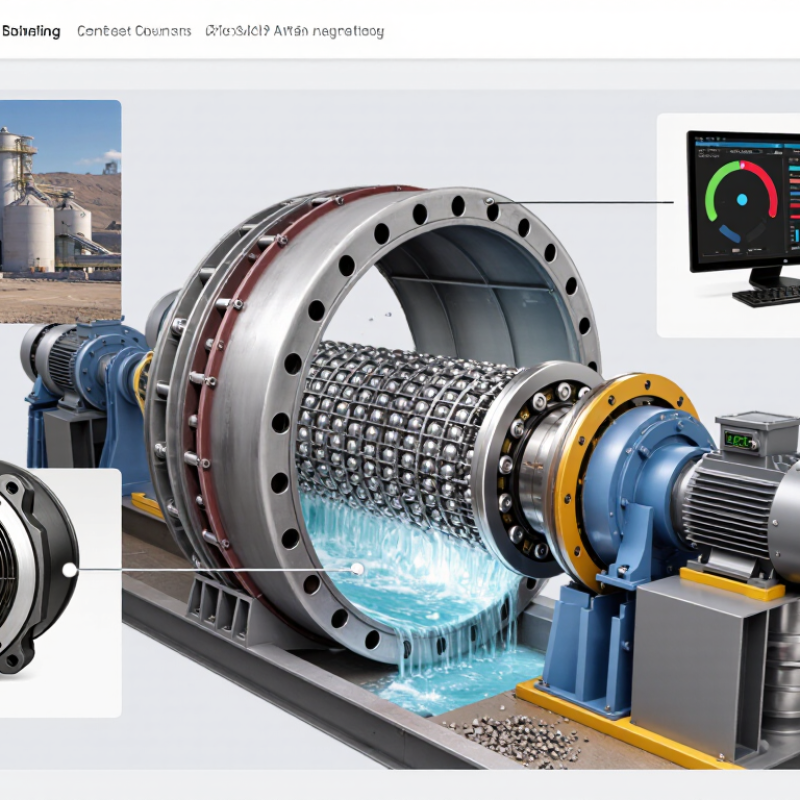
A Wet Grid Ball Mill uses water and a grate discharge system. It can support high-capacity grinding and controlled pulp discharge. Picture the operating details: a heavy shell rotates, liners protect the cylinder, and steel balls break ore against a wet slurry. Dr. Tim Napier-Munn, a respected comminution specialist, wrote, “The purpose of grinding is liberation.” That principle remains practical. Manufacturers should prove how their equipment achieves the required liberation size.

This guide compares established suppliers for global buyers. It considers mill durability, motor efficiency, liner design, automation, spare-part access, and commissioning support. It also reviews evidence from technical datasheets, mine references, and independent industry reports. No ranking is universal. Ore hardness, feed size, throughput, water quality, and local service capacity can change the result.

Some manufacturers publish impressive capacity figures. Those numbers need context. A laboratory test cannot fully represent a remote mine site. Buyers should request verified performance data from comparable installations. That step is often overlooked. It should not be.
Top Wet Grid Ball Mill Manufacturers for Global Buyers?

Wet Grid Ball Mill Fundamentals: Grid Discharge, Feed Size, and Grinding Principles

Top Wet Grid Ball Mill Manufacturers for Global Buyers?

Wet grid ball mills use water, grinding media, and rotating motion to reduce ore size. Their design matters because comminution can consume about 3–4% of global electricity, according to published assessments from the Coalition for Eco Efficient Comminution. At mine sites, grinding may represent up to half of total electricity use.

Grid discharge is the key feature. A discharge grid holds back oversized grinding media while allowing ground slurry to leave through openings. This supports faster pulp removal than overflow discharge in suitable circuits. However, performance depends on feed size, ore hardness, slurry density, and mill speed.

Feed particles that are too large can reduce capacity and increase liner wear. A practical design often targets controlled feed preparation, rather than trusting the mill to correct poor crushing.

Grinding combines impact and attrition. Larger balls break coarse particles, while smaller balls polish finer fragments. The mill usually operates below critical speed, allowing the charge to lift and cascade inside the shell.

Published Bond grinding research shows that energy demand rises as the required product size becomes finer. That sounds obvious, yet buyers sometimes compare capacity without checking product-size requirements. A small pilot test is wiser. Measure feed size, moisture, hardness, discharge density, and power draw. One overlooked variable can distort the whole selection. Mine conditions are rarely as tidy as a datasheet.


Core Specifications: 0.17–160 t/h Capacity and 18.5–6,500 kW Motor Power

Top Wet Grid Ball Mill Manufacturers for Global Buyers?

Core specifications often separate a useful wet grid ball mill from an expensive mismatch. Listed capacities may range from 0.17 to 160 t/h. Motor power can span 18.5 to 6,500 kW. These figures describe a broad equipment family, not one universal machine. Actual output depends on ore hardness, feed size, slurry density, mill speed, and circulating load. A reliable manufacturer should explain these limits clearly.

From project experience, I would request test data before accepting a capacity claim. Ask for the mill diameter, effective volume, grate opening, rated speed, and liner material. Check whether the stated throughput refers to fresh feed or total circuit flow. That difference matters. A neat brochure is not proof. Independent inspection, dimensional drawings, and recent operating references provide stronger evidence. It is also wise to compare energy consumption at the target duty, not only motor size.

For global buyers, manufacturing quality extends beyond the shell and gearbox. Review welding procedures, heat-treatment records, bearing arrangements, and spare-part availability. Confirm the supplier can support installation, alignment, lubrication, and operator training across regions. A 6,500 kW drive requires serious electrical planning and maintenance access. Smaller 18.5 kW units still need accurate load calculations. I would question any proposal that ignores water balance or discharge-grate wear. Some specifications remain uncertain until ore testing is completed. That is an uncomfortable, but necessary, part of responsible selection.

This chart presents the published specification envelope for wet grid ball mills: throughput ranges from 0.17 to 160 t/h, while motor power ranges from 18.5 to 6,500 kW. The two measures use separate vertical axes because their units and scales are different.

Leading Global Manufacturers: Technology, Certifications, and Production Capacity

Top wet grid ball mill manufacturers for global buyers should be judged by evidence, not catalog language. Technology matters when it survives muddy, abrasive operation. Look for rubber-lined or composite liners, variable-speed drives, automatic lubrication, and sealed discharge systems. These features can reduce contamination and improve control during continuous grinding. However, no design performs equally well with every ore. Feed size, slurry density, Bond Work Index, and target P80 must be tested together.

Certifications provide useful screening evidence. The ISO Survey 2023 recorded more than 1.2 million ISO 9001 certificates worldwide, but certification alone does not prove mill quality. Buyers should request traceable material certificates, welding records, factory acceptance tests, and documented service procedures. ISO 14001 and ISO 45001 can also indicate structured environmental and safety management. Still, paperwork can hide weak field experience. A witnessed load test is more convincing than polished brochures.

Production capacity needs measurable proof. Market reports from Grand View Research and Mordor Intelligence show continued growth in mining equipment demand, driven by expanding mineral processing projects. Leading manufacturers should disclose annual vessel output, machining limits, motor-testing capability, and typical delivery windows. Ask for references involving similar ore hardness and mill sizes. A realistic quotation should include installation tolerances, spare-liner availability, and commissioning support. Some suppliers publish impressive throughput figures without stating slurry conditions. That is a warning. A smaller plant with reliable testing may outperform a larger factory on difficult projects.

Buyer Comparison Metrics: Throughput, Energy Consumption, Wear Life, and Product Size

Top Wet Grid Ball Mill Manufacturers for Global Buyers?

For global buyers, manufacturer comparisons should begin with measured performance, not catalogue promises. Throughput must be checked against feed hardness, moisture, particle size, and operating hours. A mill producing 100 tonnes per hour in soft ore may perform very differently with dense, abrasive material. Ask for test data from comparable conditions.

Energy consumption deserves equal attention. Compare kilowatt-hours per tonne, not motor power alone. A larger motor may deliver higher capacity, but inefficient grinding can increase operating costs sharply. Product size also matters. Check the percentage passing the target screen, including the final 80% passing value. Small changes can affect downstream recovery and classification.

Tips: Request a wear-life estimate for liners and grinding media. Confirm whether the estimate uses actual ore samples. Inspect maintenance records and replacement intervals. A longer wear life can reduce shutdowns, but cheaper components may seem attractive initially. I have seen buyers overlook liner access, adding hours to routine service. No metric is perfect. Compare several conditions, record assumptions, and review independent test results before selecting a supplier.

Top Wet Grid Ball Mill Manufacturers for Global Buyers? - Buyer Comparison Metrics: Throughput, Energy Consumption, Wear Life, and Product Size

Mill Size Class
(diameter × length)
Typical Feed Size
F80
Typical Throughput
t/h
Specific Energy Consumption
kWh/t
Expected Liner Wear Life
operating hours
Typical Product Size
P80
Common Application
1.2 × 1.8 m ≤10 mm 5–15 18–28 4,000–8,000 75–250 µm Pilot plants, laboratories, and small concentrators
1.8 × 3.0 m ≤15 mm 15–45 15–24 5,000–9,000 75–250 µm Small-scale ore and mineral processing
2.4 × 3.6 m ≤20 mm 40–100 13–21 6,000–10,000 75–200 µm Copper, gold, iron ore, and base-metal grinding
3.2 × 4.5 m ≤25 mm 80–180 11–19 7,000–11,000 75–180 µm Standard-duty mineral concentrators
4.0 × 6.0 m ≤30 mm 150–320 10–17 8,000–12,000 75–150 µm Large-scale continuous wet grinding circuits
5.0 × 8.0 m ≤35 mm 250–500 9–16 8,000–14,000 75–150 µm High-capacity mineral processing plants
Data basis: The figures are indicative engineering ranges for wet, overflow or grate-discharge ball-mill circuits processing medium-hard ores. Actual results vary with ore hardness, mineral density, feed moisture, mill filling level, ball size, slurry density, classification efficiency, liner material, and target grind size. Throughput and energy values should be verified through a vendor test or site-specific design study.

Supplier Evaluation: ISO 9001, Spare Parts, Service Coverage, and Total Cost of Ownership

Top Wet Grid Ball Mill Manufacturers for Global Buyers

When global buyers compare wet grid ball mill manufacturers, the certificate deserves more than a logo. An ISO 9001 certificate shows a documented quality system, not flawless equipment. Ask for its scope, issuing body, and current validity. Request inspection records for shells, liners, gear assemblies, and welding. A supplier offering traceable files feels more dependable. Still, paperwork can hide weak workshop discipline. Visit the factory when the project value justifies it.

Spare parts determine whether production waits three days or three weeks. Confirm the availability of liners, diaphragms, bearings, pinions, seals, and lubrication components. Ask for part numbers, material grades, drawings, and quoted lead times. I prefer suppliers keeping critical parts near the operating region. This reduces customs surprises and emergency freight. Local stock is not always genuine. Require batch identification and storage controls.

Service coverage should be measured in working actions, not a colorful map. Check commissioning support, remote diagnostics, technician response hours, training, and language capability. Include travel costs and weekend rates in the contract. Total cost of ownership includes power consumption, grinding media, liner life, water demand, maintenance labor, and downtime. A cheaper mill may become expensive after one gearbox failure. My evaluation sheets are useful, but not perfect. Recheck downtime estimates against comparable plants and actual maintenance logs.

Powder Coat Booths

For those larger-sized parts, or smaller quantity runs, we have 2 independent powder coat booths and ovens. The quality, durability and affordability of today’s powder coating finishes make this the process of choice for world-class companies.

Powder coating advantages over other forms of coating are many. Materials used in the Powder coating process can be metals and non-metals that come in a multitude of thicknesses, textures, colors, etc. Another of Powder coating’s biggest advantages over conventional coatings is its ability to create finishes in many different textures. Powder Coating Booths allow us the ability to apply these advantages to large products.

Wet Paint Line

Tri-State Fabricators runs a full-service conveyor line for painting. Wet painting can provide protection or decoration to many different part styles. From start to finish, every project is easier to undergo random and point-based inspection by our skilled painting team.

Advantages to our Wet Paint Line are these lines start with product prep and ends with a thorough inspection of a high quality finished product. Our ability to complete large and small projects with a superior finish and doing so in a timely and economical fashion. This passes along the savings in production to our customers. When powder coating ins not an option, our Wet Paint Line gets the job done right the first time.

Wet Paint Booths

When the parts get big and heavy we roll-out our custom paint racks and oversize booth. By utilizing our partnerships with all the major paint brands, we can match virtually any color with wet paint.

The advantages of having access to a Wet Paint Booth are many. Large projects of many different shapes can be loaded into the booth. The Wet Paint Booth offers an environment that is much more controlled than a typical parts painting operation.

Not only are they used because of their controlled environment, but they’re are also advantageous when it comes to applying paint to parts that are needed in industries that require specialty coatings such as medical, aerospace, etc.

Military CARC

Our military forces have some very high standards when it comes to the finish of their vehicles and equipment. From the first pre-treatment step to final coat, it takes a great deal of knowledge and experience to protect the men and women of our armed forces. They deserve only the best, and Tri-State Fabricators provides it.

All of our processes are closely monitored by our staff and management teams. Both of which are highly trained in the processes of metal fabrication and finishing. Tri-State Fabricators’ goal is to always fully satisfy each and every customer, including the military. We will always put a 110% into what we do.

Glass-Bead Blasting

Abrasive media blasting is an excellent way to remove old paint, rust, and increase the paint/powder adhesion. Glass beads produce a much smoother and brighter finish than angular abrasives; leaving the part clean yet without any dimensional change. Chemically inert and environmentally friendly, we can recycle our beads approximately 30 times; making them a more preferred method of metal cleaning or surface finishing.

Advantages to Glass Bead Blasting are many. Glass bead blast media is used when a project is needing rough surfaces need to become smooth for applications of coatings such as paint. It is typically used to clean paint and rust from a product surface without deforming the surface it is being used on. Overall, compared to many other blasting media, Glass Bead Blasting is a very economical choice and those savings are always passed on to our customers.

Part Washing

Tri-State Fabricators utilize a zinc phosphate wash to clean and etch the material to ensure the best paint adhesion possible. The unique design of our 3-stage wash system does the work like a 5-stage. From Cleaning and rinsing to conversion coating and post-treatment, Our Part Washing process is a complete service and works throughout the fabrication service and the finishing service.

Along with the previously mentioned benefits, Curing is a vital chemical reaction that leaves the product finish hard and relatively safe from mild abrasion and aggressive corrosion. This process can be done in more than one way; ambient air-dry or in curing ovens at temps that exceed 240°.

Burn-Off Oven

From fixing paint mistakes (someone else’s of course) to simply cleaning our paint line hooks, our burn-off oven is put to good use. After a quick burn-off, a little clean up, and a fresh coat of paint, your parts will look better than new.

Why does our Burn-Off Oven work so well? Because super heating the air around parts turns the materials into ashes. From paint and powder coatings to rubber and machining oils, high temps do the job without degrading the integrity of the part.

Masking

Masking is a vital part of producing high quality products. We have die-cut masking patterns to protect machined surfaces as well as a wide range of plugs and caps to protect threaded holes and bolts. We provide permanent and temporary masking.

Masking allows the selected sections of a product to be protected from a fabrication or finishing service. This can be with both chemicals when etching and tapes, paints when only finishing just a section of the product. Masking is great in aiding the customization process of a project.

Screen Printing

Screen printing is a photographic process that transfers artwork onto a porous nylon screen which allows colored ink to flow through the screen and be deposited on an aluminum or plastic component. We can generally have just about any design created onto a screen for your parts.

Some of the advantages of Screen Printing are, brand recognition for your business displaying on your products, assembly instructions, product warnings/hazards, etc. Tri-State Fabricators produces Screen Printing of the highest quality so you know it’s durable.

Metal Finishing

Metal Finishing is the art of treating the exterior portion of product, often metal but can also be made of other materials, so that the surface is clean and free of any debris. Then the process of applying coats or either paint of powder coat takes place. This coating process improves the quality of the product in both appearance and resistance to wear and corrosion.

Tri-State Fabricators, Inc., understands that a project typically isn’t complete until a high-quality finish has been added to your product. This is why our painting and powder coating teams continuously inspect the products throughout the Metal Finishing process.
