


Water Ripple Panels bring movement to otherwise quiet surfaces. Light breaks across their ridges, shifting with the viewer’s position and the time of day. For hotels, retail spaces, offices, and homes, that effect can add depth without introducing another color or pattern. Yet a striking sample tells only part of the story.
The IEA’s 2023 Global Status Report for Buildings and Construction reports that the sector accounted for 34% of global energy demand and 37% of energy- and process-related CO₂ emissions in 2022. Those figures do not measure the impact of ripple panels specifically. They do, however, underline why buyers increasingly examine material composition, durability, and production claims alongside appearance. A polished finish is not a sustainability credential. Ask for documentation.
This guide introduces ten manufacturers serving international buyers, with attention to product range, customization, export readiness, and the details that affect installation. Panel material matters. So do thickness, ripple depth, edge treatment, optical distortion, packing, and replacement availability. A small sample can deceive; full-size panels may read differently under warm lighting or beside a window. Request technical sheets, current test reports, and project references before comparing quotations. Confirm applicable safety and performance requirements with the project team, since they vary by application and destination. Manufacturer information can also change, and listed capabilities should be verified directly. The comparison is a starting point, not an endorsement. Some suppliers may suit a one-off feature wall; others may better handle repeat orders. That distinction is easy to miss.
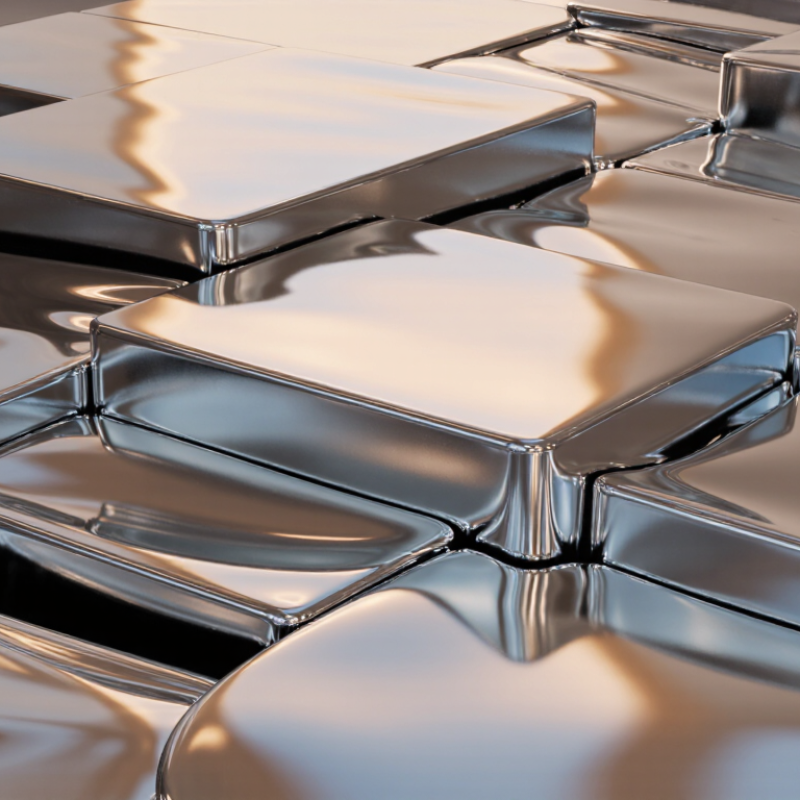
Water ripple panels create moving reflections through shallow, irregular surface geometry. They are commonly made from stainless steel, aluminum, copper, or textured glass, with each material shaping weight, durability, and appearance. Stainless steel suits busy interiors; aluminum is lighter, while copper develops a warmer, changing tone. Not always. Pressed or embossed sheets offer repeatable patterns, while hand-shaped surfaces may show subtle variation.
Pattern depth determines how strongly a panel scatters light. Fine ripples produce a softer shimmer; deeper waves create sharper highlights near focused lighting. Brushed, mirror, and colored finishes change the effect, but fingerprints and nearby fixtures become more visible on reflective faces. Request a physical sample and view it under the project’s actual lighting. A rendering can mislead.
Designers use panels on feature walls, ceilings, reception desks, lift interiors, and retail displays. In wet or high-touch areas, confirm the substrate, edge treatment, cleaning method, and fixing system with the fabricator. Large sheets need careful handling; slight distortions can interrupt a continuous reflection. Allow for expansion and access panels where the installation requires them. The finish is striking, yet maintenance expectations should be discussed early.

Choosing a water ripple panel manufacturer starts with evidence, not polished catalog images. Ask for the stainless steel grade, sheet thickness, finish options, and documented dimensional tolerances. Ask for proof. Request a physical sample large enough to inspect under side lighting; tiny swatches can hide uneven waves or scratches. Compare several areas, not just the most attractive corner. Details matter. A clear sample approval process helps prevent disagreements about ripple depth, reflectivity, and acceptable variation after production.
Production capability deserves equal attention. Confirm how panels are formed, cut, finished, and protected before shipment. Request inspection records, packaging details, and realistic lead times for the actual order size. For exterior or humid installations, discuss the environment and suitable material and finish; do not rely on a generic “corrosion-resistant” claim. Check whether the supplier can repeat the approved appearance across multiple sheets, since lighting and viewing angle can make small differences obvious. Communication is part of quality. Replies should address specific questions, though a neat document cannot guarantee a flawless batch. Keep agreed tolerances, sample references, and inspection points in writing, then verify them when the panels arrive.
Key Criteria for Evaluating Water Ripple Panel Manufacturers
Suggested evaluation weights for comparing suppliers, not measured market results. Prioritize documented material specifications, consistent finish quality, relevant production capabilities, and verifiable quality controls; adjust the weights to suit project requirements.
Regional supply for water ripple panels follows the wider stainless-steel ecosystem. The World Stainless Association’s Stainless Steel in Figures 2024 reports global crude stainless-steel production of about 58.4 million tonnes in 2023. China produced roughly 36.7 million tonnes, making East Asia a major source of sheet and formed components. This figure measures raw steel, not finished decorative panels. The gap matters.
Europe and North America also serve established architectural markets, but buyers may encounter different lead times, fabrication options, and freight costs. Regional production statistics cannot confirm a supplier’s ripple depth, surface consistency, or protective-film quality. Inspect physical samples under both daylight and warm indoor lighting. Reflections can reveal waviness that product photos hide. Not a perfect proxy.
Tips: Request the alloy grade, sheet thickness, finish direction, and sample dimensions in writing. Compare samples beside a window; minor color shifts may become obvious. Also verify packaging details, since broad panels can scratch at their edges during transit.
Top 10 Water Ripple Panel Manufacturers for Global Buyers
Choosing among water ripple panel manufacturers requires more than comparing catalog photographs. Buyers should check alloy grade, sheet thickness, ripple depth, finish consistency, and packaging. World Stainless reports global stainless steel crude production reached 58.4 million tonnes in 2023. This scale supports a broad supply base, but it does not guarantee uniform decorative-panel quality. Ask suppliers for mill certificates, inspection records, and samples from the intended production batch.
Look closely at how panels behave under real lighting. A shallow ripple may appear nearly flat in a bright showroom, then create sharp glare beside a window. Request samples large enough to reveal pattern variation, and confirm whether the finish is directional. Also clarify tolerances, edge protection, lead time, and replacement procedures before approving an order. Small details matter. A beautiful sample can still conceal uneven color between sheets—a risk buyers should test, not assume away.
Tips: Compare at least three samples under the project’s actual lighting. Specify the alloy, thickness, finish, and acceptable variation in writing. For outdoor use, ask for corrosion-resistance guidance suited to the site environment. One practical reminder: shipping damage can ruin a good finish, so inspect protective films and crate design before dispatch.
| No. | Comparison Dimension | Relevant Industry Reference | What Global Buyers Should Verify |
|---|---|---|---|
| 1 | Base metal options | Decorative ripple panels are commonly specified in stainless steel, aluminum, or copper. | Confirm the exact alloy, material standard, and whether the quoted material is solid metal or a coated product. |
| 2 | Stainless steel specification | Grades 304 and 316 are widely used stainless steel grades; ASTM A240 covers stainless steel plate, sheet, and strip for pressure vessels and general applications. | Request the grade and a material test certificate. For chloride-rich environments, assess whether 316 is appropriate for the project. |
| 3 | Aluminum specification | Alloys such as 3003 and 5052 are used for sheet applications; ASTM B209 covers aluminum and aluminum-alloy sheet and plate. | Check alloy, temper, thickness, and finish against the project drawings and applicable local requirements. |
| 4 | Copper specification | ASTM B152 covers copper sheet, strip, plate, and rolled bar; copper products are also available in different tempers. | Verify copper grade, temper, surface condition, and whether a protective coating is included. |
| 5 | Ripple pattern and reflectivity | Ripple appearance depends on the formed surface geometry and the panel’s reflective finish. | Approve a physical sample or controlled mock-up to assess pattern scale, distortion, and appearance under project lighting. |
| 6 | Surface finish | Available finishes may include polished, brushed, colored, or coated surfaces, depending on the metal and production process. | Specify finish, color reference where applicable, protective film, and acceptable sample-to-production variation. |
| 7 | Panel size and fabrication | Panel dimensions, edge details, cut-outs, and fixing methods are project-specific fabrication requirements. | Submit approved drawings and confirm dimensional tolerances, edge treatment, joints, and installation interface before production. |
| 8 | Intended environment | Corrosion performance depends on the metal, finish, exposure conditions, and maintenance; no single material is suitable for every environment. | State whether panels are for interior, exterior, coastal, or high-humidity use, and request written suitability guidance. |
| 9 | Quality documentation | Material certificates, inspection records, approved samples, and packing details can help document product conformity. | Agree on required documents, inspection points, acceptance criteria, and traceability before placing an order. |
| 10 | Export packing and logistics | Reflective metal surfaces can be vulnerable to scratching and handling damage during transport. | Confirm protective film, separation between panels, crate design, shipment terms, and responsibility for transit damage. |
Note: This table is an anonymized buyer-evaluation guide, not a verified ranking or a set of company-specific manufacturer claims. Confirm current specifications and applicable standards with each supplier.
When comparing water ripple panel manufacturers, look beyond the showroom finish. Ask for material specifications, thickness tolerances, coating details, and test records for corrosion and surface durability. Request a full-size sample: shallow ripples can look dramatic under angled light but nearly disappear in ordinary room lighting. Finish samples can flatter a product. Confirm how color and texture are checked across production batches, and whether replacement panels can match later orders.
Customization matters when panel depth, dimensions, or edge details must align with lighting and adjoining surfaces. Ask for drawings, a prototype, and written approval before production.
Supply capability deserves equal scrutiny: confirm monthly output, realistic lead times, export packaging, and how damaged pieces are handled. UNCTAD’s Review of Maritime Transport 2023 also describes ongoing disruption and uncertainty in shipping routes. A factory’s quoted capacity is not the same as dependable delivery. I would still question any comparison that relies only on price and catalog photographs.


For those larger-sized parts, or smaller quantity runs, we have 2 independent powder coat booths and ovens. The quality, durability and affordability of today’s powder coating finishes make this the process of choice for world-class companies.
Powder coating advantages over other forms of coating are many. Materials used in the Powder coating process can be metals and non-metals that come in a multitude of thicknesses, textures, colors, etc. Another of Powder coating’s biggest advantages over conventional coatings is its ability to create finishes in many different textures. Powder Coating Booths allow us the ability to apply these advantages to large products.
Tri-State Fabricators runs a full-service conveyor line for painting. Wet painting can provide protection or decoration to many different part styles. From start to finish, every project is easier to undergo random and point-based inspection by our skilled painting team.
Advantages to our Wet Paint Line are these lines start with product prep and ends with a thorough inspection of a high quality finished product. Our ability to complete large and small projects with a superior finish and doing so in a timely and economical fashion. This passes along the savings in production to our customers. When powder coating ins not an option, our Wet Paint Line gets the job done right the first time.
When the parts get big and heavy we roll-out our custom paint racks and oversize booth. By utilizing our partnerships with all the major paint brands, we can match virtually any color with wet paint.
The advantages of having access to a Wet Paint Booth are many. Large projects of many different shapes can be loaded into the booth. The Wet Paint Booth offers an environment that is much more controlled than a typical parts painting operation.
Not only are they used because of their controlled environment, but they’re are also advantageous when it comes to applying paint to parts that are needed in industries that require specialty coatings such as medical, aerospace, etc.
Our military forces have some very high standards when it comes to the finish of their vehicles and equipment. From the first pre-treatment step to final coat, it takes a great deal of knowledge and experience to protect the men and women of our armed forces. They deserve only the best, and Tri-State Fabricators provides it.
All of our processes are closely monitored by our staff and management teams. Both of which are highly trained in the processes of metal fabrication and finishing. Tri-State Fabricators’ goal is to always fully satisfy each and every customer, including the military. We will always put a 110% into what we do.
Abrasive media blasting is an excellent way to remove old paint, rust, and increase the paint/powder adhesion. Glass beads produce a much smoother and brighter finish than angular abrasives; leaving the part clean yet without any dimensional change. Chemically inert and environmentally friendly, we can recycle our beads approximately 30 times; making them a more preferred method of metal cleaning or surface finishing.
Advantages to Glass Bead Blasting are many. Glass bead blast media is used when a project is needing rough surfaces need to become smooth for applications of coatings such as paint. It is typically used to clean paint and rust from a product surface without deforming the surface it is being used on. Overall, compared to many other blasting media, Glass Bead Blasting is a very economical choice and those savings are always passed on to our customers.
Tri-State Fabricators utilize a zinc phosphate wash to clean and etch the material to ensure the best paint adhesion possible. The unique design of our 3-stage wash system does the work like a 5-stage. From Cleaning and rinsing to conversion coating and post-treatment, Our Part Washing process is a complete service and works throughout the fabrication service and the finishing service.
Along with the previously mentioned benefits, Curing is a vital chemical reaction that leaves the product finish hard and relatively safe from mild abrasion and aggressive corrosion. This process can be done in more than one way; ambient air-dry or in curing ovens at temps that exceed 240°.
From fixing paint mistakes (someone else’s of course) to simply cleaning our paint line hooks, our burn-off oven is put to good use. After a quick burn-off, a little clean up, and a fresh coat of paint, your parts will look better than new.
Why does our Burn-Off Oven work so well? Because super heating the air around parts turns the materials into ashes. From paint and powder coatings to rubber and machining oils, high temps do the job without degrading the integrity of the part.
Masking is a vital part of producing high quality products. We have die-cut masking patterns to protect machined surfaces as well as a wide range of plugs and caps to protect threaded holes and bolts. We provide permanent and temporary masking.
Masking allows the selected sections of a product to be protected from a fabrication or finishing service. This can be with both chemicals when etching and tapes, paints when only finishing just a section of the product. Masking is great in aiding the customization process of a project.
Screen printing is a photographic process that transfers artwork onto a porous nylon screen which allows colored ink to flow through the screen and be deposited on an aluminum or plastic component. We can generally have just about any design created onto a screen for your parts.
Some of the advantages of Screen Printing are, brand recognition for your business displaying on your products, assembly instructions, product warnings/hazards, etc. Tri-State Fabricators produces Screen Printing of the highest quality so you know it’s durable.
Metal Finishing is the art of treating the exterior portion of product, often metal but can also be made of other materials, so that the surface is clean and free of any debris. Then the process of applying coats or either paint of powder coat takes place. This coating process improves the quality of the product in both appearance and resistance to wear and corrosion.
Tri-State Fabricators, Inc., understands that a project typically isn’t complete until a high-quality finish has been added to your product. This is why our painting and powder coating teams continuously inspect the products throughout the Metal Finishing process.

