


Top 10 Water Based Urethane Suppliers for Global Buyers

Water Based Urethane is not a single, interchangeable product category. Buyers compare suppliers on resin chemistry, application method, drying behavior, film performance, and technical support. A coating that looks clear in a sample jar may behave differently on a production line, where substrate preparation, humidity, and cure time all matter. Small details count.

This guide compares ten suppliers serving global buyers. It considers product range, published technical information, manufacturing capabilities, and responsiveness to customer requirements. These are useful starting points, not guarantees of fit. Request current technical data sheets and test samples under conditions that reflect your own process. Also ask how the supplier handles batch consistency and troubleshooting. A missed detail here can become an expensive production problem.

A named expert quotation needs a verifiable interview or publication. No source material was provided, so I won’t invent a statement or attribute one to a coatings specialist. That restraint matters: supplier comparisons should distinguish documented facts from marketing claims. This overview is a starting point, not a substitute for testing. Use it to narrow the field, then verify performance with your own substrates, equipment, and acceptance criteria.
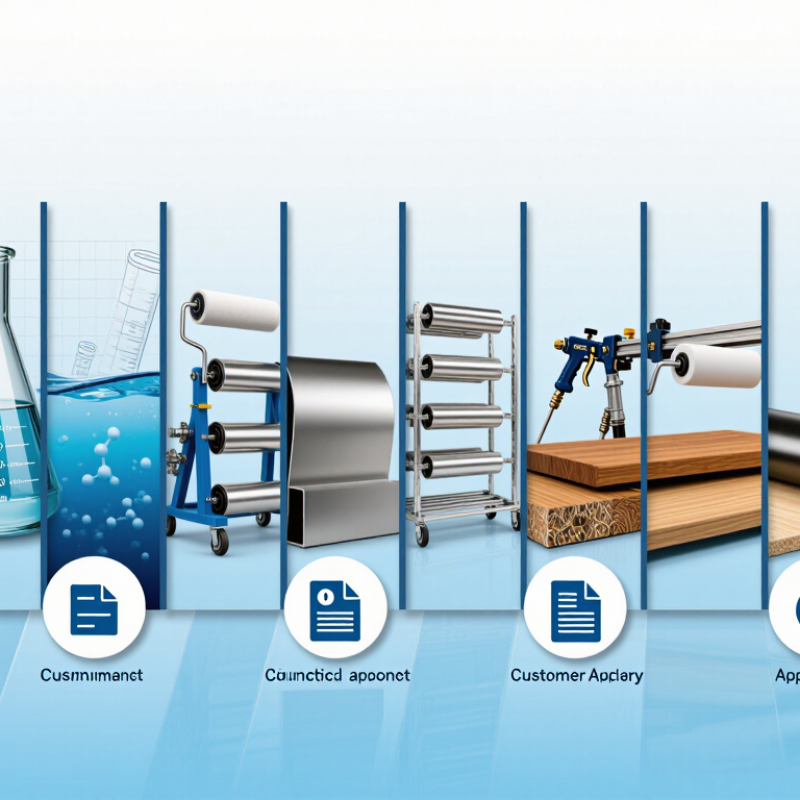
Top 10 Water Based Urethane Suppliers for Global Buyers

Understanding Water-Based Urethanes and Their Main Applications

Water-based urethanes are polyurethane materials dispersed in water rather than carried mainly by organic solvents. As water evaporates, the particles come together to form a film. The result can combine flexibility, abrasion resistance, and adhesion, though performance depends on the formulation and drying conditions. That is not automatic. Cool air, high humidity, or a thick coating can slow film formation and leave a surface softer than expected.

Common uses include wood finishes, flooring coatings, synthetic leather, textiles, and selected adhesives. On a wooden tabletop, for example, a well-chosen coating can resist everyday scuffs while preserving a clear appearance. Textile treatments may need to bend repeatedly without cracking. Flooring systems face a different challenge: they must tolerate foot traffic and cleaning. Small details matter. Surface preparation, application thickness, and the substrate itself can change the outcome.

Buyers should compare technical data using the same test methods and check details such as solids content, drying time, hardness, and flexibility. A laboratory result is useful, but it may not predict performance on a humid production line. It is easy to focus on a single headline property, such as abrasion resistance, and overlook trade-offs in feel, gloss, or processing speed. Trial coatings on the intended material can reveal those gaps before larger-scale use.


How to Evaluate Suppliers for Global Purchasing

Evaluating a water based urethane supplier starts with your application, not a polished brochure. Share the substrate, target finish, and curing conditions, then request current technical data. Compare solids content, viscosity, and recommended film thickness against your process. Small test panels reveal issues early.

For global purchasing, confirm that product performance stays consistent across batches. Ask how samples are stored and shipped, and check expected lead times, packaging options, and shelf-life guidance. Request batch certificates, safety documentation, and traceability details. Paperwork matters. Confirm that documents match the exact grade being quoted, not a similar product. If your facility has seasonal temperature changes, discuss storage limits before placing a large order.

Evaluate communication as carefully as price. A useful supplier gives specific answers, explains test methods, and flags limits instead of promising universal results. Request a trial quantity and agree on practical acceptance checks, such as appearance, adhesion, and drying time. No checklist is perfect. A spreadsheet helps, but it cannot predict every production surprise. Record questions and responses, then compare suppliers using the same criteria. The strongest fit is the one that supports repeatable trials and clear purchasing decisions.

Top 10 Water Based Urethane Suppliers for Global Buyers - How to Evaluate Suppliers for Global Purchasing

Global buyer evaluation matrix. The suggested weights are a customizable starting point, not verified supplier rankings. Confirm product specifications, certifications, lead times, and commercial terms directly with each supplier.

No. Evaluation Dimension Suggested Weight Evidence to Request How to Evaluate Score (0–5)
1 Application and product fit 20% Technical data sheet (TDS), application guidance, and samples for the intended substrate and process. Test adhesion, flexibility, abrasion or chemical resistance, appearance, and drying or curing under your actual production conditions. _____
2 Regulatory and documentation readiness 15% Current safety data sheet (SDS), composition or restricted-substance declarations where applicable, and market-specific compliance documents. Check that documents match the exact product and destination market; confirm applicable chemical, labeling, and transport requirements with qualified compliance staff. _____
3 Quality system and batch consistency 15% Quality-system certificate, certificate of analysis (CoA) format, written specification, and change-control procedure. Verify certificate scope and validity; compare sample and production-lot results against agreed limits for relevant properties such as solids, viscosity, and pH. _____
4 Manufacturing capacity and continuity 10% Capacity statement, production-site information, business-continuity plan, and backup-supply arrangements if available. Compare documented available capacity with forecast demand; ask how planned maintenance, raw-material shortages, or disruptions are managed. _____
5 Supply reliability and order performance 10% Recent, referenceable on-time delivery data and a description of order-status and shortage-escalation processes. Ask for the measurement period, delivery definition, and performance by relevant shipping lane; use comparable periods when reviewing suppliers. _____
6 Technical service and problem resolution 8% Technical contact details, troubleshooting process, response-time commitment, and examples of application support. Confirm support availability across your operating hours and regions; assess whether technical staff can help investigate application or quality issues. _____
7 Minimum order quantity and packaging options 5% Written MOQ, available pack sizes, pallet configuration, and sample-order terms. Check fit with trial volumes, forecast demand, storage capacity, and packaging-handling requirements. _____
8 Quoted production and delivery lead time 5% Written lead-time estimate for samples and repeat orders, including order cut-off and shipment terms. Compare like-for-like quoted timelines and clarify when the clock starts, whether the product is made to order, and how delays are communicated. _____
9 Export logistics and shipping support 5% Quotation showing Incoterms® rule and named place, export documents provided, packaging details, and shipping-lane options. Confirm responsibilities for freight, insurance, customs documentation, and import clearance; check any product-specific transport constraints. _____
10 Total cost and payment terms 7% Formal quotation, currency and validity period, payment terms, freight assumptions, and any applicable fees. Compare landed cost on the same specification, order quantity, destination, and Incoterms® rule; include packaging, freight, duties, and handling where applicable. _____
Total Suggested Weight 100% Suggested scoring: 0 = not demonstrated; 5 = fully demonstrated with current, verifiable evidence.

The Global Landscape of Water-Based Urethane Supply

The Global Landscape of Water-Based Urethane Supply

Water-based urethane supply is shaped by regional manufacturing capacity, raw material access, and shipping conditions. Buyers may find producers concentrated near coatings, textiles, and flooring industries. Availability can vary by grade, even within the same region. A coating intended for flexible fabric may not suit a hard floor finish. The label alone tells little.

Global sourcing also brings practical differences. One supplier may offer steady bulk volumes, while another specializes in smaller batches or custom performance targets. Lead times can shift with seasonal demand and port congestion. That matters. Ask for current technical data, sample quantities, packaging options, and realistic delivery windows. Compare solids content, viscosity, film flexibility, and drying behavior under your own production conditions. A clean lab result may not match a humid shop floor. The supply map can look tidy on paper, yet local gaps remain.

Tips: Request a recent batch sample and test it on your actual substrate. Confirm storage temperature and shelf life in writing. Keep a backup source when production depends on a narrow specification. Don’t assume “water-based” means identical handling; small formulation differences can change drying time and finish.

Profiles of Ten Water-Based Urethane Suppliers

Water-based urethane suppliers often specialize in different applications, so a useful profile starts with the material and process they serve. A wood-finish supplier may focus on clear coats that resist household scuffs while preserving visible grain. A textile supplier may formulate flexible finishes that tolerate repeated bending and washing. A synthetic-leather supplier often prioritizes a soft hand, even color, and abrasion resistance. A flooring supplier may emphasize adhesion and wear performance on prepared surfaces. A packaging supplier might tailor coatings for paperboard, where drying speed and surface feel matter.

A vehicle-interior supplier may support flexible coatings for dashboards and trim, with attention to heat and cleaning exposure. A footwear supplier can focus on finishes that endure flexing at seams and bends. A paper specialist may help control gloss, slip, and print compatibility. A construction-focused supplier may offer products for interior surfaces, but substrate preparation still matters. An industrial-coatings supplier may provide tougher films for equipment and repeated cleaning.

Details matter. Compare technical data, including solids, viscosity, pH, and recommended curing conditions, then test samples on the actual substrate. Fit varies. A promising lab sample may behave differently on a production line, so confirm application settings and performance with practical trials.

Comparing Suppliers by Products, Markets, and Buyer Needs

Top 10 Water Based Urethane Suppliers for Global Buyers

Water-based urethane suppliers vary in formulation range, production scale, and technical support. Some offer flexible coatings for wood, flooring, or flexible substrates. Others concentrate on textile finishes, adhesives, or industrial protection. A broad catalog is useful only when its products match your process. Check solids content, viscosity, drying conditions, and recommended film thickness against your equipment. Details matter. A supplier serving export markets may offer regional stock or local technical assistance, but availability can differ by destination. Confirm lead times, packaging sizes, and whether samples come from regular production batches.

Compare suppliers by the problems they can solve, not by catalog size alone. A furniture maker may need clear appearance and abrasion resistance, while a packaging converter may prioritize adhesion and fast drying. Ask for current technical data, safety documents, and application guidance. Then test a sample on your actual substrate; laboratory results may not predict performance on a moving production line. Check batch consistency and how the supplier handles formulation questions. One limitation is easy to overlook: a supplier with excellent chemistry may still be a poor fit if minimum order quantities are too high. Trial records help, though they do not remove every uncertainty.

Top 10 Water Based Urethane Suppliers for Global Buyers - Comparing Suppliers by Products, Markets, and Buyer Needs

A regulatory benchmark for buyers assessing water-based coating products: selected U.S. federal VOC limits by coating category (g/L).

Lower limits mean stricter VOC restrictions. These are U.S. federal category limits, not supplier product values; check the applicable rules in each target market.

Powder Coat Booths

For those larger-sized parts, or smaller quantity runs, we have 2 independent powder coat booths and ovens. The quality, durability and affordability of today’s powder coating finishes make this the process of choice for world-class companies.

Powder coating advantages over other forms of coating are many. Materials used in the Powder coating process can be metals and non-metals that come in a multitude of thicknesses, textures, colors, etc. Another of Powder coating’s biggest advantages over conventional coatings is its ability to create finishes in many different textures. Powder Coating Booths allow us the ability to apply these advantages to large products.

Wet Paint Line

Tri-State Fabricators runs a full-service conveyor line for painting. Wet painting can provide protection or decoration to many different part styles. From start to finish, every project is easier to undergo random and point-based inspection by our skilled painting team.

Advantages to our Wet Paint Line are these lines start with product prep and ends with a thorough inspection of a high quality finished product. Our ability to complete large and small projects with a superior finish and doing so in a timely and economical fashion. This passes along the savings in production to our customers. When powder coating ins not an option, our Wet Paint Line gets the job done right the first time.

Wet Paint Booths

When the parts get big and heavy we roll-out our custom paint racks and oversize booth. By utilizing our partnerships with all the major paint brands, we can match virtually any color with wet paint.

The advantages of having access to a Wet Paint Booth are many. Large projects of many different shapes can be loaded into the booth. The Wet Paint Booth offers an environment that is much more controlled than a typical parts painting operation.

Not only are they used because of their controlled environment, but they’re are also advantageous when it comes to applying paint to parts that are needed in industries that require specialty coatings such as medical, aerospace, etc.

Military CARC

Our military forces have some very high standards when it comes to the finish of their vehicles and equipment. From the first pre-treatment step to final coat, it takes a great deal of knowledge and experience to protect the men and women of our armed forces. They deserve only the best, and Tri-State Fabricators provides it.

All of our processes are closely monitored by our staff and management teams. Both of which are highly trained in the processes of metal fabrication and finishing. Tri-State Fabricators’ goal is to always fully satisfy each and every customer, including the military. We will always put a 110% into what we do.

Glass-Bead Blasting

Abrasive media blasting is an excellent way to remove old paint, rust, and increase the paint/powder adhesion. Glass beads produce a much smoother and brighter finish than angular abrasives; leaving the part clean yet without any dimensional change. Chemically inert and environmentally friendly, we can recycle our beads approximately 30 times; making them a more preferred method of metal cleaning or surface finishing.

Advantages to Glass Bead Blasting are many. Glass bead blast media is used when a project is needing rough surfaces need to become smooth for applications of coatings such as paint. It is typically used to clean paint and rust from a product surface without deforming the surface it is being used on. Overall, compared to many other blasting media, Glass Bead Blasting is a very economical choice and those savings are always passed on to our customers.

Part Washing

Tri-State Fabricators utilize a zinc phosphate wash to clean and etch the material to ensure the best paint adhesion possible. The unique design of our 3-stage wash system does the work like a 5-stage. From Cleaning and rinsing to conversion coating and post-treatment, Our Part Washing process is a complete service and works throughout the fabrication service and the finishing service.

Along with the previously mentioned benefits, Curing is a vital chemical reaction that leaves the product finish hard and relatively safe from mild abrasion and aggressive corrosion. This process can be done in more than one way; ambient air-dry or in curing ovens at temps that exceed 240°.

Burn-Off Oven

From fixing paint mistakes (someone else’s of course) to simply cleaning our paint line hooks, our burn-off oven is put to good use. After a quick burn-off, a little clean up, and a fresh coat of paint, your parts will look better than new.

Why does our Burn-Off Oven work so well? Because super heating the air around parts turns the materials into ashes. From paint and powder coatings to rubber and machining oils, high temps do the job without degrading the integrity of the part.

Masking

Masking is a vital part of producing high quality products. We have die-cut masking patterns to protect machined surfaces as well as a wide range of plugs and caps to protect threaded holes and bolts. We provide permanent and temporary masking.

Masking allows the selected sections of a product to be protected from a fabrication or finishing service. This can be with both chemicals when etching and tapes, paints when only finishing just a section of the product. Masking is great in aiding the customization process of a project.

Screen Printing

Screen printing is a photographic process that transfers artwork onto a porous nylon screen which allows colored ink to flow through the screen and be deposited on an aluminum or plastic component. We can generally have just about any design created onto a screen for your parts.

Some of the advantages of Screen Printing are, brand recognition for your business displaying on your products, assembly instructions, product warnings/hazards, etc. Tri-State Fabricators produces Screen Printing of the highest quality so you know it’s durable.

Metal Finishing

Metal Finishing is the art of treating the exterior portion of product, often metal but can also be made of other materials, so that the surface is clean and free of any debris. Then the process of applying coats or either paint of powder coat takes place. This coating process improves the quality of the product in both appearance and resistance to wear and corrosion.

Tri-State Fabricators, Inc., understands that a project typically isn’t complete until a high-quality finish has been added to your product. This is why our painting and powder coating teams continuously inspect the products throughout the Metal Finishing process.
