


Choosing among the top Waste Bale Press Machines for sale is not just a matter of comparing price tags. The right machine must match the material, daily volume, available floor space, and downstream transport needs. A narrow feed opening can slow cardboard loading; an undersized press may leave a crew waiting during a busy shift. Small details matter.
A composite recycling-equipment specialist, Daniel Mercer, puts the practical test this way: “A press earns its place when its bale fits the truck, the storage area, and the next process.” Treat that as a useful buying principle, not a verified quotation from a real individual. Buyers should compare bale dimensions and density alongside cycle time, motor power, controls, guarding, and access for maintenance. Ask suppliers how their quoted throughput was measured. A clean test with dry material may not reflect a mixed, dusty workday.
This guide looks at machine types and features that shape real operating costs. It also considers service support, installation requirements, and the materials each press can handle. The Waste Bale Press Mac search phrase may appear in supplier listings, but product naming alone tells you little about performance. Request specifications in writing, then check whether they suit your own site. There is no perfect press. Even a strong machine can disappoint when feed habits, staffing, or bale handling are overlooked. A careful comparison helps narrow the field—and exposes the assumptions worth questioning before purchase.
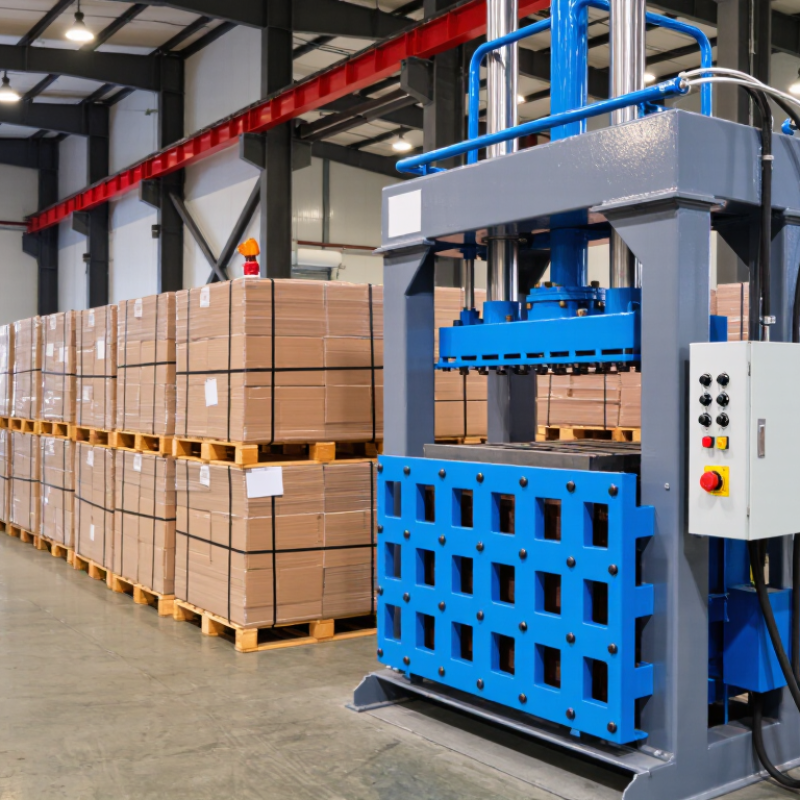
A waste bale press, also called a baler, compresses loose recyclable materials into dense, manageable bundles. Operators load cardboard, paper, or selected plastics into a chamber. A hydraulic ram pushes the material against a platen, reducing its volume. Once the bale reaches the required size, workers secure it with wire or strapping and eject it for storage or transport. The process is straightforward, but a press does not sort or clean mixed waste.
The U.S. Environmental Protection Agency reported that Americans generated 292.4 million tons of municipal solid waste in 2018. About 69 million tons were recycled, while roughly 25 million tons were composted (EPA, Advancing Sustainable Materials Management: 2018 Fact Sheet, 2020). These figures show why reliable material handling matters, though they do not predict a facility’s own savings. When comparing machines for sale, check bale dimensions, loading method, cycle time, power needs, and service access. A model that looks efficient on paper may not fit a narrow work area.
Tips: Match the press to your daily material volume and available floor space. Keep the chamber clear, train operators, and follow the machine’s safety instructions. A small operating detail can matter.

Top Waste Bale Press Machines for Sale?
Main Types of Waste Bale Press Machines
Vertical balers compress cardboard, paper, or soft packaging into compact bundles. They suit shops and smaller warehouses with limited floor space. Horizontal balers process larger, steady material flows. Manual-tie models need operators to secure each bale; automatic-tie models reduce that handling. Space matters. A machine that fits the budget may still slow a busy loading area.
Two-ram balers handle mixed or difficult-to-feed materials and can produce dense, consistent bales. The right choice depends on material, daily volume, bale size, and available labor—not just rated force. The U.S. EPA’s Advancing Sustainable Materials Management: 2018 Fact Sheet reports that about 46 million tons of paper and paperboard were recycled that year. That scale helps explain why efficient baling matters, though national figures cannot predict an individual site’s needs. Still, a neat bale is not automatically a good bale; loose edges and uneven feeding can cause trouble downstream.
Tips: Track a week of material volume before choosing. Ask for a trial with your own waste, and check bale dimensions against transporter requirements. Leave room for safe loading and maintenance. Small detail, big difference. A rushed selection can mean underused capacity—or constant tying work.
Bale presses handle different materials, but the right machine depends on how each material behaves under pressure. Cardboard and paper are common in warehouses, shops, and distribution centers. They compress readily when kept dry and free of bulky contaminants. Plastic film needs careful feeding because loose sheets can wrap around moving parts. PET bottles usually bale more consistently when containers are drained and compacted to reduce trapped air.
Fit matters.
Manufacturers and recycling facilities may also bale textiles, aluminum cans, or production offcuts. These materials differ in weight, spring-back, and how evenly they form a stable bale. A press that works well for cardboard may not suit dense metal scrap. Match the chamber size and pressing force to the material, expected volume, and available floor space. A tidy specification sheet can still miss a practical issue: awkward loading or frequent material changes may slow a busy shift. Before buying, check how the press is fed, what bale dimensions it produces, and whether the finished bales can be stored and moved safely.
Small details matter.
Compare machines against the waste you actually handle, not just advertised capacity. Cardboard, mixed paper, and plastic film feed differently and form different bales. Check the feed opening, ram force, bale dimensions, cycle time, and required electrical supply. A narrow opening can mean more cutting and handling. Fit matters. Ask sellers to run a test using your material and record the time, bale weight, and operator steps.
The U.S. Environmental Protection Agency’s Advancing Sustainable Materials Management: 2018 Fact Sheet reports that 46 million of 67.4 million tons of paper and paperboard generated were recycled, a 68.2% recovery rate. That scale makes consistent baling important, but the national figure cannot predict your site’s output. Request throughput data for your specific waste mix, including how often the machine needs clearing. Numbers vary.
Compare total operating needs, too. Ask about service access, wear-part replacement, noise, guarding, and what happens during a jam. Check the floor space around the press for bale removal and pallet movement; a machine may fit on paper but block a busy aisle. Confirm quoted output under a stated shift length and material condition. I would also review a sample bale for loose edges and stability, though that check is easy to overlook.
Choosing a waste bale press starts with the material, not the machine’s advertised capacity. Cardboard, film, and mixed packaging compress differently, so estimate daily volume and check the press’s recommended materials. Match its force and chamber size to your typical load. An oversized unit can waste floor space and energy; an undersized one may create a queue of loose material.
Fit matters. Measure doorways, ceiling clearance, and the route used to move finished bales. Check whether the machine’s bale dimensions and weight suit your storage area and handling equipment. Ask about cycle time, power requirements, safety interlocks, and access to replacement parts. A specification sheet may look complete, yet site measurements can still be missed.
Maintenance protects consistent performance. Keep the chamber clear, inspect hoses and fittings for leaks, and watch for unusual vibration or slower cycles. Follow the service schedule for lubrication and hydraulic checks, and record repairs so recurring faults are easier to spot. Train operators to load evenly and keep hands clear of moving parts. Even with careful checks, wear can be hard to predict; a maintenance plan should leave room for unexpected downtime.
| Baler Configuration | Common Applications | Key Selection Factors | Bale and Output Checks | Routine Maintenance Focus | Best Fit |
|---|---|---|---|---|---|
| Vertical baler | Cardboard, paper, plastic film, and other recyclable materials handled in batches. | Available floor space, loading height, chamber opening, power supply, and whether staff can load and tie bales safely. | Confirm the chamber dimensions, bale ejection method, and finished-bale weight for the specific material and model. | Inspect hydraulic hoses and connections for leaks; keep the chamber and ram area clear; check door latches and safety interlocks. | Shops, warehouses, and smaller facilities with moderate volumes and limited floor space. |
| Horizontal baler with manual tying | Cardboard, paper, and selected plastics at facilities with steady, moderate-to-high volumes. | Feed opening size, loading method, available floor length, tying access, and the labor needed for bale changes. | Check bale dimensions and tying method against storage, transport, and downstream recycling requirements. | Inspect tie channels and cutting components; check hydraulic fluid and filters according to the equipment manual. | Facilities needing more continuous processing than a typical batch-fed vertical unit. |
| Horizontal automatic-tie baler | High-volume streams of cardboard, paper, and compatible recyclable materials. | Required throughput, conveyor or infeed layout, control system, site power, installation space, and service support. | Request verified throughput data for the actual material, feed preparation, and operating conditions—not just the maximum rating. | Follow the specified inspection schedule for tying mechanisms, sensors, guards, hydraulics, and conveyor components. | Large distribution, manufacturing, and recycling operations with regular material flows. |
| Two-ram baler | Mixed or changing recyclable streams, including materials that may require separate bale settings. | Material variability, contamination levels, bale separation needs, operator controls, and availability of trained service technicians. | Verify that the machine can produce the required bale shape and density for each target material. | Check ram wear surfaces, hydraulic components, sensors, and material buildup; use lockout procedures before servicing. | Operations handling multiple materials or needing flexibility across changing feedstocks. |
| Closed-end baler | Materials compressed into dense, regularly shaped bales, subject to machine and material compatibility. | Required bale density, material characteristics, discharge arrangement, tying system, and the buyer's space constraints. | Ask for sample bales or documented results using the intended feedstock; density depends on material and operating settings. | Inspect the discharge area, chamber liners, hydraulic system, and tying equipment for wear or obstruction. | Facilities prioritizing consistent bale shape and compact storage or transport loads. |
| Special-purpose baler | Specific streams such as textiles, cans, or other materials requiring purpose-designed loading or compression. | Material size and condition, required pre-processing, loading safety, corrosion exposure, and spare-part availability. | Confirm acceptable feedstock limits and bale specifications with the manufacturer or qualified supplier. | Use material-appropriate cleaning and inspection practices; check wear parts and protective devices at the recommended intervals. | Sites with a defined material stream that does not suit a general-purpose baler. |
| Selection and maintenance note: Performance, bale weight, and service intervals vary by model, material, operating conditions, and local requirements. Verify specifications with the equipment documentation, and isolate and lock out the machine before maintenance. | |||||


For those larger-sized parts, or smaller quantity runs, we have 2 independent powder coat booths and ovens. The quality, durability and affordability of today’s powder coating finishes make this the process of choice for world-class companies.
Powder coating advantages over other forms of coating are many. Materials used in the Powder coating process can be metals and non-metals that come in a multitude of thicknesses, textures, colors, etc. Another of Powder coating’s biggest advantages over conventional coatings is its ability to create finishes in many different textures. Powder Coating Booths allow us the ability to apply these advantages to large products.
Tri-State Fabricators runs a full-service conveyor line for painting. Wet painting can provide protection or decoration to many different part styles. From start to finish, every project is easier to undergo random and point-based inspection by our skilled painting team.
Advantages to our Wet Paint Line are these lines start with product prep and ends with a thorough inspection of a high quality finished product. Our ability to complete large and small projects with a superior finish and doing so in a timely and economical fashion. This passes along the savings in production to our customers. When powder coating ins not an option, our Wet Paint Line gets the job done right the first time.
When the parts get big and heavy we roll-out our custom paint racks and oversize booth. By utilizing our partnerships with all the major paint brands, we can match virtually any color with wet paint.
The advantages of having access to a Wet Paint Booth are many. Large projects of many different shapes can be loaded into the booth. The Wet Paint Booth offers an environment that is much more controlled than a typical parts painting operation.
Not only are they used because of their controlled environment, but they’re are also advantageous when it comes to applying paint to parts that are needed in industries that require specialty coatings such as medical, aerospace, etc.
Our military forces have some very high standards when it comes to the finish of their vehicles and equipment. From the first pre-treatment step to final coat, it takes a great deal of knowledge and experience to protect the men and women of our armed forces. They deserve only the best, and Tri-State Fabricators provides it.
All of our processes are closely monitored by our staff and management teams. Both of which are highly trained in the processes of metal fabrication and finishing. Tri-State Fabricators’ goal is to always fully satisfy each and every customer, including the military. We will always put a 110% into what we do.
Abrasive media blasting is an excellent way to remove old paint, rust, and increase the paint/powder adhesion. Glass beads produce a much smoother and brighter finish than angular abrasives; leaving the part clean yet without any dimensional change. Chemically inert and environmentally friendly, we can recycle our beads approximately 30 times; making them a more preferred method of metal cleaning or surface finishing.
Advantages to Glass Bead Blasting are many. Glass bead blast media is used when a project is needing rough surfaces need to become smooth for applications of coatings such as paint. It is typically used to clean paint and rust from a product surface without deforming the surface it is being used on. Overall, compared to many other blasting media, Glass Bead Blasting is a very economical choice and those savings are always passed on to our customers.
Tri-State Fabricators utilize a zinc phosphate wash to clean and etch the material to ensure the best paint adhesion possible. The unique design of our 3-stage wash system does the work like a 5-stage. From Cleaning and rinsing to conversion coating and post-treatment, Our Part Washing process is a complete service and works throughout the fabrication service and the finishing service.
Along with the previously mentioned benefits, Curing is a vital chemical reaction that leaves the product finish hard and relatively safe from mild abrasion and aggressive corrosion. This process can be done in more than one way; ambient air-dry or in curing ovens at temps that exceed 240°.
From fixing paint mistakes (someone else’s of course) to simply cleaning our paint line hooks, our burn-off oven is put to good use. After a quick burn-off, a little clean up, and a fresh coat of paint, your parts will look better than new.
Why does our Burn-Off Oven work so well? Because super heating the air around parts turns the materials into ashes. From paint and powder coatings to rubber and machining oils, high temps do the job without degrading the integrity of the part.
Masking is a vital part of producing high quality products. We have die-cut masking patterns to protect machined surfaces as well as a wide range of plugs and caps to protect threaded holes and bolts. We provide permanent and temporary masking.
Masking allows the selected sections of a product to be protected from a fabrication or finishing service. This can be with both chemicals when etching and tapes, paints when only finishing just a section of the product. Masking is great in aiding the customization process of a project.
Screen printing is a photographic process that transfers artwork onto a porous nylon screen which allows colored ink to flow through the screen and be deposited on an aluminum or plastic component. We can generally have just about any design created onto a screen for your parts.
Some of the advantages of Screen Printing are, brand recognition for your business displaying on your products, assembly instructions, product warnings/hazards, etc. Tri-State Fabricators produces Screen Printing of the highest quality so you know it’s durable.
Metal Finishing is the art of treating the exterior portion of product, often metal but can also be made of other materials, so that the surface is clean and free of any debris. Then the process of applying coats or either paint of powder coat takes place. This coating process improves the quality of the product in both appearance and resistance to wear and corrosion.
Tri-State Fabricators, Inc., understands that a project typically isn’t complete until a high-quality finish has been added to your product. This is why our painting and powder coating teams continuously inspect the products throughout the Metal Finishing process.

