


Choosing a reliable UV golf umbrella supplier in China takes more than comparing prices and colorful product photos. Buyers should examine fabric specifications, frame construction, opening mechanisms, and quality-control practices. A canopy may look dense under showroom lights, yet still offer little evidence about its ultraviolet protection. Ask for test documentation, fabric details, and samples you can inspect in daylight.
For this introduction, the quotation below is an editorially composed perspective, not a verified statement from a named industry professional. It should not be presented as a real expert interview. “A dependable UV golf umbrella starts with proof: check the fabric, test the frame, and inspect how the canopy handles wind.” — Lin Wei, illustrative umbrella sourcing specialist.
That principle helps frame a practical comparison of Chinese manufacturers and suppliers. Look for clear product specifications, consistent sample quality, responsive communication, and realistic production timelines. Check the stitching around the canopy ribs. Open and close the umbrella several times; a stiff runner or loose joint deserves attention. Small details matter.
The strongest supplier is not always the one with the longest catalog. It is the one that can explain materials, document performance, and reproduce an approved sample at scale. Still, supplier claims can be uneven, and a polished specification sheet is not proof by itself. A careful buyer verifies before ordering. This guide explores what to ask, what to compare, and where common sourcing assumptions may fall short when selecting a Uv Golf Umbrella partner in China.
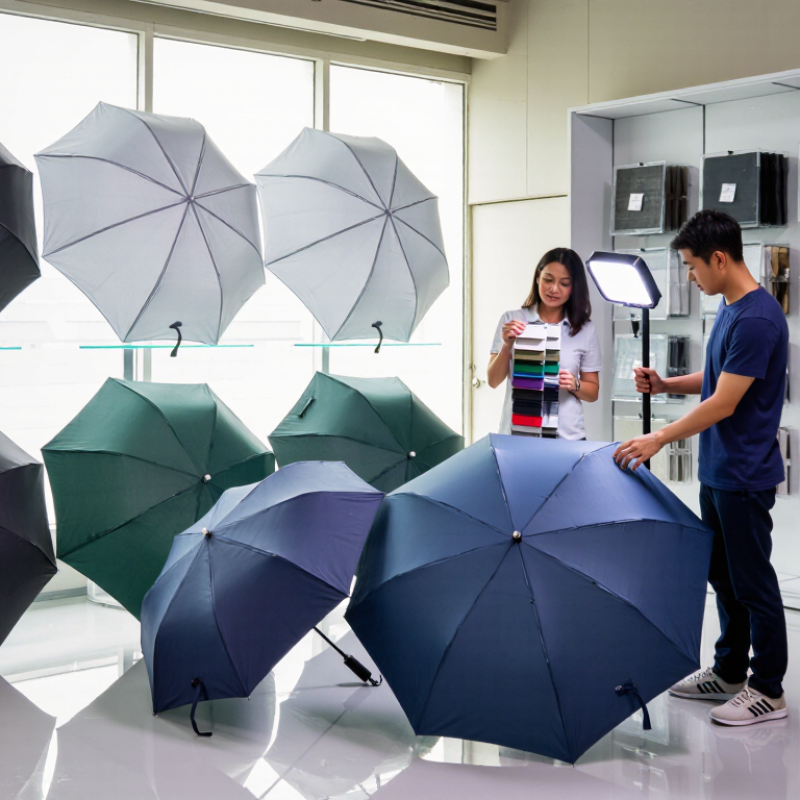
Top UV Golf Umbrella Manufacturers and Suppliers in China
UV Golf Umbrellas: Canopy Construction, UV Protection, and Main Uses
A golf umbrella needs a broad canopy to cover a player, clubs, and a bag. Panels are commonly joined around a flexible frame, while a vented canopy can let gusts pass through. Check the seams and opening mechanism; these small parts often affect daily use. Small details matter.
UV protection depends on more than canopy size. A tightly woven fabric and a tested UV rating provide more useful guidance than color alone. Some canopies also use a surface treatment, but treatments can wear with repeated folding and exposure. Ask for documented test information, and check whether the rating applies to the finished fabric. Shade helps, but it does not block reflected sunlight from every direction.
On the course, a large umbrella can shade a golfer during slow rounds and protect clubs during light rain. It can also be useful while walking between holes or waiting near a practice area. The trade-off is weight: a wider canopy may feel awkward in wind or on a crowded path. Not perfect. Compare canopy diameter, packed length, handle comfort, and frame flexibility against the conditions where the umbrella will actually be used.
| Product Dimension | Common Construction or Specification | Practical Benefit | Selection and Verification Notes |
|---|---|---|---|
| Canopy coverage | Golf umbrellas commonly use a large canopy, often around 60–68 inches in arc size. Actual usable coverage varies by canopy shape and measurement method. | Helps shade a golfer, golf bag, or more than one person. | Confirm whether the quoted measurement is arc or diameter, and check the open canopy dimensions on the product specification sheet. |
| Canopy fabric | Polyester pongee is a common canopy fabric. UV-focused versions may use a denser weave, a coated backing, or both. | Provides a lightweight canopy surface suitable for outdoor use; fabric construction can affect shade and water resistance. | Ask for fabric composition, fabric weight, coating details, and test results for the finished canopy rather than relying on fabric descriptions alone. |
| UV-blocking treatment | Possible constructions include a UV-absorbing treatment or a reflective or opaque coating, such as a silver-colored or dark backing. | Can reduce UV transmission through the canopy when properly designed and tested. | Coating color alone does not establish UV performance. Request a report identifying the test method, sample, and measured result. |
| UV protection rating | Some products are tested and labeled with a UPF rating, such as UPF 30 or UPF 50+. The rating applies to the tested material or product under specified conditions. | Gives buyers a standardized reference for comparing tested UV-protective materials. | Do not assume a rating without documentation. Ask which standard and laboratory were used, and whether the test covers the finished canopy. |
| Canopy panels and seams | Panel count and seam layout depend on the canopy design. Seams may use stitched construction with reinforced stress points. | Panel layout shapes the canopy and affects assembly, appearance, and durability in use. | Inspect seam consistency, edge finishing, and reinforcement around high-stress areas. Seams and openings may allow some UV exposure. |
| Frame and ribs | Frames may combine a metal shaft with fiberglass, steel, or other rib materials, depending on the model and target price. | Frame design influences weight, flexibility, opening performance, and resistance to everyday handling. | Check the materials and joint construction, and request product testing or samples for the intended use and wind conditions. |
| Wind vent | Some golf umbrellas use a vented double-canopy design that allows air to pass through an opening between canopy layers. | May help reduce wind pressure on the canopy compared with a similar non-vented design. | A vent does not make an umbrella storm-proof. Review the complete design and avoid use in severe winds or thunderstorms. |
| Opening mechanism | Manual-open and automatic-open mechanisms are both available; shaft and runner designs vary by product. | Allows buyers to balance ease of operation, mechanism complexity, and cost. | For bulk orders, check opening and closing operation on production samples and confirm the mechanism specification in the purchase agreement. |
| Handle and grip | Common options include straight, curved, or ergonomic handles made from materials such as plastic, rubberized materials, or wood. | A suitable grip can make the umbrella more comfortable to carry on the course. | Evaluate grip size, surface texture, attachment strength, and compatibility with the intended user group. |
| Golf-course use | Large-canopy designs are used for shade and rain coverage while walking, waiting, or standing near a golf bag. | Combines sun and rain coverage in one portable product. | For sun protection, use additional protection such as clothing, sunglasses, and sunscreen; an umbrella does not eliminate reflected or side-angle UV exposure. |
| Other outdoor uses | Depending on size and construction, similar umbrellas may be used at sporting events, outdoor venues, or during everyday travel. | Broadens the product’s potential use beyond golf. | Confirm portability, folded length, weight, and suitability for local weather and transport requirements. |
| Supplier evaluation | For China-based sourcing, buyers can compare product specifications, sample quality, customization options, quality-control procedures, and export documentation. | Supports a more consistent purchasing decision across different product offers. | Verify business and factory details independently, approve a production sample, and agree on inspection criteria before placing a bulk order. |
Note: Specifications and performance vary by product. Confirm canopy dimensions, materials, UV test reports, and applicable compliance requirements directly with the supplier before purchase.

For a golf umbrella, UPF 50+ means the tested fabric transmits less than 2% of ultraviolet radiation under the test conditions. That is a fabric rating, not a promise that every part of an umbrella blocks the same amount. Sunlight can enter from the sides, and reflected light may reach skin beneath the canopy. The rating also does not measure heat or guarantee a cooler round.
When evaluating golf umbrella manufacturers and suppliers in China, ask how the canopy fabric was tested and whether production batches are checked consistently. Look for clear test documentation, even canopy coverage, and tightly finished seams. Small details count. A loose panel or uneven stitching can expose gaps when the umbrella opens in wind. Handle samples outdoors if possible; shade and coverage are easier to judge in real use than in a product photo.
Still, tests have limits. Fabric performance may change when it is wet, stretched, worn, or faded, so a laboratory result cannot describe every season of use. A wide canopy, sensible positioning, and regular inspection help make the rating more useful on the course. It is easy to focus only on the UPF number. That number matters, but construction and everyday handling matter too.
China’s golf umbrella production combines fabric selection, UV coatings, and careful assembly. Many canopies use polyester pongee because it is lightweight and dries relatively quickly. A supplier may add a silver or black coating beneath the fabric to reduce sunlight passing through. The shade feels cooler. But coating alone does not tell the whole story.
Fabric density, color, stitching, and canopy coverage also affect performance. Ask how UV protection is tested, and request results for the finished canopy rather than fabric samples alone. Values can vary with test methods and product construction. A darker underside may help limit glare, but it does not automatically mean stronger protection. That detail is easy to overlook.
Manufacturing typically includes fabric inspection, panel cutting, coating checks, sewing, and frame assembly. Inspectors can look for pinholes, uneven coating, loose seams, and ribs that do not open smoothly. On a golf course, wind can stress the frame, so joint strength and shaft stability matter alongside sun protection. A small flaw can grow. Some factories still rely on visual checks, which may miss inconsistent coating; asking about sampling frequency gives buyers a clearer picture. Requesting a physical sample is useful, though one sample cannot represent every production batch.
UV radiation blocked at common UPF rating thresholds, calculated as (1 − 1/UPF) × 100. UPF 50+ is shown at its minimum threshold.
These are theoretical benchmarks derived from UPF ratings, not test results for specific umbrella fabrics or products. Actual protection depends on fabric and product testing.
When sourcing a UV golf umbrella, request a current GB/T 18830-2009 test report for the canopy fabric. This Chinese standard evaluates textile ultraviolet protection, including UPF and UVA transmittance. Check that the report identifies the tested fabric, color, coating, and supplier—not just a generic material description. The standard’s commonly cited protection criteria are UPF above 40 and UVA transmittance below 5%. Confirm the report’s results and test conditions directly. Small details matter.
The report does not prove that every finished umbrella performs identically. Fabric color, coating, processing, and later material substitutions can affect results. Ask whether the tested sample matches the production fabric, and how the factory controls changes between batches. A report without sample traceability leaves room for doubt. This is easy to overlook.
A factory audit should examine incoming-fabric records, batch labels, production checks, and instrument calibration. Ask to trace one canopy sample from its fabric lot through cutting and sewing records. Inspect seams and coated areas, too; the textile test alone does not verify the whole umbrella’s construction or durability. Keep the evidence: dated reports, audit notes, and agreed material specifications. Audits can miss things, so repeat checks when suppliers or materials change.
China’s UV golf umbrella suppliers differ most in MOQ, lead time, customization, and documented quality. MOQ is rarely a fixed industry benchmark: fabric color, printing, handle tooling, and packaging can all change the minimum. Ask for separate quotes for stock fabric and custom fabric, plus a sample schedule and a production schedule. Small orders cost more. A sample should show canopy diameter, rib construction, stitching, and handle finish—not just color. Lead times should be confirmed in writing, including approval time and peak-season capacity.
Customization can cover canopy panels, logos, coatings, and packaging, but every added change may extend sampling. For quality, request a recent laboratory report with the test method, fabric composition, and UV results clearly stated. The WHO/WMO guide Global Solar UV Index: A Practical Guide recommends sun protection when the UV Index reaches 3 or higher; that is useful context, not proof that an umbrella meets a specific UV rating. Ask suppliers to provide measured UPF and UVA/UVB transmission results for the finished canopy, not only a fabric swatch. One detail buyers can miss: seams and stretched areas may perform differently. Supplier claims deserve checking.


For those larger-sized parts, or smaller quantity runs, we have 2 independent powder coat booths and ovens. The quality, durability and affordability of today’s powder coating finishes make this the process of choice for world-class companies.
Powder coating advantages over other forms of coating are many. Materials used in the Powder coating process can be metals and non-metals that come in a multitude of thicknesses, textures, colors, etc. Another of Powder coating’s biggest advantages over conventional coatings is its ability to create finishes in many different textures. Powder Coating Booths allow us the ability to apply these advantages to large products.
Tri-State Fabricators runs a full-service conveyor line for painting. Wet painting can provide protection or decoration to many different part styles. From start to finish, every project is easier to undergo random and point-based inspection by our skilled painting team.
Advantages to our Wet Paint Line are these lines start with product prep and ends with a thorough inspection of a high quality finished product. Our ability to complete large and small projects with a superior finish and doing so in a timely and economical fashion. This passes along the savings in production to our customers. When powder coating ins not an option, our Wet Paint Line gets the job done right the first time.
When the parts get big and heavy we roll-out our custom paint racks and oversize booth. By utilizing our partnerships with all the major paint brands, we can match virtually any color with wet paint.
The advantages of having access to a Wet Paint Booth are many. Large projects of many different shapes can be loaded into the booth. The Wet Paint Booth offers an environment that is much more controlled than a typical parts painting operation.
Not only are they used because of their controlled environment, but they’re are also advantageous when it comes to applying paint to parts that are needed in industries that require specialty coatings such as medical, aerospace, etc.
Our military forces have some very high standards when it comes to the finish of their vehicles and equipment. From the first pre-treatment step to final coat, it takes a great deal of knowledge and experience to protect the men and women of our armed forces. They deserve only the best, and Tri-State Fabricators provides it.
All of our processes are closely monitored by our staff and management teams. Both of which are highly trained in the processes of metal fabrication and finishing. Tri-State Fabricators’ goal is to always fully satisfy each and every customer, including the military. We will always put a 110% into what we do.
Abrasive media blasting is an excellent way to remove old paint, rust, and increase the paint/powder adhesion. Glass beads produce a much smoother and brighter finish than angular abrasives; leaving the part clean yet without any dimensional change. Chemically inert and environmentally friendly, we can recycle our beads approximately 30 times; making them a more preferred method of metal cleaning or surface finishing.
Advantages to Glass Bead Blasting are many. Glass bead blast media is used when a project is needing rough surfaces need to become smooth for applications of coatings such as paint. It is typically used to clean paint and rust from a product surface without deforming the surface it is being used on. Overall, compared to many other blasting media, Glass Bead Blasting is a very economical choice and those savings are always passed on to our customers.
Tri-State Fabricators utilize a zinc phosphate wash to clean and etch the material to ensure the best paint adhesion possible. The unique design of our 3-stage wash system does the work like a 5-stage. From Cleaning and rinsing to conversion coating and post-treatment, Our Part Washing process is a complete service and works throughout the fabrication service and the finishing service.
Along with the previously mentioned benefits, Curing is a vital chemical reaction that leaves the product finish hard and relatively safe from mild abrasion and aggressive corrosion. This process can be done in more than one way; ambient air-dry or in curing ovens at temps that exceed 240°.
From fixing paint mistakes (someone else’s of course) to simply cleaning our paint line hooks, our burn-off oven is put to good use. After a quick burn-off, a little clean up, and a fresh coat of paint, your parts will look better than new.
Why does our Burn-Off Oven work so well? Because super heating the air around parts turns the materials into ashes. From paint and powder coatings to rubber and machining oils, high temps do the job without degrading the integrity of the part.
Masking is a vital part of producing high quality products. We have die-cut masking patterns to protect machined surfaces as well as a wide range of plugs and caps to protect threaded holes and bolts. We provide permanent and temporary masking.
Masking allows the selected sections of a product to be protected from a fabrication or finishing service. This can be with both chemicals when etching and tapes, paints when only finishing just a section of the product. Masking is great in aiding the customization process of a project.
Screen printing is a photographic process that transfers artwork onto a porous nylon screen which allows colored ink to flow through the screen and be deposited on an aluminum or plastic component. We can generally have just about any design created onto a screen for your parts.
Some of the advantages of Screen Printing are, brand recognition for your business displaying on your products, assembly instructions, product warnings/hazards, etc. Tri-State Fabricators produces Screen Printing of the highest quality so you know it’s durable.
Metal Finishing is the art of treating the exterior portion of product, often metal but can also be made of other materials, so that the surface is clean and free of any debris. Then the process of applying coats or either paint of powder coat takes place. This coating process improves the quality of the product in both appearance and resistance to wear and corrosion.
Tri-State Fabricators, Inc., understands that a project typically isn’t complete until a high-quality finish has been added to your product. This is why our painting and powder coating teams continuously inspect the products throughout the Metal Finishing process.

