What Are the Top Types of Track Chain Links?
Track Chain Links are the connected steel components that carry a machine’s weight and guide its movement across the ground. Their design affects durability, maintenance needs, and how well an undercarriage performs on different surfaces. The right choice depends on the machine, its work, and the conditions it faces.
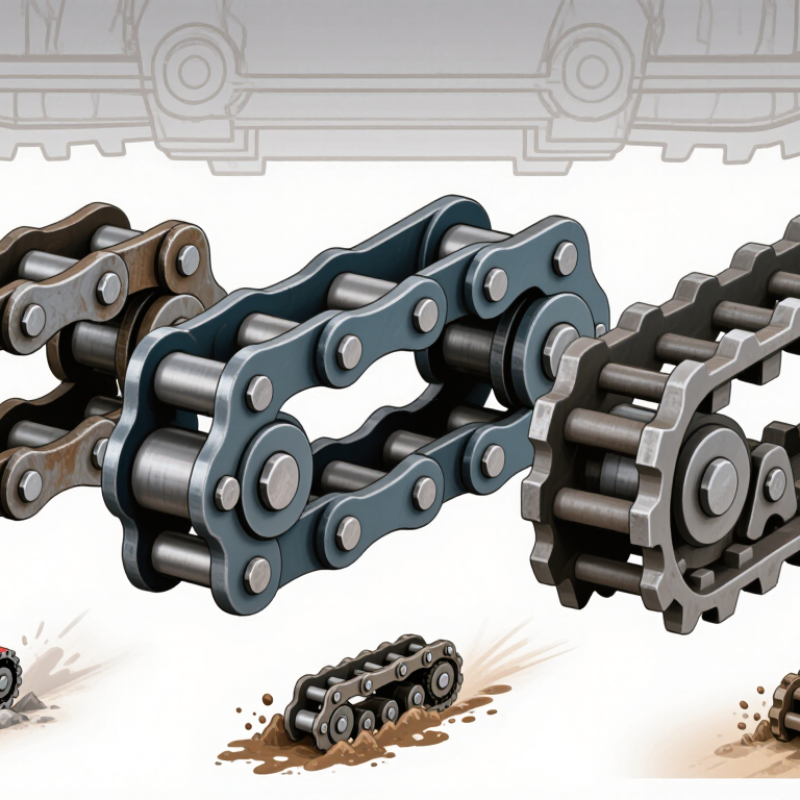
Common options include dry chain links and sealed-and-lubricated links. Dry chains have simpler construction, but their joints can wear faster when exposed to abrasive soil or frequent impact. Sealed-and-lubricated designs protect internal pins and bushings, helping reduce friction and extend service life. Heavy-duty configurations may use reinforced components for demanding applications. Details vary by manufacturer, so these labels alone do not tell the whole story.
Small details matter. Pin dimensions, pitch, bushing design, and compatibility with the sprocket all affect fit and performance. A chain that looks suitable may still be wrong for a particular machine. Check the equipment manual and confirm specifications with a qualified parts supplier before ordering. Operating conditions matter, too: rocky ground, sticky clay, and long travel distances place different demands on the undercarriage. No single Track Chain Link suits every job. In this guide, we’ll compare the main types, explain their practical differences, and identify what to check before choosing. Even then, the best option may not be obvious until maintenance history and actual site conditions are considered.
How Track Chain Links Function in a Crawler Undercarriage
What Are the Top Types of Track Chain Links?
How Track Chain Links Function in a Crawler Undercarriage
In a crawler undercarriage, track chain links join into a continuous loop that carries the machine’s weight. Pins connect neighboring links, while bushings help control movement at each joint. The chain engages with the drive sprocket and supports the track shoes as the machine moves. That matters.
Common arrangements include sealed-and-lubricated chains and dry chains. Sealed joints retain lubricant and limit the entry of dirt, which can slow internal wear. Dry chains have no internal lubricant reservoir and may need closer attention in abrasive conditions. Neither type is automatically right for every machine; operating hours, soil, maintenance, and compatible components all affect service life. Even a clean visual inspection can miss wear inside a sealed joint.
Tips: Check for loose pins, uneven link wear, packed mud, and unusual track sag. Compare measurements with the machine’s service specifications rather than relying on appearance alone. A short inspection can reveal a problem, but it cannot predict every failure. Regular records help show whether wear is gradual or changing quickly.
Sealed Dry Track Chain Links
What Are the Top Types of Track Chain Links?
Sealed Dry Track Chain Links
Sealed dry track chain links suit machines working in abrasive soil, where grit can accelerate wear around pins and bushings. Their seals help limit the entry of dirt and retain internal lubrication, but they do not make the chain maintenance-free. Daily checks still matter. Look for damaged seals, loose hardware, unusual pitch differences, and dry, polished contact surfaces. A small leak or torn seal can let fine particles work into the joint. That damage may stay hidden until chain movement becomes rough or noisy.
Use measurements, not appearance alone. Record chain pitch at consistent points and compare readings over time; also note operating hours and soil conditions. ISO 15143-3:2016 standardizes worksite data exchange for earth-moving machinery, supporting more consistent equipment records. It does not prescribe track-chain wear limits, so use the machine maker’s service specifications for those thresholds. A practical record can include measurement date, track tension, link condition, and recent work environment. Dusty haul roads and wet clay leave different wear patterns. One limitation is easy to miss: visual inspection cannot confirm internal pin-and-bushing wear. Physical measurements are still needed.
What Are the Top Types of Track Chain Links? - Sealed Dry Track Chain Links
| Track Chain Link Type | Basic Construction | Lubrication and Sealing | Typical Use | Key Consideration |
| Sealed and Lubricated Track Chain | Track pins and bushings are assembled with seals at the joints. | Lubricant is retained inside the pin-and-bushing joint; seals help limit lubricant loss and contaminant entry. | Tracked machines working in applications where reduced internal joint wear is important. | Seal condition, operating environment, and maintenance practices affect service life. |
| Sealed Dry Track Chain | A sealed pin-and-bushing joint designed without an internal oil-lubrication reservoir. | Seals help keep dirt and abrasive material out; the joint does not rely on retained oil for lubrication. | Selected undercarriage applications where a sealed, non-oil-lubricated chain design is specified. | Confirm compatibility with the machine and operating conditions; designs and service requirements vary. |
| Dry Track Chain | Conventional pin-and-bushing joints without seals or retained internal lubricant. | No sealed oil chamber; abrasive material can enter the joint more readily than in sealed designs. | Machines or service situations for which this chain type is specified. | Internal joint wear may be faster in abrasive conditions; follow the equipment maker’s inspection guidance. |
| Heavy-Duty or Abrasion-Resistant Chain Variant | A chain configuration using application-specific materials, dimensions, or wear features; it may be sealed or unsealed. | Sealing and lubrication depend on the specific design, rather than the heavy-duty designation alone. | Severe-duty work involving high impact, abrasive ground, or demanding operating cycles. | “Heavy-duty” is not a single standardized construction; verify specifications for the machine and job site. |
Note: Track chain terminology and construction can differ by machine and manufacturer. Always check the equipment specifications before selecting replacement links.
Standard-Duty and Heavy-Duty Track Chain Links
Standard-duty and heavy-duty track chain links are designed for different combinations of machine weight, ground conditions, and working hours. Standard-duty links suit lighter machines and moderate applications, such as moving across firm soil or maintaining landscaped areas. Their lower mass can reduce rolling resistance and may be appropriate when impact loads are limited.
Heavy-duty links use more robust sections and are intended for demanding service, including rocky ground, frequent turning, and sustained high loads. Added strength can help resist wear and impact, but heavier components are not automatically the better choice. They may increase undercarriage weight and cost without solving problems caused by incorrect tension or poor maintenance. Not always.
Selection should match the machine manufacturer’s specifications and actual work conditions. A useful inspection checks chain pitch, pin and bushing wear, link cracks, and track tension; dirt packed around the links can hide early damage. Compare measurements with the equipment manual rather than relying on appearance alone. Fit matters. Duty labels can vary between suppliers, so confirm dimensions and compatible undercarriage components before ordering. A slightly heavier chain may still wear quickly if the machine spends its days turning on abrasive stone. That detail is easy to overlook.
What Are the Top Types of Track Chain Links?
Standard-Duty and Heavy-Duty Track Chain Links
Both duty types use the same basic sealed-chain joint layout: one pin, one bushing, and typically two seals. Heavy-duty links are intended for more demanding loads and wear; their dimensions and construction vary by machine and application. Counts shown are per representative sealed joint, not measurements of link size.
How to Match Track Chain Links to Operating Conditions
Track chain selection starts with the ground, not the machine’s catalogue description. Sealed-and-lubricated chains suit long travel and abrasive soil because internal lubrication helps reduce pin-and-bushing wear. Dry chains are simpler, but abrasive grit can accelerate joint wear. Heavy-duty links add material for demanding impact work, though they increase cost and weight. Small difference, real consequences.
Match link pitch and shoe width to the undercarriage and terrain. In wet clay, narrow shoes may sink and pack with mud; in rocky cuts, sharp impacts can damage pins and bushings. Wider shoes spread load on soft ground, but may strain links on hard, uneven surfaces. ISO 16754:2008 provides a method for determining crawler-machine ground pressure. For example, a 20,000-kilogram machine with 3-metre contact length and 0.6-metre shoes has about 54.5 kPa average pressure, using its full track contact area. Actual pressure varies with load and terrain.
Inspect pitch elongation, pin movement, and bushing wear before choosing replacement links. A chain that fits dimensionally may still be wrong for the duty cycle. There is no perfect match. One practical check is to compare wear across several links after a consistent operating period, then adjust the specification if wear concentrates at the pins or outer edges. ISO’s calculation is a useful starting point, not a substitute for field measurements.





