What Are the Top Types of Squeezable Lip Gloss Tubes?
I can write the introduction, but no source articles were included. Please provide the industry report and a verifiable expert quotation; otherwise, naming an expert or citing data would risk inventing information.
What Defines a Squeezable Lip Gloss Tube?
A squeezable lip gloss tube is defined by a flexible body that users compress by hand to push product through an opening. It is not simply a small container. The package must hold a thick, often glossy formula while allowing controlled dispensing. Its main features include a collapsible tube wall, a dispensing tip or nozzle, and a closure that helps limit leaks and drying. A narrow opening can reduce mess, but it may also make thicker gloss harder to dispense. Small detail. Not trivial.
Material and construction affect the tube’s feel, protection, and disposal. Some bodies use single-layer plastic; others combine layers to improve barrier performance, which can complicate recycling. The OECD’s Global Plastics Outlook (2022) estimates that packaging generated about 40% of plastic waste in 2019. The Ellen MacArthur Foundation’s New Plastics Economy report (2016) found that only 14% of plastic packaging was collected for recycling. These figures cover packaging broadly, not lip gloss tubes specifically. Still, they show why a tube’s material choices matter beyond the vanity table. In practice, test the opening with the actual formula: a design that works with a thin gloss may dispense unevenly with a dense one. I would not assume every squeezable tube performs alike.
Key Components and Materials of Squeezable Tubes
A squeezable lip gloss tube is more than a soft shell. Its main parts are the tube body, shoulder, applicator tip, and closure. The body holds the formula and flexes under finger pressure. The shoulder joins it to the tip, so a weak seal there can cause leaks. Small parts matter.
Tube bodies commonly use polyethylene or laminated plastic. Polyethylene feels flexible and resists moisture, while a multilayer structure can add a barrier against air or oils. The right choice depends on the gloss formula, storage conditions, and desired squeeze resistance. A thicker wall may feel sturdy, but it can make dispensing harder. That trade-off is easy to miss on a specification sheet.
The applicator tip shapes how much gloss reaches the lips. Some tubes use a small orifice; others have a slanted tip or a soft applicator. Caps are often made from polypropylene or similar rigid plastics, and their threads must fit securely without cross-threading. Check that the tip does not clog and that the cap closes cleanly after repeated use. Feel it by hand. A tube that works well in a sample test may still feel awkward when nearly empty, so real-use testing is worth doing.
Major Types of Squeezable Lip Gloss Tubes
Major Types of Squeezable Lip Gloss Tubes
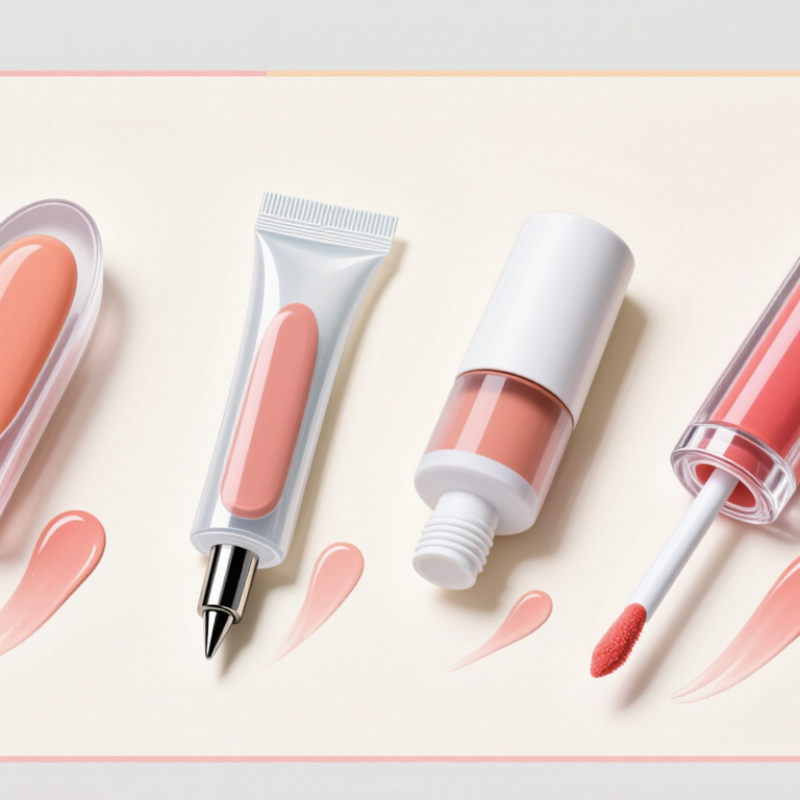
Squeezable lip gloss tubes vary by applicator, opening, and body shape. A pointed-nozzle tube dispenses gloss directly onto the lips or a fingertip. Its narrow tip allows controlled placement, though a wide opening can release too much product. Slant-tip tubes have a flattened, angled end that spreads gloss without a separate wand. They are compact, but the tip may feel less precise on smaller lips. Soft tubes with a doe-foot applicator add a wand for smoother, more familiar application. The applicator needs room inside, so the tube is often less pocket-friendly.
Some designs use a small squeeze body and a rounded silicone or plastic applicator. These can feel gentle and easy to clean, though product may collect around the tip. Tube bodies may be made from flexible plastic or laminated materials, with clear walls that reveal the remaining gloss. Small details matter. A cap that loosens easily can make a bag messy.
The wider market provides useful context, but not tube-specific demand. Grand View Research’s Cosmetic Packaging Market report estimated the global market at US$32.3 billion in 2023 and forecast 4.4% annual growth from 2024 to 2030. That growth does not prove one applicator type is preferred. For product selection, compare dispensing control, portability, and how much gloss stays trapped inside; that last point is easy to overlook.
How Applicator and Cap Designs Vary
Squeezable lip gloss tubes vary most visibly at the opening. A narrow nozzle gives direct control and works well for applying a thin line to the lips. Angled tips can spread gloss more smoothly, especially when the tube is held at a low angle. Soft silicone tips feel gentle, but they may collect product around the edge. Wipe them clean after use.
Some tubes pair a squeeze body with a wand stored inside the cap. A flocked applicator can lay down a fuller coat, while a small brush offers more precise edges. These designs feel familiar, though they add parts that need regular cleaning. Small detail. A wand can also make it harder to use every last drop.
Cap design affects both access and storage. Screw caps usually provide a secure closure when properly tightened, while flip-top caps allow quick, one-handed use. A hinged cap can be convenient, but product may dry around its opening if the tube is left uncapped. Check how the cap meets the nozzle: a snug fit helps limit mess in a purse, but no closure should be assumed leakproof. In practice, the easiest design is not always the neatest; a wide opening may dispense too much with one squeeze.
Choosing a Tube for Formula and Packaging Needs
What Are the Top Types of Squeezable Lip Gloss Tubes?
Choosing a Tube for Formula and Packaging Needs
The right squeezable tube depends on how the gloss flows and how customers apply it. Thin formulas usually work with a narrow opening and a slim applicator. Thicker, glitter-filled gloss may need a wider orifice to reduce clogging. A soft plastic tube is lightweight and easy to squeeze, while a laminated tube can offer a firmer feel and more room for printed details. Neither option suits every formula.
Check the applicator, cap, and tube as one system. A slanted tip can help with direct application, while a doe-foot wand may give more control but needs a wider opening. Match the tube material to the formula, then test for leaks, changes in texture, and dispensing consistency over time. A decorated tube may look polished, yet still feel awkward in the hand. Packaging decisions can involve trade-offs; there is no universal fit.
Tips: Fill a sample tube. Test it at room temperature and after storage. Check whether the cap stays clean between uses. Small details matter. Record the formula, opening size, and material tested, so later adjustments are based on evidence rather than guesswork.
What Are the Top Types of Squeezable Lip Gloss Tubes?
Compare common tube designs by their typical application features.
A value of 1 indicates a typical design feature; 0 indicates it is not typical of that style. Nozzle and slant-tip tubes dispense gloss directly, while doe-foot and brush-tip styles add a soft contact applicator. Features can vary by product design; this chart is a design comparison, not market-share data.