What Are the Top Types of Ropes for Different Uses?
Choosing among ROPES is not a matter of picking the thickest line or the lowest price. A rope that works well on a boat may be unsuitable for climbing, lifting, or securing a load. Fiber, construction, stretch, diameter, and exposure to water or sunlight all affect performance. Small details matter. A rough, salt-stained dock and a smooth indoor training wall call for different considerations.
Yvon Chouinard, a climber and climbing-equipment designer, is widely quoted as saying, “The best climber in the world is the one having the most fun.” It is not a rope specification, of course. But it offers a useful reminder: equipment should fit the activity, not just look impressive. This guide compares common rope types, including nylon, polyester, polypropylene, natural fiber, and specialty constructions. It explains where each tends to perform well and where its limitations deserve attention. A rope’s label is only part of the story; inspect its condition and follow the manufacturer’s instructions. Even then, choosing can feel less certain than a product chart suggests. That is worth admitting. The right choice depends on the task, the environment, and the consequences of failure.
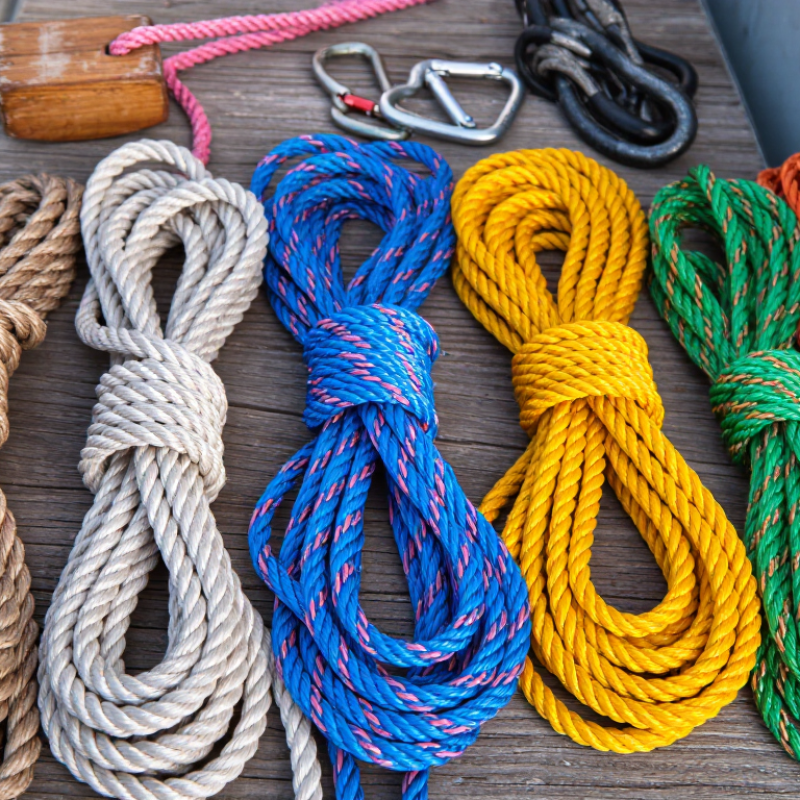
How Rope Materials and Construction Affect Performance
Rope performance begins with its fibers, not just its thickness. Nylon stretches under sudden loads, which can soften a jolt but makes it less suited to tasks needing steady length. Polyester stretches less and generally handles sunlight and damp conditions well. That steadiness matters. Polypropylene floats and feels light, though heat and prolonged sun can weaken it.
Construction changes how those fibers behave. Three-strand twisted rope is flexible and easy to splice, but it can kink when handled carelessly. Braided rope usually feels smoother and resists tangling; a braided cover over a load-bearing core can combine abrasion protection with strength. The details vary, though. A rope’s label and intended-use rating matter more than appearance alone.
For a wet dock line, polyester may keep its length better than nylon, while floating polypropylene can be easier to spot on the water. For hauling or general utility, compare hand feel, abrasion resistance, and the load rating. I would not judge by diameter alone. A thick rope can still be a poor match. Check for cuts, flattened sections, or a fuzzy sheath, and replace damaged rope according to its maker’s guidance.
Common Rope Types and Their Key Characteristics
Ropes are built from different fibers, and each fiber behaves differently under load, weather, and repeated handling. Nylon stretches under sudden force, which can soften shock loads in suitable towing or climbing systems. That stretch can also make a line harder to control when precise positioning matters. Polyester stretches less and resists sunlight and abrasion well, so it is often chosen for outdoor rigging and boat lines. It stays steady. Polypropylene is lightweight and floats, making it useful around water. However, heat and prolonged sunlight can weaken it, so it is not a universal substitute for stronger fibers.
Natural-fiber ropes, such as manila, offer a firm grip and a familiar feel in the hand. They can suit decorative work or light-duty tasks, but moisture may cause deterioration if the rope is stored damp. A dry, ventilated storage spot helps. The material alone does not determine safety: diameter, construction, knots, and wear all matter. Check for frayed strands, stiff patches, or cuts before relying on a line. One detail is easy to overlook: a rope’s rated strength can drop sharply when it is knotted or damaged. For lifting people or heavy loads, use equipment specifically rated for that purpose and follow its instructions. A slightly worn rope can look fine at a glance, which is why inspection deserves more attention than it often gets.
Best Rope Types for Marine, Climbing, and Rescue Uses
For marine use, rope choice depends on whether it must stretch, resist sunlight, or float. Nylon mooring lines absorb shock from waves, but their stretch can complicate precise handling. Polyester stretches less and generally holds up well in sun and abrasion, making it useful for dock lines and sheets. Polypropylene floats, which helps with some water tasks, but heat and prolonged sunlight can weaken it. It can feel convenient—until it wears faster than expected.
Climbing ropes are usually kernmantle: a strong inner core protected by a woven sheath. Dynamic ropes stretch under a fall and are designed for climbing systems that require fall protection. Static or low-stretch ropes suit hauling and access tasks, not lead climbing falls. Feel the sheath for soft spots, glazing, or uneven thickness. Small damage matters.
Rescue work often uses low-stretch kernmantle rope because controlled movement and hauling matter. The rope is only one part of a rescue system; compatible hardware, anchors, training, and clear procedures matter too. Check the rope’s documented specifications and inspection history, and remove it from service when damage or contamination is uncertain. In real conditions, categories blur: wet grit, sharp edges, and poor storage can change a rope’s performance. Inspect carefully.
Ropes for Construction, Agriculture, and Everyday Tasks
On construction sites, rope choice depends on the task, load, and exposure. Braided polyester handles sunlight and moisture well, making it useful for securing materials outdoors. Nylon stretches under strain, which can soften sudden pulls, but that stretch may be unwelcome when precise positioning matters. For lifting, use purpose-made, clearly rated slings and follow their instructions; ordinary utility rope is not a substitute. Check for cuts, flattened sections, fraying, or chemical damage before use. Small details matter.
Agricultural work often calls for practical, weather-aware choices. Polypropylene rope is lightweight and resists water, so it can help tie tarps or organize equipment around wet fields. Natural-fiber rope offers a familiar grip for some light-duty jobs, though dampness can weaken or degrade it over time. For fencing or securing hay, match the rope’s rating to the load and keep knots away from sharp edges. I’ve found that mud hides wear surprisingly well, so a quick rinse and inspection can reveal problems.
For everyday tasks, a clothesline, garden tie, or parcel cord rarely needs the same strength as construction gear. Choose a diameter that feels comfortable in your hands and a material suited to sun or rain. A simple braided line is easy to handle; a stretchy line may loosen as a load shifts. There is no perfect rope for every job. Replace questionable rope rather than trusting a familiar knot to make it safe.
What Are the Top Types of Ropes for Different Uses?
Typical material density (g/cm³) helps explain differences in weight and buoyancy. Values are approximate; rope construction and moisture can affect the finished rope.
Choosing a rope: Polypropylene is lightweight and floats, making it useful for farm, water, and general outdoor tasks. Nylon stretches more and can absorb shock; polyester stretches less and is commonly chosen for construction and rigging applications. Manila and sisal offer a natural-fiber grip for general-purpose tasks. For lifting or construction, use rope specifically rated for the load and application—material alone does not determine safe working capacity.
How to Match Rope Properties to a Specific Job
Rope choice depends on the forces, weather, and surfaces involved—not just the job’s name. Nylon stretches under sudden loads, which can help absorb shock, but that movement may be unsuitable for precise lifting. Polyester stretches less and resists sunlight well, making it useful for outdoor lines that need steadier length. Polypropylene floats, so it can suit water-related tasks, though sun and heat can weaken it over time. Small details matter. A rough edge can wear a rope quickly.
Tips: Check the rope’s stated working load, diameter, and construction. Leave a safety margin; knots and abrasion can reduce strength. For a wet dock, a floating rope may be handy, but inspect it for sun damage. For a load that must not bounce, choose a low-stretch option rated for that use. Never judge capacity by thickness alone.
Match the rope to the actual load and conditions. A thin line may fit through a small pulley, yet still be wrong for the force involved. Check the maker’s instructions and replace rope with cuts, fraying, stiff spots, or discoloration. One easy-to-miss issue is friction at contact points; even a strong rope can wear where it rubs against a sharp corner. I’d reassess the setup after the first use, because real surfaces are rarely as smooth as they look.





