


Hydrated lime looks simple in a storage bin: a fine, pale powder. In a mixer, however, it can behave very differently. Moisture, particle size, feed rate, and the required blend all affect performance. Choosing the right Hydrated Lime Mixer is therefore a process decision, not just a equipment purchase.
This overview compares common mixer types, including ribbon, paddle, plow, and continuous systems. Each design handles material in a different way. A ribbon mixer may suit controlled batch blending, while a paddle or plow mixer can provide more intensive movement. Continuous mixers can support steady production, but they require careful control of feed and residence time. Small details matter. A damp patch on a mixer wall, for example, can signal a process problem before the final product does.
“The best mixer is the one that delivers a consistent blend under the plant’s actual operating conditions.” This is a proposed quotation, not a verified statement. Before publication, attribute it only to a named Hydrated Lime Mixer specialist who has reviewed and approved the wording. That check matters. Mixer selection should also consider cleanout access, wear surfaces, dust control, and maintenance needs. No single design is ideal for every plant. Comparing these practical trade-offs can help buyers ask sharper questions and avoid choosing equipment based on capacity alone.
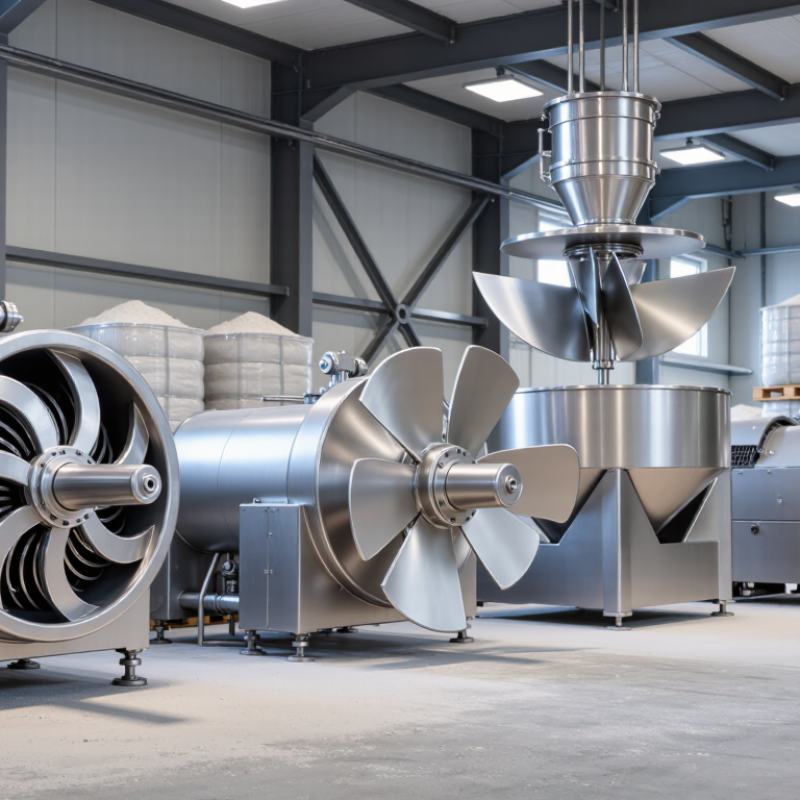
A hydrated lime mixer controls contact between quicklime, water, and moving blades. In a continuous paddle hydrator, metered quicklime and water enter one end. Paddles break up lumps and move the material through the chamber as hydration releases heat. The reaction is CaO + H₂O → Ca(OH)₂: about 56.1 kilograms of quicklime needs 18.0 kilograms of water chemically. Actual water feed varies with the required product and operating conditions. Too little can leave gritty, unreacted particles. Too much can make a paste difficult to handle. Small details matter.
Batch mixers work differently. Operators charge a vessel, agitate the contents, allow the reaction to proceed, then discharge the hydrated material. They can suit changing batch sizes; continuous systems fit steadier production. The USGS 2024 Mineral Commodity Summaries estimated U.S. lime production at 17 million metric tons in 2023, underscoring the scale of the industry, not the performance of any single mixer. In practice, operators monitor feed rates, temperature, motor load, and discharge texture. A smooth-looking sample is not proof of complete hydration; grit checks and consistent sampling help catch problems. Honestly, feed quality can vary more than a neat process diagram suggests.
| Mixer type | How it works | Typical use | Key strengths | Important considerations |
|---|---|---|---|---|
| Agitated batch tank | An impeller circulates water in a tank while hydrated lime powder is added gradually. The flow helps wet and disperse particles into a slurry. | Preparing batches of lime slurry for water treatment, pH adjustment, or other process dosing. | Straightforward operation; accommodates different batch sizes and mixing times. | Powder should be added in a controlled manner to limit dust and prevent clumps. Tank and impeller design should suit the slurry concentration and settling behavior. |
| High-speed disperser | A rapidly rotating dispersing blade creates strong local flow that draws powder into the liquid and breaks up soft agglomerates. | Powder wetting and dispersion where quick incorporation or a more uniform batch is needed. | Can improve powder incorporation and reduce persistent lumps when operated correctly. | Can introduce air or create dust during charging. It may require additional low-speed agitation to keep solids suspended after dispersion. |
| Inline static mixer | Fixed elements inside a pipe split and recombine flowing streams. Mixing energy comes from the pressure-driven flow; the mixer has no moving parts. | Blending a prepared lime slurry with a process stream, or mixing compatible liquid streams continuously. | Compact design with no internal drive shaft or rotating components. | Requires adequate flow and pressure. It is generally not a substitute for a powder-wetting vessel, and slurry lines need suitable cleanout and blockage controls. |
| Rotor-stator inline mixer | A powered rotor turns within a stationary stator, generating intense shear and circulation as liquid and solids pass through the mixing head. | Rapid wetting or deagglomeration in continuous or recirculating slurry-preparation systems. | Provides strong local mixing and can help disperse agglomerates. | Uses more mechanical energy than a static mixer and has moving parts subject to wear. Equipment selection should account for abrasive solids and maintenance access. |
| Continuous paddle or trough mixer | Rotating paddles convey and blend material along a trough. Depending on the system, water can be introduced during mixing to form a wet mixture or slurry. | Steady-throughput powder conditioning or continuous mixing applications designed for solids handling. | Supports continuous feed and can combine conveying with mixing. | The feed rate, water addition, residence time, and discharge design must be coordinated. It is not automatically suitable for preparing a pumpable slurry. |
Note: Hydrated lime is calcium hydroxide, Ca(OH)2. A hydrated-lime mixer generally disperses or blends the already hydrated powder; a lime slaker is used to react quicklime, CaO, with water.

What Are the Top Types of Hydrated Lime Mixers?
Paddle Mixers for Uniform Lime Blending
Paddle mixers suit hydrated lime blending when steady, repeatable dispersion matters. Their rotating paddles lift and fold powder through the mixing chamber, helping reduce unmixed pockets. That matters when lime feeds a dosing system or slurry preparation line. A dry corner can cause trouble.
The U.S. Geological Survey’s 2025 Mineral Commodity Summaries estimates U.S. lime production at about 18 million metric tons in 2024. This figure covers lime production overall, not hydrated lime alone, but it shows the scale of the industry. At that scale, consistent feed and dependable mixing deserve close attention.
For better results, operators should control feed rate, batch fill, and mixing time. Check paddle wear, too; worn edges can leave uneven circulation. ASTM C110 describes physical test methods for quicklime, hydrated lime, and limestone, but it does not certify mixer uniformity. Sampling the finished blend at several points can reveal variation. A paddle mixer is not magic. Moisture, lumps, and poor feeding still matter, and real plant conditions may expose flaws that a small trial misses.
A ribbon mixer is a practical option for blending dry hydrated lime with other powdered ingredients. Inside its horizontal trough, inner and outer ribbons move material in opposing directions. This creates both radial and lengthwise movement, helping distribute components through the batch. Keep the mixer correctly filled: too little material may reduce mixing action, while overfilling can leave uneven pockets.
Hydrated lime is fine and dusty, so enclosure design and dust collection deserve attention. Keep the charging and discharge points controlled, and check seals, covers, and ventilation during routine inspections. Small leaks matter. Moisture can also encourage caking, which may affect flow and cleanout. A poorly flowing batch may need process adjustments rather than simply a longer mixing cycle. Use trials.
Before selecting equipment, consider batch size, required blend uniformity, particle characteristics, and how the mixer will be emptied and cleaned. A ribbon mixer is not a magic fix; some blends may need a different mixing approach. Test representative materials and inspect samples from several points in the discharged batch. Those checks can reveal uneven distribution that a single sample might miss.
Pugmill mixers suit hydrated lime blends when water must be distributed through a continuous stream of solids. Counter-rotating shafts and angled paddles fold material repeatedly, helping break soft clumps and limit wet and dry pockets. A damp lump can hide a dry core. Operators should check moisture at several points, not only at the discharge chute. Feed rate, water flow, paddle wear, and residence time all affect consistency.
The U.S. Geological Survey’s Mineral Commodity Summaries 2025 estimates U.S. lime production at about 18 million metric tons in 2024. That figure describes the scale of lime handling, not a recommended mixer size. Actual pugmill capacity depends on bulk density, target moisture, and the material’s tendency to cake. For hydrated lime, enclosed feed points and effective dust control also matter. A visible dust plume may signal poor containment, but it does not prove the blend is dry.
For moisture-rich mixtures, operators can adjust water in small increments and inspect the discharge for shine, streaks, and persistent lumps. Measure torque and motor load during commissioning; rising load may indicate buildup or over-wetting. Not automatically. A pugmill cannot correct uneven feeding by itself. One practical limitation is that sticky material may coat paddles and reduce mixing action, so access for inspection and cleaning should be considered during equipment selection.
Indicative suitability for moisture-rich lime mixtures
Pugmill mixers are often a strong choice for moisture-rich blends because their intensive kneading action supports wet mixing and material conditioning. Ratings are qualitative comparisons based on typical mixer design, not standardized performance-test results; actual suitability depends on the material and process.
High-shear mixers suit hydrated lime preparation when powder must disperse quickly in water. A rotor-stator head creates intense local turbulence, drawing powder into the liquid and breaking apart many soft agglomerates. Operators can see the difference: fewer floating clumps, a more even slurry, and less time spent scraping the tank wall. It matters. The U.S. Geological Survey’s 2024 Mineral Commodity Summaries estimated U.S. lime production at 17 million metric tons in 2023. That figure covers lime broadly, not hydrated lime alone, but it shows why dependable, repeatable processing matters at industrial scale.
For better dispersion, feed hydrated lime steadily into a moving liquid zone rather than dumping a full bag into a quiet tank. Control the feed rate, batch temperature, and mixer speed; excessive shear can add heat and may not fix poor powder wetting. A recirculation loop can help even out concentration, especially in larger vessels. Check samples from different tank locations for lumps and consistency.
High shear is useful, not magic. Results still depend on powder quality, water chemistry, and equipment setup, and those variables are easy to underestimate. A small trial batch can reveal problems before they reach full production.


For those larger-sized parts, or smaller quantity runs, we have 2 independent powder coat booths and ovens. The quality, durability and affordability of today’s powder coating finishes make this the process of choice for world-class companies.
Powder coating advantages over other forms of coating are many. Materials used in the Powder coating process can be metals and non-metals that come in a multitude of thicknesses, textures, colors, etc. Another of Powder coating’s biggest advantages over conventional coatings is its ability to create finishes in many different textures. Powder Coating Booths allow us the ability to apply these advantages to large products.
Tri-State Fabricators runs a full-service conveyor line for painting. Wet painting can provide protection or decoration to many different part styles. From start to finish, every project is easier to undergo random and point-based inspection by our skilled painting team.
Advantages to our Wet Paint Line are these lines start with product prep and ends with a thorough inspection of a high quality finished product. Our ability to complete large and small projects with a superior finish and doing so in a timely and economical fashion. This passes along the savings in production to our customers. When powder coating ins not an option, our Wet Paint Line gets the job done right the first time.
When the parts get big and heavy we roll-out our custom paint racks and oversize booth. By utilizing our partnerships with all the major paint brands, we can match virtually any color with wet paint.
The advantages of having access to a Wet Paint Booth are many. Large projects of many different shapes can be loaded into the booth. The Wet Paint Booth offers an environment that is much more controlled than a typical parts painting operation.
Not only are they used because of their controlled environment, but they’re are also advantageous when it comes to applying paint to parts that are needed in industries that require specialty coatings such as medical, aerospace, etc.
Our military forces have some very high standards when it comes to the finish of their vehicles and equipment. From the first pre-treatment step to final coat, it takes a great deal of knowledge and experience to protect the men and women of our armed forces. They deserve only the best, and Tri-State Fabricators provides it.
All of our processes are closely monitored by our staff and management teams. Both of which are highly trained in the processes of metal fabrication and finishing. Tri-State Fabricators’ goal is to always fully satisfy each and every customer, including the military. We will always put a 110% into what we do.
Abrasive media blasting is an excellent way to remove old paint, rust, and increase the paint/powder adhesion. Glass beads produce a much smoother and brighter finish than angular abrasives; leaving the part clean yet without any dimensional change. Chemically inert and environmentally friendly, we can recycle our beads approximately 30 times; making them a more preferred method of metal cleaning or surface finishing.
Advantages to Glass Bead Blasting are many. Glass bead blast media is used when a project is needing rough surfaces need to become smooth for applications of coatings such as paint. It is typically used to clean paint and rust from a product surface without deforming the surface it is being used on. Overall, compared to many other blasting media, Glass Bead Blasting is a very economical choice and those savings are always passed on to our customers.
Tri-State Fabricators utilize a zinc phosphate wash to clean and etch the material to ensure the best paint adhesion possible. The unique design of our 3-stage wash system does the work like a 5-stage. From Cleaning and rinsing to conversion coating and post-treatment, Our Part Washing process is a complete service and works throughout the fabrication service and the finishing service.
Along with the previously mentioned benefits, Curing is a vital chemical reaction that leaves the product finish hard and relatively safe from mild abrasion and aggressive corrosion. This process can be done in more than one way; ambient air-dry or in curing ovens at temps that exceed 240°.
From fixing paint mistakes (someone else’s of course) to simply cleaning our paint line hooks, our burn-off oven is put to good use. After a quick burn-off, a little clean up, and a fresh coat of paint, your parts will look better than new.
Why does our Burn-Off Oven work so well? Because super heating the air around parts turns the materials into ashes. From paint and powder coatings to rubber and machining oils, high temps do the job without degrading the integrity of the part.
Masking is a vital part of producing high quality products. We have die-cut masking patterns to protect machined surfaces as well as a wide range of plugs and caps to protect threaded holes and bolts. We provide permanent and temporary masking.
Masking allows the selected sections of a product to be protected from a fabrication or finishing service. This can be with both chemicals when etching and tapes, paints when only finishing just a section of the product. Masking is great in aiding the customization process of a project.
Screen printing is a photographic process that transfers artwork onto a porous nylon screen which allows colored ink to flow through the screen and be deposited on an aluminum or plastic component. We can generally have just about any design created onto a screen for your parts.
Some of the advantages of Screen Printing are, brand recognition for your business displaying on your products, assembly instructions, product warnings/hazards, etc. Tri-State Fabricators produces Screen Printing of the highest quality so you know it’s durable.
Metal Finishing is the art of treating the exterior portion of product, often metal but can also be made of other materials, so that the surface is clean and free of any debris. Then the process of applying coats or either paint of powder coat takes place. This coating process improves the quality of the product in both appearance and resistance to wear and corrosion.
Tri-State Fabricators, Inc., understands that a project typically isn’t complete until a high-quality finish has been added to your product. This is why our painting and powder coating teams continuously inspect the products throughout the Metal Finishing process.

