


What Are the Top Types of Power Breakers?

Choosing the right Power Breaker is essential for protecting people, wiring, motors, and electrical equipment. A breaker must interrupt abnormal current quickly without disrupting safe, normal operation. The best choice depends on voltage, current, fault level, installation environment, and the equipment it protects.

This guide examines several widely used types, including miniature circuit breakers, molded case circuit breakers, air circuit breakers, vacuum circuit breakers, and SF6 circuit breakers. Each design has a different role. An MCB may protect a household lighting circuit, while an MCCB can handle higher currents in commercial buildings or industrial panels. ACBs often serve as main low-voltage protection, with visible settings and strong interruption capacity. Vacuum and SF6 models are commonly associated with medium- and high-voltage systems, where arc control becomes especially important.

Details matter. A loose terminal can create heat before any trip occurs. A dusty enclosure may reduce reliability. A breaker that appears oversized can leave cables poorly protected. Small mistakes matter.

Selection should follow the manufacturer’s data, local electrical requirements, and a documented fault-current study. Qualified professionals should verify installation, coordination, insulation levels, and maintenance intervals. Standards and product ratings also need careful checking because terminology can vary between regions. This comparison is useful, but it cannot replace site-specific engineering. Even experienced technicians sometimes reassess their first choice after reviewing actual load patterns, temperature, and future expansion. Safety is not a feature added at the end; it shapes the decision from the beginning.
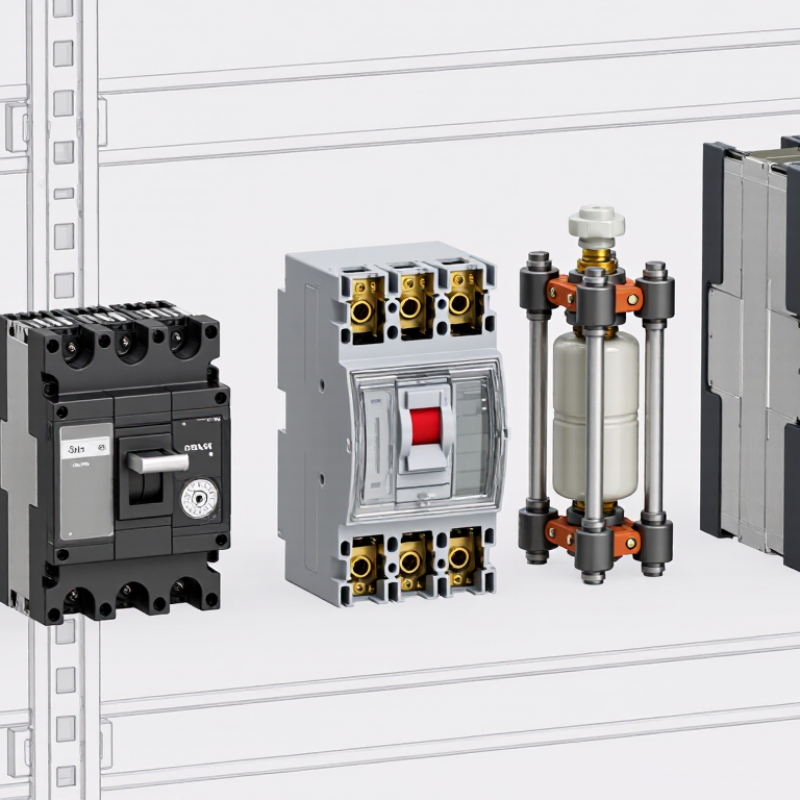
What Are the Top Types of Power Breakers?

How Power Breakers Protect Electrical Systems

What Are the Top Types of Power Breakers?

Power breakers are switching devices that stop dangerous current before wiring overheats. They protect circuits from short circuits, overloads, and certain leakage faults. Common types include miniature circuit breakers, molded-case circuit breakers, and residual-current breakers. Each type addresses a different electrical risk.

A miniature circuit breaker suits household and light commercial circuits. It trips when current stays too high or rises suddenly. A molded-case circuit breaker handles larger loads and often allows adjustable protection settings. Residual-current breakers monitor current leaving and returning through a circuit. If the difference becomes unsafe, they disconnect power quickly. This helps reduce electric shock risks. Small faults matter.

In practical maintenance, a loose terminal can create heat without triggering an immediate trip. Inspectors should check discoloration, unusual smells, vibration, and repeated breaker operation. A breaker that trips repeatedly should not be reset blindly. The circuit needs professional testing. Protection depends on correct ratings, cable size, installation conditions, and available fault current. Electrical standards and a qualified electrician’s assessment should guide selection. No breaker solves every problem. Even a correctly rated device can fail to protect equipment when connections are poor or testing is neglected.

What Are the Top Types of Power Breakers? - How Power Breakers Protect Electrical Systems

Breaker Type How It Works Typical Applications Protection Provided Key Consideration
Miniature Circuit Breaker (MCB) Typically uses thermal and magnetic trip mechanisms: heat responds to sustained overcurrent, while magnetic action responds rapidly to high fault current. Residential and light-commercial branch circuits, such as lighting and socket circuits. Overload and short-circuit protection. Choose the rated current and trip characteristics to suit the circuit, conductors, and applicable electrical rules.
Molded Case Circuit Breaker (MCCB) Interrupts fault current using a trip mechanism housed in an insulated molded case; some designs offer adjustable trip settings. Commercial and industrial feeders, distribution panels, and larger equipment circuits. Overload and short-circuit protection; available configurations may add other protective functions. Check the breaker’s interrupting rating against the available fault current at its installation point.
Air Circuit Breaker (ACB) Opens contacts in air and uses an arc-control arrangement to extinguish the electrical arc. Low-voltage main and feeder protection in larger commercial and industrial switchboards. Protects against overloads and short circuits; electronic trip units can provide additional protection functions. Often selected where higher current ratings, adjustable protection, or serviceable switchgear are required.
Vacuum Circuit Breaker (VCB) Separates contacts inside a sealed vacuum interrupter, where the arc is extinguished as the current passes through zero. Medium-voltage distribution systems, including substations and industrial switchgear. Interrupts fault currents on medium-voltage circuits when correctly rated and coordinated with the protection system. Voltage, continuous-current, and fault-interruption ratings must match the system design.
SF₆ Circuit Breaker Uses sulfur hexafluoride gas for insulation and, depending on the design, arc interruption. Some medium- and high-voltage substations and gas-insulated switchgear installations. Interrupts high-voltage fault currents as part of a coordinated protection system. SF₆ is a potent greenhouse gas, so leak prevention, gas handling, and applicable environmental requirements are important.
Oil Circuit Breaker Uses insulating oil to help insulate contacts and extinguish the arc during interruption. Legacy installations and certain existing medium- or high-voltage systems. Provides fault-current interruption when maintained and operated within its ratings. Requires attention to oil condition and presents fire and maintenance considerations; many applications use newer technologies.
Residual-Current Device (RCD/RCCB) and RCBO An RCD/RCCB detects an imbalance between outgoing and returning current. An RCBO combines residual-current protection with overcurrent protection. Circuits where additional protection against certain electric-shock or earth-leakage hazards is required. An RCD/RCCB provides residual-current protection but generally not overload or short-circuit protection; an RCBO also provides overcurrent protection. These devices complement, rather than replace, correctly selected circuit protection. Requirements vary by installation and jurisdiction.
Breaker ratings, available features, and installation requirements vary by model, system voltage, and local electrical regulations. Selection and installation should be performed by a qualified professional.

How Power Breakers Are Classified by Voltage and Arc-Quenching Medium

Power breakers are classified by voltage and by the medium that extinguishes the arc. Under IEC 62271, high-voltage switchgear covers equipment above 1 kV AC; practical systems often distinguish medium-voltage equipment from higher transmission classes. The exact boundary varies by standard and application. Check the equipment rating, not just the label.

Voltage affects insulation, clearances, and the energy a breaker must interrupt. A medium-voltage vacuum breaker can suit a compact indoor switchboard. At higher transmission voltages, designers may use gas-insulated or air-insulated equipment, depending on site conditions and system requirements. Arc-quenching medium matters. Vacuum interrupters extinguish arcs in a sealed chamber, while air-blast and gas breakers use flowing or pressurized media. Each choice brings trade-offs in footprint, maintenance, and environmental impact.

For gas-insulated breakers using sulfur hexafluoride, leakage deserves careful attention. The IPCC Sixth Assessment Report gives SF6 a 100-year global warming potential of 25,200 relative to CO2. That figure makes monitoring and gas handling more than routine details. It does not, by itself, determine the best breaker for a site. Fault current, switching duty, ambient conditions, and maintenance skills all matter. In practice, the “best” type can be less obvious than a product chart suggests.

Common Low-Voltage Types: MCBs, MCCBs, and Air Circuit Breakers

What Are the Top Types of Power Breakers?

Common Low-Voltage Types: MCBs, MCCBs, and Air Circuit Breakers

Miniature circuit breakers (MCBs) protect smaller branch circuits, such as lighting and socket circuits. Their compact bodies fit neatly inside distribution boards. Molded-case circuit breakers (MCCBs) handle higher currents and often allow adjustable trip settings, making them useful for feeders and equipment loads. Air circuit breakers (ACBs) are commonly installed as main breakers in larger low-voltage systems, where accessible settings and maintenance matter. IEC 60947-2 covers circuit breakers for systems up to 1,000 volts AC or 1,500 volts DC. These are scope limits, not a recommendation for any specific installation. Selection still depends on load current, fault level, coordination, and the installation environment. The distinctions can blur; current rating alone is not enough.

Tips: Check the available fault current and the breaker’s interrupting capacity before choosing. Compare trip curves with downstream devices, too. A setting that looks reasonable on paper may cause nuisance trips in a warm, crowded panel. That detail is easy to overlook. Use the manufacturer’s published test data and consult a qualified electrical professional when verifying protection settings.

Medium- and High-Voltage Types: Vacuum, SF₆, and Oil Breakers

Medium- and high-voltage breakers differ mainly in how they extinguish an arc. Vacuum breakers interrupt current inside sealed interrupters, where the arc collapses as current passes through zero. They are widely used in medium-voltage distribution, often from 3.6 kV to 40.5 kV. Their compact chambers need little routine contact maintenance, but switching certain inductive loads can create overvoltage concerns. That detail is easy to miss.

SF₆ breakers use sulfur hexafluoride gas for insulation and arc quenching, making them suitable for compact, high-voltage installations. The trade-off is significant: the IPCC Sixth Assessment Report gives SF₆ a 100-year global warming potential of 25,200 relative to carbon dioxide. Gas handling and leak monitoring therefore matter throughout equipment life. Oil breakers use mineral oil both to insulate and help extinguish arcs. They remain relevant in older installations, but oil condition requires testing, and leaks or internal faults can increase fire and maintenance risks. IEC 62271-100 sets requirements for high-voltage AC circuit-breakers; actual selection still depends on rated voltage, fault current, switching duty, and site conditions. A rating alone is not enough.

Sources: IPCC Sixth Assessment Report, Working Group I, Chapter 7; IEC 62271-100.

How to Match a Breaker Type to Its Application

What Are the Top Types of Power Breakers?

How to Match a Breaker Type to Its Application

Selecting a power breaker starts with the circuit, not the product name. Miniature circuit breakers suit lighting circuits and small residential loads. They provide reliable protection against overloads and short circuits. Their compact size also fits crowded distribution boards. For higher currents, molded-case circuit breakers offer adjustable settings and stronger interruption capacity. They work well in commercial panels, workshops, and small industrial systems.

The application determines the protection method. A residual-current device helps protect people from leakage to ground. An RCBO combines leakage protection with overcurrent protection in one unit. These devices are valuable in bathrooms, kitchens, outdoor outlets, and damp work areas. Air circuit breakers serve larger facilities with high fault currents. They often support adjustable trip functions and better coordination between upstream and downstream breakers.

Check voltage, continuous current, available fault current, and cable capacity before choosing. The breaker must protect the cable, not simply match the equipment rating. Trip curves also matter. Motors may need temporary starting current, while sensitive electronics require faster fault response. Environmental conditions deserve attention too. Heat, dust, vibration, and moisture can change performance. In field inspections, incorrect sizing remains a common problem. A breaker may operate safely yet interrupt essential equipment too often. That is why a qualified electrician should verify calculations, selectivity, and local code requirements. Even experienced installers should recheck assumptions before energizing a new circuit.

Top Types of Power Breakers and Their Typical Applications

Typical continuous-current ranges shown for common low-voltage breaker categories. Actual selection depends on system voltage, fault level, installation method, and applicable standards.

MCBs are commonly used for final circuits in homes and light commercial installations. MCCBs suit higher-current feeders and industrial distribution. ACBs are typically used as main or incoming breakers in large low-voltage switchboards. RCDs provide earth-leakage protection, while RCBOs combine overcurrent and earth-leakage protection in one device.

Powder Coat Booths

For those larger-sized parts, or smaller quantity runs, we have 2 independent powder coat booths and ovens. The quality, durability and affordability of today’s powder coating finishes make this the process of choice for world-class companies.

Powder coating advantages over other forms of coating are many. Materials used in the Powder coating process can be metals and non-metals that come in a multitude of thicknesses, textures, colors, etc. Another of Powder coating’s biggest advantages over conventional coatings is its ability to create finishes in many different textures. Powder Coating Booths allow us the ability to apply these advantages to large products.

Wet Paint Line

Tri-State Fabricators runs a full-service conveyor line for painting. Wet painting can provide protection or decoration to many different part styles. From start to finish, every project is easier to undergo random and point-based inspection by our skilled painting team.

Advantages to our Wet Paint Line are these lines start with product prep and ends with a thorough inspection of a high quality finished product. Our ability to complete large and small projects with a superior finish and doing so in a timely and economical fashion. This passes along the savings in production to our customers. When powder coating ins not an option, our Wet Paint Line gets the job done right the first time.

Wet Paint Booths

When the parts get big and heavy we roll-out our custom paint racks and oversize booth. By utilizing our partnerships with all the major paint brands, we can match virtually any color with wet paint.

The advantages of having access to a Wet Paint Booth are many. Large projects of many different shapes can be loaded into the booth. The Wet Paint Booth offers an environment that is much more controlled than a typical parts painting operation.

Not only are they used because of their controlled environment, but they’re are also advantageous when it comes to applying paint to parts that are needed in industries that require specialty coatings such as medical, aerospace, etc.

Military CARC

Our military forces have some very high standards when it comes to the finish of their vehicles and equipment. From the first pre-treatment step to final coat, it takes a great deal of knowledge and experience to protect the men and women of our armed forces. They deserve only the best, and Tri-State Fabricators provides it.

All of our processes are closely monitored by our staff and management teams. Both of which are highly trained in the processes of metal fabrication and finishing. Tri-State Fabricators’ goal is to always fully satisfy each and every customer, including the military. We will always put a 110% into what we do.

Glass-Bead Blasting

Abrasive media blasting is an excellent way to remove old paint, rust, and increase the paint/powder adhesion. Glass beads produce a much smoother and brighter finish than angular abrasives; leaving the part clean yet without any dimensional change. Chemically inert and environmentally friendly, we can recycle our beads approximately 30 times; making them a more preferred method of metal cleaning or surface finishing.

Advantages to Glass Bead Blasting are many. Glass bead blast media is used when a project is needing rough surfaces need to become smooth for applications of coatings such as paint. It is typically used to clean paint and rust from a product surface without deforming the surface it is being used on. Overall, compared to many other blasting media, Glass Bead Blasting is a very economical choice and those savings are always passed on to our customers.

Part Washing

Tri-State Fabricators utilize a zinc phosphate wash to clean and etch the material to ensure the best paint adhesion possible. The unique design of our 3-stage wash system does the work like a 5-stage. From Cleaning and rinsing to conversion coating and post-treatment, Our Part Washing process is a complete service and works throughout the fabrication service and the finishing service.

Along with the previously mentioned benefits, Curing is a vital chemical reaction that leaves the product finish hard and relatively safe from mild abrasion and aggressive corrosion. This process can be done in more than one way; ambient air-dry or in curing ovens at temps that exceed 240°.

Burn-Off Oven

From fixing paint mistakes (someone else’s of course) to simply cleaning our paint line hooks, our burn-off oven is put to good use. After a quick burn-off, a little clean up, and a fresh coat of paint, your parts will look better than new.

Why does our Burn-Off Oven work so well? Because super heating the air around parts turns the materials into ashes. From paint and powder coatings to rubber and machining oils, high temps do the job without degrading the integrity of the part.

Masking

Masking is a vital part of producing high quality products. We have die-cut masking patterns to protect machined surfaces as well as a wide range of plugs and caps to protect threaded holes and bolts. We provide permanent and temporary masking.

Masking allows the selected sections of a product to be protected from a fabrication or finishing service. This can be with both chemicals when etching and tapes, paints when only finishing just a section of the product. Masking is great in aiding the customization process of a project.

Screen Printing

Screen printing is a photographic process that transfers artwork onto a porous nylon screen which allows colored ink to flow through the screen and be deposited on an aluminum or plastic component. We can generally have just about any design created onto a screen for your parts.

Some of the advantages of Screen Printing are, brand recognition for your business displaying on your products, assembly instructions, product warnings/hazards, etc. Tri-State Fabricators produces Screen Printing of the highest quality so you know it’s durable.

Metal Finishing

Metal Finishing is the art of treating the exterior portion of product, often metal but can also be made of other materials, so that the surface is clean and free of any debris. Then the process of applying coats or either paint of powder coat takes place. This coating process improves the quality of the product in both appearance and resistance to wear and corrosion.

Tri-State Fabricators, Inc., understands that a project typically isn’t complete until a high-quality finish has been added to your product. This is why our painting and powder coating teams continuously inspect the products throughout the Metal Finishing process.


