What Are the Top Types of Back Stretcher Boards?

Low back discomfort affects people across occupations, ages, and activity levels. The World Health Organization’s 2023 low back pain fact sheet estimates that 619 million people experienced low back pain in 2020. It projects that number could reach 843 million by 2050. Those figures describe a major health burden, not proof that a stretching device can treat or prevent back pain. That distinction matters.

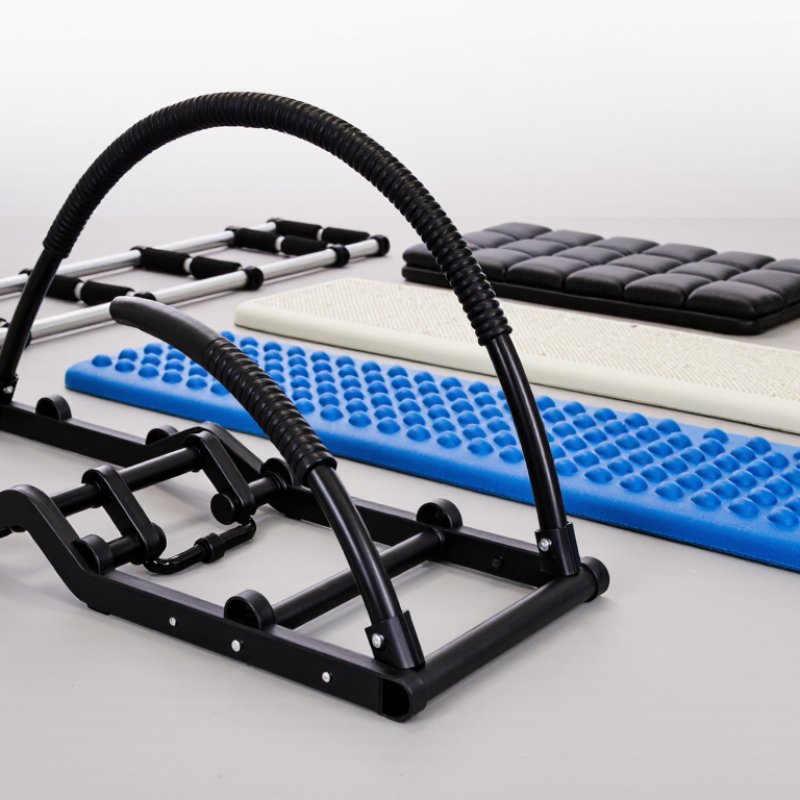
A Back Stretcher Board is a broad product category, not one standard design. Some models use a curved, adjustable arch; others add raised massage points or a firmer, flatter support surface. Traction-style boards are another option, though their setup and intended use can differ substantially. This guide compares the main types by design, adjustability, materials, and practical features, such as how securely a board sits on the floor. Small details count. A rigid arch may feel very different from a flexible one, and a higher setting is not automatically better. Product descriptions can also make benefits sound more certain than the evidence supports. WHO population data cannot tell us which board suits a particular person. Readers should consider comfort, instructions, and individual health needs, and seek professional advice when symptoms are severe or persistent. The categories below offer a clearer starting point for comparing products, with room for a little healthy skepticism.
What Are the Top Types of Back Stretcher Boards?

What a Back Stretcher Board Is and How It Works

A back stretcher board is a curved support placed beneath the back while a person lies face-up. Its raised center contacts the spine area, while the ends support the torso. As the body settles over the arch, gravity encourages a gentle backward bend. The board does not actively pull vertebrae apart or guarantee spinal “realignment.” Small distinction, but an important one.

Common designs use a fixed arch or adjustable height settings. Some include raised contact points, which may feel intense on tight muscles.

Start with the lowest setting and a short session, then stop if pain, numbness, or tingling appears. A board is not suitable for every cause of back pain, and it should not replace clinical advice when symptoms persist or worsen.

The World Health Organization’s 2023 low back pain fact sheet reports that about 619 million people experienced low back pain in 2020, with projections reaching 843 million by 2050.

That figure describes the scale of the problem, not proof that stretcher boards treat it. Their effect depends on the person, the condition, and how the device is used. A little skepticism helps.

Key Features That Distinguish Back Stretcher Boards

Back stretcher boards differ most in their curve, adjustment options, and support surface. A shallow arch creates a gentler opening, while a higher arch places the lower back in a more pronounced extended position. More height is not automatically better; comfort depends on body shape, mobility, and how the board is used. Many models include stepped settings, letting users begin with a lower curve and adjust gradually.

Small details matter. Check that the board sits flat on the floor and has a stated weight capacity. A non-slip base can help prevent movement, especially on smooth flooring. Firm plastic is common and easy to wipe clean, but it may feel hard against the spine. Foam padding can soften contact, though thick padding may reduce the feeling of support. Raised ridges or pressure points are another design choice; they can feel intense, so they are not suitable for everyone.

Size and portability also distinguish boards. A compact model fits under a desk or in a travel bag, but may offer less surface area for broader backs. A wider board can feel more stable, though it takes up more space. There is no perfect setting for every day; a position that feels comfortable once may feel too strong later. Start gently, follow the product instructions, and stop if use causes pain, numbness, or worsening symptoms. A board is a stretching aid, not a diagnosis or a substitute for professional advice.

Common Types of Back Stretcher Boards

Common Types of Back Stretcher Boards

A fixed-arch board has one curved surface and a set height. Its simple shape can suit people who want a straightforward stretch. Some models add raised pressure points along the arch. These can feel intense, especially through thin clothing. They feel different.

Adjustable boards offer several height settings, often changed with pegs or removable supports. A lower setting may feel more manageable, while a higher arch increases the curve. Move up gradually, and stop if you feel sharp pain or numbness. Small adjustments matter. A rocking board has a curved base that lets the user shift gently forward and backward. This movement may feel less static, but balance and control are important.

Boards also differ in material and surface. Rigid plastic is usually light and easy to wipe clean; wooden versions tend to feel firmer and heavier. Check that the board sits securely on a flat floor and supports your weight as specified by its maker. Raised nodes are not a measure of better support. Comfort depends on body shape and sensitivity, and a board should not be treated as a cure for back problems. If symptoms persist or worsen, ask a qualified health professional before using one.

How the Main Board Types Compare

What Are the Top Types of Back Stretcher Boards?

How the Main Board Types Compare

Rigid arched boards, foam boards, and inflatable models offer different kinds of support. A rigid board holds a fixed curve, so its pressure feels predictable but may be intense for beginners. Foam models feel softer against the back, though they can compress under body weight. Inflatable boards let users adjust firmness and pack easily, but they depend on careful inflation and stable placement. No type fits everyone. A board that feels comfortable on a carpet may feel too forceful on a hard floor.

The World Health Organization reported that low back pain affected 619 million people worldwide in 2020, with cases projected to reach 843 million by 2050. This figure describes the scale of the problem, not proof that stretcher boards treat it. Direct, high-quality comparisons between board types remain limited. That gap matters. Comfort, body shape, mobility, and the reason for back pain can all change how a board feels. Treat product claims cautiously, and ask a qualified clinician for guidance if symptoms persist or worsen.

Tips: Start with a soft surface and brief sessions. Keep your movements slow; stop if you feel sharp pain, tingling, or numbness. Check that the board sits securely before lying back. A small detail—like a slippery floor—can change the experience.

Factors to Consider When Choosing a Back Stretcher Board

Choosing a back stretcher board starts with fit, not the number of raised points. Measure the space available and check the board’s length and width against your body. If the edges press into your ribs or hips, the shape may not suit you. Fit matters. The board should feel stable on a firm, level floor and should not rock when you shift gently.

Check the material, surface, and adjustment options. A rigid board provides a different feel from a flexible one, while adjustable height can help you begin with a milder curve. Look for smooth edges and a surface that is easy to keep clean. More intense is not automatically better. It is easy to focus on the arch height, but comfort and controlled movement matter just as much. Start gently.

Consider how you plan to use it and whether its size is practical to store. Follow the maker’s instructions, and avoid forcing a stretch or bouncing on the board. If you have ongoing back pain, a recent injury, or a health condition, ask a qualified health professional before use. Stop if you feel sharp pain, numbness, or worsening symptoms. A board can feel pleasant one day and uncomfortable the next, so pay attention to your body rather than pushing through.

Top Types of Back Stretcher Boards

Typical design ratings for key selection factors

Ratings use a qualitative 1–5 scale, where 5 is higher. They describe common designs, not measured clinical outcomes; features vary by model. Consider adjustability, firmness, portability, and comfort when choosing a board.


Powder Coat Booths

For those larger-sized parts, or smaller quantity runs, we have 2 independent powder coat booths and ovens. The quality, durability and affordability of today’s powder coating finishes make this the process of choice for world-class companies.

Powder coating advantages over other forms of coating are many. Materials used in the Powder coating process can be metals and non-metals that come in a multitude of thicknesses, textures, colors, etc. Another of Powder coating’s biggest advantages over conventional coatings is its ability to create finishes in many different textures. Powder Coating Booths allow us the ability to apply these advantages to large products.

Wet Paint Line

Tri-State Fabricators runs a full-service conveyor line for painting. Wet painting can provide protection or decoration to many different part styles. From start to finish, every project is easier to undergo random and point-based inspection by our skilled painting team.

Advantages to our Wet Paint Line are these lines start with product prep and ends with a thorough inspection of a high quality finished product. Our ability to complete large and small projects with a superior finish and doing so in a timely and economical fashion. This passes along the savings in production to our customers. When powder coating ins not an option, our Wet Paint Line gets the job done right the first time.

Wet Paint Booths

When the parts get big and heavy we roll-out our custom paint racks and oversize booth. By utilizing our partnerships with all the major paint brands, we can match virtually any color with wet paint.

The advantages of having access to a Wet Paint Booth are many. Large projects of many different shapes can be loaded into the booth. The Wet Paint Booth offers an environment that is much more controlled than a typical parts painting operation.

Not only are they used because of their controlled environment, but they’re are also advantageous when it comes to applying paint to parts that are needed in industries that require specialty coatings such as medical, aerospace, etc.

Military CARC

Our military forces have some very high standards when it comes to the finish of their vehicles and equipment. From the first pre-treatment step to final coat, it takes a great deal of knowledge and experience to protect the men and women of our armed forces. They deserve only the best, and Tri-State Fabricators provides it.

All of our processes are closely monitored by our staff and management teams. Both of which are highly trained in the processes of metal fabrication and finishing. Tri-State Fabricators’ goal is to always fully satisfy each and every customer, including the military. We will always put a 110% into what we do.

Glass-Bead Blasting

Abrasive media blasting is an excellent way to remove old paint, rust, and increase the paint/powder adhesion. Glass beads produce a much smoother and brighter finish than angular abrasives; leaving the part clean yet without any dimensional change. Chemically inert and environmentally friendly, we can recycle our beads approximately 30 times; making them a more preferred method of metal cleaning or surface finishing.

Advantages to Glass Bead Blasting are many. Glass bead blast media is used when a project is needing rough surfaces need to become smooth for applications of coatings such as paint. It is typically used to clean paint and rust from a product surface without deforming the surface it is being used on. Overall, compared to many other blasting media, Glass Bead Blasting is a very economical choice and those savings are always passed on to our customers.

Part Washing

Tri-State Fabricators utilize a zinc phosphate wash to clean and etch the material to ensure the best paint adhesion possible. The unique design of our 3-stage wash system does the work like a 5-stage. From Cleaning and rinsing to conversion coating and post-treatment, Our Part Washing process is a complete service and works throughout the fabrication service and the finishing service.

Along with the previously mentioned benefits, Curing is a vital chemical reaction that leaves the product finish hard and relatively safe from mild abrasion and aggressive corrosion. This process can be done in more than one way; ambient air-dry or in curing ovens at temps that exceed 240°.

Burn-Off Oven

From fixing paint mistakes (someone else’s of course) to simply cleaning our paint line hooks, our burn-off oven is put to good use. After a quick burn-off, a little clean up, and a fresh coat of paint, your parts will look better than new.

Why does our Burn-Off Oven work so well? Because super heating the air around parts turns the materials into ashes. From paint and powder coatings to rubber and machining oils, high temps do the job without degrading the integrity of the part.

Masking

Masking is a vital part of producing high quality products. We have die-cut masking patterns to protect machined surfaces as well as a wide range of plugs and caps to protect threaded holes and bolts. We provide permanent and temporary masking.

Masking allows the selected sections of a product to be protected from a fabrication or finishing service. This can be with both chemicals when etching and tapes, paints when only finishing just a section of the product. Masking is great in aiding the customization process of a project.

Screen Printing

Screen printing is a photographic process that transfers artwork onto a porous nylon screen which allows colored ink to flow through the screen and be deposited on an aluminum or plastic component. We can generally have just about any design created onto a screen for your parts.

Some of the advantages of Screen Printing are, brand recognition for your business displaying on your products, assembly instructions, product warnings/hazards, etc. Tri-State Fabricators produces Screen Printing of the highest quality so you know it’s durable.

Metal Finishing

Metal Finishing is the art of treating the exterior portion of product, often metal but can also be made of other materials, so that the surface is clean and free of any debris. Then the process of applying coats or either paint of powder coat takes place. This coating process improves the quality of the product in both appearance and resistance to wear and corrosion.

Tri-State Fabricators, Inc., understands that a project typically isn’t complete until a high-quality finish has been added to your product. This is why our painting and powder coating teams continuously inspect the products throughout the Metal Finishing process.



