What Are the Top Types of Adapter Rings?
Adapter rings are small accessories, but they can determine whether a filter fits securely on a camera lens. In photography, the term usually refers to rings that connect lenses, filters, or other accessories with different thread sizes. Check the diameter printed on the front of your lens, such as 49 mm or 58 mm, before choosing one. A mismatch can prevent a proper fit or leave the filter loose.
Fit comes first.
Step-up rings connect a smaller lens thread to a larger filter, while step-down rings do the reverse. Step-up rings are often preferred because larger filters may work across several lenses, though they can add bulk. Reversing rings attach a lens to a camera body in reverse for close-up photography. Mount adapters are another category: they connect lenses and camera bodies with different mounts, and may affect autofocus or electronic communication. The details depend on the specific camera and lens.
Material, finish, and machining also matter. Aluminum rings are common and lightweight; brass versions may resist binding, but they are not automatically better for every setup. A clean, even thread should turn smoothly without force. Tiny burrs or cross-threading can damage delicate parts. That distinction matters.
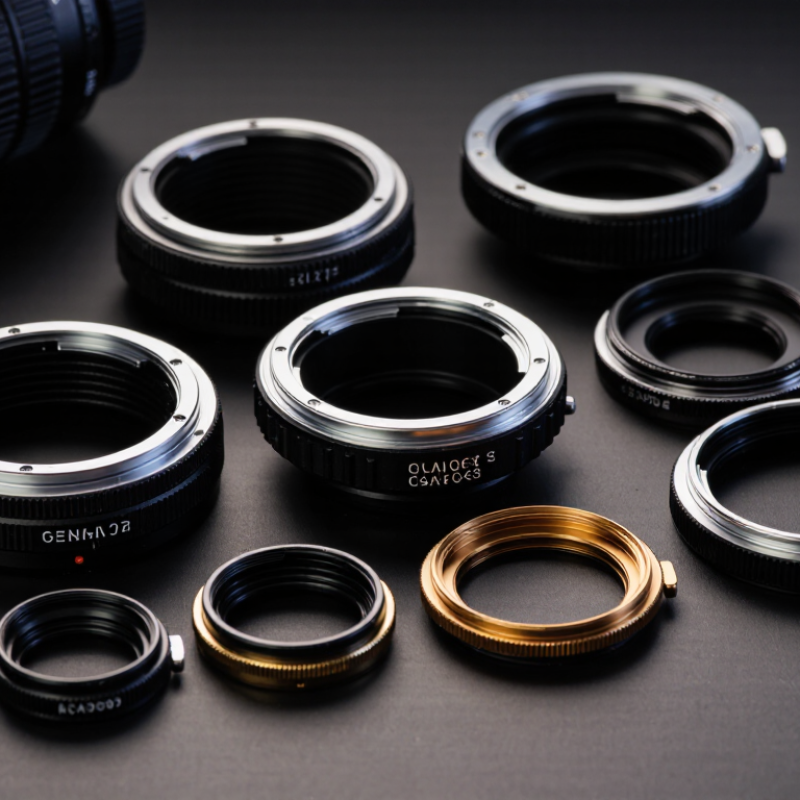
This guide compares the main types of Adapter Ring, what each one connects, and where it makes practical sense. No single design suits every kit. Confirm thread sizes and mount compatibility against the manufacturer’s specifications, and treat unusual combinations with care.
Adapter Rings Explained: Interfaces, Diameters, and Thread Pitch
What Are the Top Types of Adapter Rings?
Adapter rings connect a lens or device to an accessory with a different interface. In photography, common types include step-up rings, step-down rings, and conversion rings. A 52–67 mm step-up ring lets a 67 mm filter fit a lens with a 52 mm front thread. A step-down ring works in the opposite direction, but may cause vignetting with wide-angle lenses. Check both interfaces: matching diameters alone does not guarantee a secure fit.
Thread pitch matters, too. ISO 261 provides dimensional tables for general-purpose metric screw threads. For example, a 52 × 0.75 thread has a nominal diameter of 52 mm and a 0.75 mm pitch. Many photographic filter threads use this pitch, but not all do. Confirm the equipment specifications rather than relying on diameter markings alone. A mismatched pitch can bind after only a partial turn. That mistake is easy to make.
Tips: Clean the threads, align the ring squarely, and turn it gently by hand. If resistance appears, stop and check the interface and pitch. A caliper can help verify diameter, but it cannot confirm every thread detail. Even careful checks have limits.
What Are the Top Types of Adapter Rings?
Adapter rings connect components with different filter-thread diameters. Step-up rings fit a larger filter to a smaller-thread lens; step-down rings fit a smaller filter to a larger-thread lens. The chart shows example sizes, not a ranking. Many photographic filter threads use a 0.75 mm pitch, but check both components’ specifications before connecting them.
Step-Up Rings: Converting Common 0.75 mm Filter Threads to Larger Sizes
Step-up rings let a lens with a smaller filter thread accept a larger filter. Many camera lenses use a 0.75 mm thread pitch, but the diameter varies. A marking such as 52–67 mm usually means the ring fits a 52 mm lens thread and a 67 mm filter. Check both numbers before buying. Pitch alone does not confirm a fit.
The larger filter can leave more room in front of the lens, which may help reduce dark corners when using wide-angle lenses. It does not change the lens’s focal length or improve image quality by itself. Fit comes first. Align the threads gently and turn the ring without force; cross-threading can damage fine metal or plastic grooves. If it catches, stop and check the diameter.
A 0.75 mm pitch is common, not universal, so verify the lens manual or markings. Stacking several rings may push a filter farther from the lens and cause vignetting, especially at wide focal lengths. That detail is easy to overlook. A step-up ring can also make a lens cap or hood fit awkwardly, so test the full setup before a shoot. I would not assume a ring is compatible just because it looks close.
Step-Down Rings: Smaller Filters on Larger Threads and Vignetting Risks
A step-down ring lets a smaller filter fit a lens with a larger front thread. For example, a 67 mm filter can attach to a lens with a 72 mm thread. The ring is simple, but the smaller opening can block light near the image edges, especially on wide-angle lenses. This darkening is called vignetting. It may appear as shadowed corners in a photo, even when the center looks clear.
Risk depends on lens angle of view, filter size, and ring depth. A slim ring may help, though it cannot remove every cause of vignetting. Stacking filters or adding a deep hood can make the problem more noticeable. Check the corners at the widest focal length, with the aperture open, against a plain bright scene. Look closely. If the corners darken, remove the ring or use a larger filter with a different adapter. Stopping down may reduce some lens-related shading, but it will not reliably fix physical obstruction. One easy assumption is that matching the thread means the setup will work cleanly. It doesn’t always. Test the exact combination before an important shoot, since camera previews can make subtle corner shadows easy to miss.
Reverse and Macro Rings: Lens-Mount Fit and Close-Up Photography
Reverse and macro rings solve different close-up problems, and their fit matters as much as their purpose. A reverse ring attaches a lens to the camera with its front element facing the subject. Its camera-side mount must match the camera, while its filter thread must match the lens. Check both measurements before buying. A mismatch can leave the lens loose or make attachment impossible.
The reversed lens can produce strong magnification, but working distance may become very short. At high magnification, even a slight camera movement can shift the subject out of focus. Many setups also lose electronic aperture control and autofocus, so manual adjustments are common. Keep the exposed rear of the lens away from dust. Small parts, big effect.
A macro extension ring fits between the camera body and lens. It moves the lens farther from the sensor without adding glass, allowing closer focusing. Rings with electronic contacts may preserve aperture control, but compatibility varies by mount and lens. Adding more extension usually increases magnification and reduces available light. Expect trade-offs. For a flower, a single ring may be easier to handle; tiny subjects can require more extension and careful lighting. Results can feel awkward at first, and that is worth acknowledging: close-up work rewards slow adjustments more than extra equipment.
What Are the Top Types of Adapter Rings? - Reverse and Macro Rings: Lens-Mount Fit and Close-Up Photography
| Adapter ring type | How it fits | Typical close-up use | Important fit and handling notes |
| Lens reversing ring | Connects the camera body to a lens’s front filter thread, allowing the lens to be mounted facing backward. The ring must match the camera’s lens mount on one side and the lens’s filter-thread diameter on the other. | Reversing a lens can provide high magnification, especially with shorter focal lengths. It is commonly used for detailed subjects such as insects, textures, and small objects. | Check both the camera mount and filter-thread size. Many simple rings have no electronic contacts, so autofocus, lens-to-camera communication, and automatic aperture control may not work. Working distance can be short, and the exposed rear of the reversed lens needs protection. |
Macro coupling ring
(lens-to-lens reversing ring) | Uses two male filter-thread connections to join two lenses front-to-front. One lens stays mounted on the camera; the second lens is attached in reverse. The two lenses’ filter-thread diameters must be compatible with the ring. | Can achieve very high magnification by using a reversed lens as a close-up attachment on a normally mounted lens. It is useful for small subjects when a dedicated macro lens is not available. | The front lens must be able to support the added weight securely. Check thread sizes and avoid forcing mismatched threads; step rings may help with diameter differences but add more connections. The reversed lens’s rear element may sit close to the front element of the mounted lens, so check clearance and avoid contact. |
Fit check: Camera lens mounts and filter-thread diameters are different measurements. Confirm each required interface separately before choosing a ring. Reversed-lens setups commonly require manual focusing and careful exposure adjustment.
T-Mount Rings: The M42 × 0.75 Thread Interface
What Are the Top Types of Adapter Rings?
T-Mount Rings: The M42 × 0.75 Thread Interface
T-mount rings connect compatible cameras to telescopes, microscopes, and other optical equipment. Their defining feature is an M42 thread with a 0.75 mm pitch. The diameter alone is not enough to identify one. Some older screw mounts also measure 42 mm but use a different thread pitch, so they may not fit safely.
In a practical setup, the ring sits between the camera body and the optical device or another adapter. A clean, correctly matched connection should turn smoothly and seat without force. If it catches, stop and check the thread specification rather than tightening it. Even a small mismatch can damage the threads or leave the camera poorly aligned. Also confirm the required camera mount and optical spacing; a ring that fits mechanically may not provide the focus position you need. It sounds simple. It isn’t always.
Tips: Check both the thread diameter and pitch before buying. Keep the ring threads clean, and start screwing it on gently. A test fit without the camera attached can reveal a mismatch early.





