


Choosing a Trench Pipe supplier in China takes more than comparing prices. Buyers need to examine pipe material, wall thickness, joint design, coatings, and quality-control records. A smooth sample may look convincing under warehouse lights, but consistency across a full production run matters more. So do clear specifications and traceable inspection reports.
For transparency, the following is an illustrative quote, not a verified statement from a real industry expert. Fictional sourcing specialist Wei Chen puts the challenge this way: “A pipe earns trust underground, not in a brochure.” That is a useful lens for comparing manufacturers. Ask how suppliers test dimensions, manage production batches, and protect pipe ends during shipment. Request product data sheets and recent inspection records, then check that they match the quoted product. Small gaps matter.
This guide will compare leading Chinese suppliers by product range, manufacturing capability, export experience, and communication. It will also consider practical details: response times, packaging, sample availability, and whether technical answers are specific. Supplier rankings can change as products and operations change. Treat any shortlist as a starting point, not a final endorsement. A careful review takes time. That part is easy to underestimate.
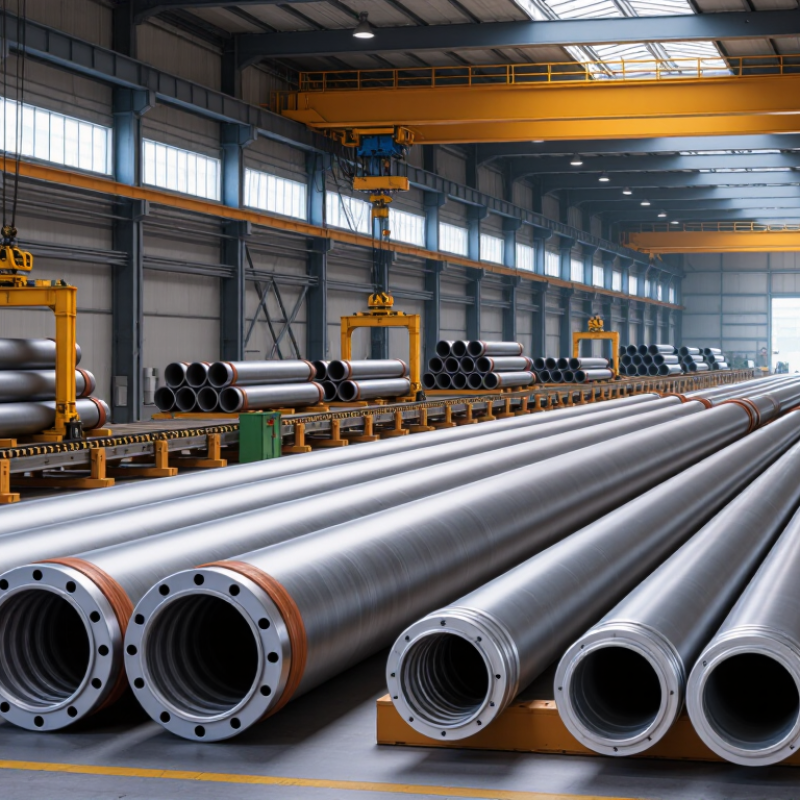
Trench pipes are pipes installed in excavated ground to carry water, wastewater, or storm runoff. The term is not perfectly precise; it can describe several pipe types rather than one specific product. Common materials include concrete, PVC, HDPE, and ductile iron. Engineers select them based on flow, burial depth, soil conditions, and expected surface loads. A pipe beneath a quiet garden path faces different pressure than one under a busy road.
These systems serve residential drainage, municipal sewers, water distribution, and industrial sites. Their performance depends on more than the pipe itself. A stable bedding layer, correct slope, and compacted backfill help limit movement and leaks. The U.S. EPA’s 2023 Drinking Water Infrastructure Needs Survey and Assessment estimates that the country needs $625 billion in drinking-water infrastructure investment over 20 years. This figure covers many system components, not trench pipes alone, but it shows the scale of buried-network maintenance.
Tips: Check soil and traffic loads before choosing a pipe. Inspect joints and bedding during installation. Small details matter. I have seen plans overlook access for future repairs; that deserves a second look.

Trench pipes are pipes installed below ground in excavated trenches, commonly for stormwater drainage, sewerage and other buried services. The chart shows SN ring-stiffness classes used for thermoplastic pipes; the figures are stiffness values in kN/m², not supplier rankings. The required class depends on factors such as burial depth, soil conditions, traffic loads and installation design.
China’s trench pipe supply industry is made up of several connected layers, not one uniform market. Pipe manufacturers produce drainage and sewer lines in materials such as concrete, ductile iron, and plastic. Some plants focus on large-diameter pipes for municipal projects, while others make smaller sizes for local construction. The details matter. A pipe’s material, joint design, and load rating must suit the trench conditions and intended use.
Around these factories are component suppliers, regional distributors, testing services, and transport companies. Distributors can help buyers source fittings and arrange delivery, especially when projects need mixed sizes. Freight planning is practical, not glamorous: long pipes need suitable vehicles, careful loading, and space at the site. Availability can also vary by region, season, and production schedule, so a quoted lead time should be checked against the project plan.
Buyers often compare more than unit price. They review technical data, inspection records, production capacity, and how the supplier handles damaged goods or specification changes. A sample joint or coating inspection can reveal issues that a catalog cannot. Paperwork can look complete. It is not the same as independent verification. Even experienced procurement teams may miss small differences between nominal dimensions and actual site requirements. A clear specification and direct technical discussion reduce that risk.
Choosing a trench pipe supplier in China requires more than comparing quotations. Start with the pipe’s intended use, soil conditions, burial depth, and expected loads. Ask for dimensional tolerances, material specifications, joint details, and coating information. A useful supplier can explain how these choices affect installation, not just send a product sheet.
Check quality records carefully. Request recent inspection reports, production traceability, and evidence that testing matches the stated specification. If possible, review a sample for wall thickness, finish, and joint fit. Small differences matter. Confirm how batches are identified and how defects are handled. A polished factory video is not proof of consistent production.
Production capacity and delivery planning deserve equal attention. Ask for a realistic schedule, packing details, and protection against dents or moisture during transport. Clarify which documents accompany each shipment, then have a qualified local engineer verify suitability for the project. Communication can reveal a lot: do answers address your drawings, or stay vague? Even thorough checks have limits; a sample may not represent every production batch, so plan for independent inspection when project risk warrants it.
China’s trench-pipe suppliers vary in more than production volume. China’s National Bureau of Statistics reported construction-industry output of RMB 31.59 trillion in 2023, a broad measure of sector activity—not trench-pipe sales. For buyers, useful capability checks include material consistency, pipe dimensions, joint compatibility, and documented quality controls. Suppliers serving drainage projects should explain how they test flow, leakage, and resistance to site loads. Details matter.
Stronger suppliers can provide drawings, test records, material traceability, and samples that match production batches. Ask how they manage custom lengths, fittings, and packaging for long-distance transport. The World Health Organization and UNICEF reported that 2.2 billion people lacked safely managed drinking water in 2022; this underscores infrastructure needs, though it is not a direct measure of trench-pipe demand. A polished catalogue can still hide gaps between samples and bulk orders. Requesting inspection records helps, but it does not replace checking the actual product. Compare technical evidence, not just quoted capacity or price.
This overview compares common supplier segments serving trench and underground pipeline projects in China. It is not a company ranking; product ranges and capabilities vary by manufacturer and should be verified for each project.
| Supplier Segment | Typical Trench-Pipe Products | Common Applications | Typical Manufacturing Capabilities | Project Checks to Make |
|---|---|---|---|---|
| HDPE pipe manufacturers | Solid-wall polyethylene pressure pipes and structured-wall drainage pipes, including corrugated designs. | Buried drainage, stormwater conveyance, and selected water or utility networks, subject to product design and specification. | Extrusion-based production; some manufacturers offer multiple diameters, stiffness classes, fittings, and joining options such as butt fusion or electrofusion for compatible pressure-pipe systems. | Confirm pipe structure, diameter, stiffness or pressure rating, joint system, material documentation, and applicable standard for the intended use. |
| Reinforced concrete pipe manufacturers | Reinforced concrete drainage and culvert pipes in specified diameters and load classes. | Gravity drainage, stormwater systems, culverts, and other buried infrastructure designed for external loading. | Concrete forming and curing; production may include reinforcement cages, different joint configurations, and made-to-order pipe lengths or classes. | Check load class, reinforcement details, joint and sealing arrangement, dimensional tolerances, test records, and project-specific design requirements. |
| Ductile iron pipe manufacturers | Ductile iron pipes with compatible fittings and jointing systems; lining and external coating options depend on the product specification. | Buried water distribution and other pressure-pipeline applications where specified by the project design. | Casting and finishing processes; product ranges may include different nominal diameters, pressure classes, linings, coatings, and restrained or flexible joints. | Verify pressure class, lining and coating system, joint compatibility, corrosion conditions, certificates, and applicable product standard. |
| Steel pipe manufacturers and fabricators | Welded steel pipes and fabricated sections, with coating or lining options specified for the service environment. | Pressure mains, crossings, casings, and engineered pipeline sections where strength, fabrication, or project design requirements call for steel. | Pipe forming or fabrication, welding, cutting, and optional surface preparation, lining, and coating; available processes vary by facility. | Review steel grade, wall thickness, weld inspection and testing, coating system, corrosion protection, and traceability documentation. |
| PVC-U pipe manufacturers | Rigid PVC-U pipes and compatible fittings in product ranges suited to specified drainage or utility applications. | Selected buried drainage and utility installations, when the pipe type, loading, and project specification are suitable. | Extrusion production and fitting supply; dimensional ranges, wall construction, joint type, and performance classes depend on the product line. | Confirm intended service, stiffness or pressure class, joint design, installation limits, temperature conditions, and applicable standard. |
Supplier qualification should be based on the project specification, verified test reports, applicable standards, product traceability, delivery capability, and references for comparable installations.
Comparing trench pipe suppliers in China starts with the project, not the quotation. Confirm soil conditions, burial depth, fluid, joint type, and design life. Then match the material and standard: ISO 4427 covers polyethylene water pipes, ISO 2531 covers ductile iron pipes, and EN 1916 covers concrete pipes. Check that the supplier’s certificates cover the exact product, diameter, and pressure class you need.
Quality needs evidence from production batches, not attractive samples alone. Request dimensional checks, pressure or stiffness test results, joint-leakage data, and material traceability. Ask who performed each test and whether the laboratory is accredited. A certificate alone is not enough. The WHO and UNICEF Joint Monitoring Programme reported that 2.2 billion people lacked safely managed drinking water in 2022, underscoring the importance of dependable water infrastructure.
Compare quotations on equal specifications, including pipe length, wall thickness, coating, joint accessories, packaging, and delivery terms. Ask for recent inspection records and a sample batch report; check that serial or batch numbers match. A low price may be reasonable, but only when the test scope and specification align. Supplier comparisons can still miss problems if documents are outdated, so verify key claims before ordering.


For those larger-sized parts, or smaller quantity runs, we have 2 independent powder coat booths and ovens. The quality, durability and affordability of today’s powder coating finishes make this the process of choice for world-class companies.
Powder coating advantages over other forms of coating are many. Materials used in the Powder coating process can be metals and non-metals that come in a multitude of thicknesses, textures, colors, etc. Another of Powder coating’s biggest advantages over conventional coatings is its ability to create finishes in many different textures. Powder Coating Booths allow us the ability to apply these advantages to large products.
Tri-State Fabricators runs a full-service conveyor line for painting. Wet painting can provide protection or decoration to many different part styles. From start to finish, every project is easier to undergo random and point-based inspection by our skilled painting team.
Advantages to our Wet Paint Line are these lines start with product prep and ends with a thorough inspection of a high quality finished product. Our ability to complete large and small projects with a superior finish and doing so in a timely and economical fashion. This passes along the savings in production to our customers. When powder coating ins not an option, our Wet Paint Line gets the job done right the first time.
When the parts get big and heavy we roll-out our custom paint racks and oversize booth. By utilizing our partnerships with all the major paint brands, we can match virtually any color with wet paint.
The advantages of having access to a Wet Paint Booth are many. Large projects of many different shapes can be loaded into the booth. The Wet Paint Booth offers an environment that is much more controlled than a typical parts painting operation.
Not only are they used because of their controlled environment, but they’re are also advantageous when it comes to applying paint to parts that are needed in industries that require specialty coatings such as medical, aerospace, etc.
Our military forces have some very high standards when it comes to the finish of their vehicles and equipment. From the first pre-treatment step to final coat, it takes a great deal of knowledge and experience to protect the men and women of our armed forces. They deserve only the best, and Tri-State Fabricators provides it.
All of our processes are closely monitored by our staff and management teams. Both of which are highly trained in the processes of metal fabrication and finishing. Tri-State Fabricators’ goal is to always fully satisfy each and every customer, including the military. We will always put a 110% into what we do.
Abrasive media blasting is an excellent way to remove old paint, rust, and increase the paint/powder adhesion. Glass beads produce a much smoother and brighter finish than angular abrasives; leaving the part clean yet without any dimensional change. Chemically inert and environmentally friendly, we can recycle our beads approximately 30 times; making them a more preferred method of metal cleaning or surface finishing.
Advantages to Glass Bead Blasting are many. Glass bead blast media is used when a project is needing rough surfaces need to become smooth for applications of coatings such as paint. It is typically used to clean paint and rust from a product surface without deforming the surface it is being used on. Overall, compared to many other blasting media, Glass Bead Blasting is a very economical choice and those savings are always passed on to our customers.
Tri-State Fabricators utilize a zinc phosphate wash to clean and etch the material to ensure the best paint adhesion possible. The unique design of our 3-stage wash system does the work like a 5-stage. From Cleaning and rinsing to conversion coating and post-treatment, Our Part Washing process is a complete service and works throughout the fabrication service and the finishing service.
Along with the previously mentioned benefits, Curing is a vital chemical reaction that leaves the product finish hard and relatively safe from mild abrasion and aggressive corrosion. This process can be done in more than one way; ambient air-dry or in curing ovens at temps that exceed 240°.
From fixing paint mistakes (someone else’s of course) to simply cleaning our paint line hooks, our burn-off oven is put to good use. After a quick burn-off, a little clean up, and a fresh coat of paint, your parts will look better than new.
Why does our Burn-Off Oven work so well? Because super heating the air around parts turns the materials into ashes. From paint and powder coatings to rubber and machining oils, high temps do the job without degrading the integrity of the part.
Masking is a vital part of producing high quality products. We have die-cut masking patterns to protect machined surfaces as well as a wide range of plugs and caps to protect threaded holes and bolts. We provide permanent and temporary masking.
Masking allows the selected sections of a product to be protected from a fabrication or finishing service. This can be with both chemicals when etching and tapes, paints when only finishing just a section of the product. Masking is great in aiding the customization process of a project.
Screen printing is a photographic process that transfers artwork onto a porous nylon screen which allows colored ink to flow through the screen and be deposited on an aluminum or plastic component. We can generally have just about any design created onto a screen for your parts.
Some of the advantages of Screen Printing are, brand recognition for your business displaying on your products, assembly instructions, product warnings/hazards, etc. Tri-State Fabricators produces Screen Printing of the highest quality so you know it’s durable.
Metal Finishing is the art of treating the exterior portion of product, often metal but can also be made of other materials, so that the surface is clean and free of any debris. Then the process of applying coats or either paint of powder coat takes place. This coating process improves the quality of the product in both appearance and resistance to wear and corrosion.
Tri-State Fabricators, Inc., understands that a project typically isn’t complete until a high-quality finish has been added to your product. This is why our painting and powder coating teams continuously inspect the products throughout the Metal Finishing process.

