


Top 10 Travertine Marble Suppliers for Global Buyers

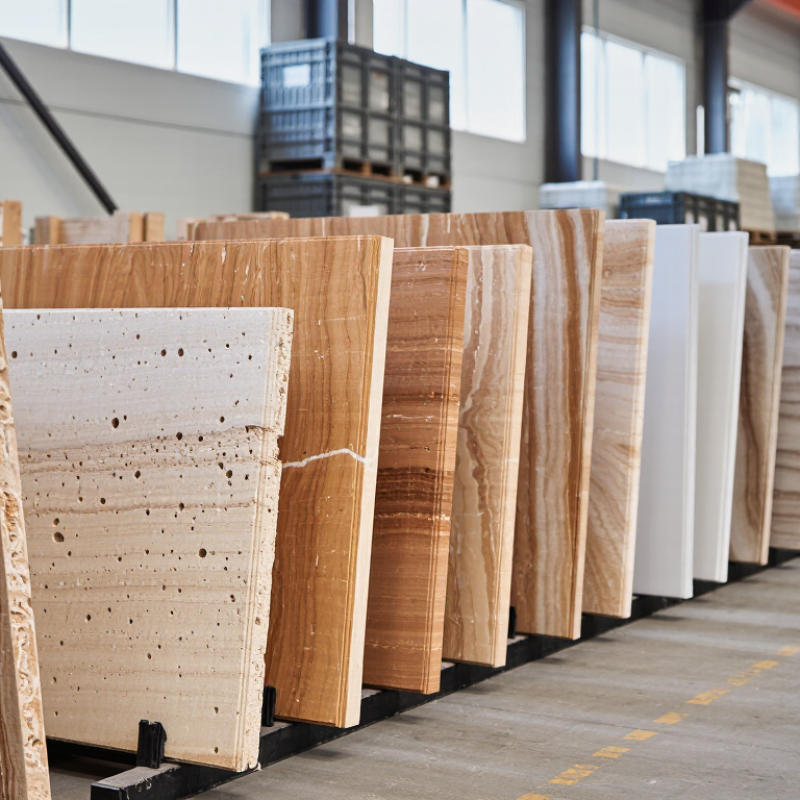
Travertine Marble has a distinctive appeal: warm color variation, visible pores, and the subtle marks of a natural stone. But global sourcing is more than choosing an attractive slab. Buyers must assess quarry origin, batch consistency, finish, sizing, packaging, and the supplier’s ability to document each order.

Industry data also requires careful reading. The U.S. Geological Survey’s Mineral Commodity Summaries covers dimension stone, while UN Comtrade trade data under HS 2515 groups marble, travertine, and alabaster. These sources help buyers understand production and trade patterns, but they do not always isolate travertine. That limitation matters. A market figure can look precise while describing several stones together.

Architect Louis Kahn’s well-known observation, “Even a brick wants to be something,” offers a useful reminder: materials have character, but procurement still depends on evidence. For Travertine Marble, ask suppliers for current photographs, technical specifications, sample approval, and clear packing details. Check whether quoted grades match the delivered slabs, not just the showroom display. Small differences in tone and filling can change a project’s final look.

The suppliers featured in this guide are assessed for product range, export readiness, communication, and practical sourcing support. No shortlist is perfect. Availability and quality can vary by quarry and production batch, so buyers should verify claims before placing an order. The right partner makes those checks easier—and more transparent.
Top 10 Travertine Marble Suppliers for Global Buyers

Understanding Travertine Marble and Its Global Supply Chain

Travertine is a sedimentary limestone formed as mineral-rich water deposits calcium carbonate. Its pores, veins, and color shifts are part of the stone, not defects by default. They also make quarry selection important. A block from one quarry face may differ noticeably from the next. Buyers should compare full slabs, not rely on a small sample, and request clear grading, finish, thickness, and tolerance details. Details matter. Even careful inspection cannot remove every natural variation.

The supply chain usually runs from quarry extraction to block processing, slab cutting, fabrication, packing, and delivery. At each stage, moisture, edge protection, and crate stability affect the condition of the stone on arrival. Ocean freight matters: UNCTAD’s Review of Maritime Transport 2024 reports that more than 80% of global trade in goods by volume moves by sea. That makes port handling and transit schedules relevant to project planning, not just freight cost. Buyers can ask suppliers for quarry and lot identification, recent slab photographs, inspection records, packing specifications, and a realistic delivery window. I would not treat a sample as a promise; natural variation makes that unrealistic. And a perfect slab photo cannot show how every piece in a shipment will look.


Criteria for Selecting Reliable Travertine Marble Suppliers

Reliable travertine suppliers provide traceable quarry origins, consistent grading, and clear test records. USGS’s 2024 Mineral Commodity Summaries tracks dimension-stone production and trade, highlighting why buyers should verify material origin and supply continuity. Ask for recent, lot-specific test results, not a generic brochure. ASTM C97 measures water absorption and bulk specific gravity; ASTM C99 evaluates flexural strength. These properties help assess performance, but they do not replace project-specific engineering review.

Inspect samples in both dry and wet conditions. Travertine’s pores, vein patterns, and filled areas can look different under changing light. Ask whether voids are filled with cement or resin, and request written tolerances for thickness, dimensions, and shade variation. Even a polished sample can mislead. A full-crate inspection is better. Also confirm packaging, container loading, replacement procedures, and realistic lead times in writing. Request photos of recent shipments and speak with buyers who have completed similar projects. No checklist is perfect; natural stone varies, and I would still allow for some variation in the finished installation.

Top 10 Travertine Marble Suppliers for Global Buyers

Criteria for Selecting Reliable Travertine Marble Suppliers

Suggested 100-point evaluation framework for comparing suppliers. The weights are a customizable buyer-created model, not survey results or rankings of specific companies. Verify product specifications, documentation, lead times, and shipping terms for each order.

Profiles of the Top 10 Travertine Marble Suppliers

Because brand names are excluded, these profiles compare supplier types rather than rank individual companies. An integrated quarry controls extraction and processing, offering clearer traceability. A regional quarry may provide distinctive color, but stock can be limited. A block specialist suits buyers with local fabrication partners. A slab processor offers polished, honed, or brushed finishes. A cut-to-size fabricator can produce stair treads and vanity tops.

A restoration-focused supplier may hold aged or reclaimed-looking material. A multi-quarry consolidator offers broader selection, though origin checks matter. A project distributor coordinates samples, packing, and shipment schedules. A boutique importer may carry unusual vein patterns in smaller lots. A logistics-led trader can simplify delivery, but verify who inspected the stone. Details matter. Request quarry origin, slab thickness, finish, batch photographs, and a written tolerance range. Ask for recent packing images; chipped corners are costly surprises. Grand View Research estimated the global natural stone market at about US$33.5 billion in 2023. Its market estimate covers many stone types, not travertine alone. That distinction matters when comparing supplier claims. A polished brochure proves little; inspect samples in daylight and confirm that the production batch matches.

Comparing Supplier Products, Pricing, and Export Capabilities

Travertine is often grouped with marble in trade listings, but it has different pores and surface character. Compare suppliers by asking for the same product format, finish, and grade. A useful range may include filled and unfilled slabs, cut tiles, and honed or tumbled finishes. Ask for current photographs, thickness tolerances, and sample pieces. Samples matter. Natural variation can make a sample look calmer than a full container.

Pricing needs context. A low price may reflect thinner material, more open pores, inconsistent sorting, or packaging that offers less protection. Request a written quotation showing stone specifications, quantity, packing, and the delivery point used for freight calculations. Compare costs per square metre, not just per slab. Clarify whether the quoted rate includes custom cutting or edge work. Small details add up.

Export capability is more than a sales promise. Ask how slabs are crated, whether tile boxes are palletized, and how the supplier checks loads before dispatch. Request recent loading photos and a realistic production schedule. Confirm which shipping documents the supplier routinely prepares and who coordinates freight. Delays happen. A clear answer is more useful than an impressive catalogue, though even careful suppliers cannot eliminate every color variation or transit risk.

How Global Buyers Verify Quality and Manage Orders

Global buyers should verify each travertine lot, not just approve a showroom sample. The USGS 2024 Mineral Commodity Summaries reported about 220 U.S. dimension-stone quarries across 34 states, illustrating how widely production can be distributed. Ask suppliers for the quarry location, block or lot numbers, and recent test results tied to the actual shipment. Compare water absorption, density, and flexural strength using recognized test methods, such as ASTM C97 and ASTM C880. Check filled and unfilled surfaces separately; resin, cement, and open pores can change appearance and performance. A polished sample can still mislead.

Keep order controls practical. Approve a labeled control sample, then require slab photographs under neutral light, with a ruler and lot number visible. Specify acceptable variation in color, veining, thickness, edge finish, and repair before production begins. For container orders, reconcile the packing list against crate labels and record any chipped corners or wet packaging at unloading. UNCTAD’s Review of Maritime Transport 2024 notes continued disruption and uncertainty in shipping routes, so buyers should confirm booking windows and buffer time in writing. Build in inspection time. It is easy to overlook. One weakness in this process is that photos cannot reveal every internal fissure; use independent inspection for high-value or tightly matched projects.

Top 10 Travertine Marble Suppliers for Global Buyers - How Global Buyers Verify Quality and Manage Orders Anonymous supplier-channel comparison. These are common sourcing models, not a ranked list of named companies; capabilities and material origin vary by supplier.
No. Supplier Type Typical Offering Quality Verification Order Management Checks
1 Quarry-owning producer Blocks or finished stone sourced from its own quarry; available colors and finishes depend on the deposit. Confirm quarry location and material description. Review current quarry or lot photographs, samples, and independent test reports where applicable. Confirm block or lot allocation, production schedule, export packing, and the process for approving the final lot before shipment.
2 Quarry-linked exporter Travertine supplied through a commercial relationship with one or more quarries; may offer blocks, slabs, or cut-to-size products. Ask for the quarry or source details for the quoted lot and check that samples, photographs, and documents refer to the same material. Put the approved grade, finish, dimensions, tolerances, quantity, delivery terms, and shipment window in the purchase contract.
3 Integrated quarry and processing factory Material extraction and processing managed within one supply chain; product formats can include slabs, tiles, and project pieces. Inspect representative pieces for color variation, filled voids, surface finish, thickness, and edge quality. Request batch-specific inspection records. Agree on a written inspection and approval point before packing, plus crate labels that identify product, dimensions, finish, and lot.
4 Block trader Sources and resells rough blocks from different producers; suitable for buyers with their own processing capacity. Verify block dimensions, visible defects, source documentation, and whether the quoted block is the actual block offered for sale. Record block identification, net and gross weight, loading method, port, shipping terms, and responsibility for loading and transport.
5 Slab processor or wholesaler Processed slabs in selected finishes and thicknesses, often supplied from one or several material sources. Check slab photographs under consistent lighting and confirm thickness, flatness, finish, filled areas, and acceptable natural variation. Reserve the selected slabs by slab number where possible; confirm bundle count, protective packing, and replacement terms for transit damage.
6 Tile manufacturer Travertine tiles in specified sizes and finishes, commonly for flooring, walls, and other interior or exterior applications. Check tile dimensions, thickness tolerance, finish consistency, edge treatment, and suitability for the intended installation conditions. Order an overage based on the project layout and cutting plan; confirm shade range, calibration, carton labels, and batch consistency.
7 Cut-to-size project fabricator Custom pieces such as panels, steps, sills, or other components made to project drawings. Approve shop drawings and a sample or first article. Verify dimensions, edge profiles, finish, and any specified fabrication tolerances. Use approved drawings and revision numbers; agree on measurement responsibility, packing by installation sequence, and delivery milestones.
8 Domestic importer or stockist Locally held inventory that may include imported travertine; can offer smaller quantities and shorter local delivery times. Ask for the country and source of the specific stock, inspect available bundles, and confirm that reserve samples represent the delivered lot. Confirm stock quantity, warehouse reservation period, local delivery charges, and the procedure for reporting shortages or damage.
9 Multi-origin stone wholesaler A range of natural stones sourced from multiple regions; product origin and specifications can differ between lots. Verify origin and technical documents for each quoted product rather than relying on general company-level information or a similar sample. Keep products from different origins or production lots separately identified in the order, packing list, and delivery plan.
10 Online B2B marketplace seller Listings for blocks, slabs, tiles, or custom orders; the seller may be a producer, exporter, or intermediary. Request a live video inspection or current lot images, verify business and shipping documents, and use independent inspection for high-value orders. Confirm payment protections, sample approval, production lead time, inspection rights, Incoterms, and the process for resolving discrepancies.

Buyer note: Travertine is a natural limestone, although it is often marketed alongside marble. Physical properties vary by deposit and product; request test results relevant to the intended use, such as water absorption and strength, rather than relying on a generic specification.

Powder Coat Booths

For those larger-sized parts, or smaller quantity runs, we have 2 independent powder coat booths and ovens. The quality, durability and affordability of today’s powder coating finishes make this the process of choice for world-class companies.

Powder coating advantages over other forms of coating are many. Materials used in the Powder coating process can be metals and non-metals that come in a multitude of thicknesses, textures, colors, etc. Another of Powder coating’s biggest advantages over conventional coatings is its ability to create finishes in many different textures. Powder Coating Booths allow us the ability to apply these advantages to large products.

Wet Paint Line

Tri-State Fabricators runs a full-service conveyor line for painting. Wet painting can provide protection or decoration to many different part styles. From start to finish, every project is easier to undergo random and point-based inspection by our skilled painting team.

Advantages to our Wet Paint Line are these lines start with product prep and ends with a thorough inspection of a high quality finished product. Our ability to complete large and small projects with a superior finish and doing so in a timely and economical fashion. This passes along the savings in production to our customers. When powder coating ins not an option, our Wet Paint Line gets the job done right the first time.

Wet Paint Booths

When the parts get big and heavy we roll-out our custom paint racks and oversize booth. By utilizing our partnerships with all the major paint brands, we can match virtually any color with wet paint.

The advantages of having access to a Wet Paint Booth are many. Large projects of many different shapes can be loaded into the booth. The Wet Paint Booth offers an environment that is much more controlled than a typical parts painting operation.

Not only are they used because of their controlled environment, but they’re are also advantageous when it comes to applying paint to parts that are needed in industries that require specialty coatings such as medical, aerospace, etc.

Military CARC

Our military forces have some very high standards when it comes to the finish of their vehicles and equipment. From the first pre-treatment step to final coat, it takes a great deal of knowledge and experience to protect the men and women of our armed forces. They deserve only the best, and Tri-State Fabricators provides it.

All of our processes are closely monitored by our staff and management teams. Both of which are highly trained in the processes of metal fabrication and finishing. Tri-State Fabricators’ goal is to always fully satisfy each and every customer, including the military. We will always put a 110% into what we do.

Glass-Bead Blasting

Abrasive media blasting is an excellent way to remove old paint, rust, and increase the paint/powder adhesion. Glass beads produce a much smoother and brighter finish than angular abrasives; leaving the part clean yet without any dimensional change. Chemically inert and environmentally friendly, we can recycle our beads approximately 30 times; making them a more preferred method of metal cleaning or surface finishing.

Advantages to Glass Bead Blasting are many. Glass bead blast media is used when a project is needing rough surfaces need to become smooth for applications of coatings such as paint. It is typically used to clean paint and rust from a product surface without deforming the surface it is being used on. Overall, compared to many other blasting media, Glass Bead Blasting is a very economical choice and those savings are always passed on to our customers.

Part Washing

Tri-State Fabricators utilize a zinc phosphate wash to clean and etch the material to ensure the best paint adhesion possible. The unique design of our 3-stage wash system does the work like a 5-stage. From Cleaning and rinsing to conversion coating and post-treatment, Our Part Washing process is a complete service and works throughout the fabrication service and the finishing service.

Along with the previously mentioned benefits, Curing is a vital chemical reaction that leaves the product finish hard and relatively safe from mild abrasion and aggressive corrosion. This process can be done in more than one way; ambient air-dry or in curing ovens at temps that exceed 240°.

Burn-Off Oven

From fixing paint mistakes (someone else’s of course) to simply cleaning our paint line hooks, our burn-off oven is put to good use. After a quick burn-off, a little clean up, and a fresh coat of paint, your parts will look better than new.

Why does our Burn-Off Oven work so well? Because super heating the air around parts turns the materials into ashes. From paint and powder coatings to rubber and machining oils, high temps do the job without degrading the integrity of the part.

Masking

Masking is a vital part of producing high quality products. We have die-cut masking patterns to protect machined surfaces as well as a wide range of plugs and caps to protect threaded holes and bolts. We provide permanent and temporary masking.

Masking allows the selected sections of a product to be protected from a fabrication or finishing service. This can be with both chemicals when etching and tapes, paints when only finishing just a section of the product. Masking is great in aiding the customization process of a project.

Screen Printing

Screen printing is a photographic process that transfers artwork onto a porous nylon screen which allows colored ink to flow through the screen and be deposited on an aluminum or plastic component. We can generally have just about any design created onto a screen for your parts.

Some of the advantages of Screen Printing are, brand recognition for your business displaying on your products, assembly instructions, product warnings/hazards, etc. Tri-State Fabricators produces Screen Printing of the highest quality so you know it’s durable.

Metal Finishing

Metal Finishing is the art of treating the exterior portion of product, often metal but can also be made of other materials, so that the surface is clean and free of any debris. Then the process of applying coats or either paint of powder coat takes place. This coating process improves the quality of the product in both appearance and resistance to wear and corrosion.

Tri-State Fabricators, Inc., understands that a project typically isn’t complete until a high-quality finish has been added to your product. This is why our painting and powder coating teams continuously inspect the products throughout the Metal Finishing process.
