


Top 10 Telemecanique Sensors Suppliers for Global Buyers

Industrial automation depends on small components that must perform reliably in demanding conditions. Telemecanique Sensors products serve applications such as position detection, limit switching, and machine monitoring. For global buyers, choosing a supplier involves more than comparing unit prices. Stock availability, product authenticity, documentation, and technical support all matter.

The International Federation of Robotics reported 553,052 industrial robots installed worldwide in 2022, a 5% increase over 2021. Its World Robotics 2023 report points to expanding automation, where dependable sensing helps machines detect position and respond to changing conditions. IFR President Marina Bill said, “The new World Robotics report shows the highest level of robot installations in history.” That growth offers useful context, though robot figures alone cannot measure demand for any specific sensor brand.

This guide compares ten suppliers of Telemecanique Sensors for buyers serving different regions and industries. It considers product range, purchasing access, delivery reach, and after-sales assistance. A listing is not a guarantee of suitability. Check exact model references, certificates, lead times, and warranty terms before ordering. Ask for written confirmation. Even a polished catalogue may leave important details unclear. That is worth remembering when production depends on a sensor arriving on time and matching the machine specification.
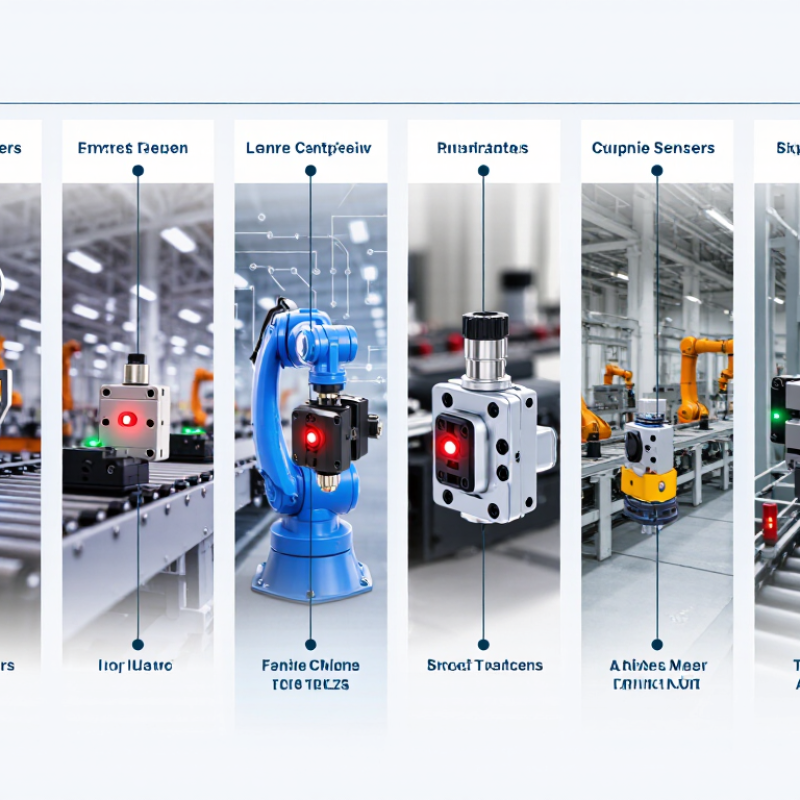
Top 10 Telemecanique Sensors Suppliers for Global Buyers

Understanding Telemecanique Sensors and Their Role in Automation

Industrial sensors turn physical events into usable signals. A proximity sensor can detect a metal part on a moving conveyor; a photoelectric sensor can confirm that a carton has reached the packing station. Controllers use these signals to adjust motion, trigger alarms, or stop equipment before a collision. Small devices. Big consequences.

The scale of automation makes dependable sensing essential. The International Federation of Robotics reported 4,281,585 industrial robots operating worldwide at the end of 2023, 10% more than a year earlier, in World Robotics 2024. Deloitte’s 2024 Smart Manufacturing Survey found that 86% of surveyed manufacturing executives expect smart manufacturing solutions to drive competitiveness within five years. Sensors provide much of the real-time information those systems need, including position, temperature, pressure, and vibration. Yet a sensor is only as useful as its installation and maintenance. Dust, vibration, poor alignment, or an unsuitable detection range can produce unreliable readings. That part is easy to underestimate. Buyers should compare sensing distance, response time, environmental protection, and compatibility with control systems, then test performance on the actual production line. A catalogue specification cannot fully predict shop-floor behavior.


Key Factors for Evaluating Global Sensor Suppliers

A sensor supplier should be assessed on performance in the buyer’s actual operating conditions, not only on catalogue specifications. Check repeatability, response time, ingress protection, operating temperature, and documented test methods. Ask for sample results from wet, dusty, or vibration-heavy environments. Small differences matter. A sensor that performs well on a clean bench may drift beside a hot motor. McKinsey’s 2020 supply-chain survey found that 93% of leaders planned to increase resilience. For buyers, that makes regional stock, realistic lead times, and clear escalation channels practical evaluation points—not optional extras.

Integration and long-term support deserve equal scrutiny. The International Federation of Robotics reported 4,281,585 industrial robots in operation worldwide in 2023, up 10% from 2022. That growth points to increasingly connected production lines, where sensor compatibility, stable communications, and replacement availability affect uptime. Request wiring diagrams, protocol details, calibration records, and a named technical contact before approval. Test units with the intended controller and cable length. Then verify performance after installation. Reports show broad industrial trends, not the reliability of any specific sensor supplier. That gap matters. Buyers should compare measured results, service response, and total replacement effort; a polished audit document alone is not proof.

Profiles of 10 Telemecanique Sensors Suppliers

A useful supplier profile should cover more than product availability. Buyers need verified part numbers, stock visibility, technical support, and clear return terms. These ten profiles represent different sourcing strengths, not a universal ranking.

Supplier 1 is a regional automation distributor with local inventory and fast dispatch.

Supplier 2 specializes in proximity sensors and can confirm sensing distance and mounting limits.

Supplier 3 focuses on photoelectric models, including options for dusty or reflective environments.

Supplier 4 serves OEMs and can support repeat orders across production lines.

Supplier 5 offers cross-reference assistance for older components, though substitutions need careful validation.

Supplier 6 supplies safety-related sensing devices and provides relevant documentation.

Supplier 7 supports export orders with traceable shipping records.

Supplier 8 serves maintenance teams needing small quantities quickly.

Supplier 9 provides engineering help for wiring, output types, and control-system compatibility.

Supplier 10 offers procurement support across several regions, but delivery performance should be checked.

Scale matters. The International Federation of Robotics’ World Robotics 2024 report counted 4,281,585 industrial robots operating in factories worldwide in 2023, up 10% from 2022. That growth makes dependable sensing and replacement access important. It does not prove that every supplier can meet a buyer’s needs.

Request current stock evidence, datasheets, and written confirmation of the exact model before purchasing. Some listings look alike; they may not be interchangeable.

Comparing Supplier Product Range, Availability, and Support

When comparing suppliers of industrial sensors, product range matters only when it fits the actual job. Check whether a catalog covers inductive, photoelectric, and limit sensors, then compare sensing distance, output type, connector, and ingress rating. A sensor rated for a clean assembly line may not suit a washdown area. Details matter.

Availability needs the same scrutiny. Ask whether quoted units are physically in stock, where they ship from, and how often inventory is updated. A short lead time on a quote can change before purchase. Request an estimated dispatch date and check minimum order quantities, especially when replacing a single failed unit. Verify product traceability and documentation before installation; a low price alone proves little. That matters.

Support can separate a useful supplier from a basic reseller. Look for staff who can discuss wiring diagrams, mounting clearances, and equivalent specifications without promising a perfect match. Ask how returns and warranty claims are handled, and whether technical help is available in your time zone. I would not rely on a quick cross-reference without checking the machine’s operating conditions. Even careful comparisons can miss a small connector difference. A written confirmation helps.

Matching a Supplier to Your Application and Region

Choosing a sensor supplier starts with the machine, not the catalog. A photoelectric sensor facing a dusty conveyor needs different support from an inductive sensor mounted near cutting fluid. Share the target material, sensing distance, switching frequency, and operating temperature before comparing quotations. Details matter. Ask whether the supplier can provide wiring diagrams, dimensional drawings, and test data for the exact model. A familiar product description is not enough if the connector, output type, or mounting space differs from your design.

Region affects more than delivery time. Check local stock, typical replenishment periods, and access to technical support in your working hours. For a production line in a humid coastal facility, confirm enclosure ratings and corrosion considerations; for a compact machine, verify connector clearance and cable bend radius. Ask how substitutions are handled when a part is unavailable. A lower price can become expensive if replacement units need new brackets or control-system changes. Request sample units where practical, then test them under real operating conditions. Even careful selection has limits: supplier specifications may not reflect every installation, and field conditions can be messier than a test bench. Human checks still count.

Top 10 Telemecanique Sensors Suppliers for Global Buyers - Matching a Supplier to Your Application and Region

A practical comparison of supplier types, not a verified ranking of individual companies. Confirm product compatibility, authorization, stock, and regional service directly with each prospective supplier.

Supplier type Typical applications Regional fit Potential advantage What to verify
1. Authorized automation distributor Routine replacement and new installations using proximity, photoelectric, limit, or pressure sensors. Best where the distributor has an established local branch or documented cross-border service. May offer product selection support and access to manufacturer documentation. Authorization status, exact part number, stock location, warranty terms, and delivery lead time.
2. Industrial automation distributor Control panels, packaging lines, conveyors, and general factory automation. Suitable for buyers sourcing within a regional industrial market. Can often consolidate sensors with related automation components. Sensor-specific technical knowledge, availability of accessories, and compatibility with the existing control system.
3. Sensor specialist Applications needing careful selection of sensing distance, output, housing, or environmental protection. Useful in regions with access to application engineering or remote technical support. May provide more focused guidance on sensor operating principles and installation conditions. Experience with the required sensor family, response times, and support for commissioning.
4. Machine builder or OEM supplier Replacement sensors for equipment supplied by a machine manufacturer or original equipment builder. Strong fit when the machine builder supports the buyer’s installation region. Can help identify the sensor specified in the machine’s bill of materials. Current part number, approved substitutes, machine revision, and availability of spare parts.
5. Systems integrator Retrofits and projects combining sensors with PLCs, drives, safety equipment, or data systems. Appropriate in markets where local engineering and on-site commissioning are available. Can assess sensor selection as part of the complete control application. Project scope, commissioning responsibility, documentation, and ongoing service coverage.
6. Regional importer or trading distributor Buyers sourcing imported components where local availability is limited. May serve markets through regional warehouses or international shipments. Can provide access to products not routinely stocked in the buyer’s immediate area. Traceability, product authenticity, import duties, applicable certifications, returns, and delivery terms.
7. MRO and maintenance supplier Plant maintenance, breakdown response, and replenishment of commonly used spare parts. A practical option where the supplier has local delivery and account support. May simplify procurement of sensors alongside other maintenance items. Exact specification, stock status, substitute approval, and emergency delivery options.
8. Online industrial parts seller Standardized replacement purchases when the required part number is already known. Can suit buyers in regions supported by the seller’s shipping and returns network. Convenient product searches and electronic order processing. Seller identity, item condition, stock location, delivery estimate, return policy, and documentation.
9. Electrical wholesaler Common electrical and automation maintenance needs in facilities with established wholesaler accounts. Most useful where local counter service or regional branch delivery is available. May offer convenient local purchasing and consolidated electrical supplies. Whether the required sensor range is stocked and whether staff can confirm technical specifications.
10. Independent repair and spare-parts supplier Legacy equipment, discontinued items, and urgent sourcing when standard channels cannot meet a need. May help in markets with limited local inventory, subject to shipping and import requirements. Can assist with hard-to-source parts or identification of possible replacements. Part condition, provenance, test records, warranty, and engineering approval of any substitute.

Powder Coat Booths

For those larger-sized parts, or smaller quantity runs, we have 2 independent powder coat booths and ovens. The quality, durability and affordability of today’s powder coating finishes make this the process of choice for world-class companies.

Powder coating advantages over other forms of coating are many. Materials used in the Powder coating process can be metals and non-metals that come in a multitude of thicknesses, textures, colors, etc. Another of Powder coating’s biggest advantages over conventional coatings is its ability to create finishes in many different textures. Powder Coating Booths allow us the ability to apply these advantages to large products.

Wet Paint Line

Tri-State Fabricators runs a full-service conveyor line for painting. Wet painting can provide protection or decoration to many different part styles. From start to finish, every project is easier to undergo random and point-based inspection by our skilled painting team.

Advantages to our Wet Paint Line are these lines start with product prep and ends with a thorough inspection of a high quality finished product. Our ability to complete large and small projects with a superior finish and doing so in a timely and economical fashion. This passes along the savings in production to our customers. When powder coating ins not an option, our Wet Paint Line gets the job done right the first time.

Wet Paint Booths

When the parts get big and heavy we roll-out our custom paint racks and oversize booth. By utilizing our partnerships with all the major paint brands, we can match virtually any color with wet paint.

The advantages of having access to a Wet Paint Booth are many. Large projects of many different shapes can be loaded into the booth. The Wet Paint Booth offers an environment that is much more controlled than a typical parts painting operation.

Not only are they used because of their controlled environment, but they’re are also advantageous when it comes to applying paint to parts that are needed in industries that require specialty coatings such as medical, aerospace, etc.

Military CARC

Our military forces have some very high standards when it comes to the finish of their vehicles and equipment. From the first pre-treatment step to final coat, it takes a great deal of knowledge and experience to protect the men and women of our armed forces. They deserve only the best, and Tri-State Fabricators provides it.

All of our processes are closely monitored by our staff and management teams. Both of which are highly trained in the processes of metal fabrication and finishing. Tri-State Fabricators’ goal is to always fully satisfy each and every customer, including the military. We will always put a 110% into what we do.

Glass-Bead Blasting

Abrasive media blasting is an excellent way to remove old paint, rust, and increase the paint/powder adhesion. Glass beads produce a much smoother and brighter finish than angular abrasives; leaving the part clean yet without any dimensional change. Chemically inert and environmentally friendly, we can recycle our beads approximately 30 times; making them a more preferred method of metal cleaning or surface finishing.

Advantages to Glass Bead Blasting are many. Glass bead blast media is used when a project is needing rough surfaces need to become smooth for applications of coatings such as paint. It is typically used to clean paint and rust from a product surface without deforming the surface it is being used on. Overall, compared to many other blasting media, Glass Bead Blasting is a very economical choice and those savings are always passed on to our customers.

Part Washing

Tri-State Fabricators utilize a zinc phosphate wash to clean and etch the material to ensure the best paint adhesion possible. The unique design of our 3-stage wash system does the work like a 5-stage. From Cleaning and rinsing to conversion coating and post-treatment, Our Part Washing process is a complete service and works throughout the fabrication service and the finishing service.

Along with the previously mentioned benefits, Curing is a vital chemical reaction that leaves the product finish hard and relatively safe from mild abrasion and aggressive corrosion. This process can be done in more than one way; ambient air-dry or in curing ovens at temps that exceed 240°.

Burn-Off Oven

From fixing paint mistakes (someone else’s of course) to simply cleaning our paint line hooks, our burn-off oven is put to good use. After a quick burn-off, a little clean up, and a fresh coat of paint, your parts will look better than new.

Why does our Burn-Off Oven work so well? Because super heating the air around parts turns the materials into ashes. From paint and powder coatings to rubber and machining oils, high temps do the job without degrading the integrity of the part.

Masking

Masking is a vital part of producing high quality products. We have die-cut masking patterns to protect machined surfaces as well as a wide range of plugs and caps to protect threaded holes and bolts. We provide permanent and temporary masking.

Masking allows the selected sections of a product to be protected from a fabrication or finishing service. This can be with both chemicals when etching and tapes, paints when only finishing just a section of the product. Masking is great in aiding the customization process of a project.

Screen Printing

Screen printing is a photographic process that transfers artwork onto a porous nylon screen which allows colored ink to flow through the screen and be deposited on an aluminum or plastic component. We can generally have just about any design created onto a screen for your parts.

Some of the advantages of Screen Printing are, brand recognition for your business displaying on your products, assembly instructions, product warnings/hazards, etc. Tri-State Fabricators produces Screen Printing of the highest quality so you know it’s durable.

Metal Finishing

Metal Finishing is the art of treating the exterior portion of product, often metal but can also be made of other materials, so that the surface is clean and free of any debris. Then the process of applying coats or either paint of powder coat takes place. This coating process improves the quality of the product in both appearance and resistance to wear and corrosion.

Tri-State Fabricators, Inc., understands that a project typically isn’t complete until a high-quality finish has been added to your product. This is why our painting and powder coating teams continuously inspect the products throughout the Metal Finishing process.
