


Choosing the 2026 Best Sus316l Stainless Steel Coil Suppliers requires more than comparing prices. It demands evidence, technical judgment, and supplier experience. SUS316L Stainless Steel Coil is widely used in chemical equipment, food-processing lines, medical components, and marine environments. Its molybdenum content supports better resistance to pitting, but quality still depends on melting control, heat treatment, surface finishing, and storage.
Dr. J. R. Davis, a respected metallurgist and editor of ASM materials references, once emphasized, “Material selection must match the service environment, not merely the specification.” That warning remains relevant. A dependable supplier should provide mill test certificates, heat numbers, dimensional reports, and clear compliance with ASTM A240 or EN 10088 requirements. Buyers should also inspect coil thickness, width tolerance, 2B or BA finish, edge condition, flatness, and surface cleanliness.
Details matter here. A bright coil may still hide poor traceability. A low quotation may exclude slitting, export packing, or independent testing. Delivery promises can also change when production capacity is unclear. This guide compares leading suppliers through manufacturing capability, inspection systems, customization, stock availability, and customer support. It also considers practical experience, including how coils arrive after long transport: dry, protected, tightly wound, and free from visible rust.
No supplier is perfect. That is worth admitting. Some companies excel in quality but struggle with small orders. Others offer fast delivery but limited technical documentation. The strongest choice depends on application risk, required certification, budget, and after-sales reliability.
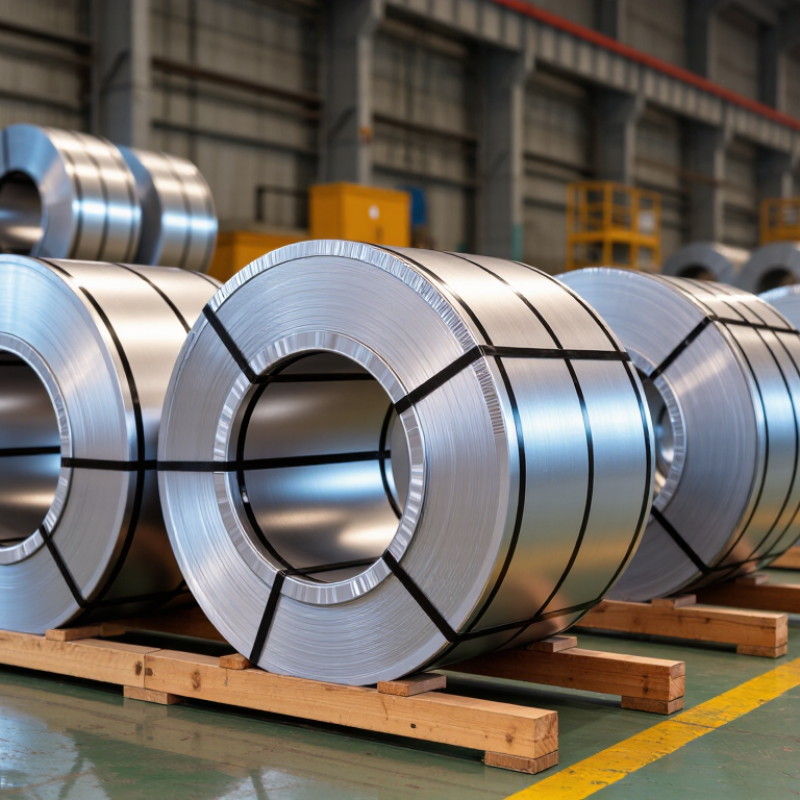
SUS316L stainless steel is a low-carbon, austenitic grade containing chromium, nickel, and molybdenum. The molybdenum improves resistance to chlorides, saltwater, and many industrial chemicals. Its low carbon content also reduces the risk of corrosion after welding. That matters when fabricators join tanks, tubes, or complex panels.
Coil form makes SUS316L efficient for continuous production. Manufacturers can uncoil, level, slit, stamp, or roll the material with fewer handling steps. Typical applications include food-processing equipment, pharmaceutical vessels, marine fittings, heat exchangers, and architectural components near coastal air. It offers good ductility and a clean surface. However, it is not corrosion-proof. Strong chemicals, poor cleaning, and trapped moisture can still cause staining or pitting.
Reliable sourcing requires more than checking the grade name. Buyers should verify the mill test certificate, heat number, thickness tolerance, surface finish, and actual chemical composition. Practical inspection should also review edge quality and coil winding, because damaged edges can complicate forming. A bright finish may look impressive, but appearance alone proves little. SUS316L can be the wrong choice when high strength, extreme heat resistance, or lower cost matters more. Careful application review remains essential.

2026 Best SUS316L Stainless Steel Coil Suppliers?
Defining your requirements is the real starting point when choosing a SUS316L coil supplier. “Best” should mean suitable, traceable, and consistent for your application. State the required thickness, width, coil weight, inner diameter, outer diameter, and edge condition. Mention the surface finish, such as 2B or BA, because appearance affects fabrication and inspection.
Ask for the complete chemical composition and mechanical test results. A mill test certificate should identify the heat number, production standard, dimensions, and testing method. Request material traceability from the coil to the original production record. Confirm whether independent inspection is available. A polished certificate is not enough. Samples should match the delivered coil.
Production details also deserve attention. Clarify thickness tolerance, flatness, slitting accuracy, minimum order quantity, and expected lead time. Ask how coils are wrapped against moisture, scratches, and impact. For marine, chemical, or food-processing equipment, explain the working temperature and corrosive exposure. Supplier recommendations become more useful when conditions are specific.
Do not choose by price alone. Compare rejected-coil procedures, communication speed, inspection photographs, and after-sales records. A short trial order can reveal more than a confident sales promise. In practice, requirements are often incomplete at the beginning. That is normal, but leaving them vague may create expensive rework. Recheck every measurement before signing the purchase specification.
2026 Best SUS316L Stainless Steel Coil Suppliers?
Supplier quality begins with evidence, not polished websites. World Stainless reported 58.4 million tonnes of global crude stainless steel production in 2023. That scale makes material identity and batch control essential. Request ISO 9001 certification, verify its scope, and check the issuing body’s current status. A certificate without scope is weak evidence.
For SUS316L coils, review the mill test certificate against ASTM A240/A240M or the agreed specification. Check carbon content, chromium, nickel, and molybdenum ranges. SUS316L typically requires carbon no higher than 0.030% and molybdenum between 2.00% and 3.00%. Confirm tensile results, thickness tolerance, surface finish, and heat-treatment condition. Small details matter.
Traceability should follow every coil. The heat number must connect to the chemical analysis, production record, inspection report, and packing label. Request EN 10204 Type 3.1 documentation when applicable. Then compare the coil ID with photographs taken before shipment. Independent testing adds confidence, especially for critical applications. Records can be incomplete. That is a warning, not automatic rejection. However, repeated gaps, altered PDFs, or unexplained grade substitutions should stop the purchase. No checklist is perfect. A careful supplier welcomes verification. (Sources: World Stainless, 2024; ASTM A240/A240M; EN 10204.)
When comparing SUS316L stainless steel coil suppliers in 2026, start with the delivered cost, not the headline price.
Request a breakdown for alloy surcharges, rolling, slitting, packaging, freight, insurance, and taxes. World Stainless reported 62.6 million tonnes of global stainless crude steel production in 2024, a 7% annual increase. Higher output can improve availability, but it does not guarantee stable nickel-based pricing. Ask for the pricing formula and its validity period.
A low quote can mislead.
Lead time needs measurable checkpoints. Confirm production, inspection, dispatch, and port transit separately. UNCTAD reported that global maritime trade grew 2.2% in 2024, while ongoing route disruptions increased schedule uncertainty. Require a written delivery window, not “around four weeks.”
For each coil, verify heat number, thickness tolerance, width, surface finish, and mill test certificate.
Small details matter.
Customer support is often tested after payment. Ask whether one technical contact handles claims, documents, and replacement decisions. A response within one business day is useful, but evidence is better: sample claim records, inspection procedures, and traceability documents.
During receiving inspection, photograph coil edges, labels, wrapping, and surface condition. I would not judge support from friendly emails alone. One overlooked issue is poor communication about partial shipments. Clarify it before ordering.
Compare three equivalent offers, using the same grade, finish, dimensions, Incoterms, and payment terms. That comparison is slower, but more honest.
2026 Best SUS316L Stainless Steel Coil Suppliers?
How to Choose the Best SUS316L Stainless Steel Coil Supplier in 2026
Choosing a SUS316L stainless steel coil supplier requires more than comparing prices. Start by checking production experience, material knowledge, and documented quality controls. A dependable supplier should understand molybdenum content, corrosion resistance, annealing, and surface requirements. Ask for recent mill test certificates, not generic samples. Each certificate should match the heat number printed on the coil packaging.
Request clear details for thickness, width, tolerance, coil weight, edge condition, and surface finish. For critical applications, require positive material identification testing before shipment. Review inspection records and ask how the supplier handles nonconforming material. Small details matter. A scratched surface can create extra polishing costs later. Independent laboratory testing may also verify chemical composition and mechanical properties.
Evaluate production capacity and delivery reliability using real evidence. Ask about monthly output, lead times, packing methods, and previous export experience. A factory audit, video inspection, or physical sample can reveal more than polished sales language. I once underestimated packaging quality, and moisture marks appeared after long transport. That mistake changed my purchasing checklist. The best supplier communicates limitations clearly, accepts reasonable inspection, and provides traceable documents. Price still matters, but unstable quality usually costs more than a slightly higher quotation.


For those larger-sized parts, or smaller quantity runs, we have 2 independent powder coat booths and ovens. The quality, durability and affordability of today’s powder coating finishes make this the process of choice for world-class companies.
Powder coating advantages over other forms of coating are many. Materials used in the Powder coating process can be metals and non-metals that come in a multitude of thicknesses, textures, colors, etc. Another of Powder coating’s biggest advantages over conventional coatings is its ability to create finishes in many different textures. Powder Coating Booths allow us the ability to apply these advantages to large products.
Tri-State Fabricators runs a full-service conveyor line for painting. Wet painting can provide protection or decoration to many different part styles. From start to finish, every project is easier to undergo random and point-based inspection by our skilled painting team.
Advantages to our Wet Paint Line are these lines start with product prep and ends with a thorough inspection of a high quality finished product. Our ability to complete large and small projects with a superior finish and doing so in a timely and economical fashion. This passes along the savings in production to our customers. When powder coating ins not an option, our Wet Paint Line gets the job done right the first time.
When the parts get big and heavy we roll-out our custom paint racks and oversize booth. By utilizing our partnerships with all the major paint brands, we can match virtually any color with wet paint.
The advantages of having access to a Wet Paint Booth are many. Large projects of many different shapes can be loaded into the booth. The Wet Paint Booth offers an environment that is much more controlled than a typical parts painting operation.
Not only are they used because of their controlled environment, but they’re are also advantageous when it comes to applying paint to parts that are needed in industries that require specialty coatings such as medical, aerospace, etc.
Our military forces have some very high standards when it comes to the finish of their vehicles and equipment. From the first pre-treatment step to final coat, it takes a great deal of knowledge and experience to protect the men and women of our armed forces. They deserve only the best, and Tri-State Fabricators provides it.
All of our processes are closely monitored by our staff and management teams. Both of which are highly trained in the processes of metal fabrication and finishing. Tri-State Fabricators’ goal is to always fully satisfy each and every customer, including the military. We will always put a 110% into what we do.
Abrasive media blasting is an excellent way to remove old paint, rust, and increase the paint/powder adhesion. Glass beads produce a much smoother and brighter finish than angular abrasives; leaving the part clean yet without any dimensional change. Chemically inert and environmentally friendly, we can recycle our beads approximately 30 times; making them a more preferred method of metal cleaning or surface finishing.
Advantages to Glass Bead Blasting are many. Glass bead blast media is used when a project is needing rough surfaces need to become smooth for applications of coatings such as paint. It is typically used to clean paint and rust from a product surface without deforming the surface it is being used on. Overall, compared to many other blasting media, Glass Bead Blasting is a very economical choice and those savings are always passed on to our customers.
Tri-State Fabricators utilize a zinc phosphate wash to clean and etch the material to ensure the best paint adhesion possible. The unique design of our 3-stage wash system does the work like a 5-stage. From Cleaning and rinsing to conversion coating and post-treatment, Our Part Washing process is a complete service and works throughout the fabrication service and the finishing service.
Along with the previously mentioned benefits, Curing is a vital chemical reaction that leaves the product finish hard and relatively safe from mild abrasion and aggressive corrosion. This process can be done in more than one way; ambient air-dry or in curing ovens at temps that exceed 240°.
From fixing paint mistakes (someone else’s of course) to simply cleaning our paint line hooks, our burn-off oven is put to good use. After a quick burn-off, a little clean up, and a fresh coat of paint, your parts will look better than new.
Why does our Burn-Off Oven work so well? Because super heating the air around parts turns the materials into ashes. From paint and powder coatings to rubber and machining oils, high temps do the job without degrading the integrity of the part.
Masking is a vital part of producing high quality products. We have die-cut masking patterns to protect machined surfaces as well as a wide range of plugs and caps to protect threaded holes and bolts. We provide permanent and temporary masking.
Masking allows the selected sections of a product to be protected from a fabrication or finishing service. This can be with both chemicals when etching and tapes, paints when only finishing just a section of the product. Masking is great in aiding the customization process of a project.
Screen printing is a photographic process that transfers artwork onto a porous nylon screen which allows colored ink to flow through the screen and be deposited on an aluminum or plastic component. We can generally have just about any design created onto a screen for your parts.
Some of the advantages of Screen Printing are, brand recognition for your business displaying on your products, assembly instructions, product warnings/hazards, etc. Tri-State Fabricators produces Screen Printing of the highest quality so you know it’s durable.
Metal Finishing is the art of treating the exterior portion of product, often metal but can also be made of other materials, so that the surface is clean and free of any debris. Then the process of applying coats or either paint of powder coat takes place. This coating process improves the quality of the product in both appearance and resistance to wear and corrosion.
Tri-State Fabricators, Inc., understands that a project typically isn’t complete until a high-quality finish has been added to your product. This is why our painting and powder coating teams continuously inspect the products throughout the Metal Finishing process.

