Global buyers need more than attractive catalogs when choosing Strength Equipment suppliers. They need dependable products, clear specifications, and responsive support.
A commercial gym may order dozens of benches, racks, cable machines, and weight plates. Each item must survive repeated use, changing users, and demanding training schedules. A power rack can look impressive online, yet weak welds or unclear load ratings create serious concerns. Practical evaluation matters more than polished photography.
This introduction examines leading suppliers through a buyer’s perspective. It considers manufacturing experience, material quality, product testing, warranty terms, spare parts, and export capability. Factory audits and sample inspections can reveal details that brochures often hide. Ask for steel thickness, coating methods, cable ratings, and documented safety testing. Verify certifications against the destination market. Do not accept vague promises.
Arnold Schwarzenegger once said, “The resistance that you fight physically in the gym and the resistance that you fight in life can only build a strong character.” His words reflect the purpose behind reliable training equipment. Equipment should support progress, not interrupt it.
No supplier is perfect. Even careful comparisons can miss delivery delays or after-sales weaknesses. That limitation matters. Buyers should request references, review contract terms, and test communication before placing large orders. A lower quotation may become expensive after freight, installation, maintenance, and replacement costs. The strongest supplier is not always the largest. It is the one that consistently matches product quality, service capacity, budget, and local requirements.
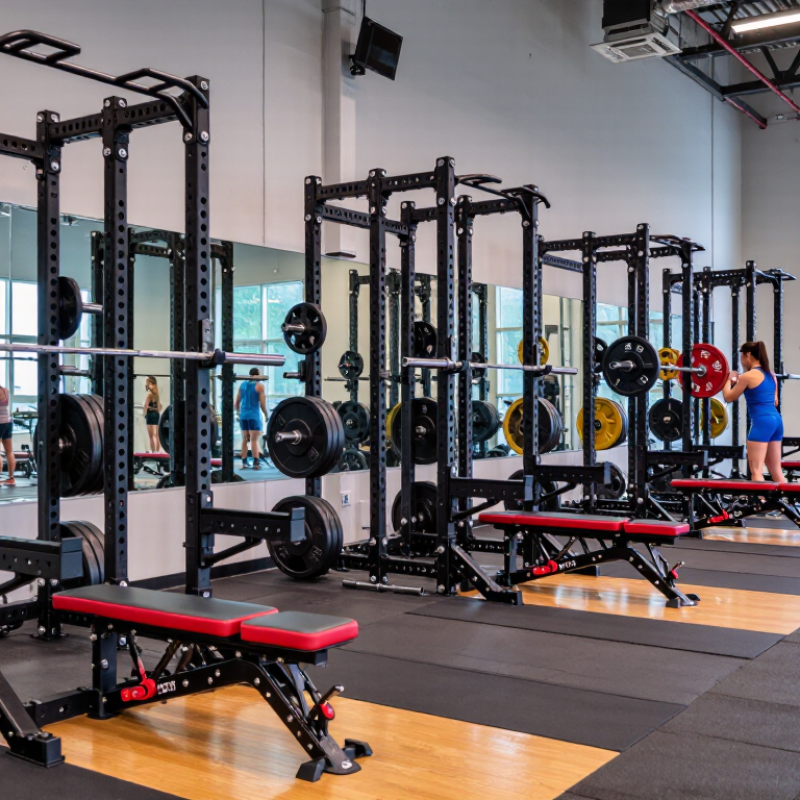
Strength equipment suppliers do more than sell racks, benches, and cable machines. They translate training goals into safe, workable equipment plans. A serious supplier asks about facility size, user levels, floor loading, and maintenance capacity. Those questions matter. A compact studio needs different choices from a public training center. Suppliers may provide drawings, load ratings, material details, and installation guidance. Clear documentation helps buyers compare products without relying on polished photographs.
Their technical role continues after an order is placed. They coordinate production checks, packaging, freight, delivery schedules, and on-site assembly. For heavy equipment, a damaged corner or missing fastener can delay an entire installation. Quality teams should inspect welds, moving parts, cable routing, upholstery, and protective finishes. They should also explain testing methods and provide practical user manuals. Reliable communication is not decoration. It reduces uncertainty across time zones, languages, and service expectations. Buyers should request spare-part lists, warranty terms, inspection records, and response procedures before payment.
Suppliers also influence long-term operating costs. A durable frame, replaceable cable, and accessible adjustment point can reduce downtime. Yet no supplier is perfect. Specifications can be misunderstood, shipping damage can occur, and installation advice may be too general. Buyers need to check measurements independently and involve qualified local professionals when required. That extra effort protects users and budgets. The best supplier relationship is not passive purchasing; it is a documented process of questions, verification, and occasional correction.
Commercial buyers depend on suppliers for equipment that combines appropriate load capacity, user safety, durability, installation support, and replacement parts. The chart compares representative maximum working loads commonly found in commercial-strength equipment categories.
Reference values are representative commercial specifications in kilograms, not market-share data. Actual ratings vary by equipment design, configuration, and manufacturer.
Before contacting a supplier, define how the equipment will be used. A hotel gym needs different machines than a high-volume training center. Record the expected daily users, available floor area, ceiling height, and training goals. Measure doorways and lift capacity too. A two-meter rack may fit the room but fail at delivery.
Specify the required equipment by movement, not appearance. List pressing, pulling, squatting, hinging, and cable exercises. Note preferred resistance types, such as weight stacks, plates, or integrated systems. Check frame dimensions, adjustment ranges, upholstery thickness, and maximum user load. In my purchasing experience, unclear load requirements often create expensive revisions. Ask suppliers for test reports, material details, warranty terms, and spare-part availability. Request installation drawings before approving production.
Safety and service should shape the shortlist. Confirm local electrical standards for powered equipment and review maintenance access around every machine. For international orders, clarify packaging, shipping terms, customs documents, and technician support. Do not judge quality from photographs alone. Ask for factory inspection records or arrange an independent inspection. Some specifications may still be too ambitious. Budget pressure can quietly reduce durability. Revisit the list after a trial layout, because real users need more space than a drawing suggests.
Finding reliable strength equipment suppliers requires more than comparing catalog prices. Start with verified manufacturer directories, trade exhibitions, and established B2B marketplaces. Check each supplier’s factory location, production capacity, export history, and quality certificates. A polished website proves very little.
Request detailed specifications for racks, benches, cables, and weight plates. Ask about steel grade, weld inspection, coating thickness, load testing, and replacement parts. Serious suppliers should provide test reports, product drawings, warranty terms, and clear packaging details. Compare shipping methods, minimum order quantities, payment stages, and expected lead times. A lower unit price may hide expensive freight or weak after-sales support.
I recommend ordering samples before a large purchase. Test the bench stability, cable movement, bolt alignment, and surface finish. Examine the carton after delivery, not only the product inside. I once overlooked spare-part availability, and a small missing component delayed installation for weeks. That mistake still affects how I evaluate suppliers. Communication also matters. Can the sales team explain technical limits without exaggeration? Can engineers answer practical questions? Time-zone differences may slow replies, but unclear answers are a bigger warning. Supplier reviews help, although some are incomplete or outdated. Compare evidence from several sources, speak with recent buyers, and record every promise in the purchase agreement. Reliability is built through consistent proof, not attractive claims.
Choosing top strength equipment suppliers requires more than comparing catalog prices. Global buyers should inspect steel grades, weld penetration, cable ratings, and load testing records. ISO 20957 specifies safety requirements for stationary training equipment, including stability, construction, and user protection. Ask suppliers to provide current test reports, calibration records, and certificates from independent laboratories.
Safety evidence should match real gym conditions. Look for guards around pinch points, secure adjustment pins, clear warning labels, and emergency stopping procedures. The World Health Organization reports that 31% of adults worldwide did not meet recommended physical activity levels in 2022, supporting continued demand for accessible training equipment. However, high demand can encourage rushed production. Inspect sample units personally. Small defects matter.
Tips: Request a factory video audit and a live production inspection. Check whether welds look even, powder coating covers corners, and upholstery seams resist pulling. Ask for fatigue-test cycles, spare-part availability, and documented quality-control checkpoints. The 2024 ACSM Worldwide Survey of Fitness Trends placed traditional strength training among leading global fitness trends. That supports the market, but survey interest does not prove manufacturing reliability. No audit is perfect. Recheck critical claims through independent testing, especially when shipping equipment across different climates and regulatory markets.
Top Strength Equipment Suppliers for Global Buyers?
How to Select a Supplier and Manage International Procurement
Selecting a strength equipment supplier requires more than comparing unit prices. Review factory experience, production capacity, material specifications, and export records. Ask for recent product samples, welding photographs, and load-test reports. A reliable supplier should explain steel grades, coating thickness, padding density, and maximum user weight clearly. Vague answers deserve caution.
Audit communication before placing a large order. Test response times with technical questions and revision requests. Request a video inspection of the production line, warehouse, and packaging area. Independent quality inspection can verify dimensions, surface defects, labels, and carton strength. I have learned that attractive samples sometimes hide inconsistent mass production. The sample is not the whole story.
International procurement also depends on precise documents. Confirm the commercial invoice, packing list, HS classification, origin statement, and shipping responsibilities. Define Incoterms, payment milestones, insurance, and delivery dates in writing. Check whether the equipment meets safety requirements in the destination market. Local testing or registration may still be necessary. Build spare parts into the purchase order, including cables, pins, pads, and fasteners. Ask how claims are handled across time zones. A low price can become expensive after port delays, damaged cartons, or missing components. I still leave extra time in project schedules because forecasts are often too optimistic.



For those larger-sized parts, or smaller quantity runs, we have 2 independent powder coat booths and ovens. The quality, durability and affordability of today’s powder coating finishes make this the process of choice for world-class companies.
Powder coating advantages over other forms of coating are many. Materials used in the Powder coating process can be metals and non-metals that come in a multitude of thicknesses, textures, colors, etc. Another of Powder coating’s biggest advantages over conventional coatings is its ability to create finishes in many different textures. Powder Coating Booths allow us the ability to apply these advantages to large products.
Tri-State Fabricators runs a full-service conveyor line for painting. Wet painting can provide protection or decoration to many different part styles. From start to finish, every project is easier to undergo random and point-based inspection by our skilled painting team.
Advantages to our Wet Paint Line are these lines start with product prep and ends with a thorough inspection of a high quality finished product. Our ability to complete large and small projects with a superior finish and doing so in a timely and economical fashion. This passes along the savings in production to our customers. When powder coating ins not an option, our Wet Paint Line gets the job done right the first time.
When the parts get big and heavy we roll-out our custom paint racks and oversize booth. By utilizing our partnerships with all the major paint brands, we can match virtually any color with wet paint.
The advantages of having access to a Wet Paint Booth are many. Large projects of many different shapes can be loaded into the booth. The Wet Paint Booth offers an environment that is much more controlled than a typical parts painting operation.
Not only are they used because of their controlled environment, but they’re are also advantageous when it comes to applying paint to parts that are needed in industries that require specialty coatings such as medical, aerospace, etc.
Our military forces have some very high standards when it comes to the finish of their vehicles and equipment. From the first pre-treatment step to final coat, it takes a great deal of knowledge and experience to protect the men and women of our armed forces. They deserve only the best, and Tri-State Fabricators provides it.
All of our processes are closely monitored by our staff and management teams. Both of which are highly trained in the processes of metal fabrication and finishing. Tri-State Fabricators’ goal is to always fully satisfy each and every customer, including the military. We will always put a 110% into what we do.
Abrasive media blasting is an excellent way to remove old paint, rust, and increase the paint/powder adhesion. Glass beads produce a much smoother and brighter finish than angular abrasives; leaving the part clean yet without any dimensional change. Chemically inert and environmentally friendly, we can recycle our beads approximately 30 times; making them a more preferred method of metal cleaning or surface finishing.
Advantages to Glass Bead Blasting are many. Glass bead blast media is used when a project is needing rough surfaces need to become smooth for applications of coatings such as paint. It is typically used to clean paint and rust from a product surface without deforming the surface it is being used on. Overall, compared to many other blasting media, Glass Bead Blasting is a very economical choice and those savings are always passed on to our customers.
Tri-State Fabricators utilize a zinc phosphate wash to clean and etch the material to ensure the best paint adhesion possible. The unique design of our 3-stage wash system does the work like a 5-stage. From Cleaning and rinsing to conversion coating and post-treatment, Our Part Washing process is a complete service and works throughout the fabrication service and the finishing service.
Along with the previously mentioned benefits, Curing is a vital chemical reaction that leaves the product finish hard and relatively safe from mild abrasion and aggressive corrosion. This process can be done in more than one way; ambient air-dry or in curing ovens at temps that exceed 240°.
From fixing paint mistakes (someone else’s of course) to simply cleaning our paint line hooks, our burn-off oven is put to good use. After a quick burn-off, a little clean up, and a fresh coat of paint, your parts will look better than new.
Why does our Burn-Off Oven work so well? Because super heating the air around parts turns the materials into ashes. From paint and powder coatings to rubber and machining oils, high temps do the job without degrading the integrity of the part.
Masking is a vital part of producing high quality products. We have die-cut masking patterns to protect machined surfaces as well as a wide range of plugs and caps to protect threaded holes and bolts. We provide permanent and temporary masking.
Masking allows the selected sections of a product to be protected from a fabrication or finishing service. This can be with both chemicals when etching and tapes, paints when only finishing just a section of the product. Masking is great in aiding the customization process of a project.
Screen printing is a photographic process that transfers artwork onto a porous nylon screen which allows colored ink to flow through the screen and be deposited on an aluminum or plastic component. We can generally have just about any design created onto a screen for your parts.
Some of the advantages of Screen Printing are, brand recognition for your business displaying on your products, assembly instructions, product warnings/hazards, etc. Tri-State Fabricators produces Screen Printing of the highest quality so you know it’s durable.
Metal Finishing is the art of treating the exterior portion of product, often metal but can also be made of other materials, so that the surface is clean and free of any debris. Then the process of applying coats or either paint of powder coat takes place. This coating process improves the quality of the product in both appearance and resistance to wear and corrosion.
Tri-State Fabricators, Inc., understands that a project typically isn’t complete until a high-quality finish has been added to your product. This is why our painting and powder coating teams continuously inspect the products throughout the Metal Finishing process.


