China Top Storage Container House Manufacturers?
Choosing among China’s top Storage Container Houses manufacturers takes more than comparing catalog photos. A neat render may hide practical details: insulation thickness, door seals, floor strength, wiring access, and how units connect on site. Buyers should ask for drawings, material specifications, production photographs, and clear answers about quality checks. Look closely. These details often shape daily comfort more than a polished brochure.
This guide introduces manufacturers serving different project needs, from compact site offices to larger modular accommodation. It considers product range, customization, communication, documented quality practices, and experience with export projects where information is available. A supplier’s factory capacity can matter, but so can its willingness to explain limits, lead times, packing methods, and after-sales support. Ask for references or project records, then check whether the examples match your intended use. Not every company publishes the same evidence, so comparisons may remain imperfect. That deserves attention.
Price alone rarely tells the full story. A lower quotation may exclude installation, interior finishes, transport, or local preparation. Requirements also vary by climate, site access, and intended occupancy, so specifications should be confirmed before ordering. This overview offers a practical starting point, not a guarantee that one manufacturer suits every project. The strongest choice is usually the one whose documented capabilities align with your needs—and whose answers stay consistent when details get specific.
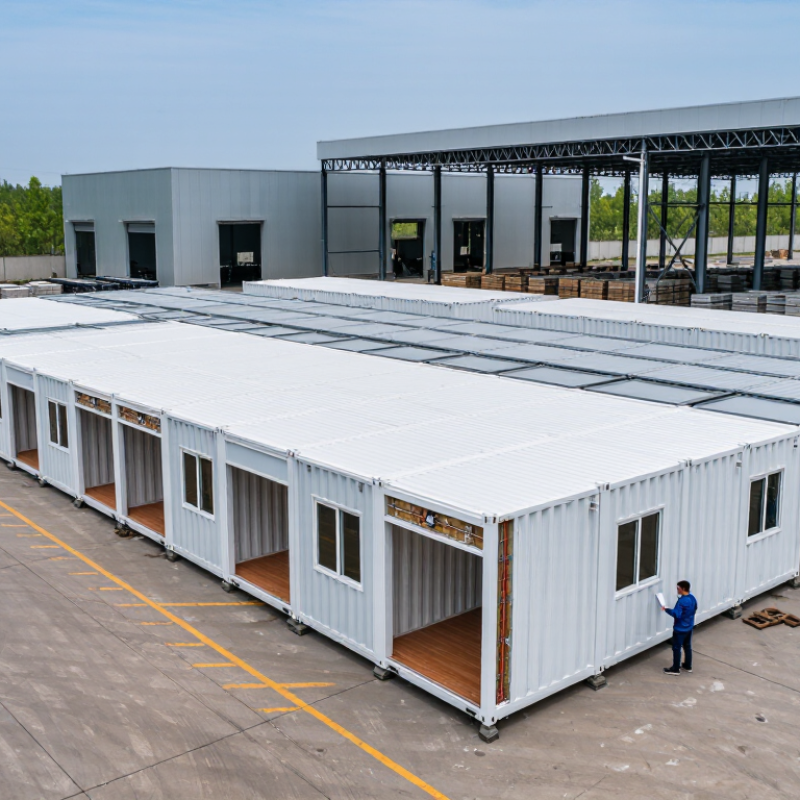
Understanding Storage Container Houses and Their Main Uses
A storage container house is a steel shipping container adapted for secure storage, a workshop, or temporary site facilities. Its appeal is straightforward: the structure arrives as a single unit, with solid walls and lockable doors. A standard 20-foot container offers roughly 33 cubic metres of internal volume, though fittings reduce usable space. Measure the actual unit before planning shelves, machinery, or access paths. Small details matter.
UNCTAD’s Review of Maritime Transport 2022 reported global container-port throughput of 858.9 million TEUs in 2021. That figure reflects the scale of container logistics, not the number of containers suitable for conversion; condition and availability vary. For storage use, inspect the floor, corner castings, door seals, and signs of corrosion. Ventilation and insulation may also be needed where stored goods are sensitive to heat or moisture. A dry box can still trap condensation.
On farms, construction sites, and industrial yards, these units can hold tools, spare parts, or seasonal equipment close to where they are used. Some operators add lighting, shelving, or a basic workbench. Yet a container is not automatically a comfortable building. Cutting openings can affect structural strength, and poor placement can leave doors blocked or water pooling underneath. Think through daily access first. The obvious plan is not always the practical one.
China Top Storage Container House Manufacturers? - Understanding Storage Container Houses and Their Main Uses
This overview compares common container-house formats rather than individual manufacturers. Dimensions are typical nominal references; actual internal space and specifications vary with the unit design, modifications, and local requirements.
| Container House Format | Typical External Dimensions (L × W × H) | Approximate Floor Area | Common Uses | Key Considerations |
| 20-foot standard container unit | 6.06 × 2.44 × 2.59 m | About 14 m² of internal floor area | Small site office, security room, tool store, temporary accommodation, or compact retail space. | Useful where access or site space is limited. Insulation, windows, doors, and interior fit-out reduce usable space. |
| 40-foot standard container unit | 12.19 × 2.44 × 2.59 m | About 28 m² of internal floor area | Longer site offices, storage rooms, workshops, staff facilities, or single-unit accommodation. | Provides roughly twice the floor area of a 20-foot unit, but transportation and placement require more room. |
| 40-foot high-cube container unit | 12.19 × 2.44 × 2.90 m | About 28 m² of internal floor area | Accommodation, offices, or storage where additional interior headroom is useful. | The higher external profile offers more vertical space than a standard-height unit. Confirm transport height and site clearances. |
| Combined or modular container-house layout | Based on the selected units; commonly formed by joining or arranging multiple modules | Depends on the number and layout of modules | Project offices, worker facilities, classrooms, clinics, larger accommodation blocks, or multi-room storage buildings. | Layout, foundations, connections, fire safety, insulation, and structural design should be checked for the intended site and use. |
How China’s Container House Manufacturing Industry Works
China Top Storage Container House Manufacturers?
How China’s Container House Manufacturing Industry Works
China’s container house industry combines steel processing, modular design, and factory-based assembly. A typical production line starts with steel sections cut to measured lengths. Workers then weld the frame, check its dimensions, and apply protective coatings. Floor panels, wall systems, doors, and windows are fitted in later stages. Electrical and plumbing components may be installed before shipment, depending on the project specification.
The process is practical, but not identical across factories. Some facilities focus on repeatable standard modules; others handle custom layouts and finishes. Insulation, window quality, and connection details can vary considerably, even when two units look similar in photographs. Ask for material specifications and production records. Better yet, inspect a sample unit or arrange an independent factory check. A tidy workshop helps, but it proves little by itself.
Quality control should cover more than appearance. Buyers can review weld consistency, coating coverage, floor flatness, and how doors close after installation. Transport also shapes the final design: oversized features may need adjustment to suit shipping and site access. Factory assembly can reduce on-site work, though foundations and utility connections still require careful planning. One detail is easy to overlook: drawings must match the unit actually being built. Small mismatches can cause delays.
Comparing Manufacturers by Products, Capacity, and Services
When comparing storage container house manufacturers in China, look beyond catalog photos. Check whether each supplier offers standard units, expandable layouts, insulated models, or custom dimensions. Ask for drawings that show door positions, window sizes, floor construction, and utility access. These details affect loading, installation, and daily use. A neat render is not enough.
Compare production capacity using documented output, current lead times, and examples of completed orders. Capacity figures alone can be misleading, especially during busy seasons. Review the material specifications, inspection steps, packing method, and replacement-part process. Service matters after delivery: confirm who handles design questions, shipping coordination, installation guidance, and warranty claims. Request written answers and sample documents. A spreadsheet can still miss practical differences, so verify important claims directly.
Tips: Send every supplier the same project brief, including unit count, dimensions, climate, and delivery location. Compare like with like. Ask for photos of finished units and check that specifications match the quotation. No comparison is perfect.
How to Evaluate and Select a Reliable Supplier
China Top Storage Container House Manufacturers?
How to Evaluate and Select a Reliable Supplier
A reliable supplier should explain how its container homes are designed, built, and checked. Ask for drawings with dimensions, wall and roof materials, insulation details, and floor-load information. Then compare the specifications, not just the quoted price. Request recent project references and, where practical, inspect a completed unit or production facility. Look closely at door seals, corner joints, welds, and the finish around windows. Small details matter in daily use. No checklist catches everything.
Check how the supplier handles changes, delivery, installation, and after-sales support. Get the scope, payment milestones, warranty terms, and shipping responsibilities in writing. Ask what happens if a component arrives damaged or dimensions differ from the approved drawings. A very low quote may omit insulation, electrical fittings, or installation work, so clarify each item before comparing offers. Notice whether answers are specific and consistent. If possible, speak with a previous customer about delays and repairs. Even a careful review can miss something; installation may reveal an awkward corner that a drawing hides. Keep room for that uncertainty, and avoid relying on glossy photos alone.
How to Evaluate a Storage Container House Supplier
Suggested evaluation weights for comparing suppliers. These are a procurement framework, not market statistics; adjust them to your project requirements.
Prioritize documented structural safety and quality controls, then verify delivery plans, itemized costs, technical support, and warranty terms before making a selection.





