


Top 10 Stainless Steel Spoon Fork Types for Wholesale

Choosing the right Stainless Steel Spoon Fork begins with evidence, not attractive catalog photos. Wholesale buyers must compare steel grade, weight, finish, production consistency, and packaging before approving a large order. World Stainless annual statistics identify stainless steel as a major global manufacturing material, supported by strong demand across foodservice, hospitality, and household applications. That demand creates opportunity, but it also creates confusion.

Trade data from UN Comtrade classifies many tableware products under HS 8215, helping buyers study import flows and supplier markets. However, trade codes rarely explain polishing quality, fork balance, or spoon thickness. This is where practical inspection matters. A sample should feel stable in the hand, resist visible scratching, and sit evenly on a flat surface. Small details matter.

The ten types covered in this guide reflect real wholesale requirements, including 18/10, 18/0, and 13/0 stainless steel options. Each grade can suit a different price position and service environment. Yet grade labels alone cannot prove durability. Buyers should request material certificates, salt-spray or corrosion-test results, dimensional tolerances, and batch photographs. Independent testing is wiser than trusting a promise.

Market reports often present broad forecasts, while purchasing decisions depend on specific quantities, destinations, and usage conditions. That limitation deserves attention. A polished finish may sell well in hospitality, but it can increase production cost and show fingerprints. A lighter model may reduce freight expense, but it may feel less substantial at a restaurant table. This introduction compares the leading types through quality, cost, user experience, and wholesale practicality.
Top 10 Stainless Steel Spoon Fork Types for Wholesale

What Defines Stainless Steel Spoon and Fork Sets

A stainless steel spoon and fork set is defined by more than its bright surface. Wholesale buyers should examine grade, thickness, balance, finish, and intended use. Common types include four-piece household sets, hotel sets, dessert sets, steak cutlery, children’s sets, and heavy-duty catering sets. Each type solves a different service problem.

The International Stainless Steel Forum reported approximately 62 million metric tons of global stainless steel production in 2024. This scale supports stable material availability, but it does not guarantee equal cutlery quality. Food-contact standards, such as ISO 8442-1, emphasize corrosion resistance, safety, and functional performance. For practical purchasing, 18/10 stainless steel usually offers stronger corrosion resistance than 18/0 steel. However, alloy labels need supplier documentation.

Details matter.

A spoon should feel balanced near the bowl, not handle-heavy. Fork tines should align cleanly and resist bending during ordinary service. Rolled edges improve comfort, while a satin finish hides fingerprints better than a mirror finish. Mirror polish still looks premium. It also reveals every mark. I would not treat a heavier gauge as automatically better. Excess weight can increase shipping costs and reduce comfort in busy dining rooms. Grand View Research’s recent tableware analysis also highlights hospitality and foodservice as major demand channels, where stacking, washing, and repeated handling influence set selection. Sample testing remains essential, because catalog photographs cannot reveal sharp edges, uneven polishing, or weak tine alignment.


Top 10 Stainless Steel Spoon and Fork Types

Wholesale buyers often need more than a basic spoon and fork set.

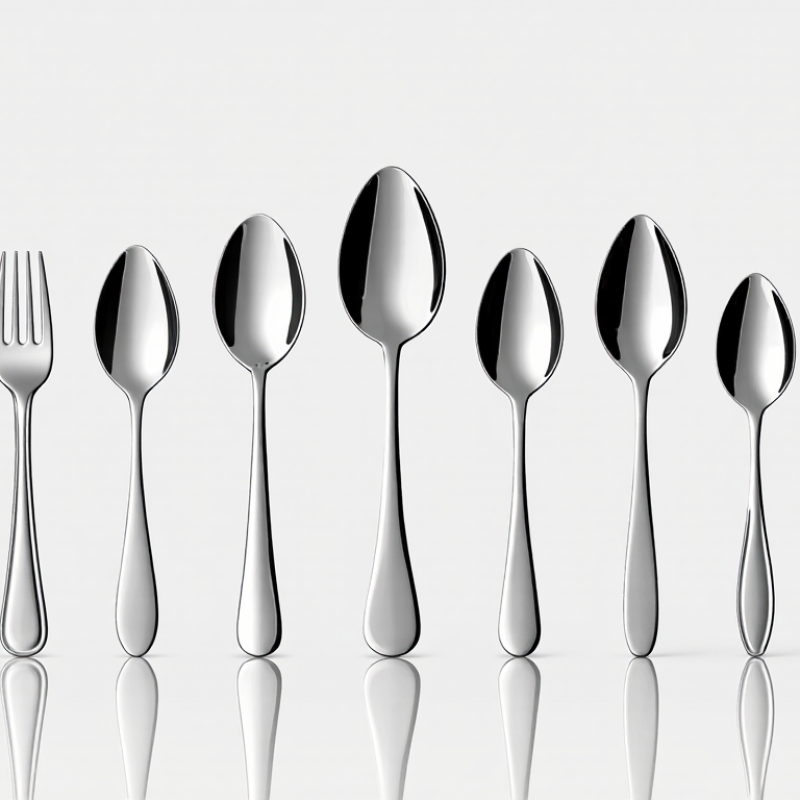
The top 10 stainless steel spoon and fork types cover different dining tasks. A teaspoon suits tea, coffee, and small desserts. A tablespoon handles soup, cereal, and generous portions. A soup spoon has a deeper bowl for broth. A dessert spoon offers a smaller, balanced shape. A serving spoon moves rice, vegetables, and sauces efficiently. A table fork works for everyday meals. A dinner fork has longer, stronger tines for main courses. A dessert fork is compact and visually refined. A salad fork uses wider spacing for leafy ingredients. A seafood fork has narrow tines for delicate meat.

Material and construction affect wholesale value. Stainless steel with a higher chromium content usually offers better corrosion resistance. Lower-cost 18/0 steel can be practical, especially when magnetic sorting matters. Polished surfaces look bright, while satin finishes hide fingerprints and light scratches.

Check the handle thickness, edge smoothness, tine alignment, and bowl depth before ordering. Small flaws become expensive across thousands of pieces.

I once underestimated handle comfort. The sample looked attractive, but its sharp underside felt tiring during long meals. That mistake changed my inspection process. Ask for production samples, not only catalog photos. Test them with soup, rice, and salad. Also review packaging, carton strength, and stacking space. A beautiful set can still perform poorly if transit causes scratches or bent tines.

How Spoon and Fork Designs Differ by Use

Top 10 Stainless Steel Spoon Fork Types for Wholesale

How Spoon and Fork Designs Differ by Use

A wholesale cutlery range should match eating habits, not only appearance. Table spoons carry rice, vegetables, and sauces during full meals. Teaspoons suit stirring, tasting, and small desserts. Dessert spoons have a broader bowl for pudding or fruit. Soup spoons use deeper, rounded bowls that reduce spills. Bouillon spoons are smaller, with a compact shape for clear broth.

Forks also change according to food texture. Dinner forks usually have four balanced tines for meat, vegetables, and pasta. Salad forks are shorter and narrower, helping users lift leafy ingredients. Dessert forks often use slimmer tines for cakes and soft pastries. Oyster forks have short, sturdy points for separating shellfish from the shell. Pastry forks may include a wider outer tine for cutting tender crusts.

In practical wholesale sourcing, 18/10 or 18/0 stainless steel affects corrosion resistance, magnetism, and cost. The choice depends on the buyer’s market and washing conditions. A polished finish looks bright, while a brushed finish hides small marks better. Handle weight matters too. A spoon can look elegant but feel tiring after repeated use. I have seen buyers focus on mirror shine and overlook bowl depth. That mistake can affect comfort at every meal. Check the edges, tine alignment, and surface consistency in physical samples. Small defects become obvious in large orders.

Top 10 Stainless Steel Spoon Fork Types for Wholesale - How Spoon and Fork Designs Differ by Use

Cutlery Type Typical Use Spoon Design Fork Design Common Steel Grade Finish Length Range Typical Gauge Typical Wholesale Pack
1. Table Spoon and Dinner Fork Set Everyday dining in homes, restaurants, hotels, and institutional food service. Oval bowl with moderate depth, designed for soups, rice, vegetables, and general meals. Four balanced tines with a medium-width head for main courses and side dishes. 18/10 or 18/0 stainless steel Mirror or satin 190–215 mm 1.5–2.5 mm 24–120 sets
2. Teaspoon and Cake Fork Set Coffee service, tea service, dessert counters, bakeries, and cafés. Small, shallow bowl suitable for stirring beverages and portioning soft desserts. Three or four narrow tines, often with a slightly pointed outer tine for pastries. 18/10 or 18/0 stainless steel Mirror 125–155 mm 1.2–2.0 mm 24–240 sets
3. Soup Spoon and Table Fork Set Soup courses, noodle dishes, broths, and casual dining service. Deep, rounded bowl that holds more liquid than a standard table spoon. Standard four-tine fork designed for noodles, vegetables, and garnishes. 18/10 or 18/0 stainless steel Mirror or satin 180–205 mm 1.5–2.5 mm 24–120 sets
4. Dessert Spoon and Dessert Fork Set Cakes, fruit, ice cream, puddings, pastries, and formal dessert service. Smaller than a soup spoon but larger than a teaspoon, with a rounded or tapered bowl. Three or four medium-length tines sized for cutting and lifting desserts. 18/10 or 18/0 stainless steel Mirror 165–185 mm 1.5–2.2 mm 24–120 sets
5. Long-Handle Sundae Spoon and Dessert Fork Ice cream, parfaits, tall beverages, fruit cups, and dessert jars. Long, slender handle with a narrow bowl for reaching the bottom of tall glasses. Long handle with compact tines for fruit, toppings, and soft desserts. 18/10 or 18/0 stainless steel Mirror 175–220 mm 1.2–2.0 mm 24–120 sets
6. Steak Knife-Compatible Spoon and Fork Set Steakhouses, grills, barbecue restaurants, and premium casual dining. Sturdy table spoon with a reinforced handle to complement heavier tableware. Strong, rigid four-tine fork with a substantial head for meat and dense foods. 18/10 or 18/0 stainless steel Mirror or satin 195–220 mm 2.0–3.0 mm 24–96 sets
7. Serving Spoon and Serving Fork Set Buffets, family-style dining, catering, banquets, and food presentation. Large, deep bowl for transferring rice, vegetables, salads, and other foods. Long, wide head with two or three sturdy tines for lifting and portioning food. 18/10 or 18/0 stainless steel Mirror or satin 250–330 mm 2.0–3.5 mm 12–60 sets
8. Bistro and Café Spoon-Fork Set Casual restaurants, cafés, diners, food courts, and high-turnover service. Compact bowl with a practical profile for soups, breakfast dishes, and desserts. Medium-sized four-tine fork designed for frequent commercial use. 18/0 or 18/10 stainless steel Satin or mirror 175–205 mm 1.2–2.0 mm 48–240 sets
9. Kids’ Spoon and Fork Set Schools, childcare facilities, family restaurants, and children’s tableware programs. Small rounded bowl with smooth edges and a shorter, easy-grip handle. Short four-tine head with rounded tips to improve handling and safety. 18/0 or 18/10 stainless steel Mirror or satin 145–170 mm 1.2–2.0 mm 24–120 sets
10. Travel and Catering Spoon-Fork Set Takeaway meals, outdoor catering, airline service, events, and emergency meal kits. Lightweight spoon with a compact bowl for controlled portions and easy packing. Short, lightweight four-tine fork designed for portability and efficient storage. 18/0 stainless steel Satin or polished 160–190 mm 0.8–1.5 mm 50–500 sets

Materials, Finishes, and Quality Standards to Compare

Top 10 Stainless Steel Spoon Fork Types for Wholesale

Wholesale buyers should compare ten practical forms: dinner spoons, teaspoons, dessert spoons, soup spoons, serving spoons, dinner forks, salad forks, dessert forks, cocktail forks, and sporks. Material choice affects weight, shine, corrosion resistance, and purchasing cost. The International Stainless Steel Forum reported 58.4 million tonnes of stainless steel production in 2023. This scale supports broad availability, but not every alloy performs equally. 18/0 stainless steel is magnetic and economical. 18/8 and 18/10 grades usually offer stronger corrosion resistance because they contain nickel. However, “18/10” labeling alone does not prove excellent quality.

Finish also changes the user experience. Mirror polishing creates a bright, formal appearance, while satin finishing hides fingerprints and small scratches. Hammered surfaces add texture, but they can complicate cleaning inspections. PVD-colored finishes may attract hospitality buyers, yet coating durability requires testing.

EN ISO 8442-2 provides relevant requirements for stainless steel table cutlery. ASTM F2323 also offers a corrosion-resistance test method for flatware. Compare spoon thickness, fork tine alignment, handle balance, edge smoothness, and dishwasher performance. Appearance is not enough.

Tips: Request material certificates and sample testing before placing a large order. Check magnet response, but do not treat it as a complete grade test. Inspect ten random pieces from every sample carton. Measure weight variation. Ask for salt-spray or food-contact documentation when appropriate. A cheaper 18/0 set may perform well in controlled use. I would not assume it will match 18/10 durability under acidic, humid service conditions. Performance data should guide the final quotation, not polished photographs.

Wholesale Buying Criteria for Stainless Steel Cutlery

Wholesale buyers should judge stainless steel cutlery by use, not appearance alone. The ten common types include dinner spoons, teaspoons, soup spoons, dessert spoons, table forks, dessert forks, salad forks, pastry forks, serving spoons, and serving forks. Each type should match the customer’s dining habits and serving needs. A hotel may need heavier tableware, while a café may prefer lighter pieces for faster turnover.

Check the steel grade, thickness, weight, balance, and polishing quality. Stainless steel marked 18/8 or 18/10 usually offers stronger corrosion resistance than basic 18/0 steel, but manufacturing quality still matters. Inspect spoon bowls for smooth edges and forks for evenly shaped tines.

Test samples in dishwashing cycles when possible. Ask for food-contact documents, production records, and clear inspection standards. Reliable suppliers should explain tolerances, packaging, replacement policies, and delivery schedules without vague promises.

Tips: Order samples before confirming large quantities. Compare weight by hand. Measure several pieces, not one. Check whether cartons protect polished surfaces during transport. A low unit price can hide thin metal, uneven finishing, or costly damage claims. This is an easy mistake. Appearance can also mislead; mirror polishing may conceal weak edges or poor balance. Leave room for improvement after the first order, because real kitchen use often reveals details that photographs cannot show.

Article Source:

Powder Coat Booths

For those larger-sized parts, or smaller quantity runs, we have 2 independent powder coat booths and ovens. The quality, durability and affordability of today’s powder coating finishes make this the process of choice for world-class companies.

Powder coating advantages over other forms of coating are many. Materials used in the Powder coating process can be metals and non-metals that come in a multitude of thicknesses, textures, colors, etc. Another of Powder coating’s biggest advantages over conventional coatings is its ability to create finishes in many different textures. Powder Coating Booths allow us the ability to apply these advantages to large products.

Wet Paint Line

Tri-State Fabricators runs a full-service conveyor line for painting. Wet painting can provide protection or decoration to many different part styles. From start to finish, every project is easier to undergo random and point-based inspection by our skilled painting team.

Advantages to our Wet Paint Line are these lines start with product prep and ends with a thorough inspection of a high quality finished product. Our ability to complete large and small projects with a superior finish and doing so in a timely and economical fashion. This passes along the savings in production to our customers. When powder coating ins not an option, our Wet Paint Line gets the job done right the first time.

Wet Paint Booths

When the parts get big and heavy we roll-out our custom paint racks and oversize booth. By utilizing our partnerships with all the major paint brands, we can match virtually any color with wet paint.

The advantages of having access to a Wet Paint Booth are many. Large projects of many different shapes can be loaded into the booth. The Wet Paint Booth offers an environment that is much more controlled than a typical parts painting operation.

Not only are they used because of their controlled environment, but they’re are also advantageous when it comes to applying paint to parts that are needed in industries that require specialty coatings such as medical, aerospace, etc.

Military CARC

Our military forces have some very high standards when it comes to the finish of their vehicles and equipment. From the first pre-treatment step to final coat, it takes a great deal of knowledge and experience to protect the men and women of our armed forces. They deserve only the best, and Tri-State Fabricators provides it.

All of our processes are closely monitored by our staff and management teams. Both of which are highly trained in the processes of metal fabrication and finishing. Tri-State Fabricators’ goal is to always fully satisfy each and every customer, including the military. We will always put a 110% into what we do.

Glass-Bead Blasting

Abrasive media blasting is an excellent way to remove old paint, rust, and increase the paint/powder adhesion. Glass beads produce a much smoother and brighter finish than angular abrasives; leaving the part clean yet without any dimensional change. Chemically inert and environmentally friendly, we can recycle our beads approximately 30 times; making them a more preferred method of metal cleaning or surface finishing.

Advantages to Glass Bead Blasting are many. Glass bead blast media is used when a project is needing rough surfaces need to become smooth for applications of coatings such as paint. It is typically used to clean paint and rust from a product surface without deforming the surface it is being used on. Overall, compared to many other blasting media, Glass Bead Blasting is a very economical choice and those savings are always passed on to our customers.

Part Washing

Tri-State Fabricators utilize a zinc phosphate wash to clean and etch the material to ensure the best paint adhesion possible. The unique design of our 3-stage wash system does the work like a 5-stage. From Cleaning and rinsing to conversion coating and post-treatment, Our Part Washing process is a complete service and works throughout the fabrication service and the finishing service.

Along with the previously mentioned benefits, Curing is a vital chemical reaction that leaves the product finish hard and relatively safe from mild abrasion and aggressive corrosion. This process can be done in more than one way; ambient air-dry or in curing ovens at temps that exceed 240°.

Burn-Off Oven

From fixing paint mistakes (someone else’s of course) to simply cleaning our paint line hooks, our burn-off oven is put to good use. After a quick burn-off, a little clean up, and a fresh coat of paint, your parts will look better than new.

Why does our Burn-Off Oven work so well? Because super heating the air around parts turns the materials into ashes. From paint and powder coatings to rubber and machining oils, high temps do the job without degrading the integrity of the part.

Masking

Masking is a vital part of producing high quality products. We have die-cut masking patterns to protect machined surfaces as well as a wide range of plugs and caps to protect threaded holes and bolts. We provide permanent and temporary masking.

Masking allows the selected sections of a product to be protected from a fabrication or finishing service. This can be with both chemicals when etching and tapes, paints when only finishing just a section of the product. Masking is great in aiding the customization process of a project.

Screen Printing

Screen printing is a photographic process that transfers artwork onto a porous nylon screen which allows colored ink to flow through the screen and be deposited on an aluminum or plastic component. We can generally have just about any design created onto a screen for your parts.

Some of the advantages of Screen Printing are, brand recognition for your business displaying on your products, assembly instructions, product warnings/hazards, etc. Tri-State Fabricators produces Screen Printing of the highest quality so you know it’s durable.

Metal Finishing

Metal Finishing is the art of treating the exterior portion of product, often metal but can also be made of other materials, so that the surface is clean and free of any debris. Then the process of applying coats or either paint of powder coat takes place. This coating process improves the quality of the product in both appearance and resistance to wear and corrosion.

Tri-State Fabricators, Inc., understands that a project typically isn’t complete until a high-quality finish has been added to your product. This is why our painting and powder coating teams continuously inspect the products throughout the Metal Finishing process.
