


7 Best Sinker EDM Machining Suppliers for Global Buyers

Choosing a sinker EDM supplier is not just about comparing machine brands. It means finding a partner that can hold tight tolerances, manage complex cavity geometry, and communicate clearly when a job changes. A small detail matters: the finish on a deep rib may reveal more about a supplier’s process control than a polished catalog ever could.

Dr. Masanori Kunieda is a recognized researcher in electrical discharge machining. The following is an editorial paraphrase of the practical lesson reflected in his field of work, not a verbatim quotation: “Reliable EDM results depend on controlling the discharge process as carefully as the part geometry.” That distinction matters. Sinker Edm Machining removes conductive material through controlled electrical discharges, so electrode design, flushing, material choice, and setup discipline all affect the result. No supplier should be judged by one capability claim alone.

This guide reviews seven suppliers for global buyers, with attention to technical range, application experience, quality practices, and export support. Look for evidence: sample projects, inspection methods, clear lead-time estimates, and direct answers about difficult features. Ask how the shop handles narrow slots, sharp internal corners, and repeat orders. Then compare responses, not just prices. A low quote can hide assumptions.

Not every supplier will fit every project. Some buyers need local engineering support; others prioritize capacity or dependable international coordination. Use the profiles as a starting point, and verify critical details directly before placing an order. A careful choice begins with better questions.
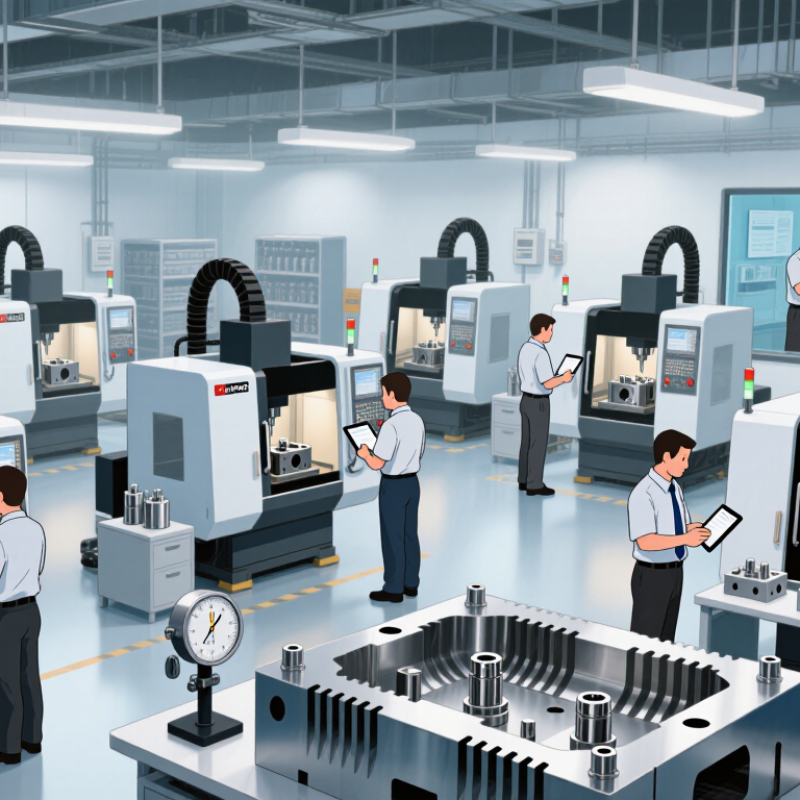
7 Best Sinker EDM Machining Suppliers for Global Buyers

Define Sinker EDM: Electrode-Based Erosion in a Dielectric Fluid

Sinker EDM shapes conductive metal with a formed electrode, usually made from graphite or copper. The electrode and workpiece sit in dielectric fluid, separated by a narrow gap. Repeated electrical discharges melt and vaporize tiny spots on the workpiece. The fluid cools the area and carries away debris. There is no cutting edge. A square electrode can gradually form a deep, sharp-cornered cavity in a steel die, even in hardened material. Ho and Newman’s review in the International Journal of Machine Tools and Manufacture (2003) describes this non-contact erosion process and its role in precision machining.

The spark is extremely local. EDM literature commonly places discharge-channel temperatures around 8,000–12,000°C; this is an estimate for the channel, not the whole part. That distinction matters. The workpiece stays much cooler overall, while each pulse leaves a tiny crater. Electrode wear can still alter fine details, so experienced operators account for it during tool design and finishing. The dielectric gap also needs steady flushing: trapped debris can cause unstable discharges and uneven surfaces. A practical caution: a deep cavity may look simple in a drawing, but its corners, depth, and flushing access can make machining less predictable. Sources: Ho and Newman (2003); technical EDM process literature on discharge-channel temperatures.


Set Precision Benchmarks: Typical ±0.005 mm Tolerance and Ra 0.1–0.8 µm

For sinker EDM, ±0.005 mm is a useful tolerance benchmark, not a promise for every feature. A deep, narrow cavity may behave differently from a shallow pocket because flushing and electrode wear affect the cut. Ask suppliers how they control these variables. Small details matter.

Surface finish also deserves a clear specification. Ra 0.1–0.8 µm may be achievable with suitable electrodes, stable settings, and finishing passes, but material and geometry influence the result. Request measured samples or inspection records, and confirm the measurement location and method. A polished-looking surface can still miss the stated Ra. That is easy to overlook.

When comparing global suppliers, check whether their reports link each result to a drawing revision and measurement point. Ask how they inspect corners, ribs, and deep sections, where results can vary. A quoted ±0.005 mm figure means little without agreed inspection conditions. I would treat it as a target to validate, not a universal guarantee. Even a capable shop may need a trial cut before confirming a demanding combination of tolerance and finish.

Sinker EDM Surface-Finish Benchmarks

Representative Ra targets by machining stage. Typical precision benchmarks are approximately ±0.005 mm tolerance and Ra 0.1–0.8 µm; achievable results vary with material, geometry, and process settings.

Compare Seven Global Suppliers by Capacity, Materials, and EDM Technology

Choosing among seven sinker EDM suppliers means comparing fit, not chasing the biggest machine list. A high-volume shop may offer multiple machines and stable scheduling. A mold specialist may handle deep ribs and fine cavities. A hard-material shop should show experience with carbide or hardened steel. A micro-feature specialist needs close control of electrode wear. An automated cell can support repeat production. A regional job shop may offer faster communication. An engineering-led supplier can help refine electrodes and machining plans. These are useful profiles, not guarantees. That matters.

Check each supplier’s work envelope, machine travel, and typical tolerances against your part drawing. Ask which materials they machine regularly, and request sample inspection records. Copper and graphite electrodes behave differently; electrode choice affects finish, wear, and cycle time. Confirm whether the shop uses orbital strategies, automatic electrode changing, or in-process measurement. Technology names alone prove little. Ask for evidence from a similar component.

Tips: Send a 3D model, material grade, and critical dimensions when requesting a quote. Ask how the supplier measures narrow slots and deep cavities. A low quote may exclude electrode design or inspection. Clarify both before comparing prices. Some details are easy to miss. Recheck them.

Assess Quality Systems Through ISO 9001 Certification and Inspection Data

For sinker EDM suppliers, ISO 9001 certification is a useful starting point, not proof that every cavity will meet specification. The ISO Survey 2022 reported 1,265,216 valid ISO 9001 certificates across 187 countries. That scale shows how widely the system is used, but it does not rank machining capability. Check the certificate’s validity, site, and scope. A certificate can look reassuring while covering only part of a supplier’s operation.

Ask for inspection records tied to actual EDM jobs. Useful evidence includes cavity dimensions, position tolerances, surface-roughness readings, and inspection equipment calibration dates. For a deep, narrow cavity, request measurement locations and the method used; one surface reading may miss local variation. Look for sample size, acceptance limits, and nonconformance records, not just a pass stamp. Small detail matters.

Compare reported results across similar parts and materials, and ask how failed measurements led to corrective action. A first-article report can show whether the inspection plan catches important features before production continues. Still, reports can be selective, and a polished sample does not predict every batch. Review traceability from drawing revision to measurement record, then confirm that the inspection method suits the feature. That check takes time. It is worth asking what changed after a defect, even when the supplier’s answer feels incomplete.

Select a Supplier by Lead Time, Technical Support, and Total Cost of Ownership

When comparing sinker EDM suppliers, test quoted lead times against the actual production route. Ask whether the estimate includes electrode design, flushing trials, inspection, and export packing. A fast start means little if first-article approval stalls. Request a dated schedule with clear milestones, not a broad promise. Then check how the supplier handles urgent engineering changes and machine downtime. Who answers? A technical contact should explain achievable tolerances, material limits, and surface-finish trade-offs in plain terms. Ask for sample inspection records and confirm that measurement methods match your drawing requirements.

Support matters after shipment, too. Clarify response hours, remote troubleshooting options, spare-electrode guidance, and whether process recommendations are documented. Compare total cost of ownership, not just hourly rates. Include setup charges, electrode consumption, scrap risk, inspection, freight, and the cost of delayed delivery. A lower quote can become expensive when revisions require new electrodes or repeated sampling. Compare suppliers using the same part, material, tolerance, batch size, and delivery point. Still, no spreadsheet captures every shop-floor surprise. Consider a pilot job, and judge communication as carefully as the finished cavity.

Powder Coat Booths

For those larger-sized parts, or smaller quantity runs, we have 2 independent powder coat booths and ovens. The quality, durability and affordability of today’s powder coating finishes make this the process of choice for world-class companies.

Powder coating advantages over other forms of coating are many. Materials used in the Powder coating process can be metals and non-metals that come in a multitude of thicknesses, textures, colors, etc. Another of Powder coating’s biggest advantages over conventional coatings is its ability to create finishes in many different textures. Powder Coating Booths allow us the ability to apply these advantages to large products.

Wet Paint Line

Tri-State Fabricators runs a full-service conveyor line for painting. Wet painting can provide protection or decoration to many different part styles. From start to finish, every project is easier to undergo random and point-based inspection by our skilled painting team.

Advantages to our Wet Paint Line are these lines start with product prep and ends with a thorough inspection of a high quality finished product. Our ability to complete large and small projects with a superior finish and doing so in a timely and economical fashion. This passes along the savings in production to our customers. When powder coating ins not an option, our Wet Paint Line gets the job done right the first time.

Wet Paint Booths

When the parts get big and heavy we roll-out our custom paint racks and oversize booth. By utilizing our partnerships with all the major paint brands, we can match virtually any color with wet paint.

The advantages of having access to a Wet Paint Booth are many. Large projects of many different shapes can be loaded into the booth. The Wet Paint Booth offers an environment that is much more controlled than a typical parts painting operation.

Not only are they used because of their controlled environment, but they’re are also advantageous when it comes to applying paint to parts that are needed in industries that require specialty coatings such as medical, aerospace, etc.

Military CARC

Our military forces have some very high standards when it comes to the finish of their vehicles and equipment. From the first pre-treatment step to final coat, it takes a great deal of knowledge and experience to protect the men and women of our armed forces. They deserve only the best, and Tri-State Fabricators provides it.

All of our processes are closely monitored by our staff and management teams. Both of which are highly trained in the processes of metal fabrication and finishing. Tri-State Fabricators’ goal is to always fully satisfy each and every customer, including the military. We will always put a 110% into what we do.

Glass-Bead Blasting

Abrasive media blasting is an excellent way to remove old paint, rust, and increase the paint/powder adhesion. Glass beads produce a much smoother and brighter finish than angular abrasives; leaving the part clean yet without any dimensional change. Chemically inert and environmentally friendly, we can recycle our beads approximately 30 times; making them a more preferred method of metal cleaning or surface finishing.

Advantages to Glass Bead Blasting are many. Glass bead blast media is used when a project is needing rough surfaces need to become smooth for applications of coatings such as paint. It is typically used to clean paint and rust from a product surface without deforming the surface it is being used on. Overall, compared to many other blasting media, Glass Bead Blasting is a very economical choice and those savings are always passed on to our customers.

Part Washing

Tri-State Fabricators utilize a zinc phosphate wash to clean and etch the material to ensure the best paint adhesion possible. The unique design of our 3-stage wash system does the work like a 5-stage. From Cleaning and rinsing to conversion coating and post-treatment, Our Part Washing process is a complete service and works throughout the fabrication service and the finishing service.

Along with the previously mentioned benefits, Curing is a vital chemical reaction that leaves the product finish hard and relatively safe from mild abrasion and aggressive corrosion. This process can be done in more than one way; ambient air-dry or in curing ovens at temps that exceed 240°.

Burn-Off Oven

From fixing paint mistakes (someone else’s of course) to simply cleaning our paint line hooks, our burn-off oven is put to good use. After a quick burn-off, a little clean up, and a fresh coat of paint, your parts will look better than new.

Why does our Burn-Off Oven work so well? Because super heating the air around parts turns the materials into ashes. From paint and powder coatings to rubber and machining oils, high temps do the job without degrading the integrity of the part.

Masking

Masking is a vital part of producing high quality products. We have die-cut masking patterns to protect machined surfaces as well as a wide range of plugs and caps to protect threaded holes and bolts. We provide permanent and temporary masking.

Masking allows the selected sections of a product to be protected from a fabrication or finishing service. This can be with both chemicals when etching and tapes, paints when only finishing just a section of the product. Masking is great in aiding the customization process of a project.

Screen Printing

Screen printing is a photographic process that transfers artwork onto a porous nylon screen which allows colored ink to flow through the screen and be deposited on an aluminum or plastic component. We can generally have just about any design created onto a screen for your parts.

Some of the advantages of Screen Printing are, brand recognition for your business displaying on your products, assembly instructions, product warnings/hazards, etc. Tri-State Fabricators produces Screen Printing of the highest quality so you know it’s durable.

Metal Finishing

Metal Finishing is the art of treating the exterior portion of product, often metal but can also be made of other materials, so that the surface is clean and free of any debris. Then the process of applying coats or either paint of powder coat takes place. This coating process improves the quality of the product in both appearance and resistance to wear and corrosion.

Tri-State Fabricators, Inc., understands that a project typically isn’t complete until a high-quality finish has been added to your product. This is why our painting and powder coating teams continuously inspect the products throughout the Metal Finishing process.
