


Top Shock Absorber Manufacturers in the World

A Shock Absorber is easy to overlook until a vehicle hits broken pavement. Then its work becomes clear: controlling spring movement, keeping tires in contact with the road, and helping the driver maintain predictable handling. The best products must balance comfort, stability, durability, and cost. No single design suits every car, truck, or driving condition.

John C. Dixon, author of The Shock Absorber Handbook, offers a useful engineering perspective. Paraphrased from his work: “A shock absorber controls suspension motion; it does not merely soften the ride.” Small parts. Big consequences. This distinction matters when comparing manufacturers, since similar-looking dampers can use different valve designs, materials, and testing standards. A careful comparison should look beyond brand recognition.

This guide examines leading manufacturers around the world and the strengths they bring to the market. It considers product range, engineering capability, vehicle applications, manufacturing reach, and evidence of performance. A damper tested on smooth roads may behave differently on rough asphalt, under heavy loads, or after years of use. The details matter. Rankings can still miss the mark, because availability and fitment vary by region and vehicle. For buyers, workshops, and industry readers, the aim is not to declare one universal winner. It is to show what distinguishes each company, where its products may fit, and what questions deserve closer inspection. Not always an easy comparison. But a more useful one.
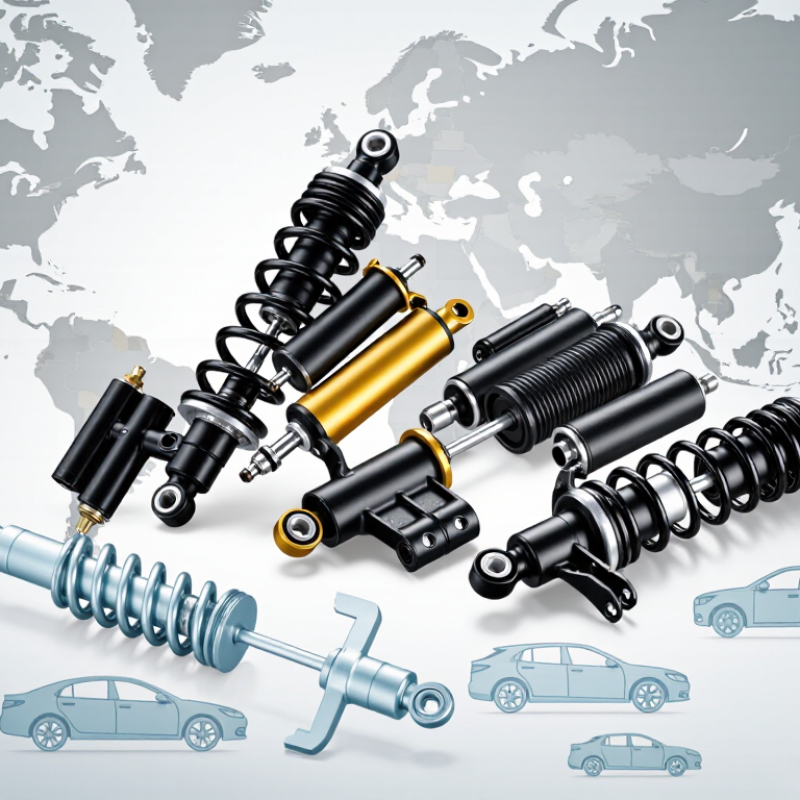
Top Shock Absorber Manufacturers in the World

Shock Absorbers: Purpose, Types, and Key Components

Shock absorbers control the repeated movement of a vehicle’s springs after a bump. Without that damping, the body may continue bouncing, and tires can lose steady contact with the road. The result can be less predictable handling and a rougher ride. They do not carry the vehicle’s weight alone; springs and suspension links share that work. Small distinction. Easy to miss.

Common designs include twin-tube and monotube units. Twin-tube models use an inner working cylinder and an outer reserve chamber. Monotube models place the piston in one main cylinder, often with a floating separator between oil and pressurized gas. Each layout manages heat and fluid movement differently, so performance depends on design, tuning, and operating conditions—not just the label. “Gas-charged” does not mean the unit works without hydraulic fluid.

Inside, a piston moves through oil as the suspension compresses and extends. Small passages and valves restrict that flow, turning motion into heat. The piston rod transfers movement from the suspension, while seals help retain oil and keep dirt out. A worn seal may leave oily residue; a leaking unit deserves inspection, though residue alone does not reveal the full cause. A tidy diagram makes these parts look simple. Real wear is less tidy.

Top Shock Absorber Manufacturers in the World - Shock Absorbers: Purpose, Types, and Key Components

Category Type or Component Purpose or Operating Principle Practical Notes
Purpose Damping suspension movement Controls spring oscillation by forcing hydraulic fluid through restricted passages, converting motion energy mainly into heat. Helps maintain tire contact, ride control, and vehicle stability. Suspension springs primarily support the vehicle’s weight.
Design type Twin-tube hydraulic Uses an inner working cylinder and an outer reservoir; fluid moves between chambers during suspension travel. A common layout for passenger vehicles; its construction can suit space and cost requirements in many applications.
Design type Monotube Uses one main cylinder, typically with a floating separator piston dividing hydraulic oil from pressurized gas. The larger working piston and direct exposure of the body can support heat transfer and consistent damping under demanding use.
Design feature Gas-charged hydraulic Uses pressurized gas alongside hydraulic fluid to help limit aeration and foaming during operation. Gas pressure supports fluid control; hydraulic valving remains central to the damping action.
Control type Adjustable damping Allows damping force to be changed mechanically or electronically; adjustment may affect rebound, compression, or both. Adjustment range and method vary by design; not every adjustable unit controls both directions independently.
Control type Adaptive or electronically controlled Uses electronically actuated valves or other control mechanisms to vary damping in response to system commands. The control system may use vehicle sensors and software; response and features depend on the vehicle design.
Key component Piston and valve assembly Meters fluid flow as the piston moves, creating resistance to compression and rebound motion. Valve geometry and calibration influence damping characteristics across different shaft speeds.
Key component Piston rod Connects the moving suspension assembly to the internal piston and transmits suspension motion. Surface finish, straightness, and corrosion protection are important to sealing and durability.
Key component Oil seal and rod guide Guide the rod and help retain hydraulic fluid while limiting contamination ingress. Material selection and sealing design must account for temperature, movement, and exposure to dirt and moisture.
Key component Hydraulic fluid Transfers force through the valve passages and carries heat generated during damping. Viscosity and temperature behavior affect the unit’s operating characteristics.
Key component Pressure tube and reservoir Contain working fluid and, depending on the design, provide space for fluid displaced by the rod. Tube strength, internal finish, and corrosion resistance contribute to reliable operation.
Key component Mounts and bushings Attach the damper to the vehicle and accommodate movement while helping isolate vibration and noise. Mounting geometry and bushing condition affect fit, noise, and suspension performance.
Manufacturing and validation Inspection and performance testing Production checks can assess dimensions, sealing, damping force, and durability under defined test conditions. Test procedures and acceptance limits are product- and application-specific; this table does not rank manufacturers.

How Leading Shock Absorber Manufacturers Are Evaluated

Top Shock Absorber Manufacturers in the World

How Leading Shock Absorber Manufacturers Are Evaluated

Leading shock absorber manufacturers are evaluated through measurable performance, consistent production, and dependable technical support. A useful assessment starts with the intended vehicle, load, and road conditions. A unit suited to a light passenger car may not perform well under heavier loads. Numbers matter. Context matters more.

Testing should examine damping force across different piston speeds, not just one convenient setting. Engineers also check performance after repeated cycles and temperature changes. A shock absorber tested on a bench may behave differently after installation, so vehicle-level trials add important evidence. Reviewers can compare force curves, leakage rates, and durability results. Yet test methods must be consistent, or comparisons become misleading.

Manufacturing quality is another key measure. Inspectors may review material controls, dimensional checks, batch traceability, and production variation. Practical details count: mounting points should align, seals should remain intact, and technical documents should clearly identify compatible applications. Customer feedback and warranty patterns can reveal recurring problems, though complaints alone do not prove a general defect. No scorecard is perfect. A fair evaluation combines laboratory data, field evidence, and transparent explanations of limitations.

Top Shock Absorber Manufacturers in the World — How Leading Manufacturers Are Evaluated

Suggested evaluation framework: the chart shows proposed weightings for comparing manufacturers, not measured company scores or a ranking. There is no single universal industry weighting; buyers should adjust criteria to their vehicle applications and sourcing priorities.

Key considerations include product durability, application coverage, engineering and testing capability, manufacturing quality, customer support, and regulatory and environmental compliance. Percentages are illustrative framework weights, not published market data.

Major Shock Absorber Manufacturers Around the World

Top Shock Absorber Manufacturers in the World

Major shock absorber manufacturers work across established automotive regions, including East Asia, Europe, and North America. Many also serve growing production hubs in India and Southeast Asia. Their factories supply vehicle makers and replacement-parts distributors, often from different facilities. Scale matters, but so does local engineering support.

The product is more than a metal tube. A typical unit contains a piston, valves, hydraulic fluid, seals, and a carefully finished shaft. Small changes in valve design can affect ride comfort, tire contact, and handling over rough roads. Some manufacturers also develop dampers for buses, commercial vehicles, and off-road equipment. Demands vary widely.

Manufacturers compete on durability, consistent production, testing capacity, and delivery times. They may assess performance through repeated compression cycles, temperature changes, and road-simulation tests. Still, “major” does not mean best for every vehicle. A design suited to a family car may feel too soft in a loaded van. Fit matters. I would also be cautious about broad quality rankings: public data rarely compares every factory under the same conditions. That leaves room for doubt. Buyers and engineers should check vehicle compatibility, specifications, and service availability before choosing a supplier.

Product Specialties and Markets Served by Leading Manufacturers

Top Shock Absorber Manufacturers in the World

Product specialties differ by vehicle type, driving conditions, and sales channel. Original-equipment suppliers often develop dampers around a vehicle’s weight, suspension geometry, and target ride comfort. Replacement-focused manufacturers prioritize broad fitment and clear installation specifications. Fit matters. OICA recorded 93.5 million motor vehicles produced worldwide in 2023, indicating the scale and diversity of vehicle platforms suppliers must serve (OICA, 2024 Production Statistics).

Twin-tube designs commonly serve passenger cars and everyday replacement markets, balancing cost, comfort, and packaging needs. Monotube dampers are often selected for vehicles needing more consistent performance under demanding use, including some performance and off-road applications. Heavy-duty products target trucks, buses, and commercial fleets, where sustained loads and rough roads raise durability demands. Still, these categories overlap; a tidy product label cannot describe every real-world trade-off.

Electric vehicles create another area of specialization. Their mass distribution and vehicle weight can call for carefully tuned damping, while drivers may expect quiet, controlled rides. The International Energy Agency’s Global EV Outlook 2024 estimated electric-car sales would reach about 17 million that year, more than one in five cars sold. That demand does not make one damper suitable for every EV. Manufacturers serve automakers, fleet operators, and independent repair channels, each with different priorities for tuning, availability, and service life. Real roads remain unpredictable.

Global Trends Shaping the Shock Absorber Industry

Global Trends Shaping the Shock Absorber Industry

Shock absorbers are evolving as vehicle designs become heavier, quieter, and more electronically controlled. Battery packs add substantial weight, placing new demands on damping consistency and heat management. A unit that performs well on smooth roads may behave differently after repeated impacts on uneven pavement. Small details matter.

Electronic damping systems are gaining attention because they can adjust resistance as road conditions change. Sensors measure wheel movement, vehicle speed, and body motion, helping control systems respond within fractions of a second. This can improve comfort and stability, though added complexity brings more parts to test and maintain. The engineering is impressive, but not every driver needs the most advanced setup.

Manufacturers are also exploring lighter materials and production methods that reduce waste. However, lightweight components must still withstand corrosion, vibration, and long-term fatigue. Testing on rough roads remains essential; laboratory data cannot capture every pothole or temperature swing. Sustainability goals can also conflict with durability when materials are difficult to repair or recycle. That tension deserves more attention.

Supply networks are shifting, too. Regional sourcing can shorten delivery routes, yet it may limit access to specialized materials. Clear quality checks at each production stage help reduce variation between units. Even then, consistency is hard. A small change in seal friction or fluid viscosity can alter ride feel, making careful validation central to product development.

Powder Coat Booths

For those larger-sized parts, or smaller quantity runs, we have 2 independent powder coat booths and ovens. The quality, durability and affordability of today’s powder coating finishes make this the process of choice for world-class companies.

Powder coating advantages over other forms of coating are many. Materials used in the Powder coating process can be metals and non-metals that come in a multitude of thicknesses, textures, colors, etc. Another of Powder coating’s biggest advantages over conventional coatings is its ability to create finishes in many different textures. Powder Coating Booths allow us the ability to apply these advantages to large products.

Wet Paint Line

Tri-State Fabricators runs a full-service conveyor line for painting. Wet painting can provide protection or decoration to many different part styles. From start to finish, every project is easier to undergo random and point-based inspection by our skilled painting team.

Advantages to our Wet Paint Line are these lines start with product prep and ends with a thorough inspection of a high quality finished product. Our ability to complete large and small projects with a superior finish and doing so in a timely and economical fashion. This passes along the savings in production to our customers. When powder coating ins not an option, our Wet Paint Line gets the job done right the first time.

Wet Paint Booths

When the parts get big and heavy we roll-out our custom paint racks and oversize booth. By utilizing our partnerships with all the major paint brands, we can match virtually any color with wet paint.

The advantages of having access to a Wet Paint Booth are many. Large projects of many different shapes can be loaded into the booth. The Wet Paint Booth offers an environment that is much more controlled than a typical parts painting operation.

Not only are they used because of their controlled environment, but they’re are also advantageous when it comes to applying paint to parts that are needed in industries that require specialty coatings such as medical, aerospace, etc.

Military CARC

Our military forces have some very high standards when it comes to the finish of their vehicles and equipment. From the first pre-treatment step to final coat, it takes a great deal of knowledge and experience to protect the men and women of our armed forces. They deserve only the best, and Tri-State Fabricators provides it.

All of our processes are closely monitored by our staff and management teams. Both of which are highly trained in the processes of metal fabrication and finishing. Tri-State Fabricators’ goal is to always fully satisfy each and every customer, including the military. We will always put a 110% into what we do.

Glass-Bead Blasting

Abrasive media blasting is an excellent way to remove old paint, rust, and increase the paint/powder adhesion. Glass beads produce a much smoother and brighter finish than angular abrasives; leaving the part clean yet without any dimensional change. Chemically inert and environmentally friendly, we can recycle our beads approximately 30 times; making them a more preferred method of metal cleaning or surface finishing.

Advantages to Glass Bead Blasting are many. Glass bead blast media is used when a project is needing rough surfaces need to become smooth for applications of coatings such as paint. It is typically used to clean paint and rust from a product surface without deforming the surface it is being used on. Overall, compared to many other blasting media, Glass Bead Blasting is a very economical choice and those savings are always passed on to our customers.

Part Washing

Tri-State Fabricators utilize a zinc phosphate wash to clean and etch the material to ensure the best paint adhesion possible. The unique design of our 3-stage wash system does the work like a 5-stage. From Cleaning and rinsing to conversion coating and post-treatment, Our Part Washing process is a complete service and works throughout the fabrication service and the finishing service.

Along with the previously mentioned benefits, Curing is a vital chemical reaction that leaves the product finish hard and relatively safe from mild abrasion and aggressive corrosion. This process can be done in more than one way; ambient air-dry or in curing ovens at temps that exceed 240°.

Burn-Off Oven

From fixing paint mistakes (someone else’s of course) to simply cleaning our paint line hooks, our burn-off oven is put to good use. After a quick burn-off, a little clean up, and a fresh coat of paint, your parts will look better than new.

Why does our Burn-Off Oven work so well? Because super heating the air around parts turns the materials into ashes. From paint and powder coatings to rubber and machining oils, high temps do the job without degrading the integrity of the part.

Masking

Masking is a vital part of producing high quality products. We have die-cut masking patterns to protect machined surfaces as well as a wide range of plugs and caps to protect threaded holes and bolts. We provide permanent and temporary masking.

Masking allows the selected sections of a product to be protected from a fabrication or finishing service. This can be with both chemicals when etching and tapes, paints when only finishing just a section of the product. Masking is great in aiding the customization process of a project.

Screen Printing

Screen printing is a photographic process that transfers artwork onto a porous nylon screen which allows colored ink to flow through the screen and be deposited on an aluminum or plastic component. We can generally have just about any design created onto a screen for your parts.

Some of the advantages of Screen Printing are, brand recognition for your business displaying on your products, assembly instructions, product warnings/hazards, etc. Tri-State Fabricators produces Screen Printing of the highest quality so you know it’s durable.

Metal Finishing

Metal Finishing is the art of treating the exterior portion of product, often metal but can also be made of other materials, so that the surface is clean and free of any debris. Then the process of applying coats or either paint of powder coat takes place. This coating process improves the quality of the product in both appearance and resistance to wear and corrosion.

Tri-State Fabricators, Inc., understands that a project typically isn’t complete until a high-quality finish has been added to your product. This is why our painting and powder coating teams continuously inspect the products throughout the Metal Finishing process.


