


A Sewer Line Cleaning Machine is more than a pump, hose, or rotating cable. Its performance depends on matching the cleaning method to pipe diameter, blockage type, access conditions, and job frequency. China’s equipment market includes manufacturers serving municipal crews, plumbing contractors, and industrial maintenance teams. Their product ranges may include high-pressure jetters, drum machines, and vehicle-mounted cleaning systems.
This guide introduces ten Chinese manufacturers and offers a practical starting point for comparing them. It does not treat a “top 10” list as a universal ranking; needs differ by project and region. Buyers should review published specifications, working pressure, flow rate, hose length, safety features, and available service support. Ask for operating manuals, warranty terms, spare-parts details, and relevant test documentation. A machine that looks powerful on paper may not suit narrow pipes or frequent transport. Small details matter.
Manufacturing claims also deserve careful checking. Confirm the company’s legal identity, production capabilities, and product model directly with the supplier. Where possible, request a demonstration using conditions similar to your worksite. Independent inspection can help, but it cannot replace a clear understanding of operating limits. This comparison aims to make the selection process more informed, not effortless. Some information may change, and that should give every buyer pause. Reliable decisions come from matching verified evidence with real maintenance needs.
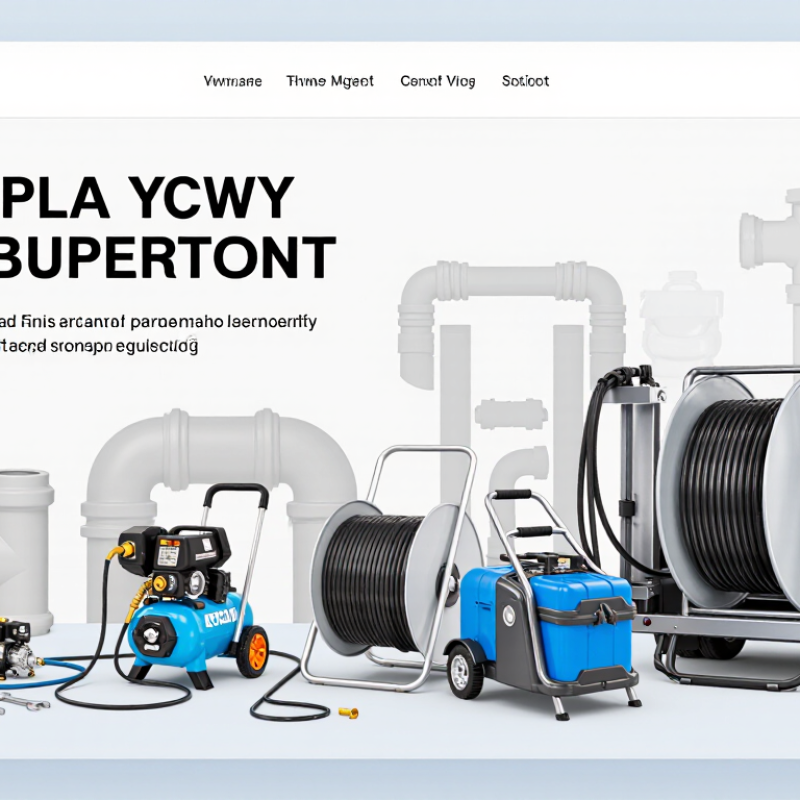
Sewer line cleaning machines remove grease, sand, scale, and other deposits that restrict wastewater flow. Crews may use them during routine maintenance or after a blockage is located. The right method depends on pipe diameter, material, access, and the type of buildup. A jetter can flush loose sediment, while hardened deposits may need mechanical cutting. Root cutting can clear a passage, but it does not repair damaged pipe walls. That distinction matters.
Common machine types include high-pressure water jetters, cable-driven drain cleaners, and combination jetting-and-vacuum units. Jetters send water through a hose and nozzle to loosen debris and carry it downstream. Cable machines rotate a flexible shaft with a suitable cutting or clearing head. Combination units can wash and recover waste, which is useful where debris should not be left in the line. Small crews often favor portable equipment. Larger networks may require truck-mounted systems.
Core technologies include pressure regulation, durable hoses, torque control, and nozzle designs that direct water forward or backward. Some systems also pair cleaning with CCTV inspection, helping operators check pipe condition before and after work. More pressure is not always better; excessive force can worsen defects in fragile pipes. In practice, choosing equipment can be less tidy than a specification sheet suggests. Operators need to match the tool to the pipe and monitor the result.
Manufacturer-neutral overview of ten common sewer and drain cleaning machine types. Pipe-size ranges are indicative, vary by model and tooling, and are not product specifications or industry standards.
| No. | Machine Type | Primary Purpose | Typical Pipe Diameter | Cleaning Method | Core Technologies | Best-Suited Conditions |
|---|---|---|---|---|---|---|
| 1 | Handheld electric drain cleaner | Clear localized blockages in household and light-commercial drains. | About 20–100 mm | A rotating flexible cable carries a cutting or retrieval head into the pipe. | Electric motor, flexible cable, interchangeable heads, and guarded cable feed. | Short indoor lines blocked by hair, grease, or soft obstructions. |
| 2 | Drum cable machine | Clean small-to-medium drain lines with a contained cable system. | About 25–150 mm | A motorized cable rotates from a drum and breaks up or retrieves blockages. | Drum housing, torque control, cable feed, and replaceable cutting heads. | Drain maintenance where portability and cable containment are useful. |
| 3 | Sectional rod machine | Reach and clear longer or larger drains using connected rod sections. | About 50–200 mm | Rotating, interlocking rods transmit torque to a cutting or scraping tool. | Coupled rod sections, drive clutch, and interchangeable end tools. | Longer runs and tougher deposits accessible from a manhole or cleanout. |
| 4 | Portable high-pressure water jetter | Flush grease, sediment, and loose debris from service lines. | About 50–300 mm | A pump supplies pressurized water through a hose and specialized nozzle. | High-pressure pump, hose reel, pressure regulation, and forward/rear jets. | Routine flushing and soft deposits; nozzle selection must suit the pipe. |
| 5 | Trailer-mounted jetter | Provide mobile jetting capacity for municipal and contractor work. | About 75–600 mm | A trailer-mounted pump sends water through a long hose to a cleaning nozzle. | Engine-driven pump, water tank, hose reel, pressure controls, and trailer chassis. | Field jobs requiring greater capacity than a compact portable unit. |
| 6 | Truck-mounted sewer jetter | Clean public sewer mains and larger pipe networks from access points. | About 100–900 mm | A vehicle-mounted pump feeds a long hose and nozzle into the sewer. | High-capacity pump, onboard water storage, powered reel, and operator controls. | Municipal maintenance where mobility, hose reach, and sustained operation matter. |
| 7 | Combination sewer cleaner | Loosen deposits with water jetting and remove slurry by vacuum. | About 150–1,200 mm | Combines high-pressure water cleaning with vacuum recovery of liquid and solids. | Water pump, vacuum system, debris tank, hose reels, and separation equipment. | Silt, standing water, and debris that need to be collected as well as loosened. |
| 8 | Chain flail descaling machine | Remove hardened scale and encrustation from suitable pipe interiors. | About 75–600 mm | Rotating chains or flails strike and abrade deposits from the pipe wall. | Flexible drive shaft, rotating head, adjustable tooling, and speed control. | Scale removal after pipe condition and material have been assessed. |
| 9 | Robotic sewer cutter | Cut roots, protruding connections, and selected obstructions inside a sewer. | About 150–1,000 mm | A remotely operated cutter head performs targeted mechanical removal. | Crawler, camera, remote controls, powered cutter, and monitored umbilical. | Targeted work in accessible mains where remote operation is appropriate. |
| 10 | Winch-and-bucket sewer cleaner | Remove heavy sediment and deposits from large sewer conduits. | Typically used in large-diameter conduits; sizing is site-specific. | A winch pulls a bucket or scraper through the conduit to collect or move material. | Winch, cable, bucket or scraper, and controlled pulling equipment. | Heavy deposits in large conduits where jetting alone may not remove the material. |
Selection note: Confirm pipe material, diameter, access, blockage type, and pipe condition before choosing a cleaning method. Use equipment within its rated operating limits and follow applicable safety procedures.

China’s sewer cleaning equipment industry serves municipal utilities, contractors, and industrial maintenance teams. Manufacturers produce compact jetting units, vacuum combination trucks, pipe inspection systems, and accessories for different operating conditions. The market reflects China’s broad vehicle and machinery supply base, while local workshops often adapt equipment to customer requirements. That flexibility matters on narrow streets and older sewer networks.
Production involves more than fitting a pump onto a vehicle. Engineers select pressure ratings, hose lengths, tank capacity, and nozzle types for the intended pipe sizes and debris. A practical inspection should check weld quality, control response, hose connections, and access to routine service points. Small details matter. Testing under realistic flow conditions can reveal leaks or unstable pressure before delivery. Still, test conditions may not fully match a job site.
Manufacturing quality varies, so buyers benefit from reviewing technical documents and asking how key components are inspected. Clear service instructions and available replacement parts can reduce downtime. Some specifications look impressive on paper, but operating costs depend on fuel use, maintenance intervals, and crew training. A machine suited to one city may be a poor fit elsewhere. Local drainage layouts and seasonal debris deserve careful consideration.
When evaluating Chinese sewer line cleaning machine manufacturers, compare operating performance, not brochure claims alone. Ask for the working pressure, flow rate, hose diameter, and maximum hose length. These figures should match the pipe sizes and blockage types you handle. Details matter. A machine that performs well on grease may struggle with roots or compacted sediment. Request a live demonstration using a comparable pipe, and observe how steadily the hose feeds and retracts. Record the test conditions; without them, performance claims are hard to compare.
Inspect the pump, frame, hose connections, and control panel for accessible maintenance points and clear labeling. Ask how replacement parts are identified, how quickly common components can be supplied, and what training is included. Ask for proof. Review operating manuals, inspection records, and customer references, then verify that each document matches the exact model being quoted. A factory visit or independent pre-shipment inspection can reveal practical details, such as unfinished welds or awkward service access. I might overlook small usability issues in a short demonstration, so operator feedback matters too. One limitation: no checklist can replace testing the machine under your actual working conditions.
Profiles of China’s top ten sewer line cleaning machine manufacturers are most useful when they compare practical capabilities rather than promotional claims. Some manufacturers focus on compact units for narrow streets and small service vehicles. Others produce truck-mounted machines with larger water tanks and longer hose reels. A clear profile should note the intended pipe range, water flow, working pressure, engine type, and available nozzle options. These details help buyers match equipment to real maintenance routes.
Manufacturing experience also deserves careful review. Look for documented inspection procedures, parts availability, operator training, and technical support after delivery. Ask whether the machine has been tested under conditions similar to your work, such as clearing sediment from a long pipe run. Photos of welds and control panels can help, but they cannot replace test records. Details matter. Comparisons may not be perfectly tidy, since specifications and local configurations can differ.
Tips: Request a written specification sheet and a demonstration using a representative hose length. Confirm service intervals, replacement-part lead times, and tank capacity before comparing prices. A lower purchase cost may not reflect the full cost of operation.
Comparing China’s sewer line cleaning machine manufacturers requires more than checking headline pressure or engine power. A useful review looks at how each machine performs in real pipe conditions. Does the range include compact units for narrow streets, high-pressure jetters for routine blockages, and combined jetting-vacuum trucks for heavier sediment? Those options matter when crews move between small access points and larger municipal lines. Details count.
Product specifications should be compared on equal terms. Check working pressure, water flow, hose length, tank capacity, and nozzle compatibility, then ask how performance changes during extended operation. A long hose may look impressive, but poor handling around a tight manhole can slow the crew. Manufacturers also differ in chassis choices, control layouts, and customization. Some brochures leave these details vague, so request operating data and clear configuration sheets.
Support can shape the machine’s useful life as much as its pump. Compare operator training, spare-parts availability, troubleshooting response, warranty coverage, and access to service technicians. Ask which wear parts are stocked and how quickly a replacement hose or seal can be supplied. References from similar users may help, though they do not guarantee the same results. No comparison is perfect; site conditions and maintenance habits can change the outcome. A careful buyer should verify claims before ordering.


For those larger-sized parts, or smaller quantity runs, we have 2 independent powder coat booths and ovens. The quality, durability and affordability of today’s powder coating finishes make this the process of choice for world-class companies.
Powder coating advantages over other forms of coating are many. Materials used in the Powder coating process can be metals and non-metals that come in a multitude of thicknesses, textures, colors, etc. Another of Powder coating’s biggest advantages over conventional coatings is its ability to create finishes in many different textures. Powder Coating Booths allow us the ability to apply these advantages to large products.
Tri-State Fabricators runs a full-service conveyor line for painting. Wet painting can provide protection or decoration to many different part styles. From start to finish, every project is easier to undergo random and point-based inspection by our skilled painting team.
Advantages to our Wet Paint Line are these lines start with product prep and ends with a thorough inspection of a high quality finished product. Our ability to complete large and small projects with a superior finish and doing so in a timely and economical fashion. This passes along the savings in production to our customers. When powder coating ins not an option, our Wet Paint Line gets the job done right the first time.
When the parts get big and heavy we roll-out our custom paint racks and oversize booth. By utilizing our partnerships with all the major paint brands, we can match virtually any color with wet paint.
The advantages of having access to a Wet Paint Booth are many. Large projects of many different shapes can be loaded into the booth. The Wet Paint Booth offers an environment that is much more controlled than a typical parts painting operation.
Not only are they used because of their controlled environment, but they’re are also advantageous when it comes to applying paint to parts that are needed in industries that require specialty coatings such as medical, aerospace, etc.
Our military forces have some very high standards when it comes to the finish of their vehicles and equipment. From the first pre-treatment step to final coat, it takes a great deal of knowledge and experience to protect the men and women of our armed forces. They deserve only the best, and Tri-State Fabricators provides it.
All of our processes are closely monitored by our staff and management teams. Both of which are highly trained in the processes of metal fabrication and finishing. Tri-State Fabricators’ goal is to always fully satisfy each and every customer, including the military. We will always put a 110% into what we do.
Abrasive media blasting is an excellent way to remove old paint, rust, and increase the paint/powder adhesion. Glass beads produce a much smoother and brighter finish than angular abrasives; leaving the part clean yet without any dimensional change. Chemically inert and environmentally friendly, we can recycle our beads approximately 30 times; making them a more preferred method of metal cleaning or surface finishing.
Advantages to Glass Bead Blasting are many. Glass bead blast media is used when a project is needing rough surfaces need to become smooth for applications of coatings such as paint. It is typically used to clean paint and rust from a product surface without deforming the surface it is being used on. Overall, compared to many other blasting media, Glass Bead Blasting is a very economical choice and those savings are always passed on to our customers.
Tri-State Fabricators utilize a zinc phosphate wash to clean and etch the material to ensure the best paint adhesion possible. The unique design of our 3-stage wash system does the work like a 5-stage. From Cleaning and rinsing to conversion coating and post-treatment, Our Part Washing process is a complete service and works throughout the fabrication service and the finishing service.
Along with the previously mentioned benefits, Curing is a vital chemical reaction that leaves the product finish hard and relatively safe from mild abrasion and aggressive corrosion. This process can be done in more than one way; ambient air-dry or in curing ovens at temps that exceed 240°.
From fixing paint mistakes (someone else’s of course) to simply cleaning our paint line hooks, our burn-off oven is put to good use. After a quick burn-off, a little clean up, and a fresh coat of paint, your parts will look better than new.
Why does our Burn-Off Oven work so well? Because super heating the air around parts turns the materials into ashes. From paint and powder coatings to rubber and machining oils, high temps do the job without degrading the integrity of the part.
Masking is a vital part of producing high quality products. We have die-cut masking patterns to protect machined surfaces as well as a wide range of plugs and caps to protect threaded holes and bolts. We provide permanent and temporary masking.
Masking allows the selected sections of a product to be protected from a fabrication or finishing service. This can be with both chemicals when etching and tapes, paints when only finishing just a section of the product. Masking is great in aiding the customization process of a project.
Screen printing is a photographic process that transfers artwork onto a porous nylon screen which allows colored ink to flow through the screen and be deposited on an aluminum or plastic component. We can generally have just about any design created onto a screen for your parts.
Some of the advantages of Screen Printing are, brand recognition for your business displaying on your products, assembly instructions, product warnings/hazards, etc. Tri-State Fabricators produces Screen Printing of the highest quality so you know it’s durable.
Metal Finishing is the art of treating the exterior portion of product, often metal but can also be made of other materials, so that the surface is clean and free of any debris. Then the process of applying coats or either paint of powder coat takes place. This coating process improves the quality of the product in both appearance and resistance to wear and corrosion.
Tri-State Fabricators, Inc., understands that a project typically isn’t complete until a high-quality finish has been added to your product. This is why our painting and powder coating teams continuously inspect the products throughout the Metal Finishing process.

