


Top Sewer Cleaning Machines Which One Is Best?

Choosing the right Sewer Cleaning Machine is not as simple as comparing motor power or advertised flow rates. A machine that clears a narrow household drain may struggle inside a long municipal pipeline. Another may deliver impressive pressure but damage fragile, aging pipes. The best choice depends on pipe diameter, blockage type, access conditions, water supply, and operator experience.

This guide examines leading sewer cleaning machines through practical performance, reliability, maintenance needs, and overall value. We will consider high-pressure jetters, drum machines, sectional machines, and combination units. Each option has a different working rhythm. A jetter can cut through grease with a sharp water stream. A drum machine may handle smaller lines with less setup. Combination equipment offers broader capability, but its added weight and cost deserve careful attention.

Field experience often reveals what product pages leave out. Hose handling can become tiring after several hours. Wheels may perform poorly on wet ground. Controls can feel awkward when visibility is limited. Small design details matter. We will also look at engine output, hose length, nozzle selection, recovery systems, noise, and routine servicing. Manufacturer specifications are useful, but they should not replace trained inspection or safe operating procedures.

No single machine wins every job. That is the uncomfortable part. A powerful model can still be the wrong investment for a small contractor. Budget options may work well initially, yet require more repairs over time. This comparison aims to provide a balanced, evidence-based starting point, helping professionals and property managers choose equipment with clearer expectations and fewer costly surprises.
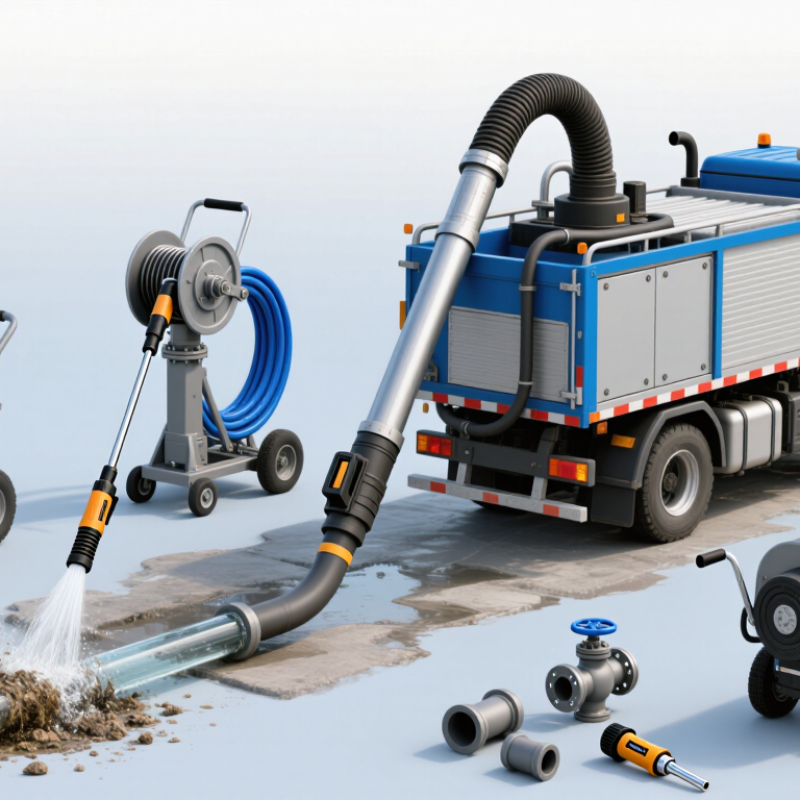
Top Sewer Cleaning Machines Which One Is Best?

Define Sewer Cleaning Machine Types: Jetters, Cable Machines, and Combo Units

Choosing the best sewer cleaning machine starts with the blockage, pipe condition, and available access. No machine wins every time.

Jetters use pressurized water to wash grease, sludge, and loose debris from pipe walls. They work especially well in longer lines with enough space for water flow. However, poor water control can leave a messy work area.

Cable machines use a rotating steel cable with cutting or clearing heads. They are useful for roots, compacted material, and smaller access points. Their direct mechanical action gives operators strong feedback through the cable. Still, careless handling can damage fragile pipes or leave debris behind.

Combo units combine water jetting and vacuum recovery. They suit heavy commercial cleaning, flooded sections, and jobs requiring debris removal. They are powerful, but their size, cost, and setup time may not fit every site.

Tips: Inspect the pipe before choosing equipment. Check diameter, material, blockage type, and outlet access. Match nozzle pressure to the pipe’s condition, not only the blockage. Use protective equipment and follow trained operating procedures. Keep records of cleaning results and repeat problem areas.

I once underestimated grease buildup in a long line; the first pass looked successful, but flow slowed again the next day. That experience reinforced a basic lesson: cleaning performance must be verified, not assumed. Camera inspection and a final flow test often reveal what a quick surface check misses.


Compare Jetting Specifications: 3,000–4,000 psi and 18–80 gpm Flow

Top Sewer Cleaning Machines: Which One Is Best?

Choosing between 3,000 and 4,000 psi requires more than chasing the highest number. Pressure breaks compacted deposits, while flow carries loosened debris through the pipe. In practical sewer work, 18–30 gpm often suits smaller residential lines and routine maintenance. Larger commercial pipes may benefit from 40–80 gpm. More water can improve flushing, but only when the drain can accept and remove it safely.

Specifications can look impressive on paper. They can also mislead. Pump pressure is measured before hose friction, nozzle wear, and elevation reduce performance. A 4,000 psi unit with restricted flow may clean less effectively than a 3,000 psi machine with better water delivery. Nozzle angle matters too. Forward jets open the blockage, while rear jets pull the hose and wash debris away. Small details decide the result.

Water supply is another practical limit. An 80 gpm machine needs a dependable source, suitable drainage, and trained handling. That setup may be excessive for a narrow household line. For many contractors, a balanced machine near 3,500 psi and 30–50 gpm offers useful flexibility. Still, this is not a universal answer. Pipe diameter, blockage type, hose length, and local site conditions can change the choice. Field testing remains valuable, because real flow rarely matches the brochure exactly. Safety procedures, pressure-rated equipment, and regular nozzle inspection should guide every cleaning job.

Match Cable Machines to Pipes: 1/2–1 1/4 in Cables by Diameter

Top Sewer Cleaning Machines Which One Is Best?

Choosing a sewer cleaning machine starts with cable diameter, not motor power. A 1/2-inch cable suits narrow branch lines, often around 1 1/2 to 2 inches, where flexibility matters. A 5/8-inch or 3/4-inch cable handles typical 2- to 3-inch drains and moderate grease buildup. For larger residential lines, 1-inch cable offers more torque and reach. A 1 1/4-inch cable is better for 4- to 6-inch pipes, but it needs a rigid, well-supported machine. Oversizing can damage older joints or become difficult to control.

The American Society of Civil Engineers gave U.S. wastewater infrastructure a D+ rating in its 2021 Infrastructure Report Card. The U.S. Environmental Protection Agency’s 2022 Clean Watersheds Needs Survey estimated $630.1 billion in wastewater infrastructure needs over 20 years. These figures support careful maintenance, not aggressive cleaning. Field experience shows that cable selection must also consider bends, pipe material, access length, and blockage type. A thicker cable is not automatically better. I still see operators choosing by machine size alone, and that decision sometimes backfires.

Tips: Measure the pipe before selecting the cable. Use 1/2 inch for tight branch lines, 3/4 inch for common small drains, 1 inch for larger residential runs, and 1 1/4 inch for substantial sewer pipes. Start with the smallest effective diameter. Wear eye protection and gloves, inspect the cable for kinks, and stop when resistance suddenly increases. A camera inspection can reveal cracks that a cleaning machine cannot safely solve.

Top Sewer Cleaning Machines: Which Cable Size Is Best?

Match the cable diameter to the inside diameter of the drain pipe. The ranges below represent typical residential and light-commercial applications; the correct choice also depends on blockage type, pipe condition, bends, and cable length.

Smaller 1/2-inch cables are more flexible for narrow lines and tight bends, while 1-inch to 1 1/4-inch cables provide greater stiffness for larger pipes and heavier blockages. Avoid oversizing the cable, since excessive diameter can increase the risk of binding or pipe damage.

Evaluate Combo Trucks: 1,000–1,500 gal Tanks for Municipal Networks

Top Sewer Cleaning Machines: Which One Is Best?

For municipal networks, combo sewer cleaning trucks with 1,000–1,500 gallon tanks offer a practical balance. They combine high-pressure water jetting with vacuum recovery. This reduces equipment changes during routine maintenance. A 1,000-gallon tank suits narrow streets and shorter routes. A 1,500-gallon tank supports longer cleaning cycles with fewer refill stops. Operators should compare nozzle flow, vacuum capacity, hose length, and debris handling. Tank size alone does not determine productivity.

In field operations, access points often sit beside parked cars, trees, or uneven pavement. Compact truck dimensions can matter more than maximum tank volume. A strong vacuum system should lift sand, grease, and settled sludge without constant clogging. Water recycling can extend working time, but it may increase filtration maintenance. Keep records of pressure, flow rate, hose wear, and disposal volume. These details reveal the real operating cost.

A useful truck is easy to service. Inspect pump seals, filters, hose reels, and safety controls before each shift. Poor visibility around the rear connection remains a common weakness. Crew training also affects cleaning quality. More pressure is not always better; fragile or aging pipes may need controlled settings. The 1,500-gallon option can appear superior, but added weight may limit access and increase fuel use. That assumption can fail. Evaluate the truck against actual pipe sizes, route distances, refill access, and daily debris loads.

Top Sewer Cleaning Machines Which One Is Best? - Evaluate Combo Trucks: 1,000–1,500 gal Tanks for Municipal Networks

Configuration Fresh-Water Tank Debris Tank Typical Water Pump Typical Vacuum System Standard Sewer Hose Best Municipal Application Overall Suitability
Compact 1,000-gal Combination Unit 1,000 gal
3,785 L
8–10 yd³ 60–80 gpm at 2,000–2,500 psi 3,000–4,000 cfm; 18–24 inHg 400–600 ft; 1 in. sewer hose Short urban routes, catch basins, laterals, and light-to-medium blockage removal Best for maneuverability and lower operating cost
Balanced 1,200-gal Combination Unit 1,200 gal
4,542 L
10–12 yd³ 70–80 gpm at 2,000–2,500 psi 3,500–4,500 cfm; 20–26 inHg 500–700 ft; 1–1¼ in. sewer hose Routine municipal cleaning, root control, storm drains, and mixed pipe diameters Best all-round balance of capacity and productivity
High-Productivity 1,300-gal Combination Unit 1,300 gal
4,921 L
12–13 yd³ 80–100 gpm at 2,000–2,500 psi 4,000–5,000 cfm; 22–27 inHg 600–800 ft; 1–1¼ in. sewer hose High-frequency cleaning, silt removal, interceptor work, and larger municipal networks Best for higher daily production
Heavy-Duty 1,500-gal Combination Unit 1,500 gal
5,678 L
12–15 yd³ 80–100 gpm at 2,000–3,000 psi 4,000–5,500 cfm; 24–28 inHg 600–800 ft; 1–1¼ in. sewer hose Long routes, deep wet wells, heavy grit, large-diameter mains, and fewer disposal stops Best for maximum onboard capacity
Recycling-Enabled 1,200–1,500-gal Unit 1,200–1,500 gal
4,542–5,678 L
10–15 yd³ 70–100 gpm at 2,000–2,500 psi 3,500–5,000 cfm; 20–28 inHg 500–800 ft; 1–1¼ in. sewer hose Water-constrained areas, extended shifts, and operations seeking fewer freshwater refills Best for water conservation and long-duration work
Evaluation note: The specifications shown are representative operating ranges for municipal combination sewer-cleaning trucks. Actual performance depends on chassis payload, pump configuration, hose diameter and length, vacuum altitude, debris density, pipe diameter, nozzle selection, and local operating conditions. Pressure and flow should be evaluated together rather than as separate ranking criteria.

Select the Best Machine by Pipe Size, Blockage, Access, and Lifecycle Cost

Choosing the best sewer cleaning machine starts with the pipe, not the motor. In field inspections, I measure the internal diameter, pipe length, and entry point before selecting equipment. Small household lines often need a compact drum or sectional machine. Larger municipal pipes may require a high-flow jetter with extended hose capacity. Match the working range carefully. An oversized cable can damage fragile joints, while an undersized tool may stall inside the line. Access matters too. A narrow cleanout can eliminate powerful equipment.

The blockage type determines the working head, pressure, and patience required. Grease responds to controlled water flow and a suitable flushing nozzle. Roots need a cutting head and steady torque, followed by inspection. Hard scale may require specialized descaling equipment, but aggressive force is not always better. It can expose cracks. I once focused too quickly on clearing the obstruction and delayed checking pipe condition. That mistake increased the later repair cost. A camera inspection provides useful evidence before and after cleaning.

Lifecycle cost includes purchase price, transport, water use, maintenance, replacement heads, training, and downtime. A cheaper machine can become expensive when cables break frequently or operators need repeated passes. Record cleaning time, energy use, and service intervals after each job. These records support a reliable equipment decision. Estimates remain imperfect. Soil, pipe age, and hidden bends can change performance. Choose equipment that technicians can control, maintain, and safely access during routine work.

Powder Coat Booths

For those larger-sized parts, or smaller quantity runs, we have 2 independent powder coat booths and ovens. The quality, durability and affordability of today’s powder coating finishes make this the process of choice for world-class companies.

Powder coating advantages over other forms of coating are many. Materials used in the Powder coating process can be metals and non-metals that come in a multitude of thicknesses, textures, colors, etc. Another of Powder coating’s biggest advantages over conventional coatings is its ability to create finishes in many different textures. Powder Coating Booths allow us the ability to apply these advantages to large products.

Wet Paint Line

Tri-State Fabricators runs a full-service conveyor line for painting. Wet painting can provide protection or decoration to many different part styles. From start to finish, every project is easier to undergo random and point-based inspection by our skilled painting team.

Advantages to our Wet Paint Line are these lines start with product prep and ends with a thorough inspection of a high quality finished product. Our ability to complete large and small projects with a superior finish and doing so in a timely and economical fashion. This passes along the savings in production to our customers. When powder coating ins not an option, our Wet Paint Line gets the job done right the first time.

Wet Paint Booths

When the parts get big and heavy we roll-out our custom paint racks and oversize booth. By utilizing our partnerships with all the major paint brands, we can match virtually any color with wet paint.

The advantages of having access to a Wet Paint Booth are many. Large projects of many different shapes can be loaded into the booth. The Wet Paint Booth offers an environment that is much more controlled than a typical parts painting operation.

Not only are they used because of their controlled environment, but they’re are also advantageous when it comes to applying paint to parts that are needed in industries that require specialty coatings such as medical, aerospace, etc.

Military CARC

Our military forces have some very high standards when it comes to the finish of their vehicles and equipment. From the first pre-treatment step to final coat, it takes a great deal of knowledge and experience to protect the men and women of our armed forces. They deserve only the best, and Tri-State Fabricators provides it.

All of our processes are closely monitored by our staff and management teams. Both of which are highly trained in the processes of metal fabrication and finishing. Tri-State Fabricators’ goal is to always fully satisfy each and every customer, including the military. We will always put a 110% into what we do.

Glass-Bead Blasting

Abrasive media blasting is an excellent way to remove old paint, rust, and increase the paint/powder adhesion. Glass beads produce a much smoother and brighter finish than angular abrasives; leaving the part clean yet without any dimensional change. Chemically inert and environmentally friendly, we can recycle our beads approximately 30 times; making them a more preferred method of metal cleaning or surface finishing.

Advantages to Glass Bead Blasting are many. Glass bead blast media is used when a project is needing rough surfaces need to become smooth for applications of coatings such as paint. It is typically used to clean paint and rust from a product surface without deforming the surface it is being used on. Overall, compared to many other blasting media, Glass Bead Blasting is a very economical choice and those savings are always passed on to our customers.

Part Washing

Tri-State Fabricators utilize a zinc phosphate wash to clean and etch the material to ensure the best paint adhesion possible. The unique design of our 3-stage wash system does the work like a 5-stage. From Cleaning and rinsing to conversion coating and post-treatment, Our Part Washing process is a complete service and works throughout the fabrication service and the finishing service.

Along with the previously mentioned benefits, Curing is a vital chemical reaction that leaves the product finish hard and relatively safe from mild abrasion and aggressive corrosion. This process can be done in more than one way; ambient air-dry or in curing ovens at temps that exceed 240°.

Burn-Off Oven

From fixing paint mistakes (someone else’s of course) to simply cleaning our paint line hooks, our burn-off oven is put to good use. After a quick burn-off, a little clean up, and a fresh coat of paint, your parts will look better than new.

Why does our Burn-Off Oven work so well? Because super heating the air around parts turns the materials into ashes. From paint and powder coatings to rubber and machining oils, high temps do the job without degrading the integrity of the part.

Masking

Masking is a vital part of producing high quality products. We have die-cut masking patterns to protect machined surfaces as well as a wide range of plugs and caps to protect threaded holes and bolts. We provide permanent and temporary masking.

Masking allows the selected sections of a product to be protected from a fabrication or finishing service. This can be with both chemicals when etching and tapes, paints when only finishing just a section of the product. Masking is great in aiding the customization process of a project.

Screen Printing

Screen printing is a photographic process that transfers artwork onto a porous nylon screen which allows colored ink to flow through the screen and be deposited on an aluminum or plastic component. We can generally have just about any design created onto a screen for your parts.

Some of the advantages of Screen Printing are, brand recognition for your business displaying on your products, assembly instructions, product warnings/hazards, etc. Tri-State Fabricators produces Screen Printing of the highest quality so you know it’s durable.

Metal Finishing

Metal Finishing is the art of treating the exterior portion of product, often metal but can also be made of other materials, so that the surface is clean and free of any debris. Then the process of applying coats or either paint of powder coat takes place. This coating process improves the quality of the product in both appearance and resistance to wear and corrosion.

Tri-State Fabricators, Inc., understands that a project typically isn’t complete until a high-quality finish has been added to your product. This is why our painting and powder coating teams continuously inspect the products throughout the Metal Finishing process.
