China Top Sewage Water Tank Manufacturers?
China’s sewage infrastructure is expanding, and the right storage tank can make a real difference to daily operations. A Sewage Water Tank may serve a treatment plant, an industrial site, or a municipal facility. Yet a large capacity figure alone tells buyers very little. Tank material, corrosion resistance, access for cleaning, installation conditions, and after-sales support all deserve close attention.
George Tchobanoglous is a respected wastewater-engineering author and educator. A practical takeaway paraphrased from the principles in his published work is: “Choose wastewater storage around the contents, operating conditions, and maintenance needs—not capacity alone.” This is a paraphrase, not a verbatim quotation. That distinction matters. A buyer’s guide should not turn an expert’s name into an unsupported endorsement.
What should buyers look for among China’s manufacturers? Start with project references, clear material specifications, documented quality checks, and realistic delivery and service arrangements. Ask how the tank handles the site’s wastewater, temperature range, and cleaning routine. Request drawings and installation details before comparing quotations. A polished brochure is not proof. Neither is the lowest price.
Small details count. Look at manway placement, seams, fittings, and room for inspection. Then check what happens if a component needs repair. Some specifications may still need independent review; that is not a weakness in the process. It is sensible procurement. This article introduces the questions that help buyers compare manufacturers carefully and select a Sewage Water Tank suited to the job, rather than the sales pitch.
Understanding Sewage Water Tanks and Their Applications
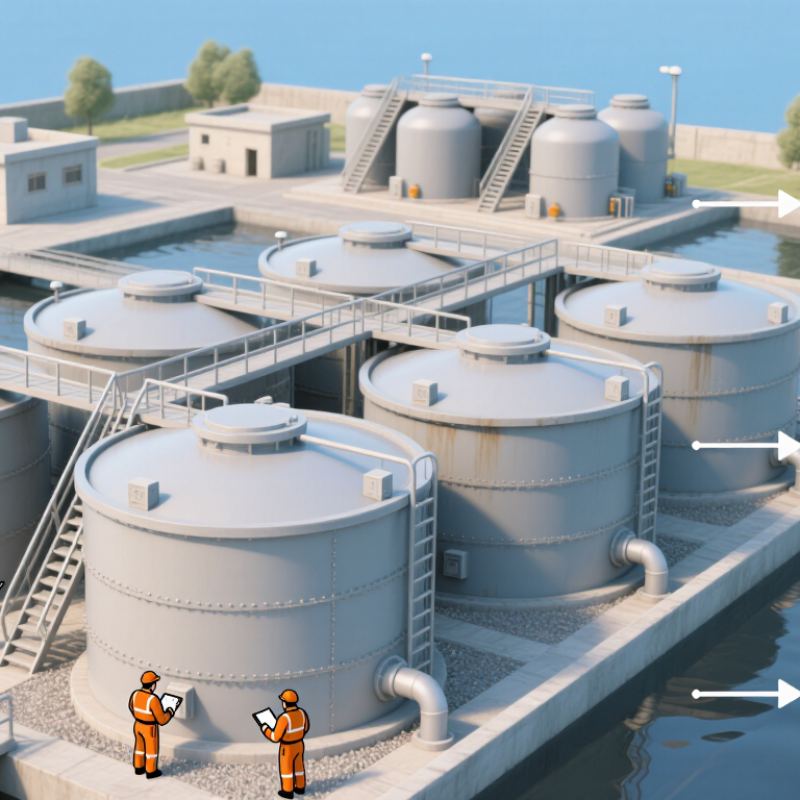
Sewage water tanks provide controlled storage before wastewater moves to treatment or disposal systems. In apartment buildings, they can collect flows from lower floors before pumps lift them onward. At treatment plants, equalization tanks temporarily hold incoming sewage and reduce sudden flow changes. They are not treatment systems by themselves. That distinction matters.
The United Nations World Water Development Report 2017 estimated that about 380 billion cubic metres of wastewater are produced globally each year, with volume projected to reach 470 billion by 2030. It also reported that over 80% of wastewater worldwide was discharged without adequate treatment. These figures underline why reliable collection and transfer infrastructure matters, especially where flows vary by hour or season.
Tank selection should reflect actual inflow, peak-use periods, solids content, installation conditions, and maintenance access. A smooth, corrosion-resistant interior can help limit buildup, while sealed covers and suitable ventilation support safer operation. For example, a municipal tank may need greater buffering capacity during heavy rain, while a factory system may require separate collection after process-specific pretreatment. Capacity based only on average flow can be misleading. Engineers should verify assumptions against site data, and operators should inspect pumps, alarms, and access points regularly. A detail can be missed. That deserves review.
How to Evaluate Sewage Water Tank Manufacturers
When evaluating sewage water tank manufacturers, look beyond price and brochure claims. The U.S. EPA’s 2022 Clean Watersheds Needs Survey estimated about $630 billion in wastewater, stormwater, and related clean-water infrastructure needs over 20 years. That scale makes dependable storage a practical concern, not a cosmetic choice. Ask for design calculations covering capacity, wastewater chemistry, sludge loads, groundwater pressure, and site conditions. Request material specifications, coating details, weld or joint inspection records, and a clear quality-control plan. Specific evidence matters.
Check whether the manufacturer can explain installation tolerances, access for cleaning, ventilation, and maintenance needs in plain language. Ask for comparable project references, delivery records, and the process for handling defects after commissioning. A certificate alone is not proof that a tank suits your site. Review the drawings with your engineer, and confirm that the proposed design follows the standards and local project requirements that apply. I would also ask what assumptions the quote excludes; those details are easy to miss. No checklist catches everything. A site visit or independent inspection may reveal workmanship issues that polished documents do not.
How to Evaluate Sewage Water Tank Manufacturers
Suggested procurement weighting for comparing manufacturers. Adjust the weights to match your project’s specifications and priorities.
The percentages are a proposed evaluation framework, not results from an industry survey. Confirm design requirements, material compatibility, quality documentation, installation support, lifecycle costs, and delivery capability for each bid.
Leading Sewage Water Tank Manufacturers in China
China Top Sewage Water Tank Manufacturers?
Leading Sewage Water Tank Manufacturers in China
China’s leading sewage water tank manufacturers are best assessed by engineering evidence, not catalogue size. Their systems serve municipal plants, industrial pretreatment, and decentralized sites. UNESCO’s 2017 World Water Development Report estimated that over 80% of global wastewater was released without adequate treatment. This is a global estimate, not a China-specific market measure, but it highlights the need for reliable storage and flow equalization. Details matter.
For buyers, compare tank materials, design life, corrosion protection, weld inspection records, and leakage testing. Ask for drawings showing foundations, access hatches, ventilation, inlet design, and overflow routing. A robust-looking tank can still fail at a poorly sealed connection. Request references for projects with similar wastewater chemistry and climate. Check maintenance intervals and spare-parts support, too. I would verify whether quoted capacity means usable volume, not total volume; brochures sometimes blur that distinction. Supplier claims deserve checking. Independent inspection and a witnessed water test can reduce uncertainty before handover.
Comparing Tank Materials, Technologies, and Capabilities
Selecting a sewage-water tank begins with the wastewater chemistry, ground conditions, and required storage time. Reinforced concrete handles burial and heavy loads, but cracks and joint leakage need disciplined inspection. Coated steel allows large, modular tanks and relatively quick assembly; coating damage can expose steel to corrosion. GRP resists many corrosive environments and keeps weight low, though panel joints and support details matter. HDPE suits smaller tanks and chemical dosing areas, but heat, ultraviolet exposure, and structural loads must be checked. No material wins every site.
Construction capability matters as much as the tank shell. Ask how suppliers control welds, panel tolerances, liner seams, anchoring, and leak tests. Useful systems may include level sensors, ventilation, mixing, and corrosion monitoring. The World Bank’s 2019 report, Wastewater: From Waste to Resource, notes that about 80% of global wastewater flows back into ecosystems untreated or unreused. That figure signals the scale of the challenge, not a tank-sizing rule. The U.S. EPA’s 2022 Clean Watersheds Needs Survey estimated $630.1 billion in wastewater and stormwater infrastructure needs over 20 years. Compare bids against documented material grades, design loads, inspection plans, and maintenance access. A low price can conceal weak details. I would still verify local operating references; paperwork alone cannot prove long-term performance.
Choosing a Manufacturer for Your Project
Choosing a sewage water tank manufacturer starts with the project conditions, not the catalogue. Share the expected flow, wastewater characteristics, installation site, and required storage volume. Ask how the proposed tank handles corrosion, soil pressure, groundwater, and cleaning access. Small details matter. A pipe opening placed several centimetres too high can complicate installation. Request dimensioned drawings and confirm inlet, outlet, and vent positions before production.
Check whether the manufacturer can document material specifications, fabrication inspections, and quality-control procedures. Relevant project references are useful, especially for similar soil conditions or climates. A polished brochure is not proof. Ask for inspection records and clarify who handles transport, installation guidance, and warranty claims. Compare quotations line by line; a lower price may exclude foundations, fittings, or site support. No checklist catches everything. I would still allow time for an independent technical review, because drawings can look clear while leaving a difficult maintenance question unanswered. Make sure the supplier explains how the tank will be inspected and serviced after it is buried or enclosed.





