


What Are the Top Rolled Metal Manufacturers in China?

China remains central to the global Rolled Metal supply chain, from hot-rolled coils to precision cold-rolled strip. According to the World Steel Association’s World Steel in Figures 2024, China produced about 1.019 billion tonnes of crude steel in 2023. That volume creates powerful manufacturing capacity, but it does not automatically identify the best supplier. Quality systems, rolling accuracy, coating performance, delivery reliability, and export experience matter just as much.

Scale is only one clue. The OECD’s latest steel market analysis has repeatedly highlighted China’s substantial production capacity and the continuing pressure of global overcapacity. Meanwhile, China Iron and Steel Industry Association data shows how strongly domestic mills influence regional supply and pricing. These reports support a practical comparison of leading producers, including Baowu Steel Group, Ansteel Group, HBIS Group, Shagang Group, and Jianlong Steel. Their capabilities differ. Some focus on automotive-grade sheet. Others perform strongly in construction plate, galvanized products, or customized coils.

The details are physical. A buyer may inspect coil edges, surface marks, thickness tolerance, mill certificates, and packaging before shipment. Small defects can become costly during stamping or slitting. As Edwin Basson, Director General of the World Steel Association, has stated, “Steel is a critical material for a low-carbon future.” That observation also applies to Rolled Metal sourcing. Manufacturers must now demonstrate lower emissions, traceable inputs, and dependable production—not merely impressive tonnage.

This ranking is not absolute. Data changes. Buyer requirements change faster. Therefore, the following review combines production scale, product specialization, technical credibility, certification, and customer experience. Perfect comparisons are impossible, but transparent criteria make them more useful.
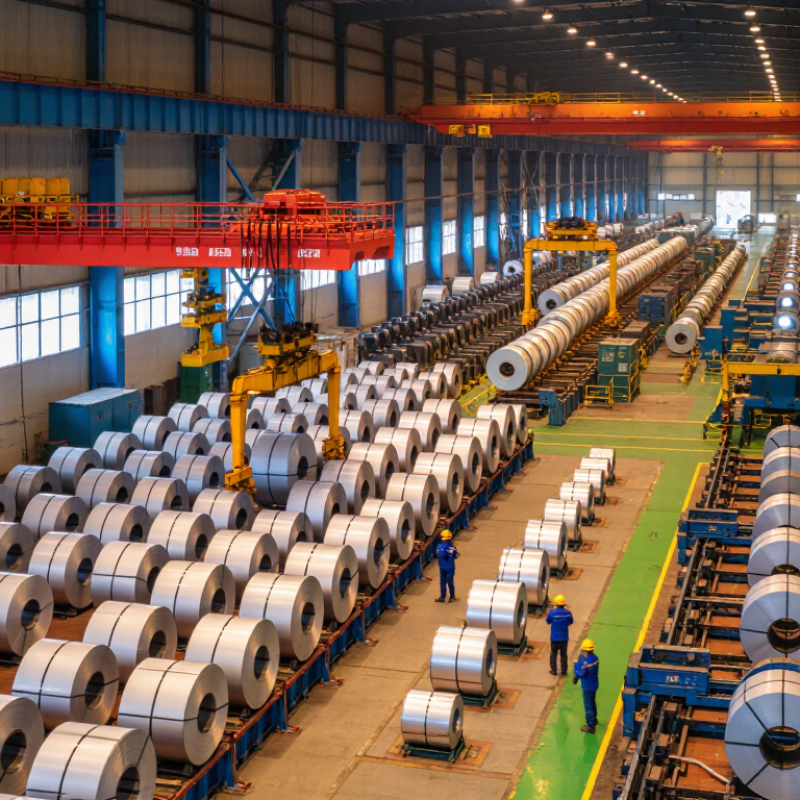
What Are the Top Rolled Metal Manufacturers in China?

China’s Rolled Metal Market: 1.019 Billion Tons of Crude Steel in 2023

What Are the Top Rolled Metal Manufacturers in China?

China’s Rolled Metal Market: 1.019 Billion Tons of Crude Steel in 2023

China remains the world’s largest steelmaking base. The World Steel Association reported 1.019 billion tons of crude steel production in 2023. That represented about 54% of global output, which reached roughly 1.892 billion tons. China’s National Bureau of Statistics also recorded approximately 1.338 billion tons of finished steel products. This gap matters. Crude steel is not the same as rolled metal.

The strongest rolled-metal manufacturers typically combine blast furnaces, continuous casting, hot rolling, and cold rolling. Their product ranges often include plates, coils, bars, and galvanized sheets. Production scale helps, but it does not guarantee reliable quality. The China Iron and Steel Industry Association has repeatedly highlighted energy efficiency, product upgrading, and cleaner production as major industry priorities. Buyers should examine mill certificates, thickness tolerance, surface quality, and delivery records. Numbers can look impressive. Specifications reveal more.

Tips: Compare annual capacity with actual output. Check testing standards, not only price. Ask for recent inspection documents and traceability records. Also review export experience, because domestic success may not prove consistent international service. My own caution is simple: rankings can change quickly, and public capacity data may include facilities operating below their stated potential.


China’s Crude Steel Output, 2019–2023

China produced approximately 1.019 billion tonnes of crude steel in 2023, making it the world’s largest steel-producing market. The chart shows national output trends without company or brand-level data.

Source: World Steel Association, World Steel in Figures 2024. Figures are rounded and measured in million tonnes.

How Top Manufacturers Are Ranked by Capacity, Quality, and Certifications

China’s top rolled metal manufacturers are rarely ranked by production volume alone. Capacity matters, but it should be measured through usable output, equipment stability, and delivery consistency. A large mill may produce millions of tonnes annually, yet still struggle with small, customized orders. Experienced buyers inspect rolling lines, furnace controls, coil storage, and traceability systems. These details reveal practical capability better than impressive figures.

Quality ranking depends on measurable results. Look for thickness tolerance, surface finish, tensile strength, and batch consistency. Independent laboratory reports can support these claims. Certifications also matter, including ISO 9001 for quality management and ISO 14001 for environmental management. Industry-specific approvals may be necessary for construction, transport, energy, or food-related applications. However, certificates do not guarantee perfect performance. Audits, recent test records, and customer references provide stronger evidence. This is where many comparisons become imperfect.

Tips: Request a factory audit, not only a product brochure. Compare three months of delivery records and rejection rates. Ask whether testing is performed internally or by an independent laboratory. Confirm certificate numbers with the issuing organization. Also, review sample coils under real processing conditions, because polished samples can hide production variation. Capacity rankings can change quickly after equipment upgrades or market shifts. A careful buyer should update the comparison before signing a long-term supply agreement.

Baowu, Ansteel, and HBIS: Comparing China’s Leading Rolled Steel Producers

China’s rolled steel market is dominated by three large, integrated groups. The World Steel Association’s World Steel in Figures 2024 reports China produced 1,019.1 million tonnes of crude steel in 2023. That represented about 53% of global output. Scale matters.

The largest group produced approximately 130.8 million tonnes. Its broad network supports hot-rolled coil, cold-rolled sheet, galvanized products, and heavy plate. A northeastern producer ranked near 55.9 million tonnes, with strong capabilities in automotive sheet, structural steel, and rail-related products. A northern group recorded roughly 41.7 million tonnes and remains important in construction plate, coated steel, and industrial sheet. These figures show production strength, but they do not equal rolled-product shipments.

The comparison is imperfect. The World Steel Association ranks crude steel output, not surface finish, thickness control, or delivery reliability. Buyers should check mill certificates, yield strength, coating mass, coil width tolerance, and inspection records. A 2024 OECD steel-market update also highlights continuing pressure from excess capacity and weaker construction demand. That pressure can affect lead times and export pricing. In practical terms, a large mill may offer stable supply, while a smaller specialized line may deliver tighter specifications. I would not judge quality from tonnage alone. On a production floor, an uneven edge or inconsistent coating can matter more than another million tonnes.

Specialty Rolled Metals: Aluminum, Stainless Steel, and Precision Strip Leaders

China’s rolled metal industry serves demanding sectors, from battery housings to medical instruments. Its strongest manufacturers specialize rather than produce every alloy equally well. Aluminum rolling facilities often focus on lightweight sheet, corrosion resistance, and controlled temper conditions. Stainless steel producers compete through surface finish, thickness stability, and consistent mechanical properties. Precision strip suppliers work with narrow widths and tight tolerances for springs, sensors, and electrical contacts.

Production capability matters, but process discipline matters more. Experienced plants monitor furnace temperature, rolling force, edge quality, and surface cleanliness. They should provide mill test certificates, chemical analysis, dimensional reports, and traceability records. Independent testing can verify hardness, tensile strength, elongation, and coating performance. Small details count. A clean coil edge can prevent costly slitting problems later.

Buyers should inspect equipment, quality procedures, and sample history before placing large orders. A supplier may claim micron-level precision, yet practical results can change across different widths or alloys. This is where technical communication becomes essential. Share drawings, tolerances, packaging needs, and end-use conditions early. Request trial coils when possible. No factory is perfect, and even strong producers sometimes reveal weaknesses during unusual specifications. Careful audits, repeat sampling, and transparent corrective actions offer better evidence than promotional language.

Export Scale, Sustainability, and Technology Shaping China’s Metal Manufacturers

China’s leading rolled-metal manufacturers are judged by more than annual output. Their export reach matters. China’s General Administration of Customs recorded about 110.7 million tonnes of steel product exports in 2024. This scale supports stable supply for construction, machinery, energy, and automotive buyers. Yet shipment volume can hide differences in coating quality, dimensional control, and delivery reliability. Buyers should inspect mill certificates, production audits, and complaint records before selecting a supplier.

Technology is changing the strongest producers. Modern mills increasingly use automated gauge control, robotic inspection, and continuous-process monitoring. These systems help maintain tight thickness tolerances across large coils. Digital traceability also links heat numbers with test results and shipment documents. The World Steel Association reports that China produced roughly 1.005 billion tonnes of crude steel in 2024. That capacity gives manufacturers valuable process experience, although scale does not guarantee precision.

Sustainability is less settled. The International Energy Agency estimates that iron and steel create around 7% to 9% of global energy-related carbon dioxide emissions. Leading facilities are testing hydrogen-based reduction, electric furnaces, waste-heat recovery, and higher scrap use. Practical progress varies. A low-carbon claim should include measured emissions, electricity sources, recycled content, and verification methods. Environmental reporting is still uneven, and that weakness deserves scrutiny. The best manufacturer may not be the largest exporter, but the one that combines dependable coils, transparent data, and measurable improvement.

What Are the Top Rolled Metal Manufacturers in China? - Export Scale, Sustainability, and Technology Shaping China’s Metal Manufacturers

Industry-level benchmark data for evaluating Chinese rolled-metal manufacturers. Company and brand names are intentionally excluded.

Evaluation Dimension Verified Industry Data Year / Status Why It Matters for Rolled-Metal Buyers Public Source
National steelmaking scale China produced approximately 1,005.1 million tonnes of crude steel. 2024 Indicates the depth of China’s upstream supply base for hot-rolled coil, cold-rolled steel, coated sheet, plate, and other rolled products. World Steel Association
Share of global crude-steel output China accounted for approximately 53.4% of global crude-steel production. 2024 A large domestic production base supports broad product portfolios, multiple mill configurations, and high-volume export programs. World Steel Association
Export scale China exported approximately 110.7 million tonnes of steel products. 2024 High export volume suggests strong experience with international documentation, container and bulk logistics, and overseas customer specifications. General Administration of Customs of China
Import-export balance China imported approximately 6.8 million tonnes of steel products, creating a substantial net-export position. 2024 The net-export position reflects strong domestic production capacity and competitive availability across standard rolled-steel categories. General Administration of Customs of China
Electric-arc-furnace adoption Electric-arc furnaces produced approximately 9.8% of China’s crude steel. 2023 EAF capability can support higher scrap utilization, flexible production scheduling, and potentially lower emissions where low-carbon electricity is available. World Steel Association
Ultra-low-emission transformation China’s policy framework targets ultra-low-emission upgrades for approximately 80% of crude-steel capacity by 2025. Policy target Useful for assessing supplier progress on particulate matter, sulfur dioxide, nitrogen oxides, fugitive emissions, and environmental monitoring. Ministry of Ecology and Environment of China
Carbon-reduction timetable China has announced a national objective to peak carbon emissions before 2030 and achieve carbon neutrality before 2060. National commitment Manufacturers are increasingly evaluated on energy intensity, emissions reporting, renewable power use, and product-level carbon data. State Council of China
Product breadth China’s large steel sector supplies major rolled categories including hot-rolled coil, cold-rolled sheet, galvanized and other coated sheet, electrical steel, and heavy plate. Current industry structure Buyers can shortlist suppliers by grade, thickness, width, coating, surface finish, testing standard, and downstream application. World Steel Association Statistics
Technology-screening indicators Recommended verification points include automated gauge control, surface inspection, process traceability, laboratory certification, and digital mill-quality records. Supplier due diligence These indicators help distinguish a high-volume commodity supplier from a manufacturer capable of stable, specification-sensitive rolled products. ISO Quality Management Guidance
Best-practice supplier qualification A robust evaluation should combine production scale, export history, product certifications, environmental performance, delivery reliability, and third-party inspection results. Recommended procurement method No single national metric proves that a manufacturer is the best fit; technical compliance and verified performance should determine the final shortlist. ISO Standards Portal
Note: Figures are industry-level indicators and are not attributed to individual companies or brands. Export figures may include multiple steel-product categories beyond rolled metal alone.

Powder Coat Booths

For those larger-sized parts, or smaller quantity runs, we have 2 independent powder coat booths and ovens. The quality, durability and affordability of today’s powder coating finishes make this the process of choice for world-class companies.

Powder coating advantages over other forms of coating are many. Materials used in the Powder coating process can be metals and non-metals that come in a multitude of thicknesses, textures, colors, etc. Another of Powder coating’s biggest advantages over conventional coatings is its ability to create finishes in many different textures. Powder Coating Booths allow us the ability to apply these advantages to large products.

Wet Paint Line

Tri-State Fabricators runs a full-service conveyor line for painting. Wet painting can provide protection or decoration to many different part styles. From start to finish, every project is easier to undergo random and point-based inspection by our skilled painting team.

Advantages to our Wet Paint Line are these lines start with product prep and ends with a thorough inspection of a high quality finished product. Our ability to complete large and small projects with a superior finish and doing so in a timely and economical fashion. This passes along the savings in production to our customers. When powder coating ins not an option, our Wet Paint Line gets the job done right the first time.

Wet Paint Booths

When the parts get big and heavy we roll-out our custom paint racks and oversize booth. By utilizing our partnerships with all the major paint brands, we can match virtually any color with wet paint.

The advantages of having access to a Wet Paint Booth are many. Large projects of many different shapes can be loaded into the booth. The Wet Paint Booth offers an environment that is much more controlled than a typical parts painting operation.

Not only are they used because of their controlled environment, but they’re are also advantageous when it comes to applying paint to parts that are needed in industries that require specialty coatings such as medical, aerospace, etc.

Military CARC

Our military forces have some very high standards when it comes to the finish of their vehicles and equipment. From the first pre-treatment step to final coat, it takes a great deal of knowledge and experience to protect the men and women of our armed forces. They deserve only the best, and Tri-State Fabricators provides it.

All of our processes are closely monitored by our staff and management teams. Both of which are highly trained in the processes of metal fabrication and finishing. Tri-State Fabricators’ goal is to always fully satisfy each and every customer, including the military. We will always put a 110% into what we do.

Glass-Bead Blasting

Abrasive media blasting is an excellent way to remove old paint, rust, and increase the paint/powder adhesion. Glass beads produce a much smoother and brighter finish than angular abrasives; leaving the part clean yet without any dimensional change. Chemically inert and environmentally friendly, we can recycle our beads approximately 30 times; making them a more preferred method of metal cleaning or surface finishing.

Advantages to Glass Bead Blasting are many. Glass bead blast media is used when a project is needing rough surfaces need to become smooth for applications of coatings such as paint. It is typically used to clean paint and rust from a product surface without deforming the surface it is being used on. Overall, compared to many other blasting media, Glass Bead Blasting is a very economical choice and those savings are always passed on to our customers.

Part Washing

Tri-State Fabricators utilize a zinc phosphate wash to clean and etch the material to ensure the best paint adhesion possible. The unique design of our 3-stage wash system does the work like a 5-stage. From Cleaning and rinsing to conversion coating and post-treatment, Our Part Washing process is a complete service and works throughout the fabrication service and the finishing service.

Along with the previously mentioned benefits, Curing is a vital chemical reaction that leaves the product finish hard and relatively safe from mild abrasion and aggressive corrosion. This process can be done in more than one way; ambient air-dry or in curing ovens at temps that exceed 240°.

Burn-Off Oven

From fixing paint mistakes (someone else’s of course) to simply cleaning our paint line hooks, our burn-off oven is put to good use. After a quick burn-off, a little clean up, and a fresh coat of paint, your parts will look better than new.

Why does our Burn-Off Oven work so well? Because super heating the air around parts turns the materials into ashes. From paint and powder coatings to rubber and machining oils, high temps do the job without degrading the integrity of the part.

Masking

Masking is a vital part of producing high quality products. We have die-cut masking patterns to protect machined surfaces as well as a wide range of plugs and caps to protect threaded holes and bolts. We provide permanent and temporary masking.

Masking allows the selected sections of a product to be protected from a fabrication or finishing service. This can be with both chemicals when etching and tapes, paints when only finishing just a section of the product. Masking is great in aiding the customization process of a project.

Screen Printing

Screen printing is a photographic process that transfers artwork onto a porous nylon screen which allows colored ink to flow through the screen and be deposited on an aluminum or plastic component. We can generally have just about any design created onto a screen for your parts.

Some of the advantages of Screen Printing are, brand recognition for your business displaying on your products, assembly instructions, product warnings/hazards, etc. Tri-State Fabricators produces Screen Printing of the highest quality so you know it’s durable.

Metal Finishing

Metal Finishing is the art of treating the exterior portion of product, often metal but can also be made of other materials, so that the surface is clean and free of any debris. Then the process of applying coats or either paint of powder coat takes place. This coating process improves the quality of the product in both appearance and resistance to wear and corrosion.

Tri-State Fabricators, Inc., understands that a project typically isn’t complete until a high-quality finish has been added to your product. This is why our painting and powder coating teams continuously inspect the products throughout the Metal Finishing process.
