


Choosing a supplier is a practical decision, not just a search for the lowest rental price. In the Power Bank Rental Business, a device must charge reliably, return to service quickly, and fit the places where customers need it. Think of a busy café: a traveler scans a kiosk, takes a charged power bank, and expects it to work through the journey. A dead unit or unclear return process can undermine that experience.
This guide examines China-based suppliers through details operators can verify: battery and device specifications, kiosk capacity, software features, customization options, production capability, warranty terms, and after-sales support. It also considers whether a supplier can explain maintenance and replacement procedures clearly. Promises matter less than evidence. Ask for product documentation, sample units, service commitments, and references relevant to your market.
One point needs care. No source article or verified expert quotation was supplied, so attributing a quote to a named industry expert would risk inventing evidence. That would weaken a supplier comparison, not strengthen it. The sections ahead therefore focus on verifiable questions and practical trade-offs, including issues that deserve closer review. Not every supplier will suit every operator. A low purchase price may look attractive, yet service delays or limited customization can change the real cost. Reliable decisions start with specific questions—and honest answers.
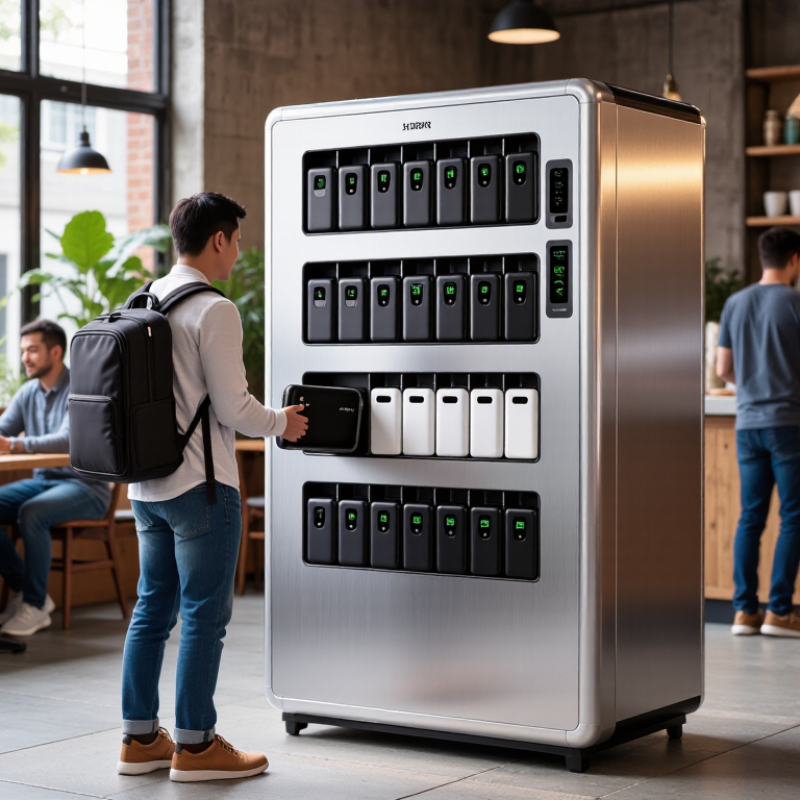
In China, a power bank rental business places shared charging stations in restaurants, shopping malls, hotels, transport hubs, and other busy venues. A customer scans a code, rents a battery pack, and returns it to a compatible station later. The operator coordinates cabinet hardware, batteries, software, payment processing, maintenance, and venue partnerships. Revenue usually comes from rental fees, though commercial terms with venues vary. Convenience sells. For suppliers, dependable battery capacity and clear return instructions matter as much as cabinet design.
iiMedia Research estimated China’s shared power bank market at about RMB 12.6 billion in 2023 and forecast roughly RMB 15.1 billion for 2024. These figures describe market scale, not the sales of any single supplier. The opportunity is visible in crowded venues, where a low phone battery can interrupt navigation or payment. Yet usage is uneven. A cabinet may sit idle in a quiet location, while a busy one needs frequent servicing. That operational gap is easy to underestimate. For buyers evaluating suppliers, check battery safety documentation, repair response times, software reporting, and the practical availability of replacement parts. The numbers are useful, but they do not guarantee profitable deployments.
| Business Dimension | How It Works in China | Relevant Supplier or Partner Type | Practical Considerations |
|---|---|---|---|
| Business model | Users rent portable power banks from self-service stations, use them while away from the station, and return them to a compatible station in the network. | Equipment manufacturers, station providers, software-platform providers, and local operating partners. | Revenue commonly comes from rental charges. Pricing, settlement rules, and revenue-sharing arrangements vary by operator and location. |
| Typical locations | Stations are commonly placed in venues where visitors may need to recharge, such as shopping areas, restaurants, hotels, transport hubs, and entertainment venues. | Venue partners, distributors, and local deployment and maintenance teams. | Placement depends on venue agreement, visitor traffic, available space, power access, and local operating conditions. |
| Rental process | A user typically scans a code on a station, follows the supported payment or account flow, releases a power bank, and returns it to an eligible station. | Rental-platform providers and payment-service integrations. | Account requirements, payment methods, deposits or payment authorizations, and return rules differ across services. |
| Hardware supply | A station stores and dispenses portable power banks. Products may differ in capacity, connector options, station size, and monitoring features. | Power-bank and charging-station manufacturers. | Buyers should check applicable safety and product-compliance documentation, device compatibility, warranty terms, and replacement-part availability. |
| Software and connectivity | Operating software can support rentals, station and inventory status, pricing configuration, payment records, and operational reporting. | Software-platform providers and system integrators. | Confirm system compatibility with the hardware, reporting needs, data access, service support, and arrangements for software updates. |
| Operations and maintenance | Operators need to monitor station availability, redistribute power banks, inspect equipment, and handle faults and customer enquiries. | Local operators, field-service contractors, and customer-support providers. | Service coverage, response times, inventory ownership, and responsibility for damaged or missing units should be agreed in advance. |
| Commercial arrangement | Depending on the arrangement, a venue may receive a share of rental revenue, a placement fee, or another agreed form of compensation. | Venue owners, rental operators, and distribution partners. | Compare contract duration, settlement frequency, fee basis, exclusivity, equipment ownership, and termination conditions. |
| Supplier evaluation | Supplier selection generally involves reviewing equipment, platform functions, service capability, and commercial terms together. | Prospective equipment, technology, and operating partners. | Request specifications, test equipment and software, verify references where available, and clarify after-sales support before deployment. |

China’s power-bank rental supply chain is layered, not simply a device factory selling chargers. It connects cell and battery-pack makers, enclosure and circuit-board suppliers, software providers, rental operators, and venue partners. China’s Ministry of Industry and Information Technology reported lithium-ion battery output above 940 GWh in 2023. That figure covers the wider battery industry, not rental devices alone, but it shows the depth of China’s upstream manufacturing base.
Downstream, manufacturers assemble charging stations with multiple battery slots, control boards, and network connections. Operators then manage inventory, app access, maintenance, and payments. A station beside a restaurant entrance may need different capacity and service intervals than one in a transit hub. Clear supplier checks should cover battery protection, charging performance, repair access, and spare-part availability. Small details matter. The chain is efficient, though not always tidy: hardware, software, and field service may come from separate suppliers, creating gaps when faults occur.
Tips: Ask for test records and component specifications, not just a sample unit. Check how quickly a supplier can replace a damaged slot or board. Treat uptime claims carefully; real performance depends on venue traffic, maintenance, and network coverage.
Power bank rental operators usually work with several supplier types, not just a hardware factory. Equipment manufacturers provide charging stations, portable batteries, cables, and replacement parts. Ask for measured charging times, battery capacity, cycle-life data, and test reports. A kiosk that looks compact in a showroom may need more floor space once its door opens.
Software providers supply the rental platform and management dashboard. Useful features include station-status alerts, battery inventory, rental records, and payment-system integration. Check how the system handles weak mobile signals and interrupted transactions. These details matter during busy hours.
Some operators choose OEM or ODM suppliers to adapt station size, enclosure design, or interface language. That flexibility can help, but custom changes may slow production or make spare parts harder to source. It matters. Payment and connectivity partners can support local transactions and network access, while logistics and maintenance providers help move equipment and replace faulty units. Their service coverage varies by city, so ask about response times and available technicians. Not every supplier will coordinate smoothly with the others; that part deserves a real-world trial, not just a promise.
A reliable supplier should prove performance at busy, ordinary locations—not just show attractive hardware. Ask for station-level uptime records, transaction logs, and repair times from comparable deployments. Test devices during a full operating day. Check charging speed, cable wear, battery temperature, and whether failed units are quickly replaced. Small details matter.
China’s State Information Center reported that the sharing economy reached 3.83 trillion yuan in transaction volume in 2023, up 3.9% year over year. This broad figure is not specific to power bank rentals, but it signals a substantial service ecosystem. The China Internet Network Information Center reported 1.10 billion internet users in June 2024, with 78.0% internet penetration. These figures support the case for digital services, but they cannot prove local rental demand. Ask suppliers for location-level usage data instead.
Review the rental dashboard before signing: Can it show device availability, payment failures, and overdue returns? Confirm who handles maintenance, replacement stock, and customer complaints. Request a limited pilot, then compare actual uptime and repeat rentals with the supplier’s claims. Contract terms deserve equal scrutiny, especially settlement timing and repair responsibilities. No spreadsheet catches every failure. I would still want to inspect a live site; reports alone leave gaps.
Leading power bank rental suppliers provide more than charging cabinets. Their core products include portable batteries, multi-port cables, touchscreen or QR-enabled kiosks, and cloud dashboards for stock and fault monitoring. Some units support USB-C fast charging, while others still rely on older connectors. That mix can frustrate users.
Services matter just as much. Suppliers typically help select cabinet locations, install equipment, manage battery replacement, and provide remote maintenance. Operators may also receive transaction reports, usage alerts, and customer-support tools. CNNIC’s 55th Statistical Report, published in January 2025, found that 99.7% of China’s internet users accessed the internet by mobile phone. This supports demand for convenient, on-the-go charging, but does not guarantee that every location can sustain a rental station.
Suppliers should explain battery capacity, charging speed, safety testing, warranty terms, and expected maintenance response times. Grand View Research valued the global power bank market at USD 13.4 billion in 2023; this wider market figure is useful context, not a rental-market estimate. Ask for real operating data, such as station uptime and average rentals per day. A sleek cabinet is not enough. Some details remain imperfect: traffic varies by venue, and poorly maintained cables can quickly undermine an otherwise solid service.
Typical offerings: Portable power banks and multi-slot charging stations, supported by QR-code or app-based rentals, cashless payments, remote station monitoring, and equipment maintenance. Available features and inventory vary by supplier.
Capacity values show representative commercial power-bank tiers, not supplier market data or a ranking. Actual rental inventory and usable capacity vary by device.


For those larger-sized parts, or smaller quantity runs, we have 2 independent powder coat booths and ovens. The quality, durability and affordability of today’s powder coating finishes make this the process of choice for world-class companies.
Powder coating advantages over other forms of coating are many. Materials used in the Powder coating process can be metals and non-metals that come in a multitude of thicknesses, textures, colors, etc. Another of Powder coating’s biggest advantages over conventional coatings is its ability to create finishes in many different textures. Powder Coating Booths allow us the ability to apply these advantages to large products.
Tri-State Fabricators runs a full-service conveyor line for painting. Wet painting can provide protection or decoration to many different part styles. From start to finish, every project is easier to undergo random and point-based inspection by our skilled painting team.
Advantages to our Wet Paint Line are these lines start with product prep and ends with a thorough inspection of a high quality finished product. Our ability to complete large and small projects with a superior finish and doing so in a timely and economical fashion. This passes along the savings in production to our customers. When powder coating ins not an option, our Wet Paint Line gets the job done right the first time.
When the parts get big and heavy we roll-out our custom paint racks and oversize booth. By utilizing our partnerships with all the major paint brands, we can match virtually any color with wet paint.
The advantages of having access to a Wet Paint Booth are many. Large projects of many different shapes can be loaded into the booth. The Wet Paint Booth offers an environment that is much more controlled than a typical parts painting operation.
Not only are they used because of their controlled environment, but they’re are also advantageous when it comes to applying paint to parts that are needed in industries that require specialty coatings such as medical, aerospace, etc.
Our military forces have some very high standards when it comes to the finish of their vehicles and equipment. From the first pre-treatment step to final coat, it takes a great deal of knowledge and experience to protect the men and women of our armed forces. They deserve only the best, and Tri-State Fabricators provides it.
All of our processes are closely monitored by our staff and management teams. Both of which are highly trained in the processes of metal fabrication and finishing. Tri-State Fabricators’ goal is to always fully satisfy each and every customer, including the military. We will always put a 110% into what we do.
Abrasive media blasting is an excellent way to remove old paint, rust, and increase the paint/powder adhesion. Glass beads produce a much smoother and brighter finish than angular abrasives; leaving the part clean yet without any dimensional change. Chemically inert and environmentally friendly, we can recycle our beads approximately 30 times; making them a more preferred method of metal cleaning or surface finishing.
Advantages to Glass Bead Blasting are many. Glass bead blast media is used when a project is needing rough surfaces need to become smooth for applications of coatings such as paint. It is typically used to clean paint and rust from a product surface without deforming the surface it is being used on. Overall, compared to many other blasting media, Glass Bead Blasting is a very economical choice and those savings are always passed on to our customers.
Tri-State Fabricators utilize a zinc phosphate wash to clean and etch the material to ensure the best paint adhesion possible. The unique design of our 3-stage wash system does the work like a 5-stage. From Cleaning and rinsing to conversion coating and post-treatment, Our Part Washing process is a complete service and works throughout the fabrication service and the finishing service.
Along with the previously mentioned benefits, Curing is a vital chemical reaction that leaves the product finish hard and relatively safe from mild abrasion and aggressive corrosion. This process can be done in more than one way; ambient air-dry or in curing ovens at temps that exceed 240°.
From fixing paint mistakes (someone else’s of course) to simply cleaning our paint line hooks, our burn-off oven is put to good use. After a quick burn-off, a little clean up, and a fresh coat of paint, your parts will look better than new.
Why does our Burn-Off Oven work so well? Because super heating the air around parts turns the materials into ashes. From paint and powder coatings to rubber and machining oils, high temps do the job without degrading the integrity of the part.
Masking is a vital part of producing high quality products. We have die-cut masking patterns to protect machined surfaces as well as a wide range of plugs and caps to protect threaded holes and bolts. We provide permanent and temporary masking.
Masking allows the selected sections of a product to be protected from a fabrication or finishing service. This can be with both chemicals when etching and tapes, paints when only finishing just a section of the product. Masking is great in aiding the customization process of a project.
Screen printing is a photographic process that transfers artwork onto a porous nylon screen which allows colored ink to flow through the screen and be deposited on an aluminum or plastic component. We can generally have just about any design created onto a screen for your parts.
Some of the advantages of Screen Printing are, brand recognition for your business displaying on your products, assembly instructions, product warnings/hazards, etc. Tri-State Fabricators produces Screen Printing of the highest quality so you know it’s durable.
Metal Finishing is the art of treating the exterior portion of product, often metal but can also be made of other materials, so that the surface is clean and free of any debris. Then the process of applying coats or either paint of powder coat takes place. This coating process improves the quality of the product in both appearance and resistance to wear and corrosion.
Tri-State Fabricators, Inc., understands that a project typically isn’t complete until a high-quality finish has been added to your product. This is why our painting and powder coating teams continuously inspect the products throughout the Metal Finishing process.

