


A Powder Coating Spray Booth can shape finish quality, operator workflow, and production consistency. The right setup helps capture overspray and maintain controlled airflow around the workpiece. Small details matter: part dimensions, hanger clearance, filter access, and the distance between the booth and curing oven. A booth that looks suitable in a catalog may feel cramped once racks and operators are in place.
This Top 10 Powder Coating Spray Booth Manufacturers overview introduces suppliers serving different production needs, from compact workshops to higher-volume finishing lines. It considers practical factors such as booth design, airflow and filtration options, customization, installation support, and access to replacement parts. These points help buyers ask clearer questions before requesting a quotation. Specifications can vary by model and application, so confirm them directly with each manufacturer.
No shortlist is perfect. A strong choice for one facility may not suit another. Available floor space, coating volume, part geometry, and future expansion plans all influence the decision. It is also worth asking how filters are changed and how routine cleaning fits into a normal shift. These details are easy to overlook. The manufacturers featured here provide a starting point for comparison, not a substitute for a site assessment or a detailed technical review. Verify current product information, service coverage, and project requirements with the supplier before making a final selection.
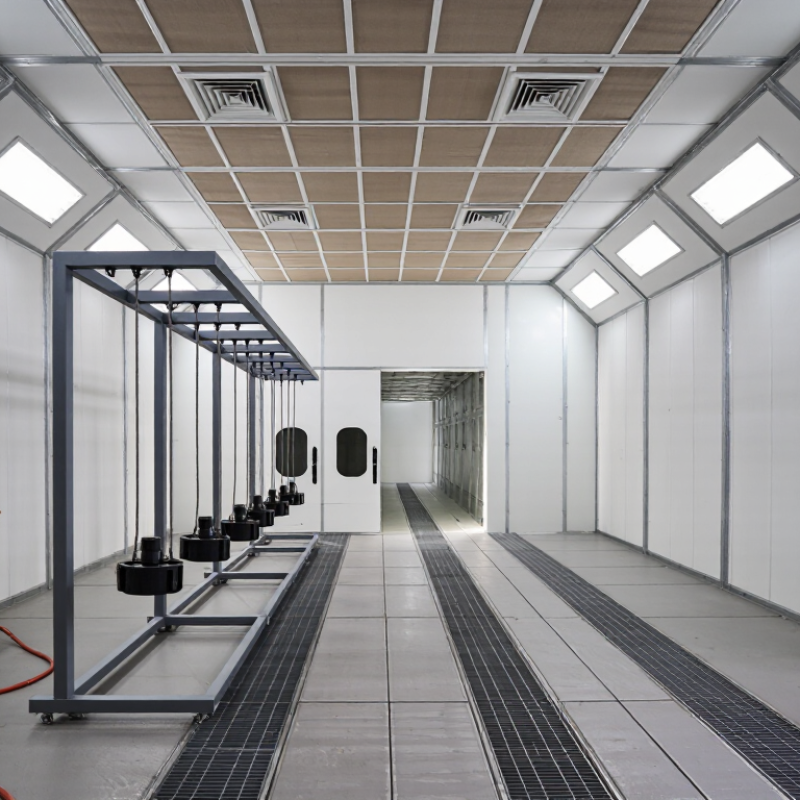
A powder coating spray booth does more than contain overspray. It manages airflow, captures airborne powder, and helps keep the coating area clean. A grounded metal part hangs from a rack inside the booth. The operator uses an electrostatic spray gun, which gives powder particles an electrical charge. The part’s grounding helps attract those particles to its surface. Air matters. Fans move air through the work zone toward filters, limiting powder drift and collecting excess material. The booth does not cure the coating; that happens later in a heated oven.
During spraying, airflow needs to be steady without disrupting the powder cloud. Too little movement can let powder collect on surfaces, while uneven flow may leave awkward areas thinly coated. Filters trap particles, and some systems collect powder for possible reuse when cleanliness and process controls allow it. Operators check filter condition, airflow, and the part’s electrical ground as routine setup tasks. A small gap in the rack contact can affect coating coverage. In practice, it is easy to focus on the spray gun and underestimate these details. The booth supports a repeatable process, but it cannot correct poor part preparation or careless technique.
A brand-neutral overview of common powder booth configurations and features. These are system types and design considerations, not a manufacturer ranking.
| Booth configuration or feature | How it works | Typical fit | Key consideration |
|---|---|---|---|
| Open-face manual booth | An exhaust system draws air from the open work face through the booth toward its powder collection filters. | Manual coating of small or medium parts in batch production. | Airflow must be designed to contain overspray without disrupting powder application. |
| Enclosed manual booth | The operator coats parts inside an enclosure while booth airflow carries airborne overspray to the collection system. | Batch work where greater separation from the surrounding workspace is useful. | Access, lighting, part handling, and cleaning should be considered in the layout. |
| Walk-in booth | A larger enclosed work area lets operators coat or handle oversized parts while exhaust airflow captures overspray. | Large components or parts that are difficult to move through a compact booth. | The booth and extraction system need to suit the part size, operator access, and required airflow pattern. |
| Batch booth | Parts are loaded, coated, and removed in groups rather than moving continuously through the booth. | Variable part sizes, short production runs, and job-shop work. | Loading and unloading time can affect throughput; hooks and fixtures need to support reliable grounding. |
| Conveyorized through-feed booth | Parts suspended from a conveyor pass through the application area while booth exhaust captures airborne powder. | Repeatable production with a regular flow of parts. | Conveyor speed, part spacing, and booth opening design influence line capacity and powder containment. |
| Cartridge-filter collection | Exhaust air passes through filter cartridges that capture overspray; some systems use periodic compressed-air pulses to clean filters. | Booths where powder is not routinely reclaimed for reuse, or where the system is designed for filter-based collection. | Filter condition and cleaning are important to maintaining the intended airflow. |
| Cyclone with final filtration | A cyclone separates a portion of overspray from the air stream; downstream filters capture remaining airborne powder. | Suitable reclaim systems and production involving compatible powder and color-change practices. | Recovered powder reuse depends on powder condition, contamination controls, and the coating process. |
| Non-reclaim collection system | Overspray is captured by the collection equipment and is generally not returned to the application process. | Frequent color changes, small production runs, or applications where reclaiming is not part of the process. | Powder disposal and filter replacement are operating considerations. |
| Quick color-change design | Accessible booth surfaces and collection components are arranged to make cleaning between powder colors more manageable. | Facilities that switch colors or coating jobs regularly. | Actual changeover time depends on booth geometry, equipment, cleaning procedure, and operator practice. |
| Automated application-compatible booth | The booth accommodates automatic spray equipment, such as reciprocators, while exhaust airflow contains overspray. | Repeat production requiring consistent gun movement or coordinated application. | Gun positioning, part presentation, grounding, and airflow should be considered together during system design. |
Note: Booth dimensions, airflow requirements, filtration, and recovery arrangements vary with the parts, powder, application equipment, production rate, and applicable safety requirements.

Criteria for Evaluating Spray Booth Manufacturers
A growing powder-coatings market makes booth selection a practical investment decision. Grand View Research estimated the global market at USD 13.3 billion in 2023 and projected 5.4% annual growth from 2024 to 2030. That forecast does not prove which booth will perform best. It does signal why buyers should examine capacity, coating recovery, and operating costs together. Ask manufacturers for airflow measurements across the working area, not just a fan rating. Request commissioning records showing how the booth handles your part sizes, powder types, and production rate. A clear answer matters.
Check the details operators meet every shift. Are filters accessible without awkward lifting? Can the recovery system limit powder buildup around seams and floor edges? Ask how the supplier verifies grounding, ventilation, and fire-protection provisions against the project’s applicable requirements. Compare energy use and maintenance intervals using the same assumptions; supplier estimates may not be directly comparable. Request references from facilities with similar workloads, then ask about response times for replacement parts and service. Brochures can look convincing. Real operating data is better. Some gaps may remain, especially before site testing, so record assumptions and confirm them during acceptance trials.
Suggested weighting for comparing spray booth manufacturers
These percentages are a suggested decision-making framework, not measured manufacturer scores or market-survey results. Prioritize safety and regulatory compliance, then assess system fit, airflow and filtration, energy use, service support, and delivery timelines for your specific operation.
Choosing among the top 10 powder coating spray booth manufacturers takes more than comparing prices. Start with the parts you coat each day. A booth for long steel frames needs different airflow and access than one for small brackets. Ask manufacturers for airflow figures, filter specifications, and practical cleaning guidance. Clear answers matter.
Look closely at construction details. Smooth interior panels, reachable filters, and well-sealed doors can make routine maintenance easier. A useful supplier should explain how the booth handles powder recovery, operator access, and future changes in production. Request drawings based on your actual workspace, not a generic layout. Details count.
Then check the support behind the equipment. Ask about installation planning, operator training, spare-filter availability, and response times for service questions. References from facilities with similar products can help, though one customer’s experience will not predict every outcome. Rankings are a starting point, not proof. I would compare at least three proposals and ask each manufacturer to explain its assumptions. Some estimates may look precise while leaving out ductwork or site preparation. That is easy to miss.
Top 10 Powder Coating Spray Booth Manufacturers: How Manufacturers Differ in Booth Design and Services
Manufacturers differ in more than booth dimensions. Some focus on compact, manual systems; others engineer automated lines with conveyor integration, rapid color changes, and centralized powder recovery. Filter layout, airflow balance, lighting, and access for cleaning also affect daily work. A poorly placed filter door can turn routine maintenance into a frustrating task. Small details matter.
Fortune Business Insights estimated the global powder-coatings market at US$13.03 billion in 2023 and projected US$20.58 billion by 2032. This market forecast signals continued demand, but it does not identify the right booth for every facility. Compare manufacturers using your part sizes, coating colors, production pace, and available floor space. Ask how each design handles overspray, filter replacement, and future expansion. Request commissioning support, operator training, and clear service response terms. A polished proposal is not proof of dependable performance; real production conditions can expose gaps.
Tips: Ask for measured airflow readings and documented powder-recovery results from a comparable setup. Check how long a color change takes with your coating and crew. Visit an operating installation if possible. One weakness in many comparisons: buyers focus on purchase price and overlook cleaning time, spare-filter availability, and service access.
A booth should fit the parts and workflow you actually run, not just the floor plan. The global powder coatings market was valued at about $15.8 billion in 2023, according to Grand View Research. That growth signals demand, but it does not identify the right equipment for your line. Start with your largest part, daily throughput, color-change frequency, and available space. Ask manufacturers to show how their proposed booth handles each requirement.
Compare practical details, not only quoted capacity. The U.S. Department of Energy’s compressed-air sourcebook estimates that compressed air uses roughly 10% of electricity in U.S. manufacturing. Ask vendors to itemize fan, recovery, and compressed-air needs, then clarify how filter cleaning and powder reclaim work. Request a layout with service access marked; a filter that is difficult to reach can turn routine maintenance into lost production time. A brochure number is not a guarantee.
Check commissioning support, operator training, spare-parts availability, and response times before signing. Ask for references from facilities with similar part sizes and production schedules. If your line is still changing, discuss modular options and future expansion costs. Even a careful layout may need adjustment after real parts arrive. That is worth planning for.


For those larger-sized parts, or smaller quantity runs, we have 2 independent powder coat booths and ovens. The quality, durability and affordability of today’s powder coating finishes make this the process of choice for world-class companies.
Powder coating advantages over other forms of coating are many. Materials used in the Powder coating process can be metals and non-metals that come in a multitude of thicknesses, textures, colors, etc. Another of Powder coating’s biggest advantages over conventional coatings is its ability to create finishes in many different textures. Powder Coating Booths allow us the ability to apply these advantages to large products.
Tri-State Fabricators runs a full-service conveyor line for painting. Wet painting can provide protection or decoration to many different part styles. From start to finish, every project is easier to undergo random and point-based inspection by our skilled painting team.
Advantages to our Wet Paint Line are these lines start with product prep and ends with a thorough inspection of a high quality finished product. Our ability to complete large and small projects with a superior finish and doing so in a timely and economical fashion. This passes along the savings in production to our customers. When powder coating ins not an option, our Wet Paint Line gets the job done right the first time.
When the parts get big and heavy we roll-out our custom paint racks and oversize booth. By utilizing our partnerships with all the major paint brands, we can match virtually any color with wet paint.
The advantages of having access to a Wet Paint Booth are many. Large projects of many different shapes can be loaded into the booth. The Wet Paint Booth offers an environment that is much more controlled than a typical parts painting operation.
Not only are they used because of their controlled environment, but they’re are also advantageous when it comes to applying paint to parts that are needed in industries that require specialty coatings such as medical, aerospace, etc.
Our military forces have some very high standards when it comes to the finish of their vehicles and equipment. From the first pre-treatment step to final coat, it takes a great deal of knowledge and experience to protect the men and women of our armed forces. They deserve only the best, and Tri-State Fabricators provides it.
All of our processes are closely monitored by our staff and management teams. Both of which are highly trained in the processes of metal fabrication and finishing. Tri-State Fabricators’ goal is to always fully satisfy each and every customer, including the military. We will always put a 110% into what we do.
Abrasive media blasting is an excellent way to remove old paint, rust, and increase the paint/powder adhesion. Glass beads produce a much smoother and brighter finish than angular abrasives; leaving the part clean yet without any dimensional change. Chemically inert and environmentally friendly, we can recycle our beads approximately 30 times; making them a more preferred method of metal cleaning or surface finishing.
Advantages to Glass Bead Blasting are many. Glass bead blast media is used when a project is needing rough surfaces need to become smooth for applications of coatings such as paint. It is typically used to clean paint and rust from a product surface without deforming the surface it is being used on. Overall, compared to many other blasting media, Glass Bead Blasting is a very economical choice and those savings are always passed on to our customers.
Tri-State Fabricators utilize a zinc phosphate wash to clean and etch the material to ensure the best paint adhesion possible. The unique design of our 3-stage wash system does the work like a 5-stage. From Cleaning and rinsing to conversion coating and post-treatment, Our Part Washing process is a complete service and works throughout the fabrication service and the finishing service.
Along with the previously mentioned benefits, Curing is a vital chemical reaction that leaves the product finish hard and relatively safe from mild abrasion and aggressive corrosion. This process can be done in more than one way; ambient air-dry or in curing ovens at temps that exceed 240°.
From fixing paint mistakes (someone else’s of course) to simply cleaning our paint line hooks, our burn-off oven is put to good use. After a quick burn-off, a little clean up, and a fresh coat of paint, your parts will look better than new.
Why does our Burn-Off Oven work so well? Because super heating the air around parts turns the materials into ashes. From paint and powder coatings to rubber and machining oils, high temps do the job without degrading the integrity of the part.
Masking is a vital part of producing high quality products. We have die-cut masking patterns to protect machined surfaces as well as a wide range of plugs and caps to protect threaded holes and bolts. We provide permanent and temporary masking.
Masking allows the selected sections of a product to be protected from a fabrication or finishing service. This can be with both chemicals when etching and tapes, paints when only finishing just a section of the product. Masking is great in aiding the customization process of a project.
Screen printing is a photographic process that transfers artwork onto a porous nylon screen which allows colored ink to flow through the screen and be deposited on an aluminum or plastic component. We can generally have just about any design created onto a screen for your parts.
Some of the advantages of Screen Printing are, brand recognition for your business displaying on your products, assembly instructions, product warnings/hazards, etc. Tri-State Fabricators produces Screen Printing of the highest quality so you know it’s durable.
Metal Finishing is the art of treating the exterior portion of product, often metal but can also be made of other materials, so that the surface is clean and free of any debris. Then the process of applying coats or either paint of powder coat takes place. This coating process improves the quality of the product in both appearance and resistance to wear and corrosion.
Tri-State Fabricators, Inc., understands that a project typically isn’t complete until a high-quality finish has been added to your product. This is why our painting and powder coating teams continuously inspect the products throughout the Metal Finishing process.

