


A clear pool can still be chemically unbalanced. That’s easy to miss. Test results help reveal changes in chlorine, pH, alkalinity, and other indicators before swimmers notice irritation or cloudy water. A reliable Pool Water Tester makes routine checks more consistent, whether you care for a backyard pool or maintain a larger one. Yet no device removes the need to follow its instructions and compare readings with the product’s recommended ranges.
This guide looks at the top pool water testers by considering accuracy, ease of use, test speed, durability, and ongoing costs. Options may include digital meters, color-matching kits, and test strips, each suited to different habits and budgets. A digital display can feel precise, but calibration and probe care matter. Strips are quick, though lighting and color judgment can affect interpretation. Small details count. Wet fingers, an old reagent bottle, or a test taken near a return jet may distort a reading. We will weigh these practical trade-offs rather than treat one format as best for every pool. A careful check takes minutes. It can reduce guesswork, but it cannot replace proper maintenance or professional advice when results remain unusual. Some comparisons are imperfect; product models and testing conditions change. Use the recommendations as a starting point, then verify readings and instructions for your specific equipment.
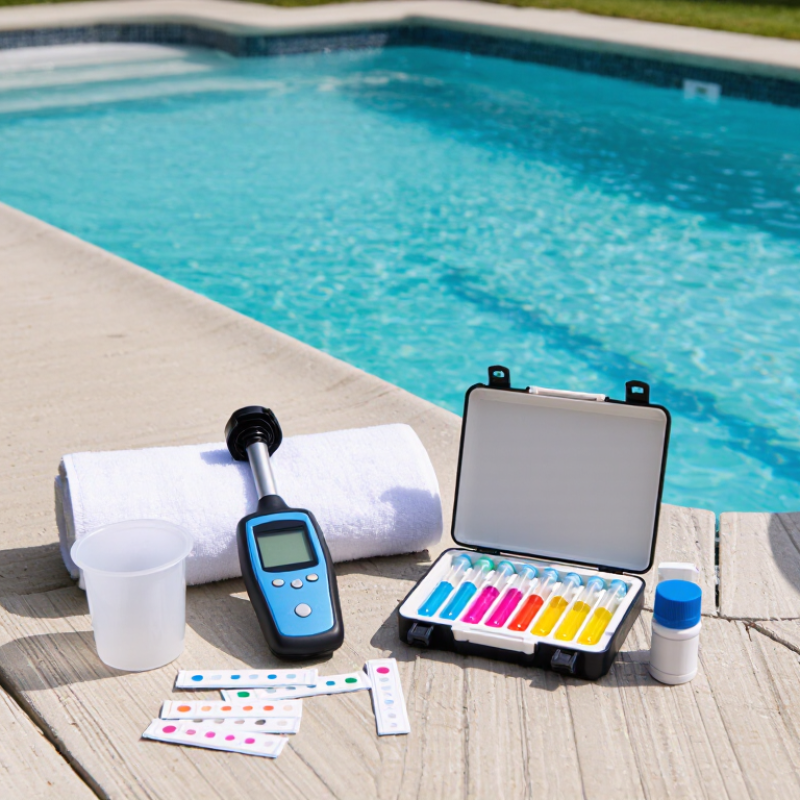
What Are the Top Pool Water Testers?
What Pool Water Testers Measure
Pool water testers check more than chlorine. Most measure free chlorine, which sanitizes the water, and pH, which affects comfort and chlorine performance. Some also measure total alkalinity, calcium hardness, and cyanuric acid. These readings help identify conditions linked to corrosion, scale, or unstable sanitizer levels. Small differences matter.
The CDC’s 2023 Model Aquatic Health Code sets a pool pH range of 7.0–7.8. It recommends at least 1 ppm free chlorine in pools without cyanuric acid, and at least 2 ppm when it is used. Those figures offer a useful reference, but local operating guidance and pool conditions still matter. A tester that checks only pH and chlorine will not flag every water-balance issue.
Test strips give quick readings, while liquid kits can offer more measured color comparisons; digital instruments may report values directly. None removes the need to follow its instructions. I sometimes trust a quick strip too much: wet fingers, fading strips, and poor lighting can blur the color match. Check the expiration date, test near the same time of day, and record results. Consistent readings make trends easier to spot.
| Tester type | What it can measure | How the result is obtained | Best suited for | Important limitations |
|---|---|---|---|---|
| Multi-parameter test strips | Depending on the strip: free chlorine, total chlorine, pH, total alkalinity, calcium hardness, and cyanuric acid. | A treated pad changes color; the color is compared with the supplied chart. | Quick routine checks and a broad overview of pool chemistry. | Readings are approximate and depend on correct timing, lighting, storage, and careful color matching. Not every strip measures every listed parameter. |
| Liquid reagent color-comparison kit | Commonly free and total chlorine or bromine, plus pH; some kits also test alkalinity, hardness, or cyanuric acid. | Pool water is mixed with specified liquid reagents and compared with a color scale. | Regular home testing when more control over the test procedure is desired. | Requires accurate sample and reagent amounts. Reagents have a shelf life, and color matching can be subjective. |
| Digital photometer or colorimeter | Parameters supported by the device and its reagents, often free or total chlorine, pH, alkalinity, hardness, or cyanuric acid. | The instrument measures the color intensity produced by a reagent and displays a numerical result. | Users who want numeric readings and more consistent color interpretation. | Each test is limited to the device’s supported methods. Reagents, clean sample cells, and correct calibration or blanking may be required. |
| Electronic pH meter | pH, reported on the pH scale (0–14). | An electrode measures the sample’s electrical response and converts it to a pH reading. | Checking pH when a numerical reading is preferred over color comparison. | It does not measure chlorine or other pool chemicals. The probe needs proper storage, cleaning, and periodic calibration. |
| Salt or conductivity meter | Electrical conductivity, often converted to an estimated salinity or salt concentration, usually shown in ppm or g/L. | Electrodes measure how readily the water conducts electricity. | Checking salt concentration in pools that use saltwater chlorination. | It does not measure free chlorine. Other dissolved ions can affect conductivity, and readings should be interpreted using the pool system’s guidance. |
| TDS meter | Total dissolved solids (TDS), typically displayed in ppm or mg/L and commonly estimated from conductivity. | A conductivity measurement is converted to an approximate dissolved-solids value. | Tracking broad changes in dissolved material over time. | It does not identify which substances are dissolved and cannot replace tests for sanitizer, pH, alkalinity, or hardness. |
Measurement availability and detection ranges vary by test method. Follow the tester’s instructions and use a separate test for any parameter the device does not measure.

Pool water testers generally fall into three groups: test strips, liquid reagent kits, and electronic meters. Strips are quick and easy to carry. Dip one into a water sample, then compare its color with the chart. They can check several readings at once, but matching shades under dim light can be tricky. Small differences matter.
Liquid kits use measured drops to trigger a color change in a sample. They often test pH and sanitizer levels, and the color can be easier to distinguish than on a strip. Careful measuring helps. Old reagents or stained vials may affect results, so check expiration dates and rinse equipment between tests. Electronic meters may use probes or a light-based sensor. Some measure only one parameter, while others read several. They can provide clear numbers, but probes need proper storage and periodic calibration. Convenient, not foolproof.
Tips: Test a fresh sample away from return jets, and follow the tester’s timing instructions. Compare colors in natural daylight when possible. If a reading seems surprising, repeat the test before adjusting the water. I have found that rushing the wait time is an easy mistake, even when the kit looks simple.
What Are the Top Pool Water Testers?
Key Features for Comparing Pool Water Testers
A useful pool water tester should measure the readings you actually need. Common checks include pH, free chlorine, total alkalinity, and, for some pools, stabilizer levels. Compare the tester’s measurement range and stated accuracy, not just its screen or packaging. A digital meter may give quick readings, while strips and drop-based kits offer different levels of detail and effort. Small details matter.
Consider how results are collected and maintained. Strips are portable, but damp storage or expired pads can affect their readings. Drop-based kits require careful counting and clear lighting; subtle color changes can be hard to judge. Digital testers may need calibration, clean sensors, and replacement reagents. Check whether instructions explain these steps and whether test supplies are easy to replace. There is no perfect option: a feature-rich tester is less useful if its upkeep feels like a chore.
Tips: Test in consistent conditions, follow the instructions, and record results with the date. Rinse reusable parts between tests. If a result seems unexpected, repeat the test before making a large adjustment. Don’t treat one reading as the whole story.
Typical number of water parameters measured by tester type
How to compare: Test strips and liquid kits offer a range of coverage, while photometers can test several parameters with digital readings. Single-parameter meters focus on one measurement. Check that a tester covers the parameters you need—especially sanitizer and pH. Coverage varies by kit and model.
Choosing a pool water tester starts with how often the water is used and which readings matter. Test strips suit quick checks before a swim. They are simple to carry, but matching a faint color can be tricky in dim light. Fast, but limited. A liquid drop kit takes longer and requires careful measuring. It can be a better fit when you need separate chlorine, pH, and alkalinity readings.
For frequent testing, a digital photometer can reduce color-matching guesswork. Keep its cuvettes clean and follow the calibration instructions; fingerprints or old reagents can distort results. Saltwater pools also need salt readings, while pools exposed to heavy sun may need stabilizer checks. No single tester covers every need. I have found that convenience often wins, even when a slower test would answer the real question.
The CDC’s Healthy Swimming guidance recommends keeping pool pH between 7.0 and 7.8, with at least 1 ppm free chlorine in typical pools. It also advises testing chlorine and pH at least twice daily, and more often with heavy use. That frequency favors an easy daily tester, backed by a more detailed kit when readings look unusual. A number on a screen is not the whole story; retest if it conflicts with cloudy water or a strong chemical smell.
A pool water tester is only useful when the sample and timing are handled consistently. Collect water about elbow-deep, away from return jets and skimmer openings. Rinse the sample vial with pool water before filling it. Follow the tester’s instructions closely: strips and liquid reagents may need different contact times. Read the result in bright, natural light, and compare colors promptly. Small details matter. I sometimes want to rush the color match, but a quick guess can lead to an unnecessary adjustment.
For a digital tester, check calibration and battery condition as its manual recommends. Rinse the probe after each use, then store it as directed; some probes should not be left dry. Keep strips and reagent bottles sealed, out of sunlight, and within their expiry dates. Replace cloudy, damaged, or expired supplies. Test more often after heavy swimming, hot weather, or rain, since these can change water conditions. Record readings with the date, so you can notice gradual shifts instead of reacting to one odd result. If a reading seems surprising, repeat the test with a fresh sample before changing the water chemistry. Not every tester is equally forgiving, and that is worth remembering.


For those larger-sized parts, or smaller quantity runs, we have 2 independent powder coat booths and ovens. The quality, durability and affordability of today’s powder coating finishes make this the process of choice for world-class companies.
Powder coating advantages over other forms of coating are many. Materials used in the Powder coating process can be metals and non-metals that come in a multitude of thicknesses, textures, colors, etc. Another of Powder coating’s biggest advantages over conventional coatings is its ability to create finishes in many different textures. Powder Coating Booths allow us the ability to apply these advantages to large products.
Tri-State Fabricators runs a full-service conveyor line for painting. Wet painting can provide protection or decoration to many different part styles. From start to finish, every project is easier to undergo random and point-based inspection by our skilled painting team.
Advantages to our Wet Paint Line are these lines start with product prep and ends with a thorough inspection of a high quality finished product. Our ability to complete large and small projects with a superior finish and doing so in a timely and economical fashion. This passes along the savings in production to our customers. When powder coating ins not an option, our Wet Paint Line gets the job done right the first time.
When the parts get big and heavy we roll-out our custom paint racks and oversize booth. By utilizing our partnerships with all the major paint brands, we can match virtually any color with wet paint.
The advantages of having access to a Wet Paint Booth are many. Large projects of many different shapes can be loaded into the booth. The Wet Paint Booth offers an environment that is much more controlled than a typical parts painting operation.
Not only are they used because of their controlled environment, but they’re are also advantageous when it comes to applying paint to parts that are needed in industries that require specialty coatings such as medical, aerospace, etc.
Our military forces have some very high standards when it comes to the finish of their vehicles and equipment. From the first pre-treatment step to final coat, it takes a great deal of knowledge and experience to protect the men and women of our armed forces. They deserve only the best, and Tri-State Fabricators provides it.
All of our processes are closely monitored by our staff and management teams. Both of which are highly trained in the processes of metal fabrication and finishing. Tri-State Fabricators’ goal is to always fully satisfy each and every customer, including the military. We will always put a 110% into what we do.
Abrasive media blasting is an excellent way to remove old paint, rust, and increase the paint/powder adhesion. Glass beads produce a much smoother and brighter finish than angular abrasives; leaving the part clean yet without any dimensional change. Chemically inert and environmentally friendly, we can recycle our beads approximately 30 times; making them a more preferred method of metal cleaning or surface finishing.
Advantages to Glass Bead Blasting are many. Glass bead blast media is used when a project is needing rough surfaces need to become smooth for applications of coatings such as paint. It is typically used to clean paint and rust from a product surface without deforming the surface it is being used on. Overall, compared to many other blasting media, Glass Bead Blasting is a very economical choice and those savings are always passed on to our customers.
Tri-State Fabricators utilize a zinc phosphate wash to clean and etch the material to ensure the best paint adhesion possible. The unique design of our 3-stage wash system does the work like a 5-stage. From Cleaning and rinsing to conversion coating and post-treatment, Our Part Washing process is a complete service and works throughout the fabrication service and the finishing service.
Along with the previously mentioned benefits, Curing is a vital chemical reaction that leaves the product finish hard and relatively safe from mild abrasion and aggressive corrosion. This process can be done in more than one way; ambient air-dry or in curing ovens at temps that exceed 240°.
From fixing paint mistakes (someone else’s of course) to simply cleaning our paint line hooks, our burn-off oven is put to good use. After a quick burn-off, a little clean up, and a fresh coat of paint, your parts will look better than new.
Why does our Burn-Off Oven work so well? Because super heating the air around parts turns the materials into ashes. From paint and powder coatings to rubber and machining oils, high temps do the job without degrading the integrity of the part.
Masking is a vital part of producing high quality products. We have die-cut masking patterns to protect machined surfaces as well as a wide range of plugs and caps to protect threaded holes and bolts. We provide permanent and temporary masking.
Masking allows the selected sections of a product to be protected from a fabrication or finishing service. This can be with both chemicals when etching and tapes, paints when only finishing just a section of the product. Masking is great in aiding the customization process of a project.
Screen printing is a photographic process that transfers artwork onto a porous nylon screen which allows colored ink to flow through the screen and be deposited on an aluminum or plastic component. We can generally have just about any design created onto a screen for your parts.
Some of the advantages of Screen Printing are, brand recognition for your business displaying on your products, assembly instructions, product warnings/hazards, etc. Tri-State Fabricators produces Screen Printing of the highest quality so you know it’s durable.
Metal Finishing is the art of treating the exterior portion of product, often metal but can also be made of other materials, so that the surface is clean and free of any debris. Then the process of applying coats or either paint of powder coat takes place. This coating process improves the quality of the product in both appearance and resistance to wear and corrosion.
Tri-State Fabricators, Inc., understands that a project typically isn’t complete until a high-quality finish has been added to your product. This is why our painting and powder coating teams continuously inspect the products throughout the Metal Finishing process.

