


As automation becomes more connected in 2026, Pneumatic Valves remain essential for controlling compressed air safely and precisely. They direct, regulate, or stop airflow inside machinery. A small valve can influence an entire production cycle. In a packaging line, for example, a directional valve may move a cylinder within milliseconds. In a workshop, a pressure regulator can prevent unstable tool performance.
This guide examines the top types of pneumatic valves used across manufacturing, robotics, transportation, and process equipment. It covers directional control valves, solenoid valves, proportional valves, flow control valves, pressure relief valves, and check valves. Each type has a different operating purpose. Their performance depends on pressure range, response time, port size, seal material, and maintenance conditions. Installation quality matters too. Even an advanced valve may fail when moisture enters the air system.
Practical selection requires more than comparing catalog prices. Engineers should review air consumption, cycle frequency, actuator load, ambient temperature, and required safety functions. Trusted manufacturers normally provide technical drawings, operating limits, and material information. Independent testing and recognized industry standards also support better decisions. Still, product claims deserve careful checking. Marketing language can sound stronger than field results.
No single valve wins every application. That remains easy to forget. This 2026 overview offers a realistic comparison rather than a perfect ranking. Some recommendations may change as smart sensors, energy-saving designs, and digital diagnostics become more common. The right choice should balance reliability, serviceability, efficiency, and total operating cost.
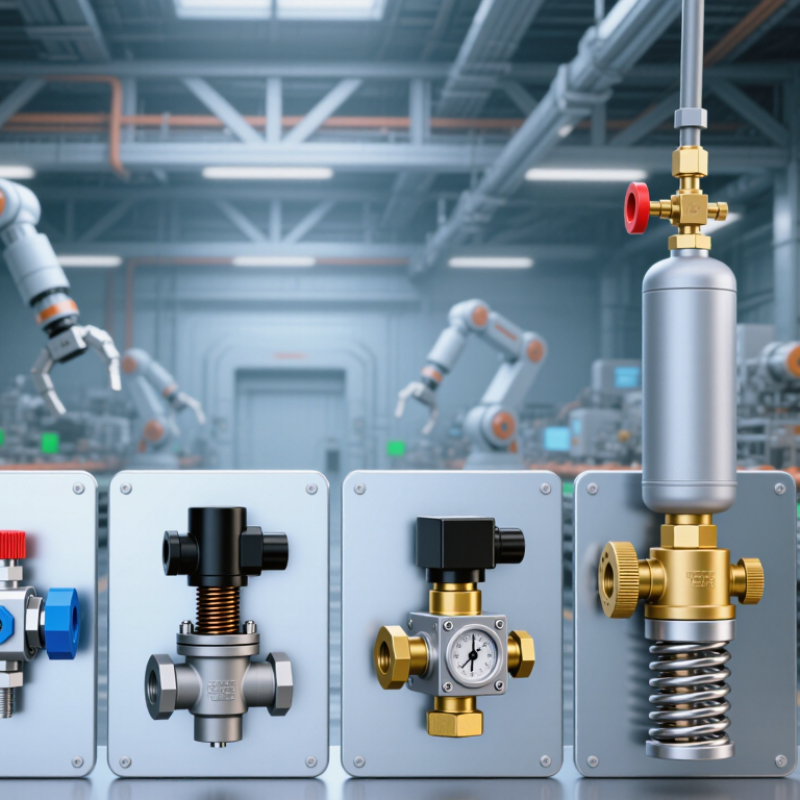
Pneumatic Valve Basics and Their Role in 2026 Automation
Pneumatic valves control compressed air by directing, regulating, or stopping its flow. In practical systems, this action moves cylinders, clamps, grippers, and rotary actuators. A clean signal can turn a slow production step into a repeatable motion.
The most common 2026 types include solenoid directional valves, proportional valves, flow-control valves, pressure-control valves, and check valves. Directional valves switch airflow between ports, often using two or three positions. Proportional valves adjust air pressure or flow with greater precision. They support gentle gripping and controlled actuator speed.
Pressure-control valves protect equipment from unstable supply conditions. Flow-control valves help tune cylinder movement near the end of a stroke. Check valves permit airflow in one direction and prevent unwanted reversal. Their small bodies can hide major effects. A poorly adjusted valve may cause vibration, noise, or uneven assembly.
Modern automation connects valves with sensors, controllers, and networked diagnostic tools. This connection helps maintenance teams detect pressure loss, delayed switching, or excessive cycle time. Still, digital monitoring cannot repair wet air or incorrect sizing. That part is often underestimated.
The classification is not always clean. Some valves combine flow, pressure, and directional functions in one assembly. Engineers should verify port size, response time, pressure range, seal material, and expected cycle frequency. A valve that works well on a test bench may perform differently beside dust, heat, and repeated impact. In 2026, practical selection remains a balance between precision, reliability, service access, and realistic plant conditions.

| Valve Type | Primary Function | Common Port or Position Configuration | Typical Automation Uses | Main Strengths | Important Selection Considerations | Role in 2026 Automation |
|---|---|---|---|---|---|---|
| 2/2-Way On/Off Valve | Starts or stops compressed-air flow through a single flow path. | Two ports and two positions; normally closed or normally open. | Air isolation, simple clamping, blow-off circuits, and machine shutoff functions. | Simple construction, straightforward control, and easy integration with electrical signals. | Check flow direction, pressure range, response time, sealing material, and fail-safe state. | Supports compact machine architectures and automated energy-isolation strategies. |
| 3/2-Way Directional Valve | Supplies, exhausts, or blocks air for a single-acting actuator. | Three ports and two positions; commonly supply, outlet, and exhaust. | Single-acting cylinders, pneumatic grippers, pilot circuits, and sensor-controlled mechanisms. | Versatile control of spring-return actuators and relatively simple troubleshooting. | Confirm whether the valve is normally closed or normally open and verify exhaust behavior. | Remains a core building block for flexible, modular, and sensor-driven pneumatic equipment. |
| 4/2-Way Directional Valve | Alternates air supply and exhaust between the two sides of a double-acting actuator. | Four ports and two positions; two actuator ports, one supply port, and one exhaust port. | Double-acting cylinders, linear slides, lifting devices, and indexing mechanisms. | Provides bidirectional actuator movement with a comparatively simple circuit. | Evaluate center or fail position requirements, actuator volume, flow capacity, and exhaust restrictions. | Useful where robust bidirectional motion and maintainable machine layouts are priorities. |
| 5/2-Way Directional Valve | Controls extension and retraction of a double-acting actuator using separate exhaust paths. | Five ports and two positions; one supply, two actuator, and two exhaust ports. | Assembly machines, pick-and-place systems, packaging equipment, and robotic end effectors. | Independent exhaust control can improve speed, cycle consistency, and circuit flexibility. | Select the correct actuation method, port size, flow rate, switching frequency, and mounting format. | A leading directional solution for high-cycle automated production and distributed valve manifolds. |
| Proportional Pneumatic Valve | Adjusts airflow or pressure continuously rather than only switching between fixed states. | Variable output controlled by an electrical command, often through analog or digital control. | Force control, pressure regulation, gentle handling, tension control, and variable-speed motion. | Enables more precise process control and smoother actuator behavior. | Consider resolution, hysteresis, response time, control-loop tuning, air quality, and feedback requirements. | Supports data-driven motion control, adaptive processes, and improved product consistency. |
| Poppet Valve | Uses a sealing element that lifts from or presses against a seat to control flow. | Available in shutoff and directional configurations, including 2/2, 3/2, and other arrangements. | Fast switching, pilot control, safety circuits, and applications requiring strong sealing. | Good shutoff performance, fast response, and tolerance of some contamination compared with close-clearance designs. | Review allowable leakage, noise, switching life, pressure differential, and seal wear. | Fits high-speed automation where reliable switching and durable sealing are important. |
| Spool Valve | Moves a sliding spool to connect different ports and direct compressed air. | Commonly configured as 3/2, 4/2, or 5/2 directional valves. | Multi-port directional control, actuator sequencing, and compact valve manifolds. | Flexible port routing, high flow potential, and suitability for many actuator circuits. | Clean, properly lubricated air may be required; assess internal leakage and spool friction. | Supports dense, scalable pneumatic control platforms used in connected production lines. |
| Check Valve | Allows airflow in one direction and restricts reverse flow. | Two ports with a defined inlet and outlet direction. | Circuit isolation, pressure retention, actuator protection, and prevention of reverse flow. | Passive operation, simple installation, and low control complexity. | Check cracking pressure, reverse leakage, flow capacity, orientation, and response to pressure changes. | Improves reliability and helps isolate pneumatic subsystems in modular automation cells. |
| Flow Control Valve | Restricts or meters airflow to adjust actuator speed. | Often a needle-style restriction combined with a check valve for one-way metering. | Cylinder speed adjustment, cushioning support, sequencing, and cycle-time control. | Economical way to tune motion without changing the main directional valve. | Choose meter-in or meter-out control carefully and account for load variation and pressure fluctuation. | Helps optimize cycle energy and repeatability when combined with sensors and machine controls. |
| Pressure Regulator | Reduces and maintains downstream air pressure at a selected setting. | Typically installed as a pressure-control device, with relieving or non-relieving operation. | Force limitation, actuator protection, pressure zoning, and preparation of machine air supplies. | Improves process stability and can reduce unnecessary compressed-air consumption. | Consider inlet variation, required downstream flow, regulation accuracy, relief behavior, and contamination control. | Contributes to energy management, safer force control, and zone-based pneumatic optimization. |
What Are the 2026 Top Types of Pneumatic Valves?
How Pneumatic Valves Are Classified by Function and Design
Pneumatic valves are commonly classified by function, meaning how they direct, stop, or regulate compressed air. A 2/2 valve has two ports and two switching positions. It usually starts as normally open or normally closed. A 3/2 valve controls single-acting cylinders and often includes an exhaust path. A 5/2 valve operates double-acting cylinders by sending air to either side of the piston. More complex systems may use 5/3 valves, which provide a defined center position. Small errors matter.
Design creates another useful classification. Direct-acting valves move their internal sealing element directly through a solenoid or mechanical force. Pilot-operated valves use air pressure to assist movement, making them suitable for larger flow rates. Spool valves slide a shaped element inside a bore, while poppet valves lift a seal from its seat. Diaphragm designs can provide effective separation between the control mechanism and airflow. Each design has different leakage, response, wear, and maintenance characteristics.
In practical equipment inspections, engineers also check pressure range, flow capacity, response time, air cleanliness, and mounting style. A compact manifold valve may save space, but restricted exhaust passages can slow a cylinder. A high-flow valve may appear stronger, yet it can waste air when oversized. Selecting the correct valve requires matching function and design to the actuator, duty cycle, and required failure position. Classification sounds simple, but field conditions often expose details that catalog tables miss.
The top types of pneumatic valves in 2026 reflect a practical shift toward precise control, lower air waste, and easier maintenance. Solenoid directional valves remain common in automated lines. Their fast switching suits cylinders, grippers, and compact assembly equipment. Five-port, two-position valves often control double-acting cylinders. Three-position versions add a useful center function, such as holding or exhausting the actuator. Selection still depends on pressure, flow, response time, and the machine’s safety design.
Proportional pneumatic valves are gaining attention where smooth speed or force matters. They adjust airflow in smaller steps than standard on-off valves. This helps with delicate handling, pressing, and controlled motion. Pressure-control valves also remain essential. Regulators stabilize working pressure, while relief valves protect circuits from excessive pressure. Check valves prevent reverse flow, and flow-control valves tune cylinder speed near the actuator ports. In field service, mismatched threads and poor filtration cause more trouble than expected. That detail is easy to overlook.
Tips: Confirm the valve’s port size, pressure range, air quality requirement, and response behavior. Test it with the actual cylinder, not only a catalog calculation. Add filtration and drainage where moisture may collect. Keep tubing short when response speed matters. A larger valve is not automatically better; it can waste air and create harsh movement. I would also review noise, access, and replacement time before approval. Some designs look efficient on paper, but maintenance conditions may prove otherwise.
Common directional pneumatic valve configurations classified by ports and switching positions.
In pneumatic valve notation, the first number indicates the number of ports and the second number indicates the number of switching positions. The 2/2, 3/2, 4/2, 5/2, and 5/3 configurations are widely used for on/off control, single-acting cylinders, double-acting cylinders, and multi-position actuator control. The classification follows the standard directional-valve notation used in ISO 1219-1.
Choosing pneumatic valves in 2026 requires more than matching port size. MarketsandMarkets’ 2024 report estimates the pneumatic valves market will grow from about USD 8.7 billion in 2024 to USD 11.1 billion by 2029. The International Federation of Robotics also recorded 541,302 industrial robot installations in 2023. These figures show why reliable valve selection matters in faster production systems.
Start with the actuator’s movement and safety requirement. Use 3/2 valves for single-acting cylinders. Use 5/2 valves for double-acting cylinders. Pilot-operated designs suit higher flow rates, while direct-acting valves respond better at low pressure.
Check operating pressure, media quality, temperature, response time, and required Cv value. A valve that looks correctly sized may still move a cylinder slowly.
Environmental details deserve equal attention. Dust, washdown water, vibration, and outdoor temperature can change the correct enclosure rating. ISO 4414 recommends managing pneumatic energy safely, including isolation and controlled exhaust.
In practice, air leakage is often underestimated. The U.S. Department of Energy reports that compressed-air leaks can waste 20% to 30% of compressor output in poorly maintained systems. That number will not fit every plant, but ignoring leakage is still a costly mistake.
Field testing should include cycle counts, pressure drops, and failure-position checks. Keep it measurable.
Pneumatic valve technology is moving beyond simple on-off control. Directional solenoid valves remain essential for cylinders, grippers, and compact automation systems. However, proportional valves are gaining attention where speed and pressure must change smoothly. Engineers now connect valves with sensors, controllers, and industrial networks. This creates faster feedback and clearer information about machine performance.
Energy efficiency is shaping nearly every new design. Smart valves can detect pressure drops, unusual cycle times, and possible air leaks. Maintenance teams may receive warnings before a weak actuator stops production. Data matters. Yet connected equipment is not automatically efficient. Poor sensor placement, unstable air quality, or incorrect software settings can create misleading results. Practical testing still matters more than attractive specifications.
Modular valve platforms are also becoming more common. Technicians can replace a single function without rebuilding an entire manifold. Lightweight materials reduce installation effort, especially inside mobile equipment. Improved sealing designs may extend service life in dusty or humid workplaces. Safety functions are receiving greater attention, including controlled exhaust and monitored pressure release.
The industry still has unresolved questions. More electronics can increase diagnostic power, but they can also complicate troubleshooting. Not every factory needs advanced connectivity. A reliable basic valve may outperform a smart valve in harsh, isolated conditions. Engineers should compare response time, air consumption, temperature range, maintenance access, and actual operating cycles before selecting the most suitable type.


For those larger-sized parts, or smaller quantity runs, we have 2 independent powder coat booths and ovens. The quality, durability and affordability of today’s powder coating finishes make this the process of choice for world-class companies.
Powder coating advantages over other forms of coating are many. Materials used in the Powder coating process can be metals and non-metals that come in a multitude of thicknesses, textures, colors, etc. Another of Powder coating’s biggest advantages over conventional coatings is its ability to create finishes in many different textures. Powder Coating Booths allow us the ability to apply these advantages to large products.
Tri-State Fabricators runs a full-service conveyor line for painting. Wet painting can provide protection or decoration to many different part styles. From start to finish, every project is easier to undergo random and point-based inspection by our skilled painting team.
Advantages to our Wet Paint Line are these lines start with product prep and ends with a thorough inspection of a high quality finished product. Our ability to complete large and small projects with a superior finish and doing so in a timely and economical fashion. This passes along the savings in production to our customers. When powder coating ins not an option, our Wet Paint Line gets the job done right the first time.
When the parts get big and heavy we roll-out our custom paint racks and oversize booth. By utilizing our partnerships with all the major paint brands, we can match virtually any color with wet paint.
The advantages of having access to a Wet Paint Booth are many. Large projects of many different shapes can be loaded into the booth. The Wet Paint Booth offers an environment that is much more controlled than a typical parts painting operation.
Not only are they used because of their controlled environment, but they’re are also advantageous when it comes to applying paint to parts that are needed in industries that require specialty coatings such as medical, aerospace, etc.
Our military forces have some very high standards when it comes to the finish of their vehicles and equipment. From the first pre-treatment step to final coat, it takes a great deal of knowledge and experience to protect the men and women of our armed forces. They deserve only the best, and Tri-State Fabricators provides it.
All of our processes are closely monitored by our staff and management teams. Both of which are highly trained in the processes of metal fabrication and finishing. Tri-State Fabricators’ goal is to always fully satisfy each and every customer, including the military. We will always put a 110% into what we do.
Abrasive media blasting is an excellent way to remove old paint, rust, and increase the paint/powder adhesion. Glass beads produce a much smoother and brighter finish than angular abrasives; leaving the part clean yet without any dimensional change. Chemically inert and environmentally friendly, we can recycle our beads approximately 30 times; making them a more preferred method of metal cleaning or surface finishing.
Advantages to Glass Bead Blasting are many. Glass bead blast media is used when a project is needing rough surfaces need to become smooth for applications of coatings such as paint. It is typically used to clean paint and rust from a product surface without deforming the surface it is being used on. Overall, compared to many other blasting media, Glass Bead Blasting is a very economical choice and those savings are always passed on to our customers.
Tri-State Fabricators utilize a zinc phosphate wash to clean and etch the material to ensure the best paint adhesion possible. The unique design of our 3-stage wash system does the work like a 5-stage. From Cleaning and rinsing to conversion coating and post-treatment, Our Part Washing process is a complete service and works throughout the fabrication service and the finishing service.
Along with the previously mentioned benefits, Curing is a vital chemical reaction that leaves the product finish hard and relatively safe from mild abrasion and aggressive corrosion. This process can be done in more than one way; ambient air-dry or in curing ovens at temps that exceed 240°.
From fixing paint mistakes (someone else’s of course) to simply cleaning our paint line hooks, our burn-off oven is put to good use. After a quick burn-off, a little clean up, and a fresh coat of paint, your parts will look better than new.
Why does our Burn-Off Oven work so well? Because super heating the air around parts turns the materials into ashes. From paint and powder coatings to rubber and machining oils, high temps do the job without degrading the integrity of the part.
Masking is a vital part of producing high quality products. We have die-cut masking patterns to protect machined surfaces as well as a wide range of plugs and caps to protect threaded holes and bolts. We provide permanent and temporary masking.
Masking allows the selected sections of a product to be protected from a fabrication or finishing service. This can be with both chemicals when etching and tapes, paints when only finishing just a section of the product. Masking is great in aiding the customization process of a project.
Screen printing is a photographic process that transfers artwork onto a porous nylon screen which allows colored ink to flow through the screen and be deposited on an aluminum or plastic component. We can generally have just about any design created onto a screen for your parts.
Some of the advantages of Screen Printing are, brand recognition for your business displaying on your products, assembly instructions, product warnings/hazards, etc. Tri-State Fabricators produces Screen Printing of the highest quality so you know it’s durable.
Metal Finishing is the art of treating the exterior portion of product, often metal but can also be made of other materials, so that the surface is clean and free of any debris. Then the process of applying coats or either paint of powder coat takes place. This coating process improves the quality of the product in both appearance and resistance to wear and corrosion.
Tri-State Fabricators, Inc., understands that a project typically isn’t complete until a high-quality finish has been added to your product. This is why our painting and powder coating teams continuously inspect the products throughout the Metal Finishing process.

