


China has a large base of manufacturers serving precast concrete and construction equipment markets. Choosing among them, however, takes more than comparing catalog prices. A Permanent Formwork Magnet must hold steel formwork securely during concrete placement, then release cleanly without damaging the casting bed. Small details matter. Magnet dimensions, rated holding force, surface finish, and button access can affect daily production.
This guide introduces Chinese manufacturers and explains how buyers can assess their products. It considers manufacturing experience, customization options, quality controls, export support, and the clarity of technical documentation. Buyers should request drawings, material specifications, and test information for the exact model under consideration. A quoted force alone may not represent performance on a real production line. Steel thickness, surface condition, and operating practices also matter.
Look closely at the details. A robust housing and accessible release mechanism can make repeated setup easier. Ask how suppliers handle sample orders, replacement parts, and changes in mold design. Factory visits or independent inspections may provide useful evidence, though not every buyer can arrange them. There is no perfect shortlist. Supplier claims can be difficult to compare when test methods differ, so verify important details before placing an order. The aim is a practical, evidence-based overview—not an unsupported ranking.
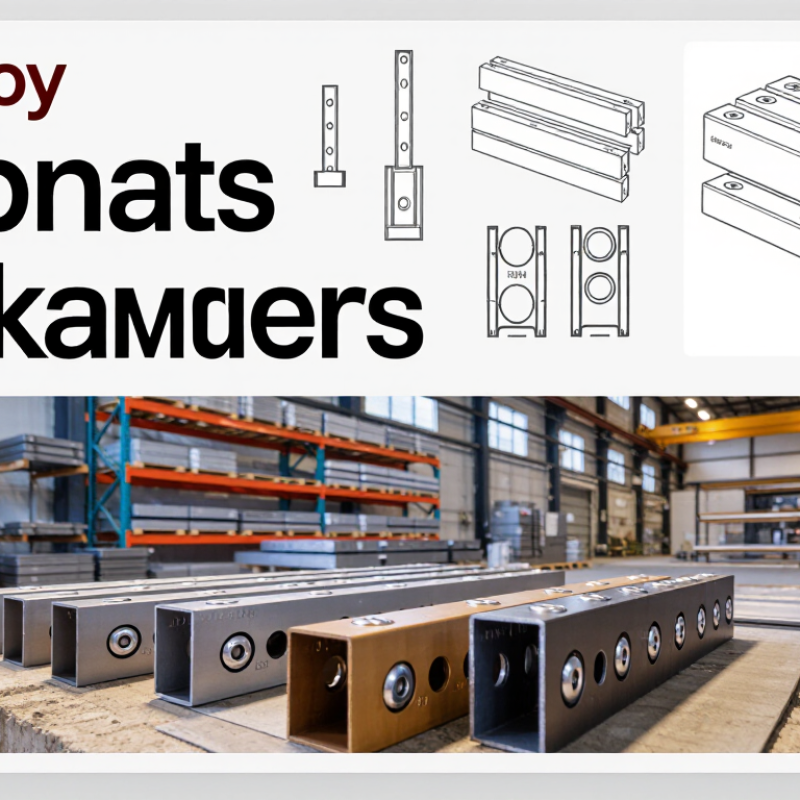
Permanent formwork magnets combine a steel housing, permanent magnet assembly, release mechanism, and threaded connection to a formwork rail or table. Common designs include push-button units and lever-operated units. The mechanism switches the magnetic force on or off; the housing transfers that force to the formwork. Small parts matter. Dust, weld spatter, or a damaged contact face can reduce effective holding performance.
The Portland Cement Association’s Design and Control of Concrete Mixtures describes normal-weight concrete at roughly 2,400 kg/m³. At that density, a one-metre vertical concrete head produces about 23.5 kPa of hydrostatic pressure. ACI 347R-14 notes that fresh-concrete form pressure also depends on factors such as placement rate and concrete temperature. So density alone cannot size a magnet system. A faster pour can change the loading picture.
Check the magnet’s rated pull against the actual steel surface, installation direction, and load path. A catalog pull figure is not a site safety factor. That distinction is easy to miss. For a 2,400 kg/m³ mix, engineers should assess panel deflection, rail spacing, vibration, and the possibility of uneven contact. Field conditions are rarely perfect. A trial installation and documented inspection can reveal gaps that calculations overlook.

For permanent formwork magnets, clamping force in kN should describe a measured condition, not just a product label. One kilonewton equals 1,000 newtons, but the result depends on the test surface and setup. A thick, clean steel plate can produce a different reading from a thin plate with paint, rust, or a small air gap. Specify the plate material and thickness, contact condition, magnet orientation, and whether the force is measured perpendicular to the plate or along it. These details make supplier comparisons more meaningful.
A practical test uses a calibrated load cell or force gauge, mounted in line with the pull. Seat the magnet fully, then increase the load steadily until it releases; record the peak force and repeat the test on several samples. Test it consistently. Note the plate temperature and any visible debris, too. A vertical pull-off result is not the same as resistance to sliding on a formwork beam. There is a weakness in any single headline figure: site conditions rarely match a laboratory plate. Buyers should ask for the test method, sample count, and results, not only a kN rating. Recheck magnets after wear or impact, since damaged contact faces may reduce holding force. A neat number can still mislead.
| Category | Item | Specification or test value | How to interpret it |
|---|---|---|---|
| Clamping-force reference | Force unit | 1 kN = 1,000 N ≈ 101.97 kgf | kN is a unit of force. The kgf equivalent is a force conversion, not the mass of a load the magnet can safely lift. |
| Example nominal force class | 5 kN ≈ 510 kgf | Illustrative rating tier for comparing specifications; it is not a verified rating for a particular product. | |
| Example nominal force class | 10 kN ≈ 1,020 kgf | Illustrative rating tier. Actual measured force depends on the magnet, contact plate, and test conditions. | |
| Example nominal force class | 15 kN ≈ 1,530 kgf | Illustrative rating tier, not a manufacturer-specific performance claim. | |
| Example nominal force class | 20 kN ≈ 2,040 kgf | Illustrative rating tier, not a substitute for a product test report. | |
| Example nominal force class | 25 kN ≈ 2,550 kgf | Illustrative rating tier. Confirm whether the declared value is a peak, minimum, or typical test result. | |
| Example nominal force class | 30 kN ≈ 3,060 kgf | Illustrative rating tier. Higher nominal force does not by itself establish suitability for a specific formwork application. | |
| Force test and reporting | Force direction | Pull perpendicular to the contact surface | Report the test direction. A perpendicular pull-off result is not the same as resistance to sliding or shear. |
| Test equipment | Calibrated force gauge or load cell, with a suitable test fixture | Record the instrument identification, capacity, and calibration status so the result can be traced. | |
| Contact surface | Document the steel plate material, thickness, flatness, and surface condition | Steel properties, plate thickness, surface irregularities, paint, rust, and debris can affect the measured force. | |
| Test setup | Seat and activate the magnet as intended; align the pull axis with the test fixture | Misalignment, incomplete contact, or an inconsistent activation procedure can change the result. | |
| Result to report | Record peak pull-off force in N or kN, test conditions, and number of trials | For comparison, test samples under the same documented conditions. Do not treat a single peak reading as a guaranteed minimum unless specified as such. | |
| Application limit | Use the supplier’s stated working limits and the project’s engineering requirements | Test pull-off force alone does not account for concrete pressure, dynamic effects, load direction, installation, or safety factors. | |
| Comparison note | Manufacturer and product selection | This table contains no company or brand rankings. The force classes are illustrative comparison points; request product-specific test records and clearly defined test conditions before comparing shuttering magnets. | |
China’s permanent formwork magnet manufacturers vary in production scale, tooling, and customization depth. A capable factory should explain how its magnet housing is formed, how components are assembled, and how each unit is checked. For example, consistent steel thickness and clean welds help the housing sit flat against a formwork panel. Small details matter.
Customization may cover magnet dimensions, button positions, clamping profiles, and access for release tools. Clear drawings and sample approval reduce fit problems on site. Ask whether custom batches receive the same inspection as standard products. A rushed change can affect fit or holding performance; more customization is not always better. I would also compare test conditions, since a holding-force result means little without the steel surface and measurement method.
Tips: Request a sample and check its fit on your actual panel. Ask for repeat-cycle results, coating checks, and batch records. Look for calibrated test equipment and traceable inspection notes. These checks cannot prevent every issue, but they make supplier claims easier to evaluate.
China’s permanent formwork magnet suppliers should be compared on process control and test evidence, not brochure claims. ISO 9001 can indicate documented procedures, corrective actions, and traceability. It does not certify a magnet’s holding force. That distinction matters.
Ask for the certificate scope, issuing body, expiry date, and recent audit status. Then request pull-force data for the exact model and production lot. A useful report states the test surface, steel thickness, contact condition, loading direction, and instrument calibration date. A clean, thick test plate can produce higher readings than a painted or uneven formwork surface. Compare repeated measurements, not one impressive maximum. Small details count.
Check how much readings vary across samples, and ask what acceptance range the supplier uses. Where possible, compare results under conditions close to your site setup. The data may still not predict every installation; surface gaps and handling can change performance. It is tempting to rank suppliers by the highest number, but that can hide inconsistency. A supplier that explains test limits and shares traceable records offers more useful evidence than one that provides a polished certificate alone.
Permanent formwork magnets can hold steel side forms in position on a precast casting bed. Their strength does not remove the need to assess fresh-concrete pressure. ACI 347R offers guidance for estimating that pressure, with placement rate, concrete temperature, mixture properties, and vibration affecting the loads. Check the current guidance and project-specific design assumptions before selecting magnet spacing or capacity. Small details matter.
During placement, concrete can push outward before it begins to stiffen. A fast pour, highly workable mix, or deep form may increase pressure on panels and connections. Confirm that the complete assembly—not just each magnet—can resist the calculated load, including local panel bending and possible sliding. Keep contact surfaces clean and flat; a thin film of paste or debris can reduce reliable seating. Do not guess. Inspect magnet engagement and form alignment before pouring, then monitor movement as concrete rises. A neat calculation may still miss uneven placement or site vibration. That uncertainty deserves a deliberate safety margin and a documented check by a qualified formwork designer.


For those larger-sized parts, or smaller quantity runs, we have 2 independent powder coat booths and ovens. The quality, durability and affordability of today’s powder coating finishes make this the process of choice for world-class companies.
Powder coating advantages over other forms of coating are many. Materials used in the Powder coating process can be metals and non-metals that come in a multitude of thicknesses, textures, colors, etc. Another of Powder coating’s biggest advantages over conventional coatings is its ability to create finishes in many different textures. Powder Coating Booths allow us the ability to apply these advantages to large products.
Tri-State Fabricators runs a full-service conveyor line for painting. Wet painting can provide protection or decoration to many different part styles. From start to finish, every project is easier to undergo random and point-based inspection by our skilled painting team.
Advantages to our Wet Paint Line are these lines start with product prep and ends with a thorough inspection of a high quality finished product. Our ability to complete large and small projects with a superior finish and doing so in a timely and economical fashion. This passes along the savings in production to our customers. When powder coating ins not an option, our Wet Paint Line gets the job done right the first time.
When the parts get big and heavy we roll-out our custom paint racks and oversize booth. By utilizing our partnerships with all the major paint brands, we can match virtually any color with wet paint.
The advantages of having access to a Wet Paint Booth are many. Large projects of many different shapes can be loaded into the booth. The Wet Paint Booth offers an environment that is much more controlled than a typical parts painting operation.
Not only are they used because of their controlled environment, but they’re are also advantageous when it comes to applying paint to parts that are needed in industries that require specialty coatings such as medical, aerospace, etc.
Our military forces have some very high standards when it comes to the finish of their vehicles and equipment. From the first pre-treatment step to final coat, it takes a great deal of knowledge and experience to protect the men and women of our armed forces. They deserve only the best, and Tri-State Fabricators provides it.
All of our processes are closely monitored by our staff and management teams. Both of which are highly trained in the processes of metal fabrication and finishing. Tri-State Fabricators’ goal is to always fully satisfy each and every customer, including the military. We will always put a 110% into what we do.
Abrasive media blasting is an excellent way to remove old paint, rust, and increase the paint/powder adhesion. Glass beads produce a much smoother and brighter finish than angular abrasives; leaving the part clean yet without any dimensional change. Chemically inert and environmentally friendly, we can recycle our beads approximately 30 times; making them a more preferred method of metal cleaning or surface finishing.
Advantages to Glass Bead Blasting are many. Glass bead blast media is used when a project is needing rough surfaces need to become smooth for applications of coatings such as paint. It is typically used to clean paint and rust from a product surface without deforming the surface it is being used on. Overall, compared to many other blasting media, Glass Bead Blasting is a very economical choice and those savings are always passed on to our customers.
Tri-State Fabricators utilize a zinc phosphate wash to clean and etch the material to ensure the best paint adhesion possible. The unique design of our 3-stage wash system does the work like a 5-stage. From Cleaning and rinsing to conversion coating and post-treatment, Our Part Washing process is a complete service and works throughout the fabrication service and the finishing service.
Along with the previously mentioned benefits, Curing is a vital chemical reaction that leaves the product finish hard and relatively safe from mild abrasion and aggressive corrosion. This process can be done in more than one way; ambient air-dry or in curing ovens at temps that exceed 240°.
From fixing paint mistakes (someone else’s of course) to simply cleaning our paint line hooks, our burn-off oven is put to good use. After a quick burn-off, a little clean up, and a fresh coat of paint, your parts will look better than new.
Why does our Burn-Off Oven work so well? Because super heating the air around parts turns the materials into ashes. From paint and powder coatings to rubber and machining oils, high temps do the job without degrading the integrity of the part.
Masking is a vital part of producing high quality products. We have die-cut masking patterns to protect machined surfaces as well as a wide range of plugs and caps to protect threaded holes and bolts. We provide permanent and temporary masking.
Masking allows the selected sections of a product to be protected from a fabrication or finishing service. This can be with both chemicals when etching and tapes, paints when only finishing just a section of the product. Masking is great in aiding the customization process of a project.
Screen printing is a photographic process that transfers artwork onto a porous nylon screen which allows colored ink to flow through the screen and be deposited on an aluminum or plastic component. We can generally have just about any design created onto a screen for your parts.
Some of the advantages of Screen Printing are, brand recognition for your business displaying on your products, assembly instructions, product warnings/hazards, etc. Tri-State Fabricators produces Screen Printing of the highest quality so you know it’s durable.
Metal Finishing is the art of treating the exterior portion of product, often metal but can also be made of other materials, so that the surface is clean and free of any debris. Then the process of applying coats or either paint of powder coat takes place. This coating process improves the quality of the product in both appearance and resistance to wear and corrosion.
Tri-State Fabricators, Inc., understands that a project typically isn’t complete until a high-quality finish has been added to your product. This is why our painting and powder coating teams continuously inspect the products throughout the Metal Finishing process.

