Top 10 Perforated Mesh Machines for Global Buyers?
In the competitive manufacturing landscape, the demand for high-quality Perforated Mesh Machines is surging. These machines play a crucial role in industries like construction, automotive, and textiles. Professionals across these sectors rely on efficient and precise equipment for their production needs.
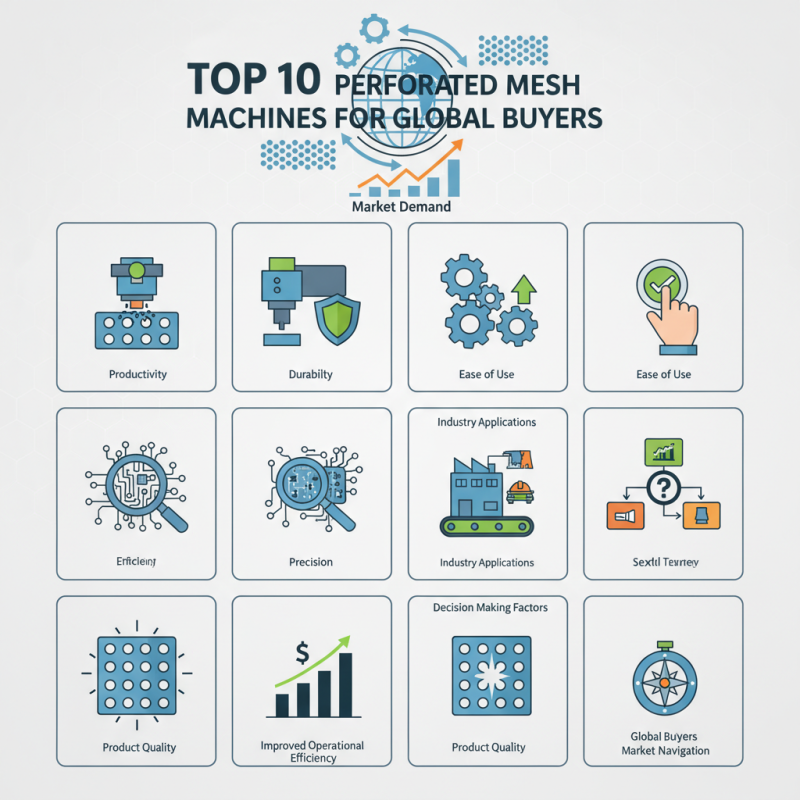
Choosing the right Perforated Mesh Machine can be overwhelming. Global buyers must consider various factors such as productivity, durability, and ease of use. This decision-making process requires in-depth knowledge of the machines and their capabilities. Understanding these aspects can lead to improved operational efficiency and product quality.
As we explore the top 10 Perforated Mesh Machines, we will highlight key features and specifications. Each machine has unique strengths and potential drawbacks. Conducting thorough research is essential for making an informed choice. The insights provided will help buyers navigate this complex market more effectively.
Overview of Perforated Mesh Technology and Its Applications
Perforated mesh technology has transformed various industries by offering unique solutions for filtration, ventilation, and aesthetic purposes. Recent industry reports indicate that the demand for perforated mesh products is projected to grow at a compound annual growth rate (CAGR) of 5.5% over the next five years. This growth stems from their widespread application in construction, automotive, and environmental sectors.
The key advantage of perforated mesh is its ability to combine strength with lightweight characteristics, making it suitable for multiple applications. For instance, in architecture, perforated panels not only provide structural support but also enhance aesthetic appeal. The versatility of materials like stainless steel, aluminum, and plastic makes them applicable in diverse settings—ranging from industrial to residential designs. However, the process of designing and manufacturing these solutions is often complex. Factors such as hole size, pattern, and material type must be precisely considered to meet specific operational requirements.
Moreover, while perforated mesh offers several benefits, sustainability concerns are rising. The production process can be energy-intensive, leading industries to rethink their practices. Striking a balance between innovation and environmental responsibility is critical. Companies must explore eco-friendly materials and manufacturing techniques. The journey toward optimizing perforated mesh technology is ongoing and requires careful assessment and improvement.
Top 10 Perforated Mesh Machines for Global Buyers
| Machine Model | Production Capacity (sqm/hour) | Max Sheet Width (mm) | Hole Diameter Range (mm) | Power Consumption (kW) | Weight (kg) |
| Model A | 150 | 1200 | 2-10 | 20 | 500 |
| Model B | 120 | 1500 | 3-12 | 25 | 600 |
| Model C | 180 | 1000 | 2-8 | 15 | 450 |
| Model D | 200 | 1300 | 1-15 | 30 | 550 |
| Model E | 160 | 1100 | 4-9 | 18 | 480 |
| Model F | 140 | 1250 | 5-11 | 22 | 530 |
| Model G | 190 | 1400 | 3-7 | 27 | 600 |
| Model H | 155 | 900 | 2-10 | 32 | 490 |
| Model I | 210 | 1000 | 6-12 | 28 | 650 |
| Model J | 145 | 1150 | 1-14 | 20 | 520 |
Key Features to Consider When Choosing a Perforated Mesh Machine
Choosing a perforated mesh machine requires careful consideration of several key features. Understanding your production needs is crucial. For instance, the mesh size you require will dictate the machine's specifications. Different applications may need varying hole patterns and sizes. Assessing the machine's versatility is also important. Can it handle different materials? This flexibility can enhance your production process.
Efficiency is another vital factor. A machine that operates swiftly can significantly impact your output. Look for features that optimize speed without sacrificing quality. Pay attention to the ease of use. A user-friendly interface reduces training time and helps maintain productivity. Durability is essential too. Machines built with high-quality materials tend to last longer, reducing the need for frequent repairs.
Reflecting on past decisions can guide new purchases. Perhaps a previous machine's frequent breakdowns taught you the importance of reliability. Balance cost and quality wisely. Sometimes, a cheaper option may not provide the long-term benefits you need. Consider your production goals. Does the machine align with your vision? Take your time to evaluate each aspect thoroughly.
Top 10 Perforated Mesh Machines: Comparative Analysis and Specifications
Perforated mesh machines are vital in various industries. Their main function is to create sheets with holes for ventilation, filtration, and aesthetic purposes. In the global market, selecting the right machine is crucial for quality production. Each machine has unique specifications that can impact performance. Some machines offer varied hole sizes, while others focus on speed and efficiency.
Understanding the operational aspects is essential. Some machines may perform well but lack durability. Regular maintenance is often an afterthought, yet it can significantly impact longevity. There's a need to evaluate each option closely. Buyers should look at user reviews and case studies. They provide insights into real-world performance. Machine specifications alone may not paint the complete picture.
The technology used in manufacturing perforated mesh continues to evolve. Laser cutting and CNC technology are becoming prominent. However, these innovations can sometimes lead to a steeper learning curve for operators. Investing in training is often necessary. Buyers must weigh the benefits against potential challenges. Each investment decision should align with production needs and future growth.
Market Trends and Innovations in Perforated Mesh Machinery
The perforated mesh machinery market is evolving rapidly. Innovations are reshaping how manufacturers approach production. Lightweight materials and precision engineering are key trends. This enables businesses to meet diverse market demands effectively.
Automation plays a crucial role in modern perforated mesh machines. Increased efficiency is driving production rates higher than ever. However, some manufacturers struggle with the transition. Integrating new technology into existing workflows remains a challenge for many.
Sustainability also influences machine design. Manufacturers are exploring eco-friendly materials and energy-efficient processes. This reflects a growing awareness of environmental impact. Still, achieving the right balance between performance and sustainability is complex. Industry players must navigate these challenges carefully.
Buyer’s Guide: How to Select the Right Perforated Mesh Machine for Your Needs
When selecting a perforated mesh machine, consider your specific manufacturing needs. Begin by assessing the material you plan to perforate. Different materials require machines with varying capabilities. For instance, metals might need sturdier machines compared to plastics.
Evaluate the size and shape of the perforations you desire. This will affect the type of machine and die used. Uniformity in perforation size is crucial for maintaining quality. A machine with adjustable settings may offer flexibility as your needs evolve.
Tips: Always check machine specifications. Don’t overlook aspects like speed and efficiency. They directly influence production capacity. Seek user reviews to understand real-world performance. This step helps you avoid potential pitfalls. Reflect on your long-term goals. A machine that serves well today might not meet future demands.
Top 10 Perforated Mesh Machines - Performance Comparison





