


Who Are the Top PEM Electrolyzer Manufacturers in China?

China has become an important market for electrolyzers, supported by expanding renewable-energy projects and industrial demand for low-carbon hydrogen. For buyers comparing a PEM Electrolyzer, the manufacturer’s name is only part of the decision. Stack design, membrane durability, power consumption, operating pressure, and service capability all affect performance after installation.

This guide examines leading PEM electrolyzer manufacturers in China and the practical differences buyers should investigate. It considers product specifications, manufacturing experience, project references, and the support available for commissioning and maintenance. These details matter. A stack may look impressive on paper, yet real operating conditions can reveal limits that a brochure cannot show.

Company rankings also deserve careful reading. Public data can be incomplete, and product ranges or production capacity may change. A neat ranking can mislead. The useful question is not only who appears at the top, but what evidence supports each company’s claims. Readers will find a grounded overview of the market, along with points to verify directly with manufacturers before making comparisons. Such checks are especially relevant when projects differ in renewable-power supply, hydrogen output, and site requirements. No single supplier is right for every application, and that is worth remembering.
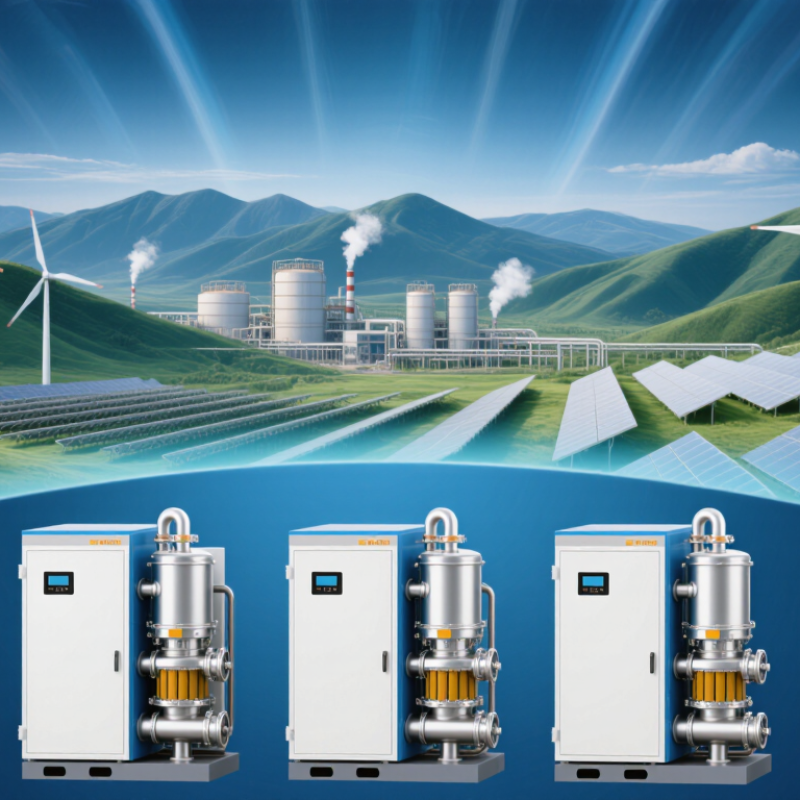
Who Are the Top PEM Electrolyzer Manufacturers in China?

How PEM Electrolyzers Work and Their Role in China

PEM electrolyzers use a thin polymer membrane to separate hydrogen and oxygen. At the anode, water releases oxygen, protons, and electrons. Protons cross the membrane; electrons travel through an external circuit. At the cathode, they combine to form hydrogen. The stack can adjust output quickly as wind or solar power changes. That helps, but it is not a cure for intermittent supply. Clean water, durable components, and affordable electricity still matter.

China’s role is both industrial and practical. The IEA’s Global Hydrogen Review 2024 estimates global electrolyzer manufacturing capacity reached about 25 GW per year in 2023, with roughly 60% located in China. This figure covers manufacturing capacity, not installed PEM systems. That distinction matters. PEM technology can support flexible renewable-powered hydrogen production, while China’s manufacturing scale may help lower equipment costs over time. Yet factory capacity alone cannot prove long-term reliability or project profitability. The IEA also notes a gap between announced hydrogen plans and projects reaching investment decisions. The gap is real. For China, PEM’s value will depend on field performance, renewable power access, and whether operators can keep stacks running economically.


Criteria for Evaluating Chinese PEM Electrolyzer Manufacturers

When evaluating Chinese PEM electrolyzer manufacturers, compare verified operating data rather than headline efficiency alone. Ask for test results at stated temperature, pressure, and current density. Without those conditions, numbers are difficult to compare. Check hydrogen purity, energy use, and performance across both steady operation and changing loads. Small details matter.

Look closely at stack design, membrane-electrode materials, seals, and cooling. Request evidence of repeatable production checks, component traceability, and documented durability testing. A factory visit or independent test report can help confirm whether stated procedures are followed. No datasheet tells the whole story. Ask how performance changes after extended operation, not only during commissioning.

Assess the complete system, too. Confirm how the rectifier, water treatment, controls, and gas handling work together, and clarify which party supports integration. Review service response times, spare-part availability, training, and warranty exclusions in writing. References from installations with similar duty cycles are more useful than general claims. One limitation deserves attention: a short test may not predict years of operation. Treat gaps in evidence as questions to resolve, not automatic proof of poor quality.

Criteria for Evaluating Chinese PEM Electrolyzer Manufacturers

Suggested evaluation weights for comparing manufacturers; these are framework values, not measured company or market data.

Assess performance and durability alongside system cost, delivery capability, and after-sales support. Apply the same evidence standards to every manufacturer.

Profiles of Leading PEM Electrolyzer Manufacturers in China

China’s leading PEM electrolyzer manufacturers are best assessed by their engineering strengths, not by headline capacity alone. The IEA’s Global Hydrogen Review 2024 estimates global electrolyzer manufacturing capacity at about 25 GW per year in 2023, with China representing roughly 60%. This covers all electrolyzer technologies, not PEM production specifically. That distinction matters.

One manufacturer profile is the stack-focused developer: its strengths may include membrane-electrode assembly, catalyst use, and compact stack design. Buyers should ask for independently verified efficiency, operating-pressure, and durability data—not just rated output.

Another profile is the system integrator, combining stacks with power electronics, water treatment, cooling, and controls. Inspect the cabinet layout and service access.

A third is the established industrial-equipment producer, often experienced in project delivery and quality systems, but its PEM track record may be newer. The IEA figure indicates manufacturing scale, not field reliability. Ask for operating hours, load-change records, and maintenance intervals from comparable projects. Some suppliers publish limited data; that makes comparison imperfect, and should prompt careful technical review.

Comparing Manufacturers by Technology, Capacity, and Applications

When comparing top PEM electrolyzer manufacturers in China, look beyond rated output. Examine membrane durability, catalyst loading, operating pressure, and stack efficiency at partial load. These details affect performance when renewable power rises and falls. Ask for test conditions, not just headline figures. A high efficiency claim means little without its measurement boundary.

Capacity matters, but so does the way a system scales. A compact unit may suit a pilot plant or a site with limited space. Larger installations need evidence of stable stack production, reliable power conversion, and practical maintenance access. Application also changes the choice: industrial hydrogen users may prioritize steady output, while renewable projects need flexible operation. Datasheets cannot show everything. I would ask for operating records and service plans; I might still overlook a site-specific constraint.

Tips: Compare guarantees under matching conditions. Check hydrogen purity, water requirements, ramping limits, and replacement intervals. Request a reference installation with a similar duty cycle. Then verify the figures independently.

Trends Shaping China’s PEM Electrolyzer Industry

Who Are the Top PEM Electrolyzer Manufacturers in China?
Trends Shaping China’s PEM Electrolyzer Industry

China’s PEM electrolyzer industry is increasingly shaped by renewable power. Solar and wind output can change quickly, so operators value equipment that responds to variable electricity. That matters. PEM systems can adjust production more flexibly than some alternatives, though performance depends on operating conditions and system design. Frequent changes still require careful controls and maintenance.

Manufacturers are working to localize more components and improve production efficiency. This may help manage costs and supply risks. But lower purchase prices do not tell the whole story. Stack lifetime, membrane performance, and replacement needs affect the cost of hydrogen over time. Buyers should ask for test conditions and service assumptions, not just headline efficiency figures. Details count.

Project design is also shifting toward modular systems that can fit different sites and power profiles. Better monitoring can help teams spot temperature changes, pressure shifts, or water-quality problems before they become costly interruptions. Still, reliable long-term field data takes time to build. The industry has momentum, but claims deserve scrutiny. A promising specification is not yet a proven operating record.

Who Are the Top PEM Electrolyzer Manufacturers in China? – Trends Shaping China’s PEM Electrolyzer Industry

This overview compares industry trends and manufacturer capabilities without naming or ranking individual companies. Company-level capacity and performance figures are not included because consistently audited, comparable public data are limited.

Industry dimension Verified context or trend What it means for manufacturers
National policy direction China’s 2021–2035 hydrogen plan, published in 2022, set 2025 goals of approximately 50,000 fuel-cell vehicles and 100,000–200,000 tonnes per year of renewable hydrogen production. Policy targets support project development, but they are targets—not proof that the targets have been achieved or that demand is guaranteed for any specific supplier.
PEM technology characteristics Proton exchange membrane electrolysis uses a solid polymer electrolyte. PEM systems are valued for compact design, flexible operation, and the potential to respond to variable electricity supply. Stack design, operating flexibility, durability, and system integration are important comparison points alongside headline capacity.
Catalyst and material supply PEM electrolyzers rely on platinum-group-metal catalysts, including iridium-based catalyst materials. Availability, cost, and material-use efficiency are recognized technology challenges. Manufacturers are incentivized to reduce precious-metal loading, improve catalyst utilization, and develop reliable domestic material supply chains.
Renewable-power integration Renewable hydrogen projects depend on access to low-carbon electricity and suitable project economics. Variable wind and solar generation increases the value of flexible electrolyzer operation. Controls, power electronics, ramping capability, and performance under changing loads can differentiate complete systems.
Manufacturing scale-up Scaling production requires repeatable stack assembly, quality control, testing, and dependable supply of membranes, porous transport components, and other critical parts. Assessing manufacturing readiness requires more than announced factory capacity; production output, product validation, and delivered project references also matter.
System-level performance Electrolyzer performance should be compared using clearly defined system boundaries, including whether energy use covers the stack alone or the full balance of plant. Buyers should request consistent test conditions and clarify treatment of auxiliaries, hydrogen pressure, purity, and operating load.
Project bankability and service Commercial evaluation considers delivery capability, warranties, maintenance arrangements, safety systems, and demonstrated operation—not only the electrolyzer stack. A robust supplier assessment should include project references, after-sales coverage, spare-parts plans, and independently verifiable test documentation.

Sources: China’s National Development and Reform Commission and National Energy Administration, Medium and Long-Term Plan for the Development of the Hydrogen Energy Industry (2021–2035) (published 2022); International Energy Agency, Global Hydrogen Review and electrolyser technology resources. Policy figures above are stated as plan targets.

Powder Coat Booths

For those larger-sized parts, or smaller quantity runs, we have 2 independent powder coat booths and ovens. The quality, durability and affordability of today’s powder coating finishes make this the process of choice for world-class companies.

Powder coating advantages over other forms of coating are many. Materials used in the Powder coating process can be metals and non-metals that come in a multitude of thicknesses, textures, colors, etc. Another of Powder coating’s biggest advantages over conventional coatings is its ability to create finishes in many different textures. Powder Coating Booths allow us the ability to apply these advantages to large products.

Wet Paint Line

Tri-State Fabricators runs a full-service conveyor line for painting. Wet painting can provide protection or decoration to many different part styles. From start to finish, every project is easier to undergo random and point-based inspection by our skilled painting team.

Advantages to our Wet Paint Line are these lines start with product prep and ends with a thorough inspection of a high quality finished product. Our ability to complete large and small projects with a superior finish and doing so in a timely and economical fashion. This passes along the savings in production to our customers. When powder coating ins not an option, our Wet Paint Line gets the job done right the first time.

Wet Paint Booths

When the parts get big and heavy we roll-out our custom paint racks and oversize booth. By utilizing our partnerships with all the major paint brands, we can match virtually any color with wet paint.

The advantages of having access to a Wet Paint Booth are many. Large projects of many different shapes can be loaded into the booth. The Wet Paint Booth offers an environment that is much more controlled than a typical parts painting operation.

Not only are they used because of their controlled environment, but they’re are also advantageous when it comes to applying paint to parts that are needed in industries that require specialty coatings such as medical, aerospace, etc.

Military CARC

Our military forces have some very high standards when it comes to the finish of their vehicles and equipment. From the first pre-treatment step to final coat, it takes a great deal of knowledge and experience to protect the men and women of our armed forces. They deserve only the best, and Tri-State Fabricators provides it.

All of our processes are closely monitored by our staff and management teams. Both of which are highly trained in the processes of metal fabrication and finishing. Tri-State Fabricators’ goal is to always fully satisfy each and every customer, including the military. We will always put a 110% into what we do.

Glass-Bead Blasting

Abrasive media blasting is an excellent way to remove old paint, rust, and increase the paint/powder adhesion. Glass beads produce a much smoother and brighter finish than angular abrasives; leaving the part clean yet without any dimensional change. Chemically inert and environmentally friendly, we can recycle our beads approximately 30 times; making them a more preferred method of metal cleaning or surface finishing.

Advantages to Glass Bead Blasting are many. Glass bead blast media is used when a project is needing rough surfaces need to become smooth for applications of coatings such as paint. It is typically used to clean paint and rust from a product surface without deforming the surface it is being used on. Overall, compared to many other blasting media, Glass Bead Blasting is a very economical choice and those savings are always passed on to our customers.

Part Washing

Tri-State Fabricators utilize a zinc phosphate wash to clean and etch the material to ensure the best paint adhesion possible. The unique design of our 3-stage wash system does the work like a 5-stage. From Cleaning and rinsing to conversion coating and post-treatment, Our Part Washing process is a complete service and works throughout the fabrication service and the finishing service.

Along with the previously mentioned benefits, Curing is a vital chemical reaction that leaves the product finish hard and relatively safe from mild abrasion and aggressive corrosion. This process can be done in more than one way; ambient air-dry or in curing ovens at temps that exceed 240°.

Burn-Off Oven

From fixing paint mistakes (someone else’s of course) to simply cleaning our paint line hooks, our burn-off oven is put to good use. After a quick burn-off, a little clean up, and a fresh coat of paint, your parts will look better than new.

Why does our Burn-Off Oven work so well? Because super heating the air around parts turns the materials into ashes. From paint and powder coatings to rubber and machining oils, high temps do the job without degrading the integrity of the part.

Masking

Masking is a vital part of producing high quality products. We have die-cut masking patterns to protect machined surfaces as well as a wide range of plugs and caps to protect threaded holes and bolts. We provide permanent and temporary masking.

Masking allows the selected sections of a product to be protected from a fabrication or finishing service. This can be with both chemicals when etching and tapes, paints when only finishing just a section of the product. Masking is great in aiding the customization process of a project.

Screen Printing

Screen printing is a photographic process that transfers artwork onto a porous nylon screen which allows colored ink to flow through the screen and be deposited on an aluminum or plastic component. We can generally have just about any design created onto a screen for your parts.

Some of the advantages of Screen Printing are, brand recognition for your business displaying on your products, assembly instructions, product warnings/hazards, etc. Tri-State Fabricators produces Screen Printing of the highest quality so you know it’s durable.

Metal Finishing

Metal Finishing is the art of treating the exterior portion of product, often metal but can also be made of other materials, so that the surface is clean and free of any debris. Then the process of applying coats or either paint of powder coat takes place. This coating process improves the quality of the product in both appearance and resistance to wear and corrosion.

Tri-State Fabricators, Inc., understands that a project typically isn’t complete until a high-quality finish has been added to your product. This is why our painting and powder coating teams continuously inspect the products throughout the Metal Finishing process.
