A reliable Pda Barcode Scanner can keep orders moving through a busy warehouse, a delivery route, or a crowded retail counter. The right device reads worn labels, survives daily handling, and sends accurate data to the systems teams already use. The wrong choice creates delays. Small details matter.
“Without data, you’re just another person with an opinion,” is a line often attributed to quality-management expert W. Edwards Deming. It is not a scanner-specific statement, but it fits procurement well: compare measurable performance, not polished promises. Check scan speed on the barcodes your staff actually sees. Ask how long batteries last during a full shift. Look closely at drop protection, operating-system support, connectivity, warranty terms, and service availability in your region. A glossy specification sheet can still leave gaps.
This guide reviews leading PDA barcode scanner manufacturers for global buyers, with attention to product range, durability, integration, and after-sales support. It also considers how distributors, software compatibility, and local service affect the real cost of ownership. A device may look ideal in a test room and feel awkward with gloves on. That is worth checking. No manufacturer is perfect for every workflow, and published specifications rarely tell the whole story. Practical trials, clear questions, and careful comparison make the shortlist more dependable.
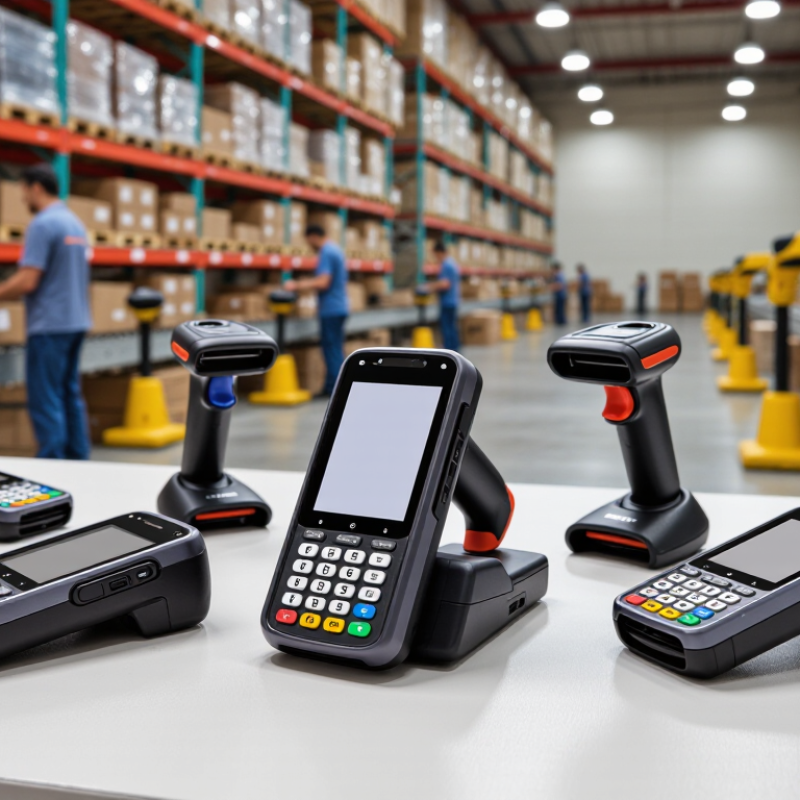
A PDA barcode scanner is a handheld computer with an integrated barcode reader, touchscreen, and wireless connection. In a warehouse, a worker can scan a carton, view its item details, and confirm its location on the screen. The scanner’s imaging sensor captures the barcode; software decodes its pattern into characters or numbers. A warehouse application then checks that data against an inventory record. The device may return a simple confirmation—or flag a mismatch.
Many models read both one-dimensional barcodes and two-dimensional codes, even when labels are slightly angled or poorly lit. Wi-Fi or cellular connectivity sends scan events to inventory systems, helping teams update receiving, picking, and stock counts. MHI’s 2023 Annual Industry Report found that 87% of surveyed supply-chain professionals expected digital supply chains to become the predominant business model by 2026. That finding reflects broad digitalization, not scanner performance specifically. In practice, results still depend on network coverage, readable labels, and well-configured software. A smudged label can defeat a smooth workflow; teams sometimes overlook that basic weakness.
PDA barcode scanners combine a handheld computer, display, keypad, and barcode reader in one device. Their value depends on how reliably they work during ordinary shifts. A warehouse worker may scan cartons from waist height, check a location on screen, and confirm a pick without returning to a desktop. Fast decoding, clear displays, and responsive controls help reduce repeated scans. Long battery life matters during extended shifts, while replaceable batteries can keep devices available. Useful details. A scanner should also tolerate dust, occasional drops, and use with work gloves. Yet ruggedness alone is not enough.
Warehouses and distribution centers use these devices for receiving, picking, and cycle counts. Retail teams can check shelf inventory and process stock transfers. On production lines, workers scan parts to record movement between stations. Healthcare teams may use them to track supplies or verify patient-care workflows, provided the device suits local hygiene procedures. Field technicians benefit from wireless connections and readable screens in changing light. In practice, specifications rarely tell the whole story: a scanner that feels balanced in a showroom may tire workers after hours of use. Test scan speed, grip, battery life, and network performance in the actual work environment. Small trials reveal problems. A little inconvenient, perhaps, but worth doing.
Top PDA Barcode Scanner Manufacturers for Global Buyers
How to Evaluate PDA Barcode Scanner Manufacturers
Choosing a PDA barcode scanner manufacturer takes more than comparing scan speed or quoted prices. Ask for a sample unit and test it with the labels your staff actually handles: glossy cartons, worn shelf tags, and small codes under warehouse lighting. Test it yourself. Note how quickly the scanner reads each code, and whether the screen stays usable with work gloves. Check battery life across a full shift, charging time, drop resistance, and access to replacement batteries. A specification sheet is useful, but it cannot show how a device feels after hours of use.
Review the manufacturer’s quality controls, warranty terms, repair process, and availability of technical support in your operating regions. Ask how long software updates are provided and whether the PDA works with your existing inventory or warehouse systems. Request clear documentation for wireless compatibility and requirements in the markets where you plan to use it. A polished product page may leave practical questions unanswered. That is worth noting, not ignoring. Compare responses in writing, and check whether promised delivery times and spare parts can be confirmed. A small pilot across different shifts can reveal issues that a short demonstration misses. No checklist catches everything; even experienced buyers sometimes overlook an awkward charging dock.
Leading PDA barcode scanner manufacturers for global buyers should be assessed by more than headline scan speed. A useful device must read worn labels, tolerate repeated drops, and remain comfortable during a full shift. Buyers should compare scan engines, display visibility, battery replacement options, and operating-system support. Ask for test units. Try them in the actual warehouse, including dim aisles and reflective packaging.
Strong suppliers provide clear documentation, repair options, and realistic product-life commitments. Check whether spare batteries, charging cradles, and protective cases will remain available over time. Response speed matters when a scanner fails during receiving or inventory counts. So does communication. Confirm warranty terms and service coverage in writing, and ask how firmware updates are handled. A polished demonstration is not enough.
Global operations add practical complications: keyboard layouts, regional power adapters, wireless compatibility, and multilingual software. A manufacturer should explain these details plainly and support integration with the buyer’s warehouse system. Request evidence from durability and temperature testing, then verify what those tests represent. A lab result may not match a dusty loading bay. Small oversights happen. Even experienced teams can underestimate grip fatigue or the effort of charging several devices overnight. Compare total operating costs, not just purchase prices, and leave room for a pilot before placing a large order.

When comparing PDA barcode scanner manufacturers, assess sourcing consistency as carefully as quoted price. Ask whether the quoted model, battery, charger, and accessories match the samples you will test. Confirm production capacity, component-change notification, and lead times for repeat orders. A low price matters less if a shipment arrives with a different screen or delayed batteries. Test sample units using your own labels, software, and warehouse workflow.
Compliance needs model-specific evidence, not a generic certificate folder. Request applicable radio, electrical, and material documentation for the markets where the devices will be sold. Requirements vary by destination and product configuration. Check that document numbers match the exact model and accessories. A polished PDF is not proof of field reliability. When claims are unclear, ask the supplier to explain them in writing and verify requirements with a qualified local specialist.
After-sales support is easier to judge through details than promises. Ask about warranty exclusions, repair turnaround, spare-unit availability, and who handles firmware issues. Get response times and escalation contacts in writing. Then test support with a practical question before placing a large order. Even capable suppliers can be slow during peak seasons; that risk deserves a plan. Keep a few spare devices and confirm how diagnostic logs can be shared securely.


For those larger-sized parts, or smaller quantity runs, we have 2 independent powder coat booths and ovens. The quality, durability and affordability of today’s powder coating finishes make this the process of choice for world-class companies.
Powder coating advantages over other forms of coating are many. Materials used in the Powder coating process can be metals and non-metals that come in a multitude of thicknesses, textures, colors, etc. Another of Powder coating’s biggest advantages over conventional coatings is its ability to create finishes in many different textures. Powder Coating Booths allow us the ability to apply these advantages to large products.
Tri-State Fabricators runs a full-service conveyor line for painting. Wet painting can provide protection or decoration to many different part styles. From start to finish, every project is easier to undergo random and point-based inspection by our skilled painting team.
Advantages to our Wet Paint Line are these lines start with product prep and ends with a thorough inspection of a high quality finished product. Our ability to complete large and small projects with a superior finish and doing so in a timely and economical fashion. This passes along the savings in production to our customers. When powder coating ins not an option, our Wet Paint Line gets the job done right the first time.
When the parts get big and heavy we roll-out our custom paint racks and oversize booth. By utilizing our partnerships with all the major paint brands, we can match virtually any color with wet paint.
The advantages of having access to a Wet Paint Booth are many. Large projects of many different shapes can be loaded into the booth. The Wet Paint Booth offers an environment that is much more controlled than a typical parts painting operation.
Not only are they used because of their controlled environment, but they’re are also advantageous when it comes to applying paint to parts that are needed in industries that require specialty coatings such as medical, aerospace, etc.
Our military forces have some very high standards when it comes to the finish of their vehicles and equipment. From the first pre-treatment step to final coat, it takes a great deal of knowledge and experience to protect the men and women of our armed forces. They deserve only the best, and Tri-State Fabricators provides it.
All of our processes are closely monitored by our staff and management teams. Both of which are highly trained in the processes of metal fabrication and finishing. Tri-State Fabricators’ goal is to always fully satisfy each and every customer, including the military. We will always put a 110% into what we do.
Abrasive media blasting is an excellent way to remove old paint, rust, and increase the paint/powder adhesion. Glass beads produce a much smoother and brighter finish than angular abrasives; leaving the part clean yet without any dimensional change. Chemically inert and environmentally friendly, we can recycle our beads approximately 30 times; making them a more preferred method of metal cleaning or surface finishing.
Advantages to Glass Bead Blasting are many. Glass bead blast media is used when a project is needing rough surfaces need to become smooth for applications of coatings such as paint. It is typically used to clean paint and rust from a product surface without deforming the surface it is being used on. Overall, compared to many other blasting media, Glass Bead Blasting is a very economical choice and those savings are always passed on to our customers.
Tri-State Fabricators utilize a zinc phosphate wash to clean and etch the material to ensure the best paint adhesion possible. The unique design of our 3-stage wash system does the work like a 5-stage. From Cleaning and rinsing to conversion coating and post-treatment, Our Part Washing process is a complete service and works throughout the fabrication service and the finishing service.
Along with the previously mentioned benefits, Curing is a vital chemical reaction that leaves the product finish hard and relatively safe from mild abrasion and aggressive corrosion. This process can be done in more than one way; ambient air-dry or in curing ovens at temps that exceed 240°.
From fixing paint mistakes (someone else’s of course) to simply cleaning our paint line hooks, our burn-off oven is put to good use. After a quick burn-off, a little clean up, and a fresh coat of paint, your parts will look better than new.
Why does our Burn-Off Oven work so well? Because super heating the air around parts turns the materials into ashes. From paint and powder coatings to rubber and machining oils, high temps do the job without degrading the integrity of the part.
Masking is a vital part of producing high quality products. We have die-cut masking patterns to protect machined surfaces as well as a wide range of plugs and caps to protect threaded holes and bolts. We provide permanent and temporary masking.
Masking allows the selected sections of a product to be protected from a fabrication or finishing service. This can be with both chemicals when etching and tapes, paints when only finishing just a section of the product. Masking is great in aiding the customization process of a project.
Screen printing is a photographic process that transfers artwork onto a porous nylon screen which allows colored ink to flow through the screen and be deposited on an aluminum or plastic component. We can generally have just about any design created onto a screen for your parts.
Some of the advantages of Screen Printing are, brand recognition for your business displaying on your products, assembly instructions, product warnings/hazards, etc. Tri-State Fabricators produces Screen Printing of the highest quality so you know it’s durable.
Metal Finishing is the art of treating the exterior portion of product, often metal but can also be made of other materials, so that the surface is clean and free of any debris. Then the process of applying coats or either paint of powder coat takes place. This coating process improves the quality of the product in both appearance and resistance to wear and corrosion.
Tri-State Fabricators, Inc., understands that a project typically isn’t complete until a high-quality finish has been added to your product. This is why our painting and powder coating teams continuously inspect the products throughout the Metal Finishing process.




