


Please provide the referenced articles or a verifiable expert name and quotation. They were not included, and I can’t reliably attribute an invented statement to a real Money Bill Counter Machine industry expert.
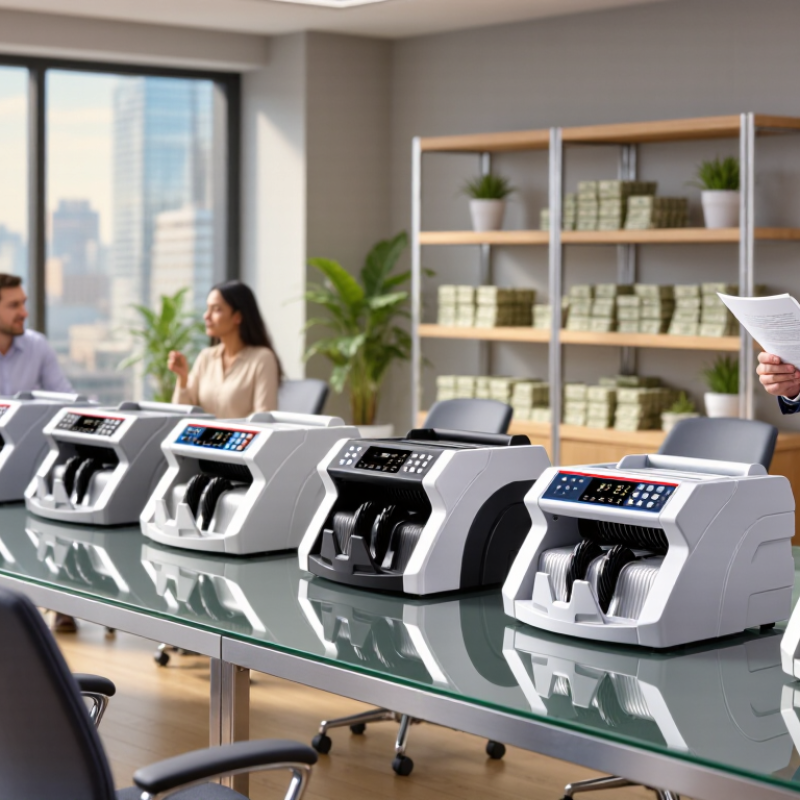
A money bill counter is a machine that counts paper banknotes as they pass through a feeding mechanism. It helps cash-handling teams process stacks more quickly and reduce manual counting errors. A typical unit separates notes with rollers, belts, or friction pads, then moves them past optical sensors. The display reports the count, while some machines also identify mixed denominations or detect possible irregularities.
The process is straightforward. An operator squares a stack, places it in the hopper, and selects the required mode. Sensors register each passing note by tracking light, dimensions, thickness, or other physical features. Depending on the model, ultraviolet, magnetic, or infrared checks may flag notes for review. A warning is not proof of a counterfeit; it is a reason to inspect the note more closely. Not foolproof.
Performance depends on clean sensors, suitable notes, and careful loading. Folded, damp, or worn bills can trigger jams or inaccurate readings. Dust builds up. Regular cleaning and checking counts against a second method help catch problems. In practice, speed is useful, but it can also make users trust the display too quickly. A counter supports careful cash work; it does not replace attention or verification.
Banknote counters differ by the decisions they make. Basic value counters use friction rollers and optical sensors to count single-denomination stacks. Mixed-denomination machines add image recognition, often using contact image sensors, to identify note size, design, and denomination. Higher-capacity sorters also assess fitness, separating heavily worn or damaged notes. Small details matter: a curled corner can affect feeding, while dust can obscure a sensor.
Detection combines several signals. Ultraviolet sensors check fluorescent features; magnetic sensors read ink patterns; infrared systems examine how materials absorb or reflect light. More advanced models compare captured note images against stored patterns. No single sensor proves authenticity, so multiple checks reduce reliance on one reading. They are not infallible. The European Central Bank’s Annual Report 2023 recorded 29.8 billion euro banknotes in circulation, worth €1.57 trillion. That figure describes cash in circulation, not counter demand, but it shows the scale of notes these systems must handle. Buyers should test mixed, worn, and folded notes under real operating conditions; lab specifications alone can miss everyday feeding problems.
A qualitative comparison of commonly integrated sensing technologies across banknote counter types.
How to read: A score of 1 indicates a technology commonly used in that counter category; 0 means it is not typically a core feature. UV, magnetic, infrared, and image-based sensing support different authentication, denomination-recognition, and sorting tasks. Actual features vary by model and currency requirements; this is not a manufacturer ranking or market-share chart.
Evaluating a money bill counter machine manufacturer starts with the work the machine must handle. Ask for a live demonstration using bills in the condition you see daily, including worn edges and folded corners. Test mixed denominations if that feature matters. Watch for missed counts, double feeds, jams, and how clearly the screen reports errors. Speed claims deserve scrutiny. A slightly slower machine may be more useful if it counts reliably through a busy shift.
Request written test results, warranty terms, maintenance intervals, and details about replacement parts. Ask how operators receive training and how quickly technical support responds. Documentation should explain calibration and routine cleaning in plain language. Test it in person. A polished brochure is not proof, and a short demonstration cannot represent every working condition. Treat perfect-accuracy claims cautiously; even a well-built device may need adjustment as parts wear.
Compare manufacturers on consistent criteria rather than headline specifications alone. Check whether the proposed model fits your expected daily volume, available counter space, and power supply. Ask for references from users with a similar workload, then verify what service was actually provided. Relevant quality or safety certifications can add confidence, but they do not replace practical testing. Some evaluation details are easy to overlook, including noise and how quickly staff can clear a jam. That is worth reconsidering before purchase.
Profiles of ten leading money bill counter manufacturers worldwide are most useful when they explain how each company solves a different counting problem. Some focus on compact machines for busy retail counters. Others build high-throughput systems for cash centers, with larger hoppers and continuous-feed operation. Several specialize in mixed-denomination counting, while others emphasize counterfeit detection, batch settings, or simple daily operation. The details matter: a clear display, accessible jam points, and replaceable rollers can save time during a long shift. Small design choices count.
A strong profile should also describe testing and service support, not just speed claims. Ask how accuracy is measured, which currencies are supported, and whether the machine flags worn or overlapping notes. Noise, footprint, and cleaning access deserve attention too. These practical points help buyers compare equipment for their actual workload. I would not treat a high notes-per-minute figure as a complete measure of performance; real results depend on note condition and operator habits.
Tips: Request a live test using mixed, circulated notes. Check warranty terms, calibration guidance, and local service availability before choosing. A polished brochure is helpful, but it cannot replace a hands-on trial.
The European Central Bank’s 2024 SPACE study found that cash made up 52% of euro-area point-of-sale transactions by number. This keeps reliable banknote handling relevant, even as digital payments grow. Machines increasingly need clear denomination recognition, counterfeit screening, and adjustable batch settings. Cash still matters.
Standards and service deserve equal scrutiny. ISO 9001 concerns quality-management systems; it does not certify a machine’s counting accuracy. Ask manufacturers for documented test procedures, supported currencies, error-rate definitions, and service response times. Confirm that software updates, sensor calibration, and replacement rollers are available locally. One caution: an impressive showroom test may not reflect dusty counters or mixed, worn notes. This is where procurement teams can overlook daily operating conditions.
Tips: Test a representative batch of clean and circulated notes before purchase. Record miscounts, rejected notes, and restart time. Keep the results; they make service discussions more useful.
An anonymized industry guide to relevant standards and buyer checks; it does not rank or identify individual manufacturers. Applicable requirements depend on the product, destination market, and product configuration.
| No. | Area | Verified standard or industry fact | What buyers should check | Reference |
|---|---|---|---|---|
| 1 | Quality management | ISO 9001 specifies requirements for a quality management system; certification is not automatic upon claiming compliance. | If certification is claimed, request a current certificate and confirm its scope covers the relevant manufacturing or service site. | ISO 9001 |
| 2 | Environmental management | ISO 14001 specifies requirements for an environmental management system. | Check whether any environmental certification is valid and covers the facility relevant to the product. | ISO 14001 |
| 3 | EU product conformity | CE marking applies to products covered by relevant EU harmonisation legislation. The manufacturer is responsible for the applicable conformity assessment and EU declaration of conformity. | Request the declaration and identify which EU legislation and standards apply to the specific machine. | EU CE marking guidance |
| 4 | Electromagnetic compatibility | IEC 61000-6-1 and IEC 61000-6-3 provide generic EMC immunity and emissions standards for specified environments, where applicable. | Ask for test evidence for the exact model and intended operating environment; applicable product-specific standards may take precedence. | IEC 61000-6-1; IEC 61000-6-3 |
| 5 | Harmonic current emissions | IEC 61000-3-2 addresses harmonic current emissions for equipment with input current up to and including 16 A per phase, subject to its scope and exclusions. | Confirm the machine’s electrical rating and whether the standard applies in the destination market. | IEC 61000-3-2 |
| 6 | Voltage fluctuations and flicker | IEC 61000-3-3 covers voltage changes, voltage fluctuations, and flicker in public low-voltage supply systems for equipment within its stated scope. | Check electrical compatibility and test documentation for the intended power supply and market. | IEC 61000-3-3 |
| 7 | Restricted substances | The EU RoHS Directive restricts specified hazardous substances in electrical and electronic equipment, subject to its scope and exemptions. | For EU sales, request relevant technical documentation or a compliance declaration for the supplied configuration. | Directive 2011/65/EU |
| 8 | End-of-life equipment | The EU WEEE Directive establishes rules for waste electrical and electronic equipment, including separate collection and treatment requirements. | For EU markets, clarify applicable producer-responsibility and take-back arrangements with the supplier. | Directive 2012/19/EU |
| 9 | Test and calibration competence | ISO/IEC 17025 specifies general requirements for the competence of testing and calibration laboratories. | When test results are important, check the laboratory’s accreditation scope and whether it includes the relevant test. | ISO/IEC 17025 |
| 10 | After-sales support and detection features | Warranty duration, repair turnaround, spare-parts availability, and service coverage are contract-dependent. Counterfeit-detection capabilities vary by model and supported currency. | Get warranty exclusions, service locations, parts terms, response targets, supported banknote series, and software-update arrangements in writing. | Verify in the product specification and service agreement |



For those larger-sized parts, or smaller quantity runs, we have 2 independent powder coat booths and ovens. The quality, durability and affordability of today’s powder coating finishes make this the process of choice for world-class companies.
Powder coating advantages over other forms of coating are many. Materials used in the Powder coating process can be metals and non-metals that come in a multitude of thicknesses, textures, colors, etc. Another of Powder coating’s biggest advantages over conventional coatings is its ability to create finishes in many different textures. Powder Coating Booths allow us the ability to apply these advantages to large products.
Tri-State Fabricators runs a full-service conveyor line for painting. Wet painting can provide protection or decoration to many different part styles. From start to finish, every project is easier to undergo random and point-based inspection by our skilled painting team.
Advantages to our Wet Paint Line are these lines start with product prep and ends with a thorough inspection of a high quality finished product. Our ability to complete large and small projects with a superior finish and doing so in a timely and economical fashion. This passes along the savings in production to our customers. When powder coating ins not an option, our Wet Paint Line gets the job done right the first time.
When the parts get big and heavy we roll-out our custom paint racks and oversize booth. By utilizing our partnerships with all the major paint brands, we can match virtually any color with wet paint.
The advantages of having access to a Wet Paint Booth are many. Large projects of many different shapes can be loaded into the booth. The Wet Paint Booth offers an environment that is much more controlled than a typical parts painting operation.
Not only are they used because of their controlled environment, but they’re are also advantageous when it comes to applying paint to parts that are needed in industries that require specialty coatings such as medical, aerospace, etc.
Our military forces have some very high standards when it comes to the finish of their vehicles and equipment. From the first pre-treatment step to final coat, it takes a great deal of knowledge and experience to protect the men and women of our armed forces. They deserve only the best, and Tri-State Fabricators provides it.
All of our processes are closely monitored by our staff and management teams. Both of which are highly trained in the processes of metal fabrication and finishing. Tri-State Fabricators’ goal is to always fully satisfy each and every customer, including the military. We will always put a 110% into what we do.
Abrasive media blasting is an excellent way to remove old paint, rust, and increase the paint/powder adhesion. Glass beads produce a much smoother and brighter finish than angular abrasives; leaving the part clean yet without any dimensional change. Chemically inert and environmentally friendly, we can recycle our beads approximately 30 times; making them a more preferred method of metal cleaning or surface finishing.
Advantages to Glass Bead Blasting are many. Glass bead blast media is used when a project is needing rough surfaces need to become smooth for applications of coatings such as paint. It is typically used to clean paint and rust from a product surface without deforming the surface it is being used on. Overall, compared to many other blasting media, Glass Bead Blasting is a very economical choice and those savings are always passed on to our customers.
Tri-State Fabricators utilize a zinc phosphate wash to clean and etch the material to ensure the best paint adhesion possible. The unique design of our 3-stage wash system does the work like a 5-stage. From Cleaning and rinsing to conversion coating and post-treatment, Our Part Washing process is a complete service and works throughout the fabrication service and the finishing service.
Along with the previously mentioned benefits, Curing is a vital chemical reaction that leaves the product finish hard and relatively safe from mild abrasion and aggressive corrosion. This process can be done in more than one way; ambient air-dry or in curing ovens at temps that exceed 240°.
From fixing paint mistakes (someone else’s of course) to simply cleaning our paint line hooks, our burn-off oven is put to good use. After a quick burn-off, a little clean up, and a fresh coat of paint, your parts will look better than new.
Why does our Burn-Off Oven work so well? Because super heating the air around parts turns the materials into ashes. From paint and powder coatings to rubber and machining oils, high temps do the job without degrading the integrity of the part.
Masking is a vital part of producing high quality products. We have die-cut masking patterns to protect machined surfaces as well as a wide range of plugs and caps to protect threaded holes and bolts. We provide permanent and temporary masking.
Masking allows the selected sections of a product to be protected from a fabrication or finishing service. This can be with both chemicals when etching and tapes, paints when only finishing just a section of the product. Masking is great in aiding the customization process of a project.
Screen printing is a photographic process that transfers artwork onto a porous nylon screen which allows colored ink to flow through the screen and be deposited on an aluminum or plastic component. We can generally have just about any design created onto a screen for your parts.
Some of the advantages of Screen Printing are, brand recognition for your business displaying on your products, assembly instructions, product warnings/hazards, etc. Tri-State Fabricators produces Screen Printing of the highest quality so you know it’s durable.
Metal Finishing is the art of treating the exterior portion of product, often metal but can also be made of other materials, so that the surface is clean and free of any debris. Then the process of applying coats or either paint of powder coat takes place. This coating process improves the quality of the product in both appearance and resistance to wear and corrosion.
Tri-State Fabricators, Inc., understands that a project typically isn’t complete until a high-quality finish has been added to your product. This is why our painting and powder coating teams continuously inspect the products throughout the Metal Finishing process.