


Top Modular Conveyor Belt Manufacturers for Global Buyers

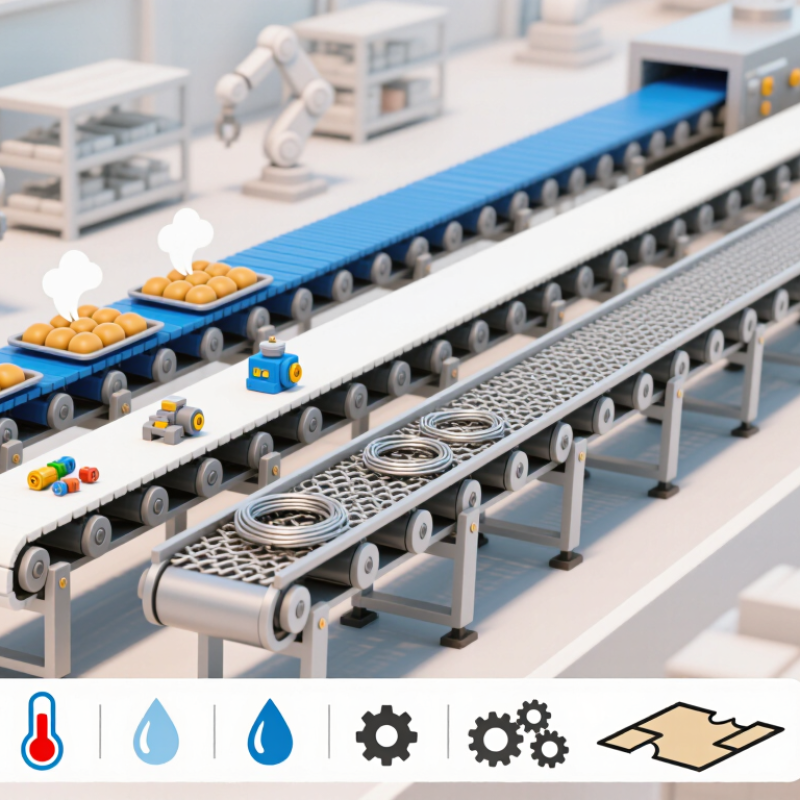
For global buyers, selecting a Modular Conveyor Belt manufacturer is not simply a matter of comparing prices. The right system must suit the product, production speed, washdown routine, and available floor space. A belt carrying warm bakery trays faces different demands from one moving small components through a dry assembly area. Details matter.

“Choose the belt for the process it must survive, not just the product it carries.” This is an original illustrative quotation, attributed to fictional conveyor specialist Elena Morris; it is not a sourced statement from a real industry expert. The principle reflects a practical concern: a poor match between belt design and operating conditions can lead to premature wear, difficult cleaning, or unplanned downtime.

This guide examines manufacturers through buyer-focused criteria, including material options, belt geometry, customization, technical support, and delivery capability. Modular plastic belts can offer useful flexibility. Still, they are not automatically the best choice for every line. Buyers should confirm the required pitch, sprocket compatibility, operating temperature, chemical exposure, and load before requesting a quotation. Ask for clear drawings and application guidance. Then compare like with like.

There is room for caution here. Supplier claims may sound similar, while maintenance needs differ sharply between factories. A careful shortlist should include evidence: product specifications, relevant application experience, and responsive engineering support. The following overview is designed to help international purchasers ask better questions and identify manufacturers worth evaluating—not to declare one universal winner.
Top Modular Conveyor Belt Manufacturers for Global Buyers

Understanding Modular Conveyor Belts and Their Industrial Uses

Understanding Modular Conveyor Belts and Their Industrial Uses

Modular conveyor belts are built from interlocking plastic modules joined by hinge rods. A damaged section can often be replaced without discarding the whole belt. That saves time. It is useful on food-processing lines, packaging equipment, and systems carrying small components. Open-grid designs let water and debris drain away, while flatter surfaces support cartons and trays. The right choice depends on product shape, temperature, cleaning routine, and conveyor layout—not just belt width.

Market figures show why conveyor technology matters across industry. MarketsandMarkets estimated the global conveyor system market at USD 9.4 billion in 2023 and projected USD 12.1 billion by 2028, a 5.2% compound annual growth rate. This covers conveyor systems broadly, not modular belts alone.

In practical selection, engineers should also check load limits, belt speed, transfer gaps, and compatibility with sprockets. A belt that handles wet produce may not suit hot, sharp-edged parts. Small details matter. Even an easy-to-clean design can leave residue around hinges if maintenance is rushed. Testing under actual operating conditions is often more revealing than relying on a catalogue rating.


Key Criteria for Evaluating Modular Conveyor Belt Manufacturers

Evaluating a modular conveyor belt manufacturer takes more than comparing prices. Start with the belt’s actual operating conditions: product weight, temperature, washdown frequency, belt speed, and exposure to oils or cleaning agents. Ask for documented material specifications and test results, not broad claims about durability. A sample belt can reveal details that a brochure misses, such as hinge flexibility, edge finish, and how easily modules connect.

Integration matters. The International Federation of Robotics reported

541,302 industrial robot installations worldwide in 2023 in its World Robotics 2024 report.

That growth makes reliable coordination between conveyors, sensors, and automated equipment increasingly important. Check whether a supplier can provide dimensional drawings, compatible sprocket details, and practical guidance for installation and maintenance. Also ask how replacement modules are identified and shipped; a small delay can stop a whole line.

Service life depends on more than belt material. Request references from facilities with similar loads and cleaning routines, plus clear warranty terms and spare-part availability. Inspect wear points yourself. A clean-looking test setup may not reflect months of abrasive use. Useful answers should include measurable limits, maintenance intervals, and examples of failures the manufacturer has addressed. Some specifications still need independent verification. That is worth remembering.

Leading Manufacturers and Their Product Capabilities

Modular conveyor belt manufacturers serve food processing, packaging, automotive, and distribution lines, where belt design affects cleaning, product handling, and uptime. Their capabilities typically include straight-running and side-flexing belts, molded sprockets, wear strips, and custom layouts for curves or elevation changes. Some suppliers also offer engineering support to match belt pitch, material, and open-area design to a specific product. Small details matter: a poorly aligned transfer can catch a soft package or leave crumbs beneath the belt. That is where specifications meet the factory floor.

Manufacturers differ in material options, load ratings, temperature ranges, and their ability to provide replacement parts quickly. Buyers should ask for documented operating limits and test results, not only catalog claims. MarketsandMarkets’ 2023 report, Conveyor System Market, estimated the global market at USD 9.4 billion in 2023 and projected USD 12.2 billion by 2028. This broader category includes multiple conveyor types, so it is not a modular-belt market estimate. Still, it signals sustained investment in material handling. Ask suppliers how they validate belt strength, cleanability, and wear under actual operating conditions. A sample test helps. One caution: custom designs can solve awkward layouts, but they may also make future sourcing less straightforward.

Top Modular Conveyor Belt Manufacturers for Global Buyers - Leading Manufacturers and Their Product Capabilities

Manufacturer Capability Area Common Belt Construction Typical Materials Product and Design Capabilities Common Applications Buyer Checks
General-purpose modular belts Interlocking injection-molded modules connected by hinge rods Polypropylene (PP), polyethylene (PE), acetal (POM) Straight-running designs, multiple surface patterns, sprocket drive, and widths assembled from modular rows Packaging, distribution, food processing, and general manufacturing Confirm belt pitch, width, surface style, sprocket compatibility, and operating temperature limits for the selected resin.
Open-area and drainage belts Modules with perforations or open-grid construction PP, PE, acetal (POM) Open surfaces that allow airflow, liquid drainage, and washdown; open area varies by module design Cooling, washing, drying, and conveying products that need drainage or airflow Check open area, product support, hole or grid geometry, and cleanability requirements.
Curved and side-flexing belts Side-flexing modular construction designed for curved conveyor paths Common engineering thermoplastics, including acetal (POM) and PP Curve-compatible belt and sprocket configurations; allowable curve radius depends on belt design and conveyor layout Space-constrained production lines, accumulation systems, and packaging conveyors Request the specified minimum inner and outer radii, allowable belt width, and load limits for the intended layout.
High-grip and inclined-conveying belts Modular surfaces with molded texture or flights PP, PE, acetal (POM); material availability varies by design Raised flights, textured surfaces, and other features to help control product movement on inclines or declines Inclined transfer, elevation changes, and handling products prone to sliding Check flight height and spacing, product stability, transfer points, and the conveyor angle under actual operating conditions.
Food-contact and hygienic designs Modular belts with surfaces and joints selected for the process environment Food-contact grades of PP, PE, or acetal (POM), subject to supplier documentation Design options may include open surfaces, cleanable profiles, and materials selected for specific food-processing conditions Food and beverage processing, including washdown areas Verify applicable food-contact documentation, cleaning-chemical compatibility, temperature limits, and hygiene requirements for the target market.
High-load or wear-focused designs Reinforced modular constructions or designs using wear-resistant engineering plastics Acetal (POM), reinforced thermoplastics, or other specified engineering polymers Material and module options intended to address load, abrasion, impact, or dimensional stability needs Industrial conveying, heavier products, and demanding operating cycles Compare allowable working load, belt speed, support spacing, wear data, and the effects of temperature and chemical exposure.
Custom and system-matched supply Standard modules assembled to suit a conveyor, with compatible drive and return components Selected according to application, environment, and required compliance Potential services include belt sizing, sprocket matching, flight or side-guard selection, and replacement-belt identification Retrofits, OEM equipment, and multi-site conveyor installations Provide conveyor drawings, existing belt specifications, shaft and sprocket details, operating conditions, and destination-market requirements.

Specifications and material performance vary by belt design, resin grade, operating conditions, and supplier. Confirm current technical data and compliance documentation for each proposed product.

Comparing Suppliers by Region, Service, and Industry Expertise

Top Modular Conveyor Belt Manufacturers for Global Buyers

Comparing suppliers by region means looking beyond factory location. Manufacturing clusters in Asia, Europe, and North America can offer different lead times, engineering support, and access to spare parts. For buyers, service coverage matters on a Tuesday breakdown, not just during a polished sales call. MHI’s 2024 Annual Industry Report found that 55% of surveyed organizations planned to increase supply chain technology investment over the following two years. That trend makes supplier support for automation integration increasingly relevant. Ask who handles commissioning, how quickly replacement modules ship, and whether technicians can work with your existing controls. Details matter.

Industry expertise should match the actual product and operating environment. Food processing lines may need belt materials that tolerate frequent washdowns, while parcel hubs prioritize dependable tracking and fast repairs. The U.S. Bureau of Labor Statistics reported that warehousing and storage employed about 1.8 million people in May 2023; high-volume operations have little room for avoidable stoppages. Request references from comparable facilities, plus documented test results for load, wear, and cleaning conditions. A supplier’s regional office can help, but it does not guarantee local inventory. I would verify that point. Compare response-time commitments, training, and spare-module availability in writing, then weigh them against purchase price. A low quote can look less attractive after repeated delays.

Assessing Costs, Compliance, and Long-Term Support for Global Buyers

Top Modular Conveyor Belt Manufacturers for Global Buyers

Choosing a modular conveyor belt supplier means looking beyond the quoted price. Compare belt, sprocket, and frame costs, then ask what installation, spare parts, and technical support will add. A low initial quote can become expensive if replacement modules take weeks to arrive. Request a written lead-time estimate and confirm which components are stocked locally.

Compliance deserves practical attention. Ask for material declarations, load limits, operating temperature ranges, and cleaning guidance suited to your product and environment. These details help maintenance teams assess whether a belt fits the application. Documentation quality varies, and a neat specification sheet does not guarantee smooth commissioning. Discuss testing and acceptance criteria before ordering.

Tips: Share your layout, product dimensions, washdown routine, and expected operating hours when requesting a quotation. Ask how damaged modules are identified and replaced, and whether remote troubleshooting is available across time zones. Keep a small set of critical spares on site. It may seem cautious, but an unplanned stoppage is harder to fix than a shelf of unused parts.

Powder Coat Booths

For those larger-sized parts, or smaller quantity runs, we have 2 independent powder coat booths and ovens. The quality, durability and affordability of today’s powder coating finishes make this the process of choice for world-class companies.

Powder coating advantages over other forms of coating are many. Materials used in the Powder coating process can be metals and non-metals that come in a multitude of thicknesses, textures, colors, etc. Another of Powder coating’s biggest advantages over conventional coatings is its ability to create finishes in many different textures. Powder Coating Booths allow us the ability to apply these advantages to large products.

Wet Paint Line

Tri-State Fabricators runs a full-service conveyor line for painting. Wet painting can provide protection or decoration to many different part styles. From start to finish, every project is easier to undergo random and point-based inspection by our skilled painting team.

Advantages to our Wet Paint Line are these lines start with product prep and ends with a thorough inspection of a high quality finished product. Our ability to complete large and small projects with a superior finish and doing so in a timely and economical fashion. This passes along the savings in production to our customers. When powder coating ins not an option, our Wet Paint Line gets the job done right the first time.

Wet Paint Booths

When the parts get big and heavy we roll-out our custom paint racks and oversize booth. By utilizing our partnerships with all the major paint brands, we can match virtually any color with wet paint.

The advantages of having access to a Wet Paint Booth are many. Large projects of many different shapes can be loaded into the booth. The Wet Paint Booth offers an environment that is much more controlled than a typical parts painting operation.

Not only are they used because of their controlled environment, but they’re are also advantageous when it comes to applying paint to parts that are needed in industries that require specialty coatings such as medical, aerospace, etc.

Military CARC

Our military forces have some very high standards when it comes to the finish of their vehicles and equipment. From the first pre-treatment step to final coat, it takes a great deal of knowledge and experience to protect the men and women of our armed forces. They deserve only the best, and Tri-State Fabricators provides it.

All of our processes are closely monitored by our staff and management teams. Both of which are highly trained in the processes of metal fabrication and finishing. Tri-State Fabricators’ goal is to always fully satisfy each and every customer, including the military. We will always put a 110% into what we do.

Glass-Bead Blasting

Abrasive media blasting is an excellent way to remove old paint, rust, and increase the paint/powder adhesion. Glass beads produce a much smoother and brighter finish than angular abrasives; leaving the part clean yet without any dimensional change. Chemically inert and environmentally friendly, we can recycle our beads approximately 30 times; making them a more preferred method of metal cleaning or surface finishing.

Advantages to Glass Bead Blasting are many. Glass bead blast media is used when a project is needing rough surfaces need to become smooth for applications of coatings such as paint. It is typically used to clean paint and rust from a product surface without deforming the surface it is being used on. Overall, compared to many other blasting media, Glass Bead Blasting is a very economical choice and those savings are always passed on to our customers.

Part Washing

Tri-State Fabricators utilize a zinc phosphate wash to clean and etch the material to ensure the best paint adhesion possible. The unique design of our 3-stage wash system does the work like a 5-stage. From Cleaning and rinsing to conversion coating and post-treatment, Our Part Washing process is a complete service and works throughout the fabrication service and the finishing service.

Along with the previously mentioned benefits, Curing is a vital chemical reaction that leaves the product finish hard and relatively safe from mild abrasion and aggressive corrosion. This process can be done in more than one way; ambient air-dry or in curing ovens at temps that exceed 240°.

Burn-Off Oven

From fixing paint mistakes (someone else’s of course) to simply cleaning our paint line hooks, our burn-off oven is put to good use. After a quick burn-off, a little clean up, and a fresh coat of paint, your parts will look better than new.

Why does our Burn-Off Oven work so well? Because super heating the air around parts turns the materials into ashes. From paint and powder coatings to rubber and machining oils, high temps do the job without degrading the integrity of the part.

Masking

Masking is a vital part of producing high quality products. We have die-cut masking patterns to protect machined surfaces as well as a wide range of plugs and caps to protect threaded holes and bolts. We provide permanent and temporary masking.

Masking allows the selected sections of a product to be protected from a fabrication or finishing service. This can be with both chemicals when etching and tapes, paints when only finishing just a section of the product. Masking is great in aiding the customization process of a project.

Screen Printing

Screen printing is a photographic process that transfers artwork onto a porous nylon screen which allows colored ink to flow through the screen and be deposited on an aluminum or plastic component. We can generally have just about any design created onto a screen for your parts.

Some of the advantages of Screen Printing are, brand recognition for your business displaying on your products, assembly instructions, product warnings/hazards, etc. Tri-State Fabricators produces Screen Printing of the highest quality so you know it’s durable.

Metal Finishing

Metal Finishing is the art of treating the exterior portion of product, often metal but can also be made of other materials, so that the surface is clean and free of any debris. Then the process of applying coats or either paint of powder coat takes place. This coating process improves the quality of the product in both appearance and resistance to wear and corrosion.

Tri-State Fabricators, Inc., understands that a project typically isn’t complete until a high-quality finish has been added to your product. This is why our painting and powder coating teams continuously inspect the products throughout the Metal Finishing process.
